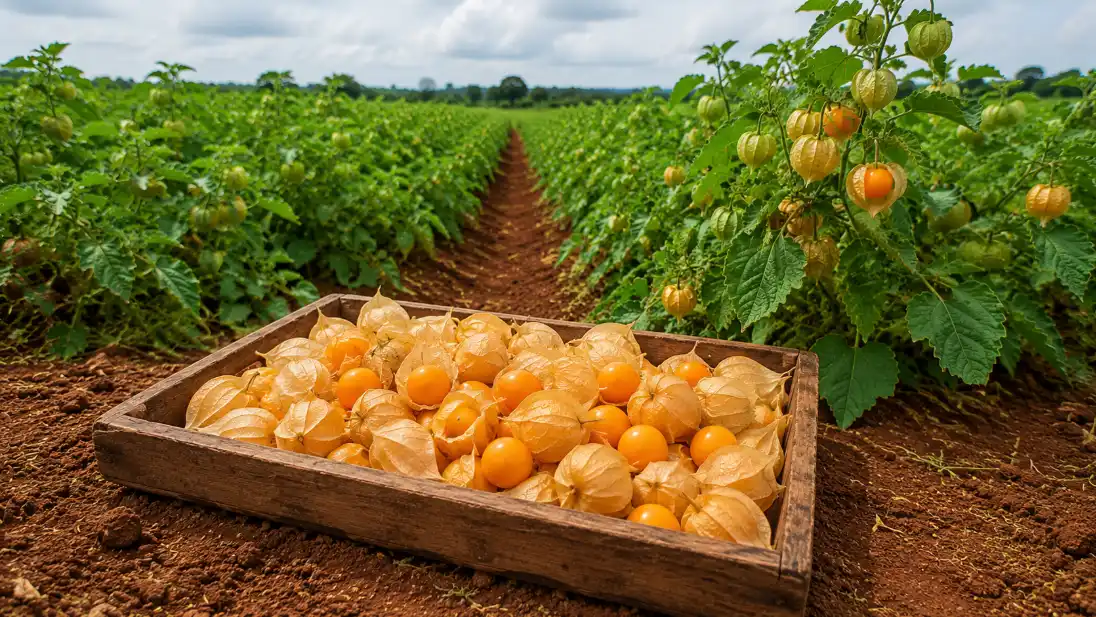

- High Profitability: Cape gooseberry farming in Kenya offers high returns, with current 2026 market prices reaching KES 600 to KES 900 per kilogram in premium retail outlets like Carrefour and Naivas.
- Low Entry Barrier: Initial setup costs for one acre range between KES 150,000 and KES 250,000, while the crop matures quickly in 3 to 4 months and continues producing for up to two years.
- High Yield Potential: Under optimal management in counties like Kiambu or Meru, a single acre can yield between 4,000 kg and 6,000 kg annually, making it one of the most lucrative emerging crops in the country.
Table of Contents
Cape gooseberry farming in Kenya has transitioned from a wild growing shrub found in the highlands to a high value commercial venture. Known scientifically as Physalis peruviana and often referred to locally as the Golden Berry or Inca Berry, this fruit is becoming a staple in the healthy living movement sweeping across Nairobi and other urban hubs. For the modern Kenyan farmer, the appeal lies in the plant resilience, low water requirement compared to traditional vegetables, and the massive price gap between production costs and retail value.
As we move into 2026, the demand for value added products like gooseberry jam, juice, and dried snacks has opened even wider doors for small scale and large scale agripreneurs alike. The crop is no longer just a childhood snack found by the roadside. It is a sophisticated export product that is earning farmers foreign exchange. With its ability to produce fruit for up to two years, it offers a consistent cash flow that few other seasonal crops can match in the current Kenyan economy.
Read Also: Avocado, Macadamia or Dairy? Best Export-Ready Agribusiness Ventures in Kenya for 2026
Cape gooseberry farming involves cultivating the Physalis peruviana plant, which thrives in altitudes between 1,200m and 2,800m. It is a highly profitable venture in 2026 due to rising health awareness and low competition. Farmers can expect first harvests within 120 days, with an acre producing up to 6 tons of fruit annually under proper irrigation and nutrition.
What Is Cape Gooseberry (Physalis Peruviana)?
The Cape gooseberry is a small, round, golden orange fruit encased in a papery husk called a calyx. Originating from the Andes mountains in South America, it belongs to the Solanaceae family. This makes it a close relative of tomatoes, potatoes, and peppers. In the Kenyan market, it is often called the Golden Berry, Uchuva, or the Nanyuki berry depending on which trader you ask. The fruit starts as a green berry inside a green husk, which eventually turns straw colored or light brown when the fruit reaches its peak sugar content.
To succeed in Cape gooseberry farming in Kenya, one must first understand that this is not the same as the English gooseberry or the Chinese gooseberry, which is actually the Kiwi fruit. The Physalis peruviana is unique because of its protective husk, which naturally extends its shelf life after harvest. This husk acts as a natural packaging, protecting the delicate fruit from pests and physical damage during transport from the farm to the city markets.
The nutritional profile of the Golden Berry is what drives its 2026 market value. It is packed with Vitamin C, Vitamin A, and minerals like iron and potassium. Unlike many other berries, it has a significant amount of protein and fiber, making it a favorite for fitness enthusiasts. On the shamba, the plant grows as a perennial herb, usually reaching heights of 1 to 1.5 meters. While it can live for many years, commercial farmers in regions like Nyandarua and Nyeri often treat it as a two year crop to maintain high fruit quality and size.
KALRO’s Recognition of Cape Gooseberry in Kenya
Although Cape Gooseberry has grown naturally in parts of Kenya for many years, it has only recently gained attention as a commercial horticultural crop. In 2010, the then Kenya Agricultural Research Institute (KARI), now the Kenya Agricultural and Livestock Research Organization (KALRO), classified Cape Gooseberry as one of Kenya’s underutilized fruit crops. During a stakeholder assessment, it was ranked as the seventh most important underutilized fruit in the country.
This recognition highlighted the crop’s untapped commercial potential and encouraged further research into its production, value addition, and market development. Today, growing demand for nutritious “superfruits,” expanding export opportunities, and increased interest from supermarkets, hotels, and health-conscious consumers have transformed Cape Gooseberry from a little-known wild fruit into a promising high-value agribusiness for Kenyan farmers.
The following table provides a quick look at the botanical and commercial characteristics of the plant as it is currently grown in Kenya.
| Feature | Description |
|---|---|
| Scientific Name | Physalis peruviana |
| Family | Solanaceae (Tomato Family) |
| Common Names | Golden Berry, Uchuva, Inca Berry |
| Lifespan | 1 to 2 Years (Commercial) |
| Maturity | 90 to 120 Days |
| Fruit Color | Golden Orange when ripe |
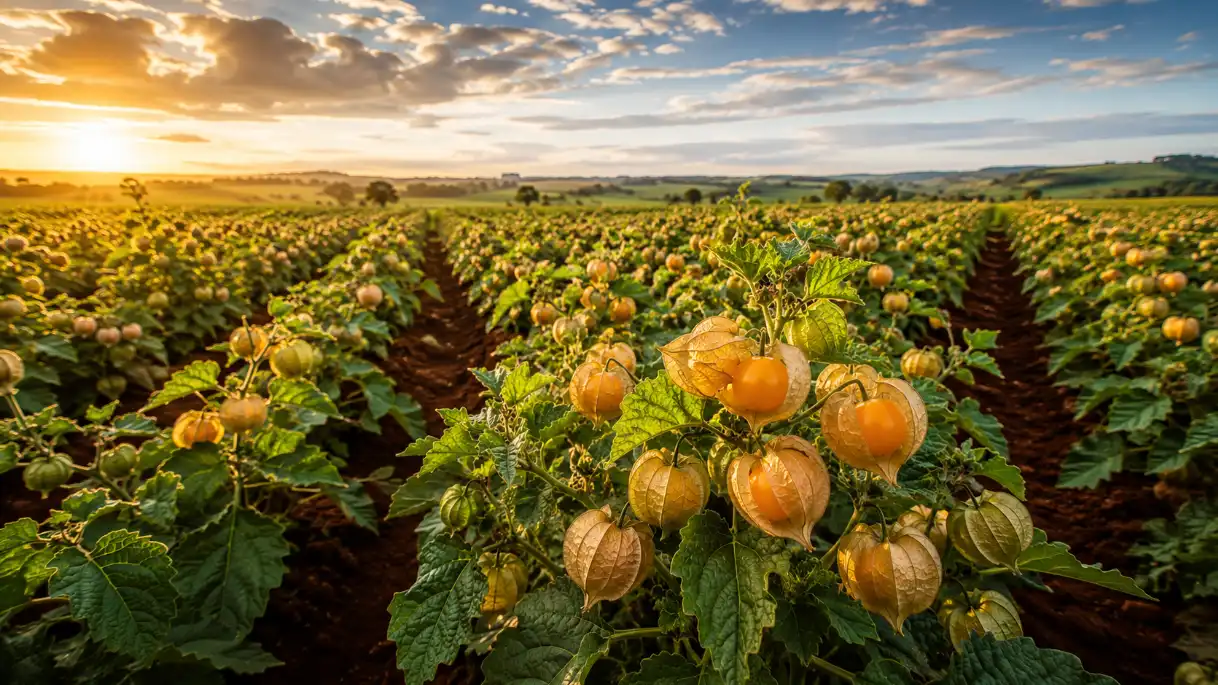
Why Cape Gooseberry Farming Is Booming in Kenya
Several factors have converged to make 2026 a landmark year for the Golden Berry in Kenyan agriculture. Firstly, the traditional big crops like maize and beans have faced volatile pricing and climate challenges. This has pushed farmers to look for high value alternatives that occupy less space. A Cape gooseberry farming profit analysis reveals that a farmer can earn more from half an acre of gooseberries than from three acres of maize, especially when selling directly to high end retailers in Nairobi or Mombasa.
Secondly, the tourism industry recovery has spiked demand for unique ingredients. 5-star hotels and boutique lodges in the Masai Mara and Laikipia use these berries for garnishing, desserts, and breakfast buffets. Furthermore, the Cape gooseberry market price has remained stable because production has not yet outpaced demand. This first mover advantage allows early adopters to set price points that guarantee a high return on investment (ROI). With the Government of Kenya through KALRO promoting underutilized crops for food security, farmers are receiving more technical support than ever before.
Read Also: Dwarf Orange Farming in Kenya (2026): How Farmers Are Growing Heavy Fruiting Citrus Trees in Containers
The boom in 2026 is driven by a shift toward functional foods and the diversification of the Kenyan export basket. Hotels, supermarkets, and health-conscious consumers in Nairobi are willing to pay premium prices for locally grown, organic gooseberries, while export markets in Europe and the Middle East are actively seeking Kenyan suppliers.
Cape Gooseberry Benefits
When you are marketing your produce, focusing on Cape gooseberry benefits is your strongest selling point. These berries are rich in polyphenols and carotenoids, which are known to fight stress in the human body. For the Kenyan consumer, the high Vitamin A content is particularly marketed for eye health, while the Vitamin C levels help in boosting immunity during the cold seasons in the highlands. They are also a rare plant source of B-complex vitamins, which are essential for energy.
Beyond human consumption, the fruit is highly versatile in the kitchen. It has a natural pectin content, meaning it gels easily, making it perfect for jams and preserves without needing massive amounts of artificial additives. This versatility is a key pillar of Cape gooseberry farming in Kenya because it means the farmer is not just selling a fresh fruit, but a raw material for a multi-billion shilling food processing industry. Whether eaten fresh, dried into raisins, or blended into smoothies, the Golden Berry is a nutritional giant.
Cape gooseberries are nutritional powerhouses, containing high levels of antioxidants, vitamins, and anti-inflammatory compounds. They support immune function, eye health, and digestion. In 2026, their classification as a superfood allows farmers to market them as medicine-foods, fetching much higher prices than standard table fruits.
Is Cape Gooseberry a superfood?
Yes, absolutely. In the 2026 global market, the Golden Berry sits alongside blueberries and kale as a top tier superfood. Its ability to provide more potassium than a banana and significant amounts of plant based protein makes it a favorite for the vegan and keto communities in Kenya. For the farmer, this superfood tag is a license to charge a premium price. You are not just selling a berry; you are selling health and longevity to a growing middle class that is increasingly wary of processed sugars.
Ecological Requirements for Cape Gooseberry Farming
While the plant is hardy, achieving the yields necessary for maximum profit requires specific conditions. Physalis peruviana is highly adaptable but performs best in well drained sandy loam soils with a pH of 6.0 to 7.5. It requires moderate rainfall and thrives in altitudes ranging from 1,200m to 2,800m above sea level. This makes the Kenyan highlands the ideal production zone for export quality fruit that meets international standards.
Climate and Temperature
The plant prefers temperatures between 15 and 25 degrees Celsius. While it can tolerate mild frost, extreme cold will kill the foliage. Conversely, temperatures consistently above 30 degrees Celsius can lead to flower loss and reduced fruit set. In Kenya, the temperate climate of the central and rift valley regions provides the perfect balance for year round production. If you are in a hotter area, you may need to use shade nets to keep the plants productive.
Altitude and Sunlight
The best Cape gooseberry farming in Kenya happens at higher altitudes. The intensity of sunlight at high altitudes helps in the development of the fruit natural sugars and deep orange color. It is a sun loving plant that requires at least 6 to 8 hours of direct sunlight daily to reach maximum yield potential. If planted in too much shade, the plant becomes tall and weak, producing very few berries that lack the signature tart sweet flavor profile.
Soil and Water Requirements
Drainage is the most critical soil factor for this crop. The plant hates having wet feet. If the soil remains waterlogged for too long, the roots will rot within days. Loamy soils rich in organic matter are ideal for long term health. While the plant is somewhat drought tolerant once established, consistent moisture is required during the flowering and fruiting stages to prevent the berries from shriveling or dropping prematurely. Drip irrigation is highly recommended for commercial success in 2026.
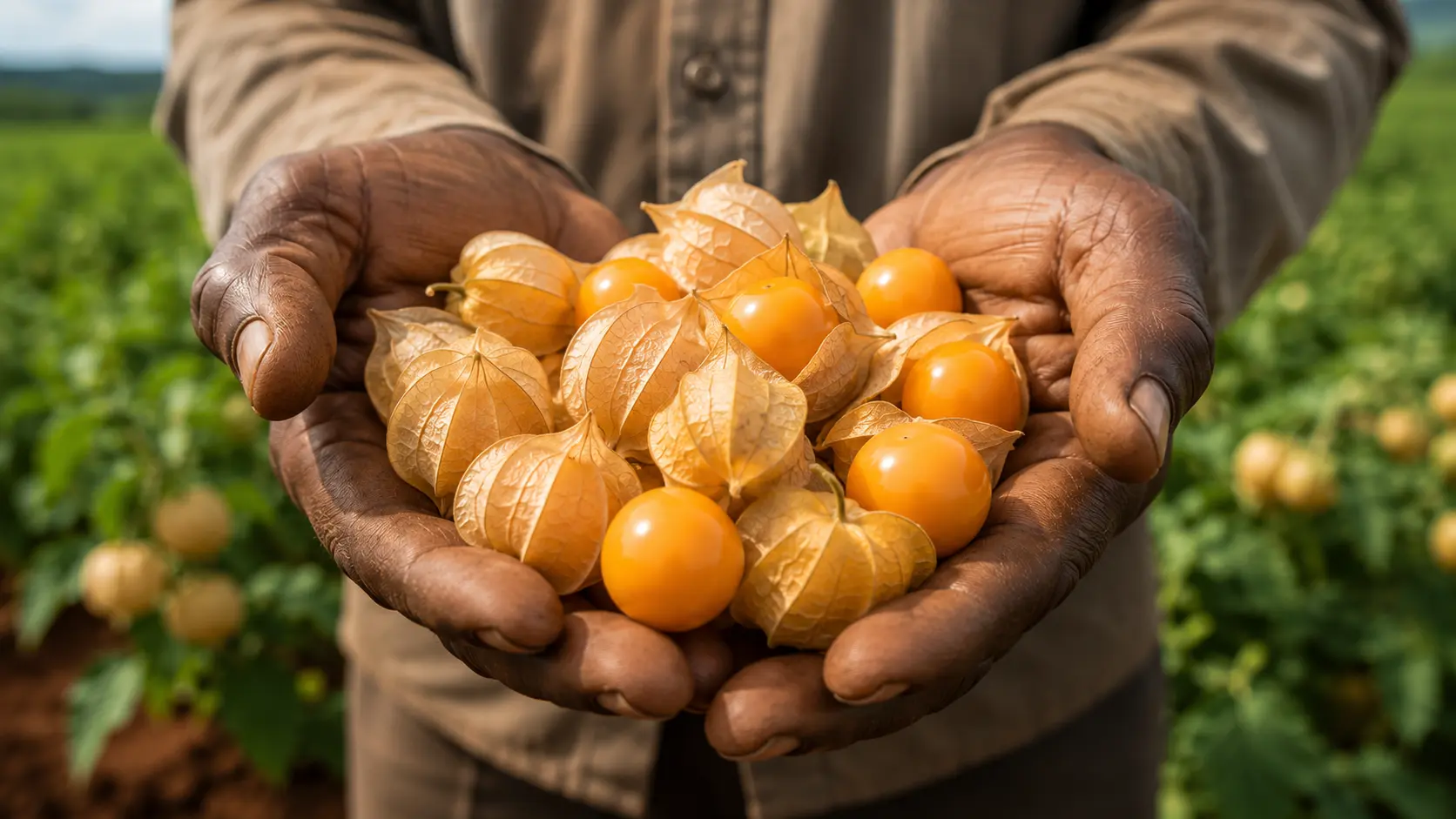
Best Counties for Cape Gooseberry Farming in Kenya
Not every part of Kenya is suited for commercial golden berry production. Counties such as Kiambu, Meru, Nyeri, and Nyandarua are the top performers for gooseberry production due to their favorable altitudes and rich volcanic soils. Regions like Uasin Gishu and Kericho are also emerging as commercial hubs for export oriented farming. These areas have the cool nights and sunny days that the plant needs to store sugars in the fruit.
- Kiambu: Proximity to the Nairobi market and high end supermarkets like Carrefour makes it the most profitable location for fresh sales.
- Meru and Embu: These regions offer the perfect altitude and consistent rainfall, producing large, sweet fruits ideal for the juice industry.
- Nyandarua: Known for its cool climate, it produces berries with a longer shelf life, which is critical for the export market.
- Nakuru and Laikipia: The well drained soils and moderate temperatures allow for massive commercial plantations on former wheat lands.
- Kisii and Kericho: These areas have the high organic matter content in the soil that Cape gooseberry farming thrives on without heavy chemical use.
Cape Gooseberry Varieties Grown in Kenya
The primary variety grown is the Physalis peruviana, often selected through local seeds known as Kenya Yellow. However, in 2026, improved varieties from Colombia and South Africa are being introduced to offer larger fruit sizes and higher sugar content. These improved varieties also have better resistance to common soil diseases like fusarium wilt, which can be a problem in older farming blocks.
Read Also: Watermelon Farming in Kenya 2026: Step by Step Guide from Planting to Harvest
Most farmers start with Gooseberry seeds in Kenya sourced from KALRO or reputable agro consultants. The Improved Kenya Yellow is the workhorse of the industry, offering a balance between disease resistance and high yield. However, for those looking at the export market, varieties that produce fruits larger than 1.5 cm in diameter are preferred. These improved varieties often have a more upright growth habit, making them easier to manage and harvest.
The table below compares the common varieties found in Kenyan nurseries and their suitability for different market types.
| Variety | Average Yield | Fruit Size | Primary Use |
|---|---|---|---|
| Kenya Yellow | 5 tons/acre | Medium | Local markets, Jam |
| Colombian Giant | 7 tons/acre | Large | Export, Fresh Retail |
| South African Gold | 6 tons/acre | Large | Premium Supermarkets |
Where to Buy Cape Gooseberry Seeds and Seedlings in Kenya
Authentic seeds and seedlings can be purchased from KALRO centers, Simlaw Seeds, and certified private nurseries in Naivasha and Limuru. In 2026, many farmers also use online agricultural platforms and social media groups to find verified seedling suppliers who deliver nationwide via courier. Sourcing high quality seeds is the foundation of your success. Avoid buying seeds from open air markets where the variety and germination rate are unknown.
Expect to pay between KES 10 and KES 25 per seedling, depending on the variety and quantity. If buying seeds, a 25g packet can cost around KES 1,500 to KES 2,500. When buying, always ask for the health certificate if you are buying in bulk. This is especially important if you intend to export your produce later, as international buyers are very strict about the origin of the plant material and the use of clean, disease free starting stock.
For the best results, buy hardened seedlings that are at least 15cm tall. This reduces the mortality rate after transplanting. Certified nurseries in the Tigoni area of Kiambu are currently the gold standard for healthy gooseberry seedlings in the country.
Land Preparation and Nursery Establishment
Success begins with a fine soil texture and high organic matter. Land should be ploughed and harrowed to a fine tilth, followed by the addition of well decomposed manure at a rate of 10 tons per acre. For nurseries, use sterilized coco peat or forest soil in trays to ensure maximum germination and seedling health. The seeds of the Physalis peruviana are very small, much like tomato seeds, so direct sowing into the field is not recommended.
Use seedling trays with a media of coco peat and vermiculite for the best results. Germination usually takes 7 to 14 days under warm conditions. During this time, keep the nursery moist but not soaking wet to avoid damping off disease. Once the seedlings have 4 to 6 true leaves, which is usually about 6 to 8 weeks after sowing, they should be hardened off. This involves gradually reducing water and increasing sunlight exposure before the final move to the field.
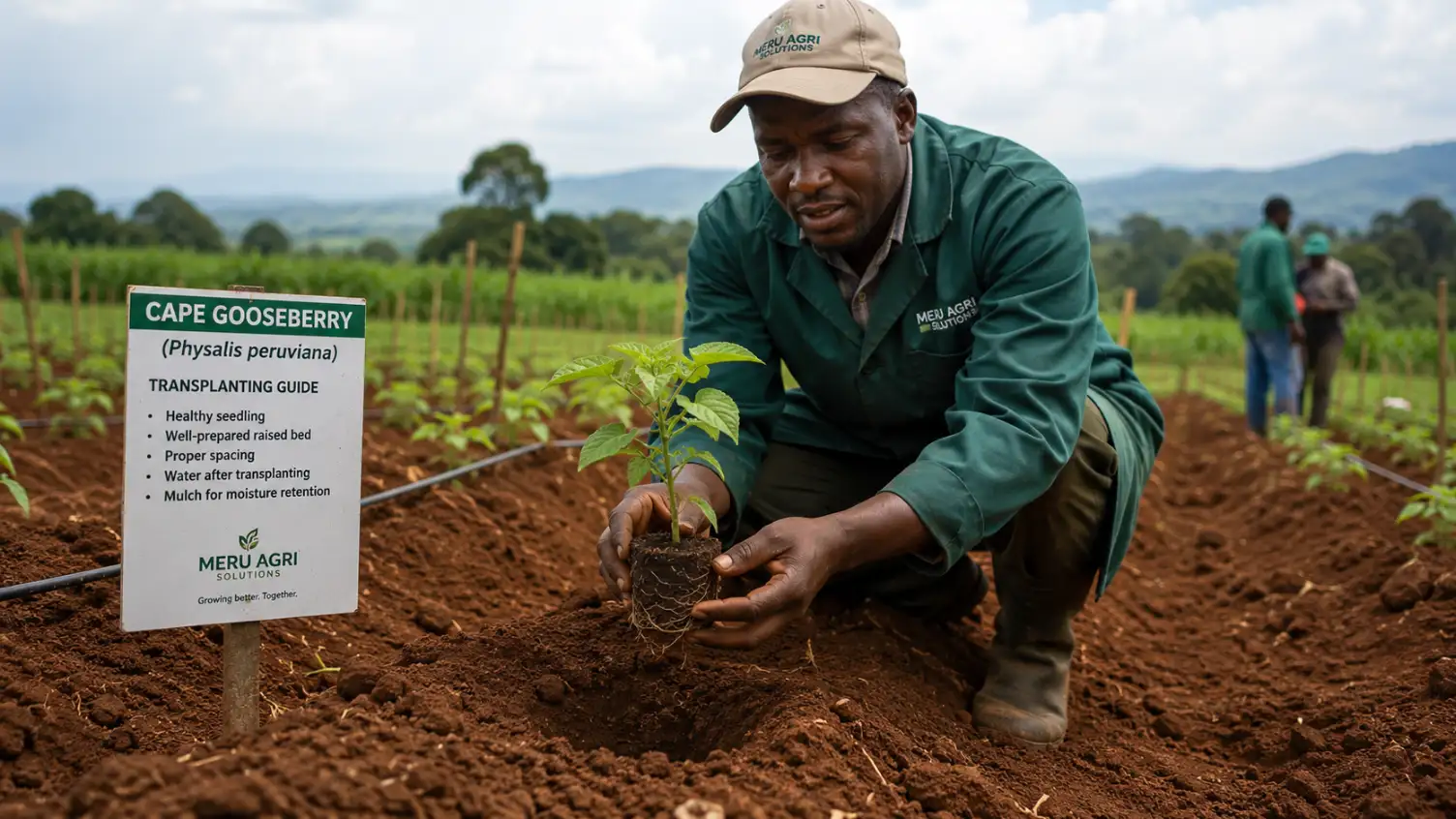
Planting Cape Gooseberries for Maximum Yield
Transplanting should ideally happen at the onset of the rains if you do not have irrigation. However, 2026 commercial standards dictate year round production through drip irrigation. Dig holes of 30cm by 30cm by 30cm. Mix the topsoil with a bucket of well rotted manure and about 50g of DAP fertilizer. Place the seedling at the same depth it was in the nursery tray and firm the soil around it to remove air pockets.
The recommended spacing for Cape gooseberries is 1 meter between plants and 1.5 meters between rows. This spacing allows for adequate sunlight penetration, easy harvesting, and effective pest management. This results in an optimal population of approximately 2,500 to 2,700 plants per acre. With this plant population, you balance the Cape gooseberry farming profit per acre against the cost of daily management and chemical applications.
High-density planting closer than 1m can lead to disease outbreaks like powdery mildew due to poor air circulation. Conversely, spacing them too far apart wastes land and increases the weeding burden. For the best commercial results, stick to the 1m by 1.5m grid.
Irrigation Requirements
Irrigation is the secret sauce for consistent Cape gooseberry farming in Kenya. The plant needs consistent moisture to produce flowers throughout the year. If the plant experiences water stress, it will drop its flowers to save itself, leading to zero harvest for that cycle. Drip irrigation is the most efficient method, delivering water directly to the root zone and keeping the foliage dry, which reduces the risk of fungal infections.
During the peak fruiting season, each plant may require 2 to 5 liters of water every two days, depending on the weather and soil type. Mulching with grass or plastic can help retain moisture and keep the fruit clean. If the fruit touches the soil, it is likely to rot or be attacked by soil dwelling insects. Proper irrigation not only increases yield but also ensures that the berries are juicy and have a high weight, which directly translates to more money at the scales.
Fertilizer Program
A balanced nutrition program is essential for high yields. Use DAP at planting for root growth, CAN for vegetative development 4 weeks later, and NPK during flowering. In 2026, potassium rich foliar feeds are critical during the fruiting stage to increase berry size and sugar content. Always do a soil test before applying large amounts of fertilizer to avoid nutrient imbalances that can lead to poor fruit quality.
The following table outlines a standard fertilizer schedule used by successful commercial farmers in the Rift Valley and Central regions.
| Stage | Fertilizer | Method of Application |
|---|---|---|
| Planting | DAP / TSP | Basal (in the hole) |
| Vegetative | CAN / Urea | Top dressing (month 1 and 2) |
| Flowering | NPK (17:17:17) | Soil application |
| Fruiting | Potassium Foliar | Leaf spray every 14 days |
Pest Management
Because the Physalis peruviana belongs to the tomato family, it shares many of the same enemies. Aphids, whiteflies, and cutworms are the primary pests. Aphids are particularly troublesome during the dry season, as they can transmit viral diseases that stunt the plant. Cutworms are a threat mainly to young seedlings in the first two weeks after transplanting. For these, use organic oils or specific pesticides, but always observe the pre-harvest interval to ensure safety.
Red Spider Mites can also be a problem in dusty conditions. They live on the underside of the leaves and suck the sap, causing the leaves to turn yellow and fall off. In 2026, Integrated Pest Management using biological controls and neem based sprays is the preferred method to meet the zero residue requirements for the export market. Avoiding broad spectrum chemicals helps keep beneficial insects like ladybirds alive, which naturally control the aphid population.
Always scout your farm at least twice a week. Early detection of pests like whiteflies can save you thousands of shillings in lost yields and expensive chemical treatments later in the season.
Diseases Affecting Cape Gooseberries
Common diseases include powdery mildew, fusarium wilt, and root rot. Powdery mildew appears as white flour like spots on the leaves, especially in humid conditions with poor air flow. This can be managed by proper pruning and the use of sulfur based fungicides. Fusarium wilt is more serious; it causes the plant to suddenly wilt and die. It is a soil borne disease, so the best control is crop rotation and using clean seedlings.
Bacterial wilt is another dangerous disease that can wipe out an entire field. It causes the plant to suddenly collapse while still green. There is no cure for bacterial wilt once a plant is infected. The infected plant must be uprooted and burned, and the hole treated with lime. To prevent this, never plant gooseberries on land where you recently grew tomatoes or potatoes, as they share the same bacterial wilt germs.
Harvesting Cape Gooseberries
Harvesting begins 12 to 16 weeks after planting when the papery husks turn straw colored and the berries inside are golden. A well managed acre in Kenya can yield between 4,000 kg and 6,000 kg per year, with picking occurring every 7 to 10 days during the peak production months. The fruit should be picked when the husk is dry. If you harvest during the rain, the moisture trapped inside the husk will cause the fruit to rot or develop mold very quickly.
One of the best things about this crop is that it does not all ripen at once. This provides the farmer with a steady weekly income for several months. Harvesting is done by hand. You must ensure the fruit is dry when picked. Post harvest handling is simple but crucial. Spread the harvested berries in a cool, shaded area to allow any residual moisture to evaporate. Do not remove the husks yet, as the husk is what protects the fruit and gives it a long shelf life of up to 4 weeks.
Cape Gooseberry Yield Per Acre in Kenya
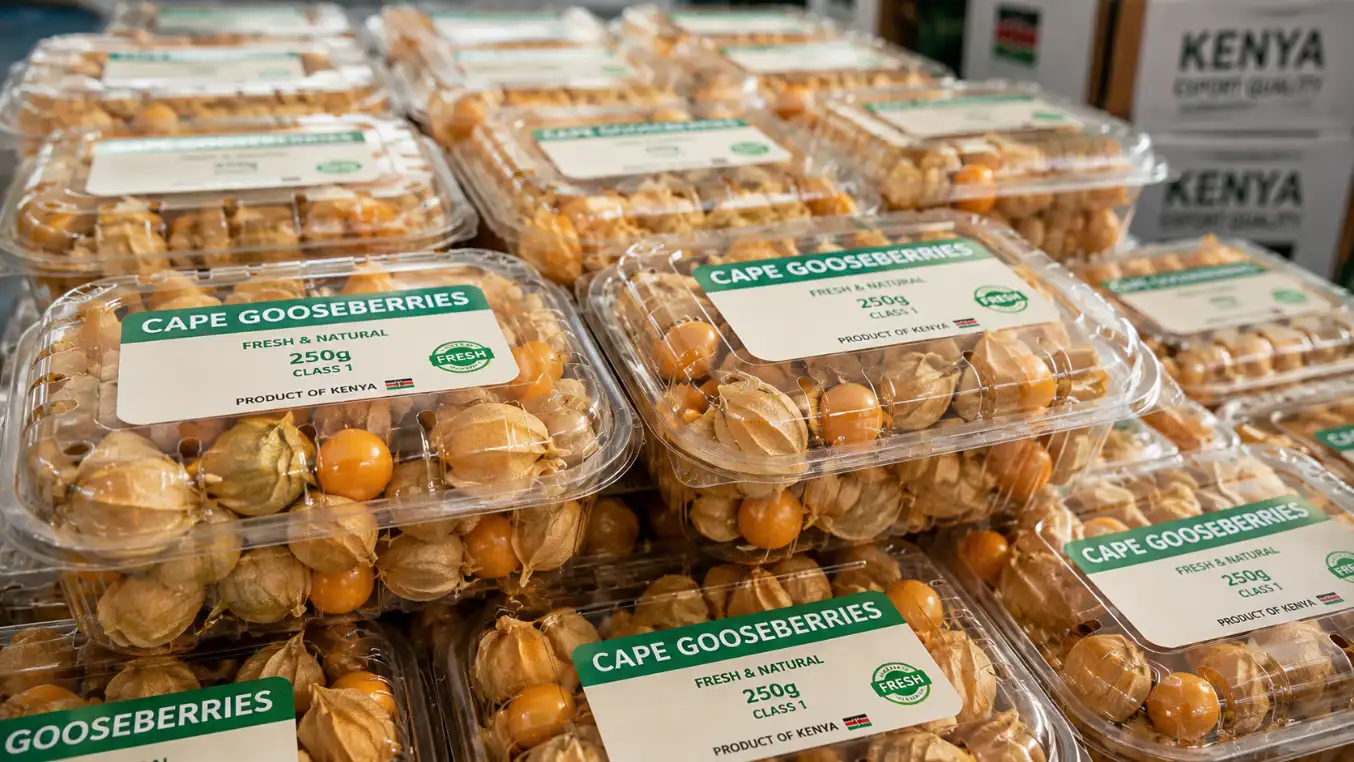
The Cape gooseberry yield per acre in Kenya is highly dependent on the level of management. A single plant can produce between 1kg and 2kg of fruit per year under good care. With a population of 2,500 plants, a realistic harvest is around 4 tons. However, expert farmers who use advanced irrigation and nutrition programs have reported yields as high as 6 tons per acre annually.
It is important to remember that yield decreases as the plant ages. The first year usually provides the highest quality and quantity of fruit. By the end of the second year, the berries tend to become smaller, and the plant becomes more susceptible to diseases. Most commercial farmers in Kenya uproot their plants after 18 to 24 months and start with fresh, clean seedlings to maintain high profitability and market standards.
The table below summarizes the yield expectations for a typical one acre farm in a high potential area like Meru or Kiambu.
| Metric | Value (Per Acre) |
|---|---|
| Plant Population | 2,500 – 2,700 Plants |
| Average Yield per Plant | 1.5 kg – 2.2 kg |
| Total Annual Yield | 4,000 kg – 6,000 kg |
| Harvest Frequency | Every 7 – 10 Days |
Cost of Cape Gooseberry Farming in Kenya (2026)
Setting up an acre of Cape gooseberries in 2026 requires an investment of approximately KES 180,000 to KES 250,000. This includes costs for seedlings, labor, organic manure, fertilizers, and a basic drip irrigation system. Operating costs in the second year are significantly lower because the plants are already established and the irrigation infrastructure is already in place. This makes the second year the most profitable for the farmer.
Read Also: Is Macadamia Farming Profitable? Everything You Need to Know in 2026
Labor remains the most variable cost. Harvesting is the most labor intensive part of the project because every single berry must be picked by hand. In areas like Kiambu where labor is expensive, you might spend more on casual workers than a farmer in a more remote region. However, being closer to the Nairobi market reduces your transport costs, so the two factors often balance each other out in the final budget.
| Item | Estimated Cost (KES) |
|---|---|
| Seedlings (2,500 units) | 50,000 |
| Land Preparation & Manure | 35,000 |
| Fertilizers and Chemicals | 40,000 |
| Drip Irrigation System | 65,000 |
| Labor (First 6 Months) | 50,000 |
| Total Startup Cost | 240,000 |
Cape Gooseberry Farming Profit Per Acre
This is the section most farmers care about. The Cape gooseberry farming profit per acre is currently among the highest for any fruit crop in Kenya. A farmer can achieve a gross income of over KES 1.2 million per acre by selling 4,000 kg of fruit at an average price of KES 300 per kg. After deducting the production costs of KES 240,000, the net profit in the first year typically exceeds KES 900,000. This is a massive return on investment compared to maize or even coffee.
In a best case scenario, selling directly to supermarkets in Nairobi at KES 500 per kg can push the gross income to KES 2 million. This is why Golden Berry farming is being treated as a green gold rush. The key to hitting these numbers is consistency in quality. If your berries are small, sour, or poorly packed, you will be forced to sell to middlemen at low prices. If you produce export quality fruit, the profit margins are truly life changing for a small scale farmer.
Cape Gooseberry Market Prices in Kenya (2026)
The Cape gooseberry market price is highest during the dry months from January to March when supply from rain fed farms drops. Farmers with irrigation can capitalize on this off season window to command prices as high as KES 400 at the farm gate. In the retail space, prices are much higher. A 250g punnet in a Nairobi supermarket can go for KES 250, which translates to KES 1,000 per kilogram. Even after the supermarket takes its cut, the farmer is left with a very healthy margin.
The following table shows the current price ranges across different selling points in the country as of early 2026.
| Market | Price per Kg (KES) |
|---|---|
| Farm Gate (Middlemen) | 200 – 350 |
| Wholesale Markets (Wakulima) | 400 – 550 |
| Premium Retail (Supermarkets) | 700 – 900 |
| Export (Direct Contract) | 600 – 800 |
Where to Sell Cape Gooseberries for Maximum Profit
For maximum profit, farmers should target direct contracts with supermarket chains like Carrefour, Quickmart, and Naivas. Exporting to the European Union and Middle East via agents at JKIA offers the highest long term stability. These markets prefer fruit with the husk still on, as it proves the fruit is fresh and has not been handled excessively. You can also sell directly to the growing number of health food shops in Nairobi suburbs like Karen, Westlands, and Gigiri.
Another high profit avenue is selling to juice and jam companies. Several Kenyan brands have started including golden berry in their premium juice blends. While these companies might pay slightly less than a supermarket, they buy in very large volumes, which reduces your marketing and packaging costs. Selling via social media platforms like Instagram and WhatsApp is also a powerful tool for modern farmers, allowing them to reach the urban middle class directly and get paid via M-Pesa before the goods even leave the farm.
Value Addition Opportunities
The real wealth in Cape gooseberry farming in Kenya lies in value addition. Fresh berries are great, but dried berries sell for triple the price. Dried golden berries, often called Inca Berries in international markets, are a popular snack for hikers and health conscious individuals. They have a shelf life of over a year, meaning you never have to worry about your crop rotting if the fresh market is slow. You can also process the fruit into high end jams, which are a favorite in the tourism and gift industry.
Other opportunities include making gooseberry wine, which is known for its unique tart flavor and golden color. The seeds can also be pressed for oil, which is used in the cosmetic industry for its high antioxidant content. By diversifying your products, you protect your farm from price fluctuations in the fresh fruit market. Even the husks can be composted to create high quality organic fertilizer for the next season, ensuring nothing from the plant goes to waste.
Cape Gooseberry Export from Kenya: Requirements, Standards & Market Opportunities
Cape Gooseberry exports present one of the most lucrative opportunities for Kenyan farmers looking to access premium international markets. Known globally as Golden Berry or Physalis peruviana, the fruit is highly sought after in Europe, the Middle East, and North America due to its unique sweet-tart flavor, long shelf life, and exceptional nutritional value.
Although Colombia remains the world’s leading exporter of Cape Gooseberries, countries such as Egypt, Turkey, Peru, and South Africa have also established strong export industries. Kenya is well-positioned to expand its market share thanks to its favorable climate, year-round production potential, and growing horticultural sector.
Why Export Cape Gooseberries?
Export markets generally offer higher prices than local wholesale markets, especially for premium-quality fruits that meet international standards. Buyers are willing to pay more for consistent quality, reliable supply, and proper post-harvest handling.
Exporting also enables farmers to:
- Access premium international markets.
- Earn foreign exchange.
- Diversify income sources.
- Reduce dependence on local market price fluctuations.
- Establish long-term supply contracts with international buyers.
Major Export Markets for Kenyan Cape Gooseberries
Kenyan exporters can target several high-demand markets, including:
- European Union countries such as the Netherlands, Germany, France, Belgium, and the United Kingdom.
- Middle Eastern markets including the United Arab Emirates, Qatar, Saudi Arabia, and Kuwait.
- North American markets such as the United States and Canada through approved import channels.
Many of these markets prefer fresh Cape Gooseberries with their natural papery husks intact because the husk protects the fruit, extends shelf life, and reduces mechanical damage during transportation.
Export Quality Requirements
International buyers have strict quality specifications. Export-grade Cape Gooseberries should have:
- Uniform fruit size and shape.
- Bright golden-orange color at maturity.
- Firm, undamaged skin.
- Sweet flavor with good sugar content.
- Clean, dry, intact protective husks.
- Freedom from pests, diseases, and pesticide residues.
- No bruises, cracks, or signs of decay.
Fruits should be harvested carefully using clean scissors or pruning shears rather than pulling them from the plant. This minimizes damage and preserves the protective husk.
Farm Compliance and Certification
Farmers intending to export should maintain high production standards throughout the growing season. Export buyers often require farms to demonstrate:
- Good Agricultural Practices (GAP).
- Proper field sanitation.
- Pest monitoring programs, including fruit fly traps where applicable.
- Regular scouting and disease management.
- Traceability records for production activities.
- Responsible pesticide use following recommended pre-harvest intervals.
Commercial exporters may also require internationally recognized certifications, depending on the destination market and buyer requirements.
Post-Harvest Handling
Proper post-harvest handling plays a critical role in maintaining fruit quality.
After harvesting:
- Remove damaged or diseased fruits.
- Grade fruits according to size and quality.
- Leave the protective husk intact.
- Store in a cool, dry, and well-ventilated environment.
- Pack fruits carefully using export-approved packaging materials.
- Transport under suitable temperature conditions to maintain freshness.
Careful handling reduces post-harvest losses and improves acceptance by export buyers.
Value Addition for Non-Export Grade Fruits
Not every fruit will meet export specifications. Rather than selling lower-grade produce at discounted prices, farmers can increase profitability through value addition.
Common value-added products include:
- Dried Cape Gooseberries.
- Fruit jams and preserves.
- Juice and smoothie blends.
- Fruit sauces.
- Dessert toppings.
- Health snacks.
- Fruit concentrates.
Processing lower-grade fruits helps reduce waste while creating additional revenue streams throughout the year.
Tips for Farmers Interested in Exporting
Farmers planning to enter the export market should:
- Start with certified, disease-free planting material.
- Maintain consistent fruit quality throughout the season.
- Keep accurate farm production records.
- Follow Good Agricultural Practices (GAP).
- Network with licensed horticultural exporters.
- Join farmer cooperatives or export groups to increase production volumes and improve bargaining power.
- Research buyer requirements before planting to ensure the chosen variety meets target market specifications.
With increasing global demand for nutritious “superfruits,” Cape Gooseberries offer Kenyan farmers an excellent opportunity to participate in the international fresh produce trade. By focusing on quality production, proper post-harvest handling, and compliance with export standards, farmers can position themselves to supply premium markets and achieve higher returns than those available in many local channels.
Trellising and Supporting Cape Gooseberry Plants
Cape Gooseberry plants naturally develop long, spreading branches that become heavy as fruits mature. Without proper support, these branches often bend to the ground, increasing the risk of fruit rot, pest infestations, and fungal diseases. Installing a simple trellising or staking system helps keep plants upright, improves air circulation, and makes harvesting easier.
For small-scale farms, individual wooden or bamboo stakes are sufficient. Commercial growers may prefer a wire trellis system with treated posts and galvanized wire running along each row. As plants grow, gently tie the main stems to the support using soft plant ties to avoid damaging the stems.
Proper plant support offers several benefits, including:
- Reduces fruit contact with the soil.
- Improves sunlight penetration.
- Enhances air circulation.
- Lowers disease incidence.
- Makes spraying and harvesting easier.
- Produces cleaner, higher-quality fruits suitable for premium markets.
Installing supports soon after transplanting is recommended to avoid disturbing the root system later in the season.
Pruning and Training Cape Gooseberry Plants
Regular pruning is essential for maintaining healthy, productive Cape Gooseberry plants. As the crop grows, it produces numerous side branches that can become overcrowded, restricting airflow and increasing humidity within the canopy. This creates favorable conditions for fungal diseases such as powdery mildew.
Pruning should focus on removing:
- Dead or damaged branches.
- Diseased shoots.
- Weak or overcrowded stems.
- Suckers growing close to the ground.
- Old branches that have stopped producing.
Training plants into an open canopy allows sunlight to reach developing fruits, improves spray coverage, and encourages the production of larger, healthier berries.
Pruning also offers several advantages:
- Improves fruit size and quality.
- Encourages continuous flowering.
- Reduces disease pressure.
- Simplifies harvesting.
- Extends the productive life of the plant.
Always use clean, disinfected pruning tools to minimize the spread of diseases between plants.
Storage and Shelf Life of Cape Gooseberries
One of the greatest advantages of Cape Gooseberries is their naturally long shelf life, thanks to the protective papery husk surrounding each fruit. Unlike many soft fruits, the husk acts as a natural barrier against moisture loss, pests, and physical damage during storage and transportation.
For the best storage results:
- Harvest only mature fruits with dry, straw-colored husks.
- Avoid washing fruits before storage.
- Remove damaged or diseased berries.
- Store in a cool, dry, and well-ventilated area.
- Keep fruits away from direct sunlight.
When stored with the husk intact under proper conditions, Cape Gooseberries can remain fresh for several weeks. Refrigerated storage further extends shelf life while preserving fruit quality for local and export markets.
Maintaining good storage practices reduces post-harvest losses and allows farmers to market their produce over a longer period rather than selling immediately after harvest.
Common Mistakes to Avoid in Cape Gooseberry Farming
Many farmers fail to achieve the crop’s full yield potential because of avoidable management mistakes. Understanding these challenges early can significantly improve productivity and profitability.
Common mistakes include:
- Planting uncertified or poor-quality seeds and seedlings.
- Growing the crop in poorly drained soils prone to waterlogging.
- Overwatering, leading to root rot and other fungal diseases.
- Ignoring recommended plant spacing, resulting in poor air circulation.
- Failing to stake or support heavily loaded plants.
- Delaying pest and disease control until infestations become severe.
- Harvesting fruits before they reach full maturity.
- Removing the protective husk before storage or transport.
- Depending entirely on middlemen without exploring premium markets.
- Planting without identifying reliable buyers in advance.
By following recommended agronomic practices and planning your marketing strategy before planting, farmers can reduce production risks, improve fruit quality, and maximize returns from Cape Gooseberry farming in Kenya.
Challenges Facing Cape Gooseberry Farmers
The main challenges include a lack of awareness among rural consumers, a fragile shelf life if the husks are removed, and the high cost of Global G.A.P. certification for small scale exporters. Additionally, price volatility in local wholesale markets can occur during the peak rainy seasons when wild harvested berries flood the market. Theft of the fruit can also be an issue because the berries are easy to pick and hide in a pocket, making farm security a priority as the crop reaches maturity.
Another challenge is the high labor requirement during harvesting. Unlike maize, which can be harvested all at once, gooseberries require you to walk through the field every week for months. If you do not have a reliable source of labor, much of your crop will fall to the ground and rot. Managing soil borne diseases like bacterial wilt also requires strict discipline in crop rotation, which can be difficult for farmers with very small pieces of land.
Is Cape Gooseberry Farming Profitable in Kenya?
Yes, Cape gooseberry farming is one of the most profitable emerging agribusinesses in 2026. With a low initial investment compared to greenhouses and a potential net profit of over KES 800,000 per acre in the first year, it offers a faster and higher return on investment than traditional cash crops like coffee or tea. The growing global trend for superfoods ensures that the demand for Kenyan golden berries will continue to rise for the foreseeable future.
The 2026 outlook for this crop is extremely positive. As more Kenyans become health conscious and the export infrastructure improves, the golden berry is set to become a major horticultural pillar for the country. If you have the right altitude and a reliable water source, there is no reason why you shouldn’t be making millions from this crop.
Quick Facts About Cape Gooseberry Farming in Kenya
Before investing in Cape Gooseberry farming, it is important to understand the crop’s production cycle, yield potential, and market outlook. While results vary depending on factors such as climate, irrigation, soil fertility, and farm management practices, Cape Gooseberries (Physalis peruviana) remain one of Kenya’s most promising high-value horticultural crops.
Under optimal management practices, farmers can achieve impressive yields and attractive returns. Some commercial farmers report harvesting several tonnes annually from a well-managed acre, particularly when using drip irrigation, quality seedlings, and proper pest and disease management. Likewise, premium retail prices can reach significantly higher levels than farm-gate prices, especially when selling to supermarkets, hotels, and export buyers.
It is worth noting that profitability is not guaranteed. Factors such as weather conditions, market access, labor availability, and production practices will ultimately determine the success of your venture. The figures below should therefore be viewed as realistic estimates and potential benchmarks rather than guaranteed outcomes.
| Metric | Value |
|---|---|
| Scientific Name | Physalis peruviana |
| Maturity Period | 90–120 Days |
| Yield Potential | Up to 6,000 kg per Acre |
| Startup Cost | KES 180,000–250,000 |
| Fruiting Period | Up to 24 Months |
| Best Growing Counties | Kiambu, Meru, Nyeri |
| Market Price | KES 200–900 per kg |
With increasing demand for healthy, nutrient-rich foods in Kenya and abroad, Cape Gooseberry farming continues to present an attractive opportunity for farmers seeking to diversify into high-value crops in 2026 and beyond.
Conclusion
Cape Gooseberry farming in Kenya is steadily emerging as one of the country’s most promising high-value agribusiness opportunities. With relatively low competition, growing consumer awareness, increasing demand from supermarkets and hotels, and expanding export markets, the Golden Berry offers farmers an attractive alternative to traditional crops.
Under proper management, the crop can begin producing within 90 to 120 days and continue bearing fruit for up to two years. While profitability will vary depending on factors such as location, irrigation, market access, and production practices, Cape Gooseberries have demonstrated significant income potential for both small-scale and commercial farmers.
The key to success lies in starting with quality seedlings, adopting good agronomic practices, maintaining consistent quality, and identifying reliable buyers before harvest. Farmers who invest in value addition through products such as dried berries, jams, and juices may unlock even greater returns while reducing post-harvest losses.
As Kenya continues to embrace climate-smart and high-value agriculture, Cape Gooseberry farming is well-positioned to become a major player in the horticultural sector. For farmers looking to diversify their income streams in 2026, this underutilized crop is certainly worth considering.
If you have access to suitable land, a reliable water source, and a clear marketing strategy, now may be the ideal time to explore the opportunities that Cape Gooseberry farming has to offer.
Frequently Asked Questions
Is Cape Gooseberry Farming Profitable in Kenya in 2026?
Yes, it is highly profitable with net returns often exceeding KES 800,000 per acre due to high demand in urban retail and export sectors.
How Much Can You Earn From One Acre of Cape Gooseberries in Kenya?
A well-managed acre can earn a gross income between KES 1 million and KES 1.8 million annually depending on the market channel used.
What Is the Current Market Price of Cape Gooseberries in Kenya?
In 2026, prices range from KES 250 (farm-gate) to KES 900 (premium retail) per kilogram depending on quality and location.
How Long Do Cape Gooseberries Take to Mature After Planting?
They typically take 3 to 4 months (90 to 120 days) to produce the first harvestable fruits after being transplanted from the nursery.
Where Can I Buy Cape Gooseberry Seeds and Seedlings in Kenya?
You can buy them from KALRO centers, Simlaw Seeds, or certified private nurseries in Tigoni, Naivasha, and Meru.
Which Counties in Kenya Are Best for Growing Cape Gooseberries?
Kiambu, Meru, Nyandarua, Nyeri, Nakuru, and Kericho are the top-performing counties due to their cool climate and high altitude.
How Many Cape Gooseberry Plants Can Fit on One Acre?
Using a standard spacing of 1m by 1.5m, approximately 2,500 to 2,700 plants can fit on one acre of land comfortably.
What Are the Major Pests and Diseases Affecting Cape Gooseberries?
Major threats include aphids, whiteflies, thrips, powdery mildew, and bacterial wilt, which require careful integrated management.
What Are the Health Benefits of Eating Cape Gooseberries?
They are rich in antioxidants, Vitamin A and C, and help boost immunity, eye health, and digestion due to high fiber.
Where Can Farmers Sell Cape Gooseberries for Maximum Profit in Kenya?
Maximum profit is achieved through direct supply to supermarkets like Carrefour, export agents, and high-end hotels in major cities.