
- Feed Conversion Ratio (FCR) is the primary driver of poultry profitability, with top 2026 commercial feeds achieving a 1.5 to 1.7 ratio for broilers.
- Protein requirements vary by stage, needing 22 percent for broiler starters and 18 percent for high-yielding layers to ensure maximum production.
- Homemade feed savings can reach 30 percent if farmers source local alternatives like Black Soldier Fly (BSF) larvae and yellow maize germ.
Table of Contents
Success in Kenyan poultry farming depends almost entirely on your feeding strategy. Feed accounts for up to 70 percent of total production costs in 2026. This guide provides the data-backed insights you need to optimize nutrition for fast growth and maximum egg output.
Poor feed quality destroys your profits silently. You might not see the birds dying. However, you will notice slow growth or fewer eggs. This hidden loss is what separates successful commercial farmers from those who fail within a year.
Understanding Chicken Nutritional Requirements in Kenya
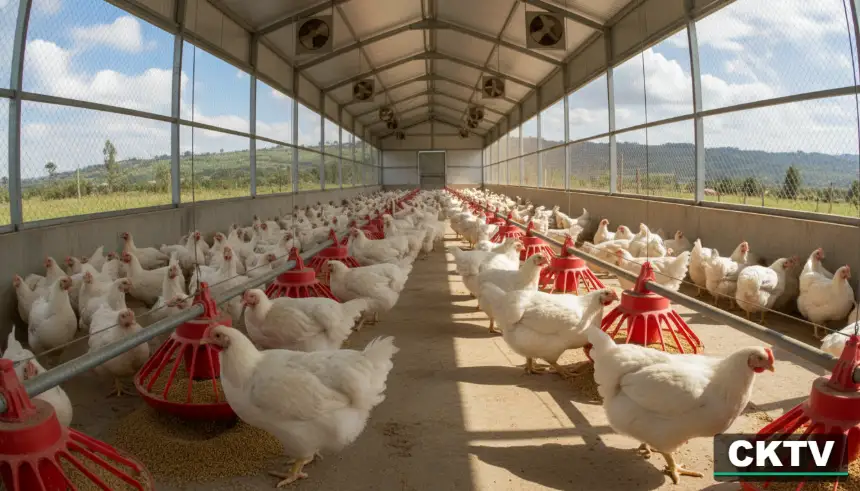
Chicken nutrition in Kenya requires a precise balance of energy, proteins, vitamins, and minerals. Energy comes from maize or wheat products, while proteins are sourced from fish meal or soya. In 2026, successful farmers prioritize high-quality protein and calcium to ensure rapid weight gain and strong eggshells during peak production cycles.
Chickens are not generic eaters. They have metabolic needs that change every week. A chick in its first seven days needs massive protein for organ development. An adult layer needs high calcium to prevent soft-shelled eggs.
If you ignore these phases, you lose money. Stunted growth in the early weeks cannot be recovered later. This is why following a strict feeding schedule is vital for every shamba owner in Kenya.
Energy Requirements for Local Climates
Energy is the fuel for your birds. In colder regions like Nyandarua or Limuru, birds eat more to stay warm. You must provide high-energy grains like yellow maize germ or wheat pollard.
If energy levels are too low, birds use protein for heat. This is an expensive waste of valuable resources. Proper energy balance ensures that protein is used only for muscle or egg production.
Protein for Rapid Muscle and Egg Growth
Protein builds the meat you sell and the eggs you harvest. Broilers need at least 20 to 22 percent crude protein in the first three weeks. Layers require about 17 to 18 percent protein to maintain high lay rates.
Lack of protein leads to slow feathering and cannibalism. In 2026, amino acids like Lysine and Methionine are crucial additions. These help the bird digest protein more efficiently for faster results.
The Critical Role of Calcium and Minerals
Calcium is non-negotiable for layers. Without it, the bird pulls calcium from its own bones. This leads to paralysis or cage layer fatigue which stops egg production.
In 2026, many farmers supplement with oyster shells or lime. These materials maintain shell integrity in hot markets like Mombasa or Kisumu. Stronger shells mean less breakage during transport to urban centers.
Best Feed for Broilers in Kenya for Fast Growth
The best broiler feed in Kenya for 2026 focuses on a two-phase or three-phase system using high-density pellets. Starter mash ensures early gut development, while finisher pellets maximize muscle mass. Targeting a slaughter weight of 1.8kg to 2.2kg within 35 to 42 days requires consistent, high-protein nutrition and clean water.
Broiler farming is a race against time. Every extra day the bird stays on the farm, it eats your profit. You want the bird ready for market in six weeks maximum.
High-quality commercial feeds like Unga Feeds or Sigma Feeds are formulated for speed. They use highly digestible soya to trigger rapid muscle expansion. This ensures your birds reach market weight before your competitors.
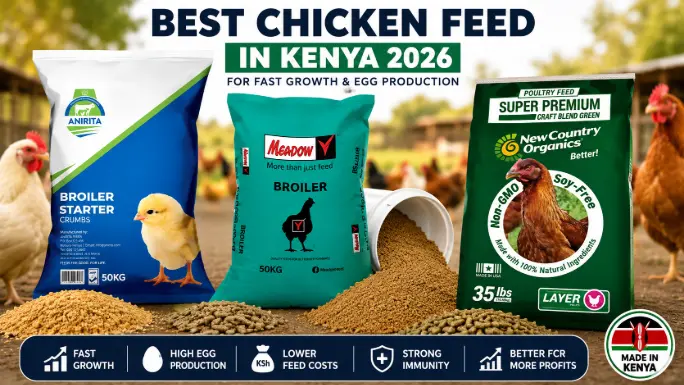
Broiler Starter Feed (0 to 3 Weeks)
The first 21 days are the most important for broilers. You must use broiler starter crumbs or fine mash. This feed contains coccidiostats to prevent early gut diseases.
Read Also: Azolla vs. BSF vs. Hydroponic Fodder: Which is the Cheapest Feed in Kenya? (2026 Edition
It should have 22 percent protein to support bone foundations. Small, frequent feedings during this stage reduce wastage. This encourages the appetite needed for explosive growth in later weeks.
Broiler Finisher Feed (4 to 6 Weeks)
After three weeks, the bird enters the finishing stage. The goal shifts from building bones to packing muscle. Finisher feed has slightly lower protein but much higher energy.
This energy turns into the breast meat that Nairobi hotels demand. Ensure the birds have 24-hour access to feed during this final push. Use high-quality pellets to prevent the birds from sorting through the feed.
The Impact of Pellets versus Mash
Pelleted feed is often better for broilers than traditional mash. Pellets prevent the birds from picking out only the tasty bits. Every bite contains the same balanced nutrition for uniform growth.
Pelleting also reduces dust in the poultry house. This lowers the risk of respiratory diseases that common in dusty environments. While pellets cost more, the faster weight gain usually covers the extra expense.
Best Feed for Layers in Kenya for Maximum Egg Production
Layer feeding in 2026 requires a transition from Chick Mash to Growers Mash, ending with high-calcium Layers Mash. For maximum production, farmers must maintain a strict lighting schedule and provide 110g to 120g of feed per bird daily. High-quality feed ensures a long laying cycle of up to 80 weeks.
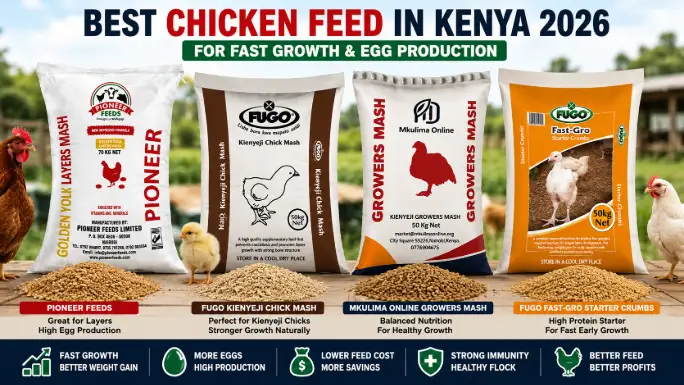
Layers are a long-term investment. Unlike broilers, you cannot rush their development. If you feed them too much protein early, they grow too fat.
Fat layers won’t lay eggs consistently. If you underfeed them, they won’t reach the required weight to start laying. Precision is the only way to win with commercial layers in Kenya.
Chick Mash (0 to 8 Weeks)
Start with Chick Mash to build the immune system. This feed contains vitamins essential for early life. Most farmers in Kenya buy 50kg bags for small-scale batches.
Ensure the mash is not too dusty to avoid respiratory issues. Young chicks need high protein to develop their reproductive organs. This stage sets the potential for how many eggs they will lay later.
Growers Mash (9 to 18 Weeks)
This is the teenage phase of the bird’s life. Growers mash has lower protein to prevent early maturity. You want a strong frame before the bird starts carrying the weight of eggs.
Avoid giving layers mash too early. The high calcium in layers mash can damage the kidneys of a young bird. Feed them enough to reach a target weight of 1.5kg by week 18.
Layers Mash (18 Weeks and Above)
Once you see the first egg, switch to Layers Mash. This feed is heavy in calcium and phosphorus. It supports the daily production of a hard eggshell.
In 2026, top-tier layers mash from Pembe Feeds guarantees high lay rates. Peak production should stay above 90 percent for several months. Constant access to clean, cool water is essential for egg size.
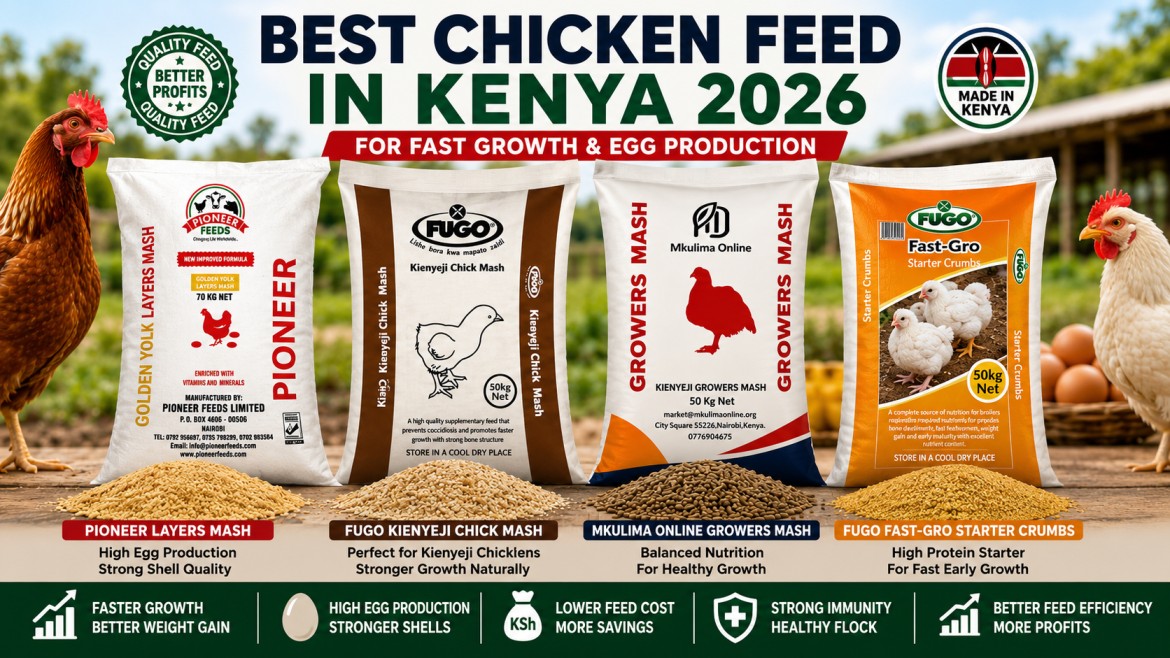
Commercial Chicken Feed Brands in Kenya 2026 Comparison
The 2026 poultry market is dominated by Unga Feeds, Sigma Feeds, and Pembe Feeds, each offering specialized formulas for different bird types. Unga leads in consistency and availability, Sigma is preferred for high-growth broilers, and Pembe offers competitive pricing for medium-scale kienyeji farmers across Kenya’s agricultural hubs.
Choosing a brand is a serious business decision. You must balance the price per bag against the actual weight gain. A cheaper bag that results in slow growth is a bad deal.
Most successful farmers stick to one brand. Changing brands suddenly can stress the bird’s digestive system. This causes a drop in production that takes weeks to recover.
The following table compares the leading brands available in Kenyan agro-vets today. Prices are estimated averages for the 2026 season across major towns.
| Brand Name | Primary Strength | Best For | Avg. Price (50kg) |
|---|---|---|---|
| Unga Feeds | High Consistency | Commercial Layers | KES 3,300 – 3,500 |
| Sigma Feeds | Fast Growth (FCR) | Export Broilers | KES 3,400 – 3,700 |
| Pembe Feeds | Value for Money | Improved Kienyeji | KES 3,100 – 3,300 |
| Isinya Feeds | Local Availability | Small-scale Shambas | KES 3,000 – 3,250 |
Why Consistency Matters in Feed Brands
Chickens are creatures of strict habit. If you change the color or smell of the feed, they might stop eating. This “feed strike” can drop egg production by 20 percent overnight.
Reliable brands like Unga maintain strict laboratory standards. This ensures every bag contains the exact same nutrient levels. Stability in feeding leads to stability in your farm’s income.
Authorized Commercial Feed Manufacturers Contact Directory
To buy in bulk directly from the source or verify the authenticity of your local distributor, contact the licensed millers using their official channels below:
- Unga Feeds (Unga Farmcare / Group PLC)
- Physical Headquarters: Ngano House, Commercial Street, Industrial Area, Nairobi
- Regional Plants: Nairobi Hub, Eldoret Plant (Rift Valley)
- Customer Care Contacts: +254 709 772 000 | +254 707 202 020
- Official Email: [email protected] | [email protected]
- Direct Website Link: Unga Group PLC
- Sigma Feeds Limited (incorporating Isinya Feeds)
- Physical Headquarters: Oloosirkon, Tuala Area, Ongata Rongai, Kajiado County
- Milling Distribution Hubs: Kisaju Plant (Kajiado), Thika Outlet, Nairobi Supply Lines
- Customer Care Contacts: +254 733 600 897 | +254 721 560 251
- Official Email: [email protected] | [email protected]
- Direct Website Link: Sigma Feeds Limited
- Pembe Feeds (Pembe Flour Mills Limited)
- Physical Headquarters: Pembe Premises, Lunga Lunga Road, Industrial Area, Nairobi
- Regional Distribution Hubs: Nairobi Industrial Sector, Thika Highway Hubs, Nakuru Regional Depots
- Customer Care Contacts: +254 722 722 134 | +254 20 204 6407
- Official Email: [email protected]
- Direct Company Info Link: Pembe Flour Mills Business Profile
Assessing Feed Quality at the Agro-vet
Check the manufacturing date on every bag you buy. Feed that is older than three months loses vitamin potency. Fresh feed always yields better growth results than old stock.
Look for bags that are well-sealed and stored on pallets. Damp floors in an agro-vet can ruin the feed before you buy it. Moisture leads to mold which produces dangerous toxins for your birds.
How to Make Homemade Chicken Feed in Kenya 2026
Making homemade chicken feed in Kenya involves mixing maize germ, wheat pollard, omena, and sunflower cake in specific ratios. To reduce costs by 40 percent, farmers are increasingly using Black Soldier Fly larvae as a protein substitute. Professional mixing and milling are required to ensure the nutrition is uniform.
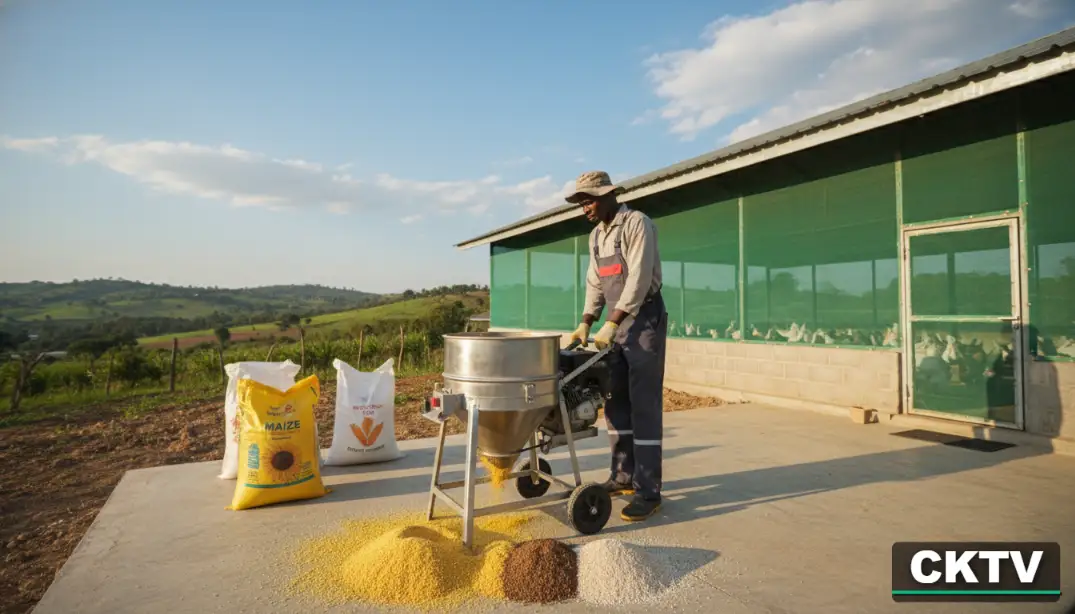
The high cost of commercial feed is driving many to mix their own. This is only profitable if you can source raw materials cheaply. Buying maize at market price and omena at retail saves nothing.
Read Also: How to Find a Trusted Agrovet Near Me in Kenya (2026 Guide to Genuine Farming Inputs
You need to buy in bulk during the harvest seasons. Store your ingredients properly to prevent weevils and mold. Homemade mixing requires a high level of discipline to get the ratios right.
Essential Ingredients for Homemade Mixes
Your base will always be energy from maize germ or wheat bran. For protein, omena (silver cyprinid) is the gold standard in Kenya. However, its price fluctuates wildly based on lake harvests.
Many farmers now use cotton seed cake or soya bean meal. You must also add a vitamin premix. This contains essential amino acids like Lysine which birds cannot produce themselves.
Detailed Homemade Ingredient Breakdown
Maize germ provides the necessary carbohydrates for energy and heat. Wheat pollard adds fiber which helps in digestion and gut health. Cottonseed cake is a cheaper protein alternative to fish meal.
Lime or crushed shells provide the calcium for bone and shell development. Salt is needed in very small amounts for metabolic function. Each ingredient must be ground to the correct size for the bird’s age.
The following formula is a standard guide for mixing 70kg of layers mash. This is optimized for birds in their peak laying cycle in Kenya.
| Ingredient | Quantity (kg) | Purpose |
|---|---|---|
| Whole Maize/Maize Germ | 34 kg | Energy Source |
| Soya Bean Meal | 12 kg | High Protein |
| Fish Meal (Omena) | 8 kg | Animal Protein |
| Lime/Oyster Shells | 10 kg | Calcium |
| Wheat Pollard | 4 kg | Fiber/Energy |
| Mineral Premix | 2 kg | Vitamins/Minerals |
The Importance of Proper Mixing
Hand mixing with a shovel is rarely effective for large batches. It leaves pockets of concentrated vitamins and areas with none. This leads to uneven growth across your flock.
Use a mechanical drum mixer if possible. If mixing by hand, do it in small batches and turn the pile five times. Proper distribution of the mineral premix is the most critical step.
Financial Breakdown: Feed Costs and Profit Potential
Feeding 100 broilers for six weeks in 2026 costs approximately KES 32,000 to KES 38,000 depending on the feed brand. For layers, the cost to reach maturity is higher, but the long-term ROI is stabilized by daily egg sales. Profitability depends on maintaining a low mortality rate and efficient feed conversion.
You must know your numbers before you buy a single chick. In 2026, input prices have stabilized, but margins remain thin. A single bag of broiler starter averages KES 3,600.
Calculate how many bags each bird will consume. This avoids the common mistake of running out of cash mid-cycle. Starving birds for even one day can set back their growth by a week.
The table below provides a realistic cost estimate for feeding different bird types in 2026. These figures include a small margin for wastage and local transport.
| Bird Type | Stage | Feed Quantity | Est. Cost (KES) |
|---|---|---|---|
| 100 Broilers | 0-6 Weeks | 9 – 10 Bags (50kg) | 34,000 – 38,000 |
| 100 Layers | 0-18 Weeks | 18 – 20 Bags (50kg) | 58,000 – 65,000 |
| 100 Kienyeji | 0-20 Weeks | 12 – 14 Bags (50kg) | 38,000 – 45,000 |

Understanding the Feed Conversion Ratio (FCR)
FCR is the most important math in poultry farming. It tells you how many kilos of feed make one kilo of meat. If your FCR is 2.0, you are likely losing money.
Top farmers in Kenya target an FCR of 1.6 for broilers. This means for every 1.6kg of feed, the bird gains 1kg. High-quality commercial feed is designed to hit these specific targets.
Calculating Profit per Bird
To find your profit, subtract the chick cost, feed cost, and medicine from the selling price. In 2026, a broiler sold at KES 650 should leave a profit of KES 150. This profit only exists if you manage your feed wastage strictly.
For layers, profit is calculated monthly. You compare the cost of one bag of feed to the number of egg trays produced. A good layer should produce at least 25 eggs per month to be profitable.
Regional Analysis: Feed Availability and Prices in Kenya
Feed prices in Kenya vary by region due to transport costs and proximity to milling hubs. Nairobi and Thika offer the most competitive prices for commercial feeds. Western Kenya and Rift Valley farmers benefit from cheaper raw materials like maize germ, while coastal regions face higher costs for quality fish meal and soya.
Where you farm determines your profit margin. In Uasin Gishu, you can buy maize germ directly from the mill. This saves significantly on the transport costs that Nairobi farmers must pay.
Read Also: Broiler Farming in Kenya 2026: Complete Guide to Broiler Feed, Costs & Profit
In Mombasa, you might pay more for transport from the central highlands. However, you have better access to the high-demand tourism market. You must adapt your feeding strategy to your local geography.
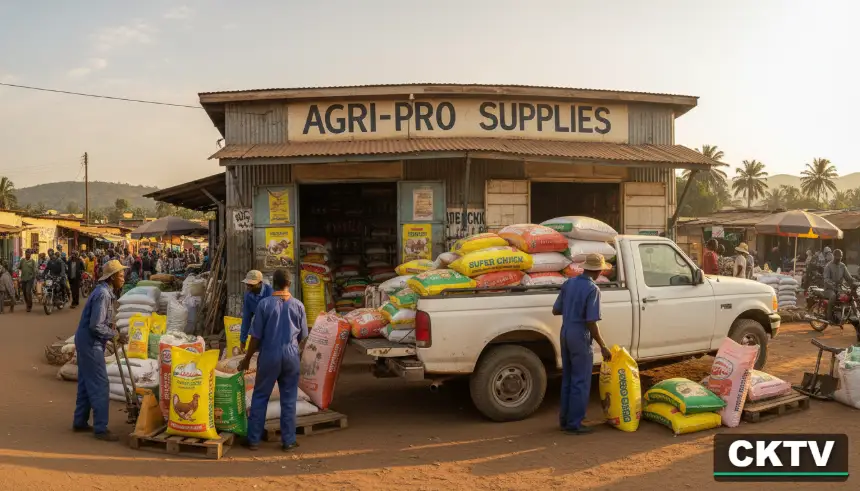
Central Kenya (Kiambu, Murang’a, Nyeri)
This is the poultry hub of Kenya. Competition between suppliers like Unga and Sigma is very high. Prices are usually the lowest in these counties.
Most farmers use commercial feeds because land is too small for grain. Access to expert veterinary services is a major advantage here. Delivery services to the farm gate are also common in this region.
Rift Valley (Nakuru, Eldoret, Kericho)
This is the land of homemade feed mixing. Large-scale grain production means maize germ is readily available. Many farmers here invest in their own small hammer mills.
They mix feed for themselves and their neighbors. This creates a local micro-economy of poultry inputs. Feed costs in the Rift Valley can be 15 percent lower than in other regions.
Western Kenya and Nyanza
Farmers here often focus on Improved Kienyeji birds. These birds are hardier and can handle local grain mixes better than broilers. Omena from Lake Victoria provides a cheap protein source.
However, commercial feed brands can be more expensive due to transport from Nairobi. Farmers are encouraged to use a mix of commercial starter and homemade finisher. This balances cost and growth speed effectively.
Common Feeding Mistakes Killing Poultry Profits
Farmers often lose profits through feed wastage, poor storage leading to aflatoxins, and using the wrong feed for the bird’s age. Wet feed causes fungal infections, while poor feeder design can lead to 10 percent of feed being kicked onto the floor. Proper management prevents these invisible financial leaks.
The “Broker Trap” lures beginners into buying cheap, unbranded feed. This feed often lacks the essential proteins promised on the label. Your birds will look healthy but won’t grow.
By the time you realize the feed is fake, you have wasted weeks. You have also wasted thousands of shillings in labor and water. Always buy from reputable, authorized agro-vets in your town.
The Danger of Aflatoxins and Mold
Never buy feed that smells musty or looks damp. Aflatoxins are silent killers in Kenyan poultry. They are produced by molds in poorly stored grains and finished mash.
Even small amounts cause liver damage and mass mortality. Always store your feed on wooden pallets. Never place bags directly on a concrete floor as it draws moisture.
Poor Feeder Design and Height
If the feeder is too low, birds will scratch the feed out. If it is too high, smaller birds cannot eat enough. The rim of the feeder should be at the level of the bird’s back.
Adjust the height every week as the birds grow taller. This simple step can save you two bags of feed per cycle. Every gram of feed on the floor is a gram of profit lost.
Sudden Changes in Feed Type
Switching from one brand to another must be done gradually. Mix the old and new feed together for three days. A sudden change can upset the bird’s stomach and cause diarrhea.
Diarrhea prevents the bird from absorbing nutrients. This leads to weight loss and weak immune systems. Consistency in your supply chain is as important as the feed quality itself.
Innovative Feed Alternatives for 2026
Black Soldier Fly (BSF) larvae and Azolla are the top alternative proteins for 2026. BSF can replace up to 50 percent of expensive fish meal, while Azolla provides a cheap, high-protein green supplement for kienyeji chickens. These innovations are essential for farmers looking to survive rising global soya prices.
Climate change and global supply shifts have made traditional soya very expensive. Kenyan farmers are now becoming “bio-producers” of their own protein. You can grow your own protein in a small space.
Read Also: Pond vs Container Azolla Farming: Which One Is Better for Profit in 2026?
This is not just a trend for the future. It is a survival strategy for the 2026 poultry economy. Using organic waste to produce feed reduces your environmental footprint and your costs.
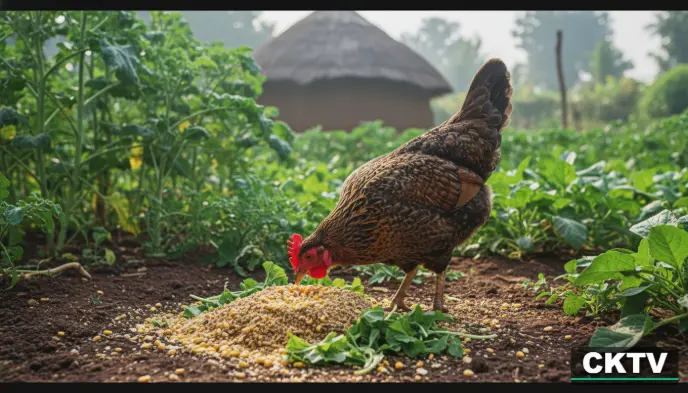
Black Soldier Fly (BSF) Farming
BSF larvae eat kitchen waste and turn it into high-quality protein. They are over 40 percent protein by weight. Chickens love them and the growth rates are excellent.
Many startups in Nairobi now sell BSF starter kits for small farms. It is a clean and odorless way to reduce your feed bill. It also helps manage waste on the farm effectively.
Azolla and Duckweed Supplements
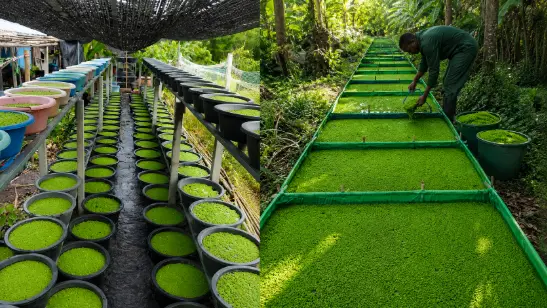
Azolla is a floating fern that grows quickly in small water ponds. It is rich in protein and essential minerals. For kienyeji birds, Azolla is an excellent daily supplement.
You can harvest it every single day from a backyard pond. While it cannot replace grain entirely, it reduces the volume of mash needed. This keeps your birds healthy and your wallet full.
AI Poultry Feed & Health Scanner: Detect Problems Instantly
In 2026, technology is helping farmers identify nutritional gaps before they become crises. Modern AI tools can scan your flock for signs of poor feeding. You no longer have to guess why birds are small.
By analyzing bird behavior and physical signs, you can adjust your formula. If you notice pale combs or weak legs, the AI can suggest a calcium or vitamin boost. This digital assistance is revolutionizing small-scale farming.
Detecting Nutritional Deficiencies Early
A simple scan of a bird’s feathers can reveal protein shortages. Frayed or dull feathers often mean the bird isn’t getting enough amino acids. Early detection allows you to fix the feed before growth stops.
Monitoring droppings is another way to check feed quality. Runny or discolored droppings suggest the feed might be contaminated. Use these insights to hold your feed supplier accountable for their quality.
Management Recommendations for Better Yield
The AI tool provides specific advice for your county’s climate. If the weather in Eldoret is unusually cold, the tool might suggest increasing energy intake. This level of precision was previously only available to giant corporations.
Take photos of your birds weekly to track their progress. Comparing these images helps you see if the growth curve is normal. Data-driven farming is the only way to stay competitive in the 2026 market.
Is it Worth It? The 2026 Poultry Outlook
Poultry farming remains a highly viable business in Kenya for 2026, provided farmers prioritize feed efficiency. With the rise of digital marketplaces and increased urban demand for white meat, those who master high-density feeding and cost control will see returns of 20 to 30 percent per cycle.
The hard truth about poultry in Kenya is that it is a volume business. You cannot make a living from 20 birds. To see real profit, you need at least 500 broilers or 300 layers.
At this scale, small savings in feed costs become significant. Saving just five shillings per kilo adds up to thousands over a month. Discipline in procurement is your greatest asset.
The 2026 “Market-First” Strategy
Do not buy a single bag of feed until you know your buyer. In 2026, successful farmers use TikTok and WhatsApp to secure orders early. They tailor their feeding to what the buyer specifically wants.
For example, if a hotel wants yellow-skinned chickens, you add greens. If they want large eggs, you focus on peak-phase layers mash. Understanding the market demand saves you from producing what you cannot sell.
Who Should Invest and Who Should Avoid
If you have a reliable water source and can afford three months of feed, invest. If you have the patience to monitor birds daily, you will succeed. Poultry requires constant attention and care.
Avoid this business if you are looking for a get-rich-quick scheme. If you cannot be on the farm to supervise feeding, your staff might waste resources. Success comes to those who manage the small details of the feeder.
Case Study: Success in Nakuru County
A farmer in Lanet started with 200 broilers in late 2025. By switching to high-density pellets, she achieved 2.1kg weights in just 37 days. Her feed cost was KES 355 per bird.
She sold each bird for KES 600 to a local supermarket. Her net profit was over KES 35,000 in just five weeks. This shows that the right feed choice makes the business highly profitable.
Farmers Also Ask
What is the best feed for chickens in Kenya?
Commercial brands like Unga, Sigma, and Pembe are the most reliable. The best choice depends on your specific bird type and local agro-vet availability.
Which chicken feed makes broilers grow faster?
Broiler Starter and Finisher pellets from brands like Sigma or Isinya maximize growth rates. They offer the best Feed Conversion Ratios (FCR) for fast results.
How to make chicken feed at home in Kenya?
Mix 34kg maize germ, 12kg soya, 8kg omena, and 10kg lime. Always use a professional hammer mill to ensure ingredients are distributed evenly across the mix.
How much feed do 100 broilers eat in 6 weeks?
Expect 100 broilers to consume between 9 and 10 bags of 50kg feed. This should bring them to a slaughter weight of approximately 2kg each.
What can I give my kienyeji chicken to grow faster?
Supplement their scavenging with high-protein Growers Mash. Adding Black Soldier Fly larvae or Azolla can also boost their growth naturally without high costs.
How long does a 20kg bag of chicken feed last?
A 20kg bag will feed 100 young chicks for about 4 to 5 days. As they grow older, their daily consumption increases significantly every week.
Which are the best poultry feeds in Kenya?
Unga Feeds, Sigma, and Pembe are the top-rated brands. They are recognized for their consistency, nutritional balance, and wide availability in the 2026 market.
How to make chickens grow faster and bigger naturally?
Ensure they have 24-hour access to clean water and high-protein supplements. Maintaining a stress-free environment with good ventilation is also key to natural growth.
Is homemade chicken feed cheaper than commercial feed?
Yes, it can be 20 to 30 percent cheaper. However, this only applies if you buy raw ingredients like maize and omena in bulk during the harvest.
What causes chickens not to gain weight fast?
Common causes include low protein in the feed, poor water quality, or intestinal worms. Heat stress and sub-standard feed from unreliable brokers also play a role.