

Sweet Potato Farming in Kenya 2026: Complete Guide From Planting to Profit
 stephen kilemi
May 14, 2026
stephen kilemi
May 14, 2026
- Commercial Viability: Sweet potato farming offers net profits of KES 120,000 to KES 250,000 per acre with a short 4-month maturity cycle.
- High-Demand Varieties: Orange-Fleshed Sweet Potatoes (OFSP) like Kabode and Vitaa are the top earners for 2026 due to industrial puree and flour demand.
- Climate Resilience: This crop is increasingly replacing maize in semi-arid regions due to its low water requirements and resistance to erratic weather.
Table of Contents
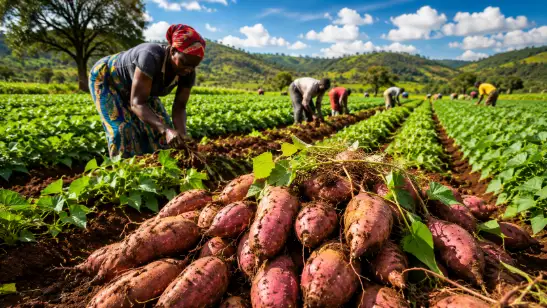
The agricultural landscape in Kenya is undergoing a massive shift. High fertilizer costs and erratic rainfall patterns are forcing commercial growers away from traditional staples like maize. Sweet potatoes have emerged as the premier climate-smart alternative, offering lucrative returns within a remarkably short four month growth cycle.
In 2026, profit in this sector is driven by surging urban health trends and industrial value addition. Savvy commercial farmers are capitalizing on a massive market gap as consumers replace processed breakfast foods with nutrient-dense tubers. This guide provides a data-backed roadmap to scaling a sweet potato enterprise, from navigating KEPHIS certification to maximizing your farm-gate margins.
The Current State of Sweet Potato Farming in Kenya
Sweet potato farming is now a multibillion-shilling industry in Kenya. It is centered in Western, Nyanza, and parts of Central and Eastern regions. Success in 2026 requires moving beyond subsistence methods. Farmers must focus on high-yield Orange-Fleshed Sweet Potatoes (OFSP) and direct-to-market supply chains to maximize returns.
Why Sweet Potato Farming Is Growing Fast
Food security is the biggest driver of the current sweet potato boom. The Kenyan government has prioritized drought-resistant crops through various county-level initiatives. This has led to a surge in technical support and vine distribution for rural farmers.
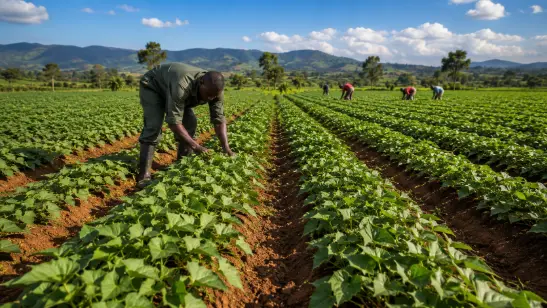
Rising fertilizer costs have also made maize farming less attractive for many. Sweet potatoes require minimal nitrogen and can often thrive with just organic manure. This lower cost of production makes the profit margins far more attractive for smallholders.
Read Also: Tomato Farming in Kenya 2026: Complete Guide From Nursery to Harvest
The maturation period is another critical factor for commercial interest. Most modern varieties are ready for harvest in just four months. This allows farmers to have two or even three successful harvest cycles within a single calendar year.
Why Some Farmers Still Fail
Failure in this sector usually starts with poor-quality planting materials. Many farmers buy uncertified vines from neighbors or local open-air markets. These vines are often infected with viruses that lead to stunted growth and very low yields.
Poor soil drainage is another common reason for crop failure. Sweet potatoes will quickly rot if they sit in waterlogged soil for more than a few days. Farmers who do not invest in proper ridge formation often lose their entire harvest during heavy rains.
Market timing is the final hurdle that many fail to clear. Planting at the same time as everyone else leads to a harvest glut. This allows brokers to drive down prices at the farm gate, often below the actual cost of production.
Is Sweet Potato Farming Profitable in Kenya?
Yes, sweet potato farming is highly profitable under proper management. Average gross returns for one acre range from KES 200,000 to KES 450,000. Net profit typically lands between KES 130,000 and KES 280,000. These figures depend on variety selection, irrigation use, and the specific month of harvest.
Average Yield Per Acre
An average farmer using traditional methods harvests between 15 and 30 bags per acre. This low yield is usually the result of recycling vines and neglecting soil nutrition. These levels are barely enough to sustain a commercial operation after labor costs.
Commercial farmers using certified vines and ridging techniques achieve 50 to 80 bags per acre. With supplemental irrigation and proper fertilization, some farmers in Meru have reported up to 100 bags. This level of output is what transforms farming into a high-earning business.
Yield is also influenced by the variety planted. Some yellow-fleshed varieties produce massive tubers but fewer of them. In contrast, the orange-fleshed types tend to produce more medium-sized tubers which are preferred by supermarkets.
Sweet Potato Market Prices in Kenya
Prices in Kenya fluctuate wildly based on the region and the season. During the peak harvest season, a 90kg bag might sell for KES 2,500 at the farm gate. However, in the dry months of January and February, that same bag can fetch over KES 5,500.
Urban markets in Nairobi and Mombasa offer the highest prices for quality tubers. Markets like Marikiti and Muthurwa are the primary hubs for wholesale distribution. Farmers who can transport their produce directly to these markets see much higher margins.
Contract farming is also becoming more popular in 2026. Processors who make flour or puree often offer a fixed price per kilogram. This provides price stability for the farmer, even when the open market is experiencing a glut.
Revenue and Profit Potential
A typical one-acre investment requires approximately KES 70,000 to KES 85,000. This covers land prep, certified vines, basic fertilizer, and labor for the season. This is significantly cheaper than the investment required for onions or tomatoes.
Read Also: Top 5 High-Yield 3-Month Crops in Kenya (2026 Profit Guide + ROI Breakdown)
If you harvest 60 bags and sell each at an average of KES 4,000, your revenue is KES 240,000. After subtracting the KES 80,000 production cost, your net profit is KES 160,000. This profit is realized in just four to five months of work.
Strategic farmers use irrigation to harvest in December or March. During these periods, supply is low and prices are at their annual peak. This strategy can easily double the net profit compared to rain-fed farming cycles.
Best Sweet Potato Varieties in Kenya
Selecting the correct variety dictates your market viability. For industrial processing and premium urban networks, Orange-Fleshed Sweet Potatoes (OFSP) dominate due to high beta-carotene content. For traditional wholesale hubs, high dry matter yellow and white varieties remain stable choices.
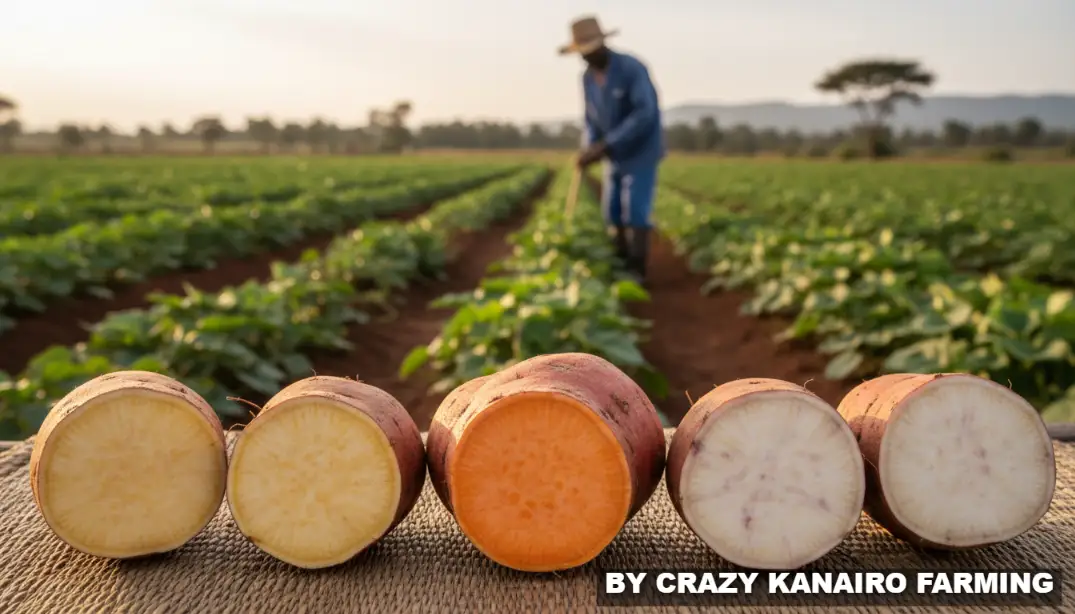
The table below outlines the performance metrics of the most popular certified varieties compiled from recent KALRO field trials.
| Variety | Flesh Color | Maturity (Months) | Yield (Tons/Acre) | Primary Market Target |
| Kabode | Deep Orange | 3.5 to 4.0 | 5.5 to 7.5 | Supermarkets & Puree Processors |
| Vitaa | Light Orange | 4.0 to 4.5 | 5.0 to 7.0 | Health Food Shops & Infant Feed |
| SPK 004 | Yellow | 4.5 to 5.0 | 4.5 to 6.0 | Local Open Markets |
| Kenspot 1 | White | 4.0 to 5.0 | 4.0 to 5.5 | Industrial Starch |
| Mwavuli | Yellow/Cream | 5.0 to 6.0 | 3.5 to 4.5 | Home Consumption |
Orange Fleshed Sweet Potatoes (OFSP)
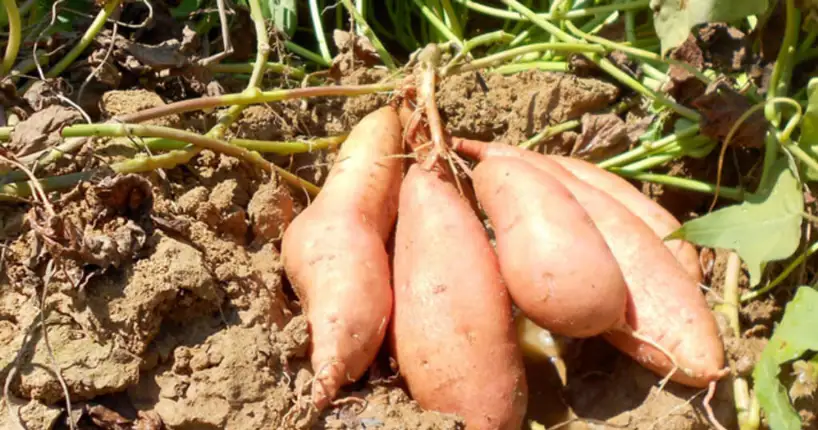
Kabode is the premier commercial variety in Kenya. It maintains a high dry matter content, keeping it firm when boiled, which solves the watery texture problem common in older orange varieties. Crucially, it displays solid field resistance to the Sweet Potato Virus Disease (SPVD), minimizing the risk of total crop loss.
Vitaa is highly favored for its exceptional beta-carotene density. While it has a slightly higher moisture profile than Kabode, its soft texture makes it the primary selection for industrial purees and baby food lines. Multiple schools and healthcare facilities actively issue contracts specifically for Vitaa due to its fortified nutritional advantages.
Both Kabode and Vitaa mature rapidly and deliver consistent yields. They form the core of modern commercial sweet potato cultivation in Kenya, receiving heavy backing from agricultural cooperatives and state subsidy initiatives.
Traditional White and Yellow Varieties
Yellow-fleshed varieties like SPK 004 (SPK 004, also known as ‘Kakamega’) have been the staple for decades. They are very hardy and can survive in harsher soils than the newer orange varieties. They are preferred by consumers who like a very floury, dry texture in their potatoes.
White varieties are often used for industrial purposes like starch extraction. They are less sweet and have a very high dry matter content. While the market for fresh white potatoes is shrinking, the industrial processing market is growing steadily.
Local landrace varieties like Mwavuli are still grown in many homesteads. They take longer to mature and have lower yields. However, they are highly adapted to local pests and often require zero inputs to produce a modest crop.
Ecological Requirements for Sweet Potato Farming
Sweet potatoes thrive in temperatures between 24 and 30 degrees Celsius and require at least 750mm of rainfall annually. They perform best in sandy loam soils with a pH of 5.5 to 6.5. Areas with altitudes between 0 and 2,100 meters above sea level are ideal for maximum tuber development.
Climate and Sunlight
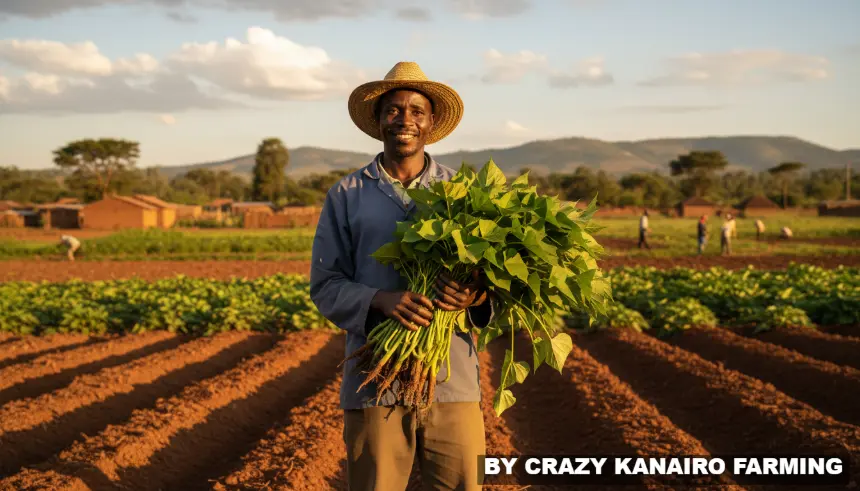
Sweet potatoes are tropical plants that love the sun and warmth. They require at least 6 to 8 hours of direct sunlight every day to produce starch. Shady areas will lead to long, thin vines but very few tubers.
The crop is sensitive to frost and extreme cold. In high-altitude areas like Nyandarua, the growth rate slows down significantly. In such areas, maturity can take up to 8 months compared to 4 months in the lake regions.
Humidity also plays a role in pest management. Very high humidity can encourage fungal diseases on the leaves. Conversely, very dry air during the maturity stage can cause the soil to crack, giving weevils easy access to the tubers.
Best Soil Characteristics
Sandy loam is the gold standard for sweet potato production. This soil type provides enough space for the tubers to expand without resistance. It also allows for excellent drainage, which is critical for preventing root rot.
Read Also: Top 10 Best Maize Seeds in Kenya 2026: Prices, Yields & Highest Profit Varieties
Heavy clay soils are the most difficult for sweet potato farming. Clay compacts tightly, which results in small, misshapen tubers that are hard to sell. If you must farm in clay, you must build much higher ridges and incorporate organic matter.
Soil fertility should be moderate rather than excessive. Too much nitrogen in the soil will promote leaf growth while suppressing tuber formation. A balanced soil profile with high potassium levels is the goal for any commercial grower.
Growing Sweet Potatoes in Sacks: A Step-by-Step Commercial Guide
Urbanization and shrinking land sizes in high-potential areas have made traditional ground farming difficult for many aspiring growers. Sack farming offers a high-yield, space-efficient alternative that can be managed in smaller backyards or even on paved compounds.
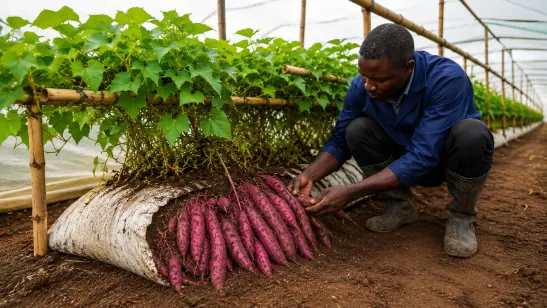
To succeed with this method, you must select compact, fast-maturing varieties like Kabode, Vitaa, or Kemb 10. These specific varieties perform exceptionally well in confined environments because they develop tight, dense clusters of tubers rather than sprawling extensively under the soil surface.
Step 1: Preparation and Planting First, acquire large, sturdy polypropylene sacks, such as those used for 90kg grains. To enhance the nutrient profile and encourage tuber expansion, prepare a potting mix of sandy loam soil, well-rotted animal manure, and a few handfuls of wood ash for potassium. Turn the sacks halfway inside out to create a manageable, sturdier structure and fill them with the mixture.
Ensuring they remain upright and stable. Plant two or three certified vine cuttings of your chosen variety deeply into the soil at a 45-degree angle, making sure at least two nodes are buried. Thoroughly water the bags immediately after planting to ensure the soil settles firmly around the stems.
Step 2: Bag Management and Upkeep Once the vines establish, maintain a strict watering schedule. Sacks dry out significantly faster than open ground, so they require consistent moisture, particularly in arid counties like Machakos or Kajiado. As the vines begin to trail over the side, periodically hill up the sacks by adding fresh soil mixture to cover the nodes that may have become exposed.
This creates more vertical space for the roots to expand into tubers. To maximize commercial profit, ensure the sacks are placed in areas with at least 8 hours of direct sunlight. While traditional methods rely on rain, successful sack farmers often set up simple, gravity-fed drip irrigation systems tailored directly to the bags.
Read Also: How to Grow Tomatoes in Sacks: A Complete Step-by-Step Guide for 2026
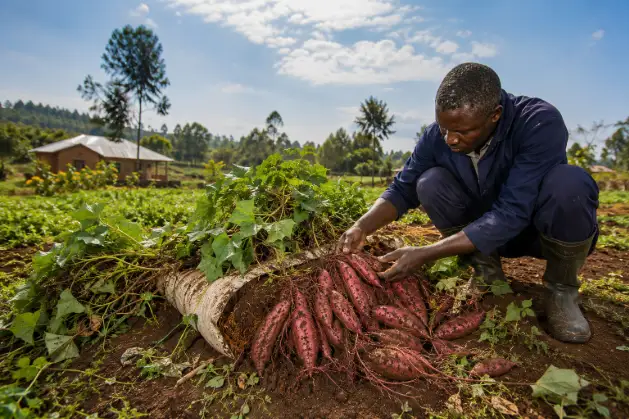
Step 3: Harvesting and Profit After approximately four months, when the lower leaves begin to yellow, the sweet potatoes are ready for harvest. This is the stage demonstrated in the image provided. The harvesting process is the most efficient part of sack farming; rather than tedious digging with a hoe, which often bruises tubers, you simply lay the sack on its side and cut or tip the contents out.
The tubers are easily separated from the loose potting mix. The yields from a 90kg sack can range from 8kg to 15kg under good management. After sorting Grade A tubers for supermarkets, any small or slightly damaged pieces can be utilized in value-addition, such as being milled into fortified orange flour for urban bakeries.
Ground Farming vs Sack Farming
Ground farming is the only viable option for commercial-scale sweet potato production in Kenya. It offers higher total yields and lower labor costs per bag produced. Sack farming is best suited for urban kitchen gardens where space is limited and the goal is family food security rather than profit.
Commercial Suitability
In ground farming, the vines spread out and create a natural mulch. This mulch helps to keep the soil cool and moist throughout the growing season. This natural environment is difficult to replicate in a synthetic sack environment.
Ground farming also allows for the use of animal-drawn or tractor-drawn equipment. You can harvest an entire acre in a day with the right tools. In sack farming, every bag must be emptied manually, which is incredibly slow for large volumes.
The cost per kilogram of potato produced is much lower in ground farming. You don’t have to buy sacks or move soil from one place to another. This efficiency is what allows ground farmers to survive during periods of low market prices.
Advantages of Sack Farming
Sack farming is excellent for people living in urban areas like Nairobi. You can grow sweet potatoes on a balcony or a small backyard. It provides a source of fresh, organic food without requiring a large piece of land.
It also allows for better control of the soil environment. If your local soil is poor, you can create a perfect mix of manure and sand inside the sack. This can lead to very high-quality tubers on a very small scale.
However, sacks dry out very quickly in the Kenyan sun. You will need to water them almost every day to get a good harvest. For a commercial farmer, this water requirement would be too expensive and difficult to manage.
Best Counties for Sweet Potato Farming in Kenya
Homa Bay and Migori counties remain the powerhouses of sweet potato production. These regions have the perfect combination of sandy loam soil and high temperatures. They provide the bulk of the supply for the Nairobi wholesale markets.
Bungoma and Busia are also major producers, particularly for the traditional yellow varieties. These counties benefit from the cross-border trade with Uganda. This trade often introduces new varieties and farming techniques to the local farmers.
Meru and Embu are the emerging stars of irrigated sweet potato farming. Farmers in these areas use water from the mountains to grow potatoes during the dry season. This allows them to dominate the market when prices are at their highest.
Land Preparation and Ridge Formation
Effective land preparation involves deep ploughing to a depth of 30cm and creating ridges 30cm to 45cm high. Ridges improve soil aeration and facilitate easy harvesting. Proper spacing of 90cm between ridges ensures the vines have enough room to spread and capture sunlight for photosynthesis.
Why Proper Land Preparation Matters
The goal of tilling the land is to create a loose, airy environment. If the soil is too hard, the sweet potato roots will struggle to expand into tubers. Deep ploughing breaks the hardpan and allows for better water penetration.
Ridges are superior to flat land planting for several reasons. They increase the surface area for the plants to grow. They also make it much easier to dig up the tubers during harvest without damaging them with a hoe.
In 2026, many commercial farmers are using small-scale tractors for ridging. Manual ridging is labor-intensive and often inconsistent in height. Mechanized ridging ensures that every plant has the same amount of loose soil for tuber growth.
Mechanized vs. Manual Ridging
Manual ridging requires significant physical labor and time. One person can usually ridge about an eighth of an acre in a day. This slow pace can be a bottleneck if you are trying to plant a large farm before the rains start.
Tractor-drawn ridgers can complete several acres in a few hours. While the initial cost is higher, the uniformity of the ridges leads to more consistent tuber sizes. Consistency is key when selling to supermarkets that have strict grading standards.
Read Also: How to Find a Trusted Agrovet Near Me in Kenya (2026 Guide to Genuine Farming Inputs)
Regardless of the method, the ridges should run across the slope of the land. This helps to prevent soil erosion during heavy downpours. Proper ridge orientation also helps in moisture retention during shorter dry spells.
Where to Buy Certified Sweet Potato Vines in Kenya
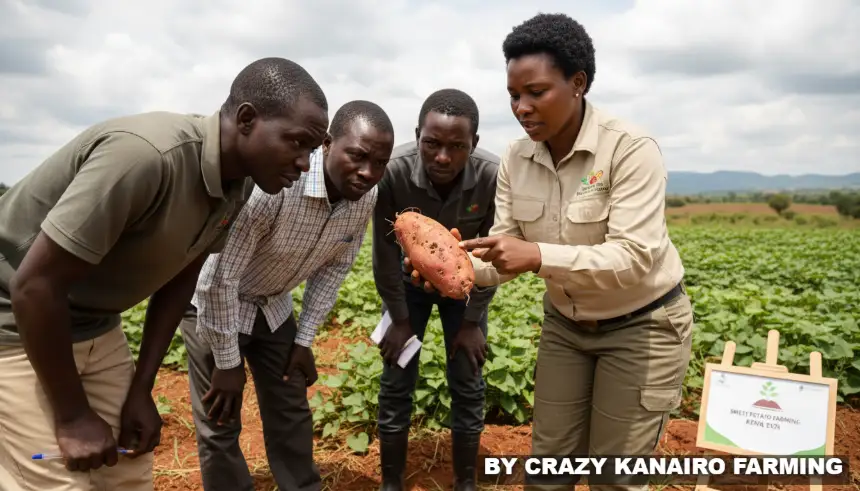
Sourcing clean, certified planting material is the single most critical investment for your farm. Recycling vines from neighbors risks introducing devastating viral complexes that can suppress your yields by up to 80 percent. In Kenya, the propagation and distribution of certified clean seed are regulated by the Kenya Plant Health Inspectorate Service (KEPHIS).
Recommended Certified Sources
- KALRO Katumani & Kakamega: The primary research centers for clean vine multiplication. They provide certified disease-free cuttings and localized technical advice.
- International Potato Center (CIP): Coordinates with decentralized vine multipliers across Western and Central Kenya to distribute clean OFSP material.
- KEPHIS-Registered Cooperatives: Regional groups, such as the South Nyanza Sweet Potato Cooperative, provide inspected vines that comply with strict national phytosanitary standards.
Commercial Population Density and Seed Rates
To optimize your land use, you must calculate your exact population density rather than guessing. Commercial spacing requires a standard configuration of 90cm between soil ridges and 30cm between plants within the row.
This layout establishes an optimal seed rate of 14,800 vine cuttings per acre. Maintaining this density ensures a full leaf canopy that acts as a natural mulch to suppress weeds while providing enough underground space for uniform tuber expansion. Healthy cuttings must measure 25cm to 30cm in length and feature at least 3 to 4 active growth nodes.
How to Identify Healthy Vines
Healthy vines should have thick stems and deep green leaves. Avoid any vines that show signs of yellowing, curling, or spotting on the foliage. These are often indicators of viral infections that will ruin your yield.
The length of the vine cutting should be between 25cm and 30cm. It should have at least 3 to 4 nodes. Nodes are the points where the leaves join the stem, and this is where the new roots and tubers will grow from.
Always ask for the age of the vines. Cuttings should ideally be taken from plants that are 2 to 3 months old. Vines from older plants are more likely to be woody and have lower vigor, leading to slower establishment in your field.
Step-by-Step Planting Process
Planting should coincide with the start of the rainy season for optimal establishment. Use 30cm cuttings and bury at least two nodes deep into the ridge at a 45-degree angle. Space the plants 30cm apart within the row to allow for adequate tuber expansion and vine spread.
Vine Selection and Preparation
Once you have your certified vines, keep them in a cool, shaded area. Do not let them sit in direct sunlight, as they will lose moisture and vigor. Ideally, you should plant the vines within 48 hours of cutting them from the mother plant.
Strip the leaves from the bottom half of the cutting. This reduces moisture loss through transpiration and makes it easier to push the stem into the soil. Be careful not to damage the nodes during this process.
If the soil is very dry, soak the bottom of the cuttings in water for an hour before planting. This gives the plant a quick boost and helps it to start forming roots immediately after it is placed in the ridge.
The Planting Technique
Push the cutting into the top of the ridge at a slanted 45-degree angle. This angle ensures that the nodes are distributed at different depths in the soil. It increases the chances of the plant finding moisture even if the top layer of soil dries out.
Ensure that at least two nodes are completely covered by the soil. These nodes will produce the roots that eventually thicken into sweet potatoes. The nodes left above the ground will produce the vines and leaves for photosynthesis.
Firm the soil around the cutting with your hands or feet. This removes air pockets and ensures good contact between the stem and the soil. Good soil contact is essential for the quick development of new roots.
Description: A close-up cinematic shot of a farmer’s hands planting a sweet potato vine cutting into a fresh ridge at an angle, showing the correct depth and soil firmness.
Fertilizer and Nutrient Management
Sweet potatoes are not heavy feeders but benefit significantly from Potassium-rich fertilizers. Apply well-rotted manure at 2 to 5 tons per acre during land preparation. If using inorganic fertilizers, NPK 17:17:17 is recommended at a rate of 50kg per acre during the first month of growth.
Why Sweet Potatoes Need Potassium
Potassium is the most important nutrient for any tuber crop. It helps in the translocation of sugars from the leaves down to the roots. Without enough potassium, you will have plenty of green vines but very small, thin tubers.
In many parts of Kenya, the soil is naturally deficient in potassium due to years of maize farming. Adding wood ash to your ridges is a cheap and effective way to boost potassium levels. Many successful farmers in Busia use this traditional method with great results.
Read Also: 2026 Fertilizer Guide: Understanding NPK Ratios for Maximum Maize Yields
If you are using commercial fertilizer, avoid those with very high nitrogen levels like Urea after the first month. Excess nitrogen will cause the plant to continue growing vines rather than focusing on tuber development. This is a common mistake that leads to disappointing harvests.
Organic Manure Integration
Well-rotted cow or chicken manure is excellent for improving soil structure. It helps sandy soils hold more water and makes clay soils more porous. Always ensure the manure is completely decomposed to avoid introducing pests.
Fresh manure can actually burn the young vine cuttings and introduce harmful bacteria. It can also lead to an explosion of the sweet potato weevil population. Apply manure at least two weeks before you plan to plant your vines.
Biochar is another amendment gaining popularity in 2026. It is a form of charcoal that helps the soil retain nutrients for several years. For sweet potato farmers, it provides a stable environment for beneficial soil microbes to thrive.
Common Sweet Potato Pests in Kenya
The Sweet Potato Weevil (Cylas formicarius) is the primary pest, responsible for up to 80 percent of crop losses if left unmanaged. Control it by hilling up ridges to cover soil cracks and practicing strict crop rotation. Rodents and aphids are secondary pests that can be managed through field sanitation and organic sprays.
The Sweet Potato Weevil
Weevils are most active during the dry season when the soil starts to crack. They crawl through the cracks and lay eggs directly on the tubers. The larvae then tunnel through the potato, making it bitter and completely unsellable.
Hilling up is your best defense against this pest. Every three weeks, use a hoe to pull fresh soil onto the ridges. This covers any cracks and creates a physical barrier that the weevils cannot penetrate. This simple labor-intensive task can save your entire profit.
Crop rotation is also essential. Never plant sweet potatoes in the same field two seasons in a row. The weevils can survive in the soil on leftover roots. Rotating with maize or beans breaks their lifecycle and keeps the population low.
Aphids and Whiteflies
These small insects are not dangerous because of the leaves they eat, but because of the viruses they carry. They are the primary vectors for the Sweet Potato Virus Disease. Controlling these insects is the only way to prevent the spread of the virus.
Neem-based sprays (Mwarubaini) are very effective and organic. They repel the insects without leaving harmful chemicals on the tubers. Spraying should be done early in the morning when the insects are most active on the undersides of the leaves.
Maintaining a weed-free field also helps. Many weeds act as alternative hosts for aphids and whiteflies. By keeping the area around your ridges clean, you reduce the places where these pests can hide and multiply.
Harvesting Sweet Potatoes
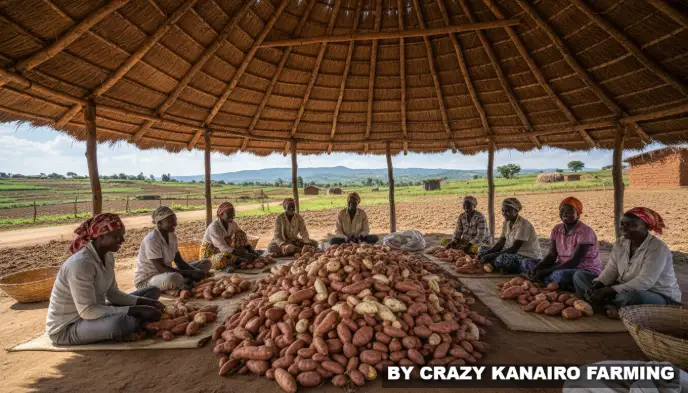
Harvesting usually begins 4 months after planting when the lower leaves start to turn yellow. Use a garden fork rather than a hoe to minimize tuber bruising and cuts. Avoid harvesting during heavy rain as wet tubers are more prone to rotting and have a much shorter shelf life.
Signs of Maturity
The most reliable sign of maturity is the yellowing of the older leaves near the base of the plant. You can also perform a “snap test.” Dig up one tuber and break it; if the sap dries quickly without turning dark, the potato is ready.
If you leave the potatoes in the ground for too long, they become targets for weevils and rodents. Over-mature tubers also tend to crack, which reduces their market value. Timing your harvest perfectly is a skill that comes with experience.
In 2026, many farmers are moving toward “piecemeal harvesting” for home use. However, for commercial purposes, a “bulk harvest” is necessary to fill a lorry and get the produce to market while it is still fresh.
How to Avoid Tuber Injury
Injured tubers rot within days and cannot be stored. When using a fork, dig about 30cm away from the center of the ridge to avoid hitting the potatoes directly. Gently lift the soil and let the tubers fall out naturally.
Handle the harvested potatoes like eggs. Don’t throw them into heaps or into the back of a truck. Every bruise is an entry point for fungus. Use padded crates or soft bags for transport to minimize skin damage during transit.
Harvesting is best done in the morning when the tubers are cool. Avoid leaving harvested potatoes in the direct midday sun. The heat can cause “sunscald,” which leads to soft spots and rapid decay after the potato is bagged.
Post-Harvest Handling and Storage
Curing is the process of toughening the skin and increasing the sugar content of the tuber. Store sweet potatoes in a cool, dark, and well-ventilated room. Properly cured and stored tubers can last for 3 to 5 months, allowing you to sell when the market price is most favorable.
The Curing Process
Curing should be done immediately after harvest. Spread the potatoes on a clean floor in a room with high humidity and a temperature of about 25 degrees Celsius. Let them sit for 7 to 10 days without moving them.
During this time, the skin thickens and any small scratches heal over. The starch inside also starts to convert into sugars, which improves the flavor. A cured potato is much sweeter and has a better texture than one fresh from the ground.
In rural Kenya, some farmers use “pit storage” lined with dry grass for curing. While this is cheap, it carries a risk of rodent attack. A dedicated store with a concrete floor and wire mesh on the windows is the professional 2026 standard.
Sorting and Grading
Before bagging, sort your potatoes into three grades. Grade A consists of medium-sized, clean, and unblemished tubers for supermarkets. Grade B includes the larger or slightly odd-shaped tubers for local open-air markets.
Grade C includes the very small, broken, or slightly weevil-damaged tubers. Do not try to sell these to brokers as they will use them as an excuse to lower the price of your entire load. These are best used for animal feed or home consumption.
Proper grading allows you to target different markets and maximize your revenue. It also builds trust with buyers. If a broker knows your bags are consistently “Grade A,” they will be willing to pay a premium for your produce.
Sweet Potato Market Prices and Selling Strategies
Selling directly to processors or supermarkets offers 30 percent higher margins than selling to farm-gate brokers. In 2026, joining a farmer cooperative is the most effective way to negotiate better prices and handle logistics. Target the “off-season” harvest months of January, February, and August for the highest returns.
Dealing with Brokers
Brokers are a necessary evil in the current Kenyan system because they handle the transport and risk. However, they are known for “extending” bags beyond the legal 90kg limit. Always insist on selling by weight (per kilogram) rather than per bag.
If you must sell to brokers, try to organize a group of farmers in your area. Selling 100 bags as a group gives you much more bargaining power than selling 5 bags individually. You can also share the cost of a lorry and bypass the broker entirely.
Always keep an eye on the Nairobi market prices via mobile apps or radio broadcasts. Knowing the current price in Marikiti helps you realize when a broker is giving you a fair deal versus when they are exploiting your lack of information.
Selling to Supermarkets and Hotels
Supermarkets like Carrefour and Naivas have a high demand for OFSP varieties. They require a consistent supply and high-quality standards. You will often need to have a registered business and a KRA PIN to supply these outlets.
Hotels and schools are another excellent market. Many schools are switching from bread to sweet potatoes to save costs and improve student health. Approaching the procurement officers of local institutions can result in a steady, year-round contract.
Digital platforms are also changing the game in 2026. Apps like M-Farm and Twiga Foods allow farmers to list their produce and find buyers directly. This transparency is slowly reducing the power of traditional middlemen in the sweet potato trade.
Sweet Potato Value Addition Opportunities
Processing sweet potatoes into flour or puree can triple your profit per kilogram. OFSP flour is a popular gluten-free alternative used in the baking of bread, cakes, and biscuits. The vines can also be processed into high-quality silage for dairy cows, creating a secondary income stream from the same crop.
Sweet Potato Flour Production
Making flour is a simple way to deal with a market glut. The potatoes are washed, sliced thinly, sun-dried, and then milled into flour. This flour has a long shelf life and can be sold at a much higher price than raw tubers.
OFSP flour is especially valuable because of its color and vitamin content. It is often mixed with wheat flour at a ratio of 30:70 to make “fortified” bread. This is a growing niche in urban bakeries in Nairobi and Kisumu.
Read Also: Sukuma Wiki Farming in Kenya 2026: Types, Price per kg, Yields and Profits per Acre
Small-scale solar driers are now affordable for most farmer groups. They produce much cleaner and more consistent dried chips than open-air sun drying. Cleanliness is critical if you want to sell your flour to established food brands.
Silage and Animal Feed
The vines and leaves of the sweet potato are rich in protein. Instead of letting them rot in the field, they can be used to feed livestock. In 2026, many dairy farmers in the Rift Valley are specifically buying sweet potato vines to boost milk production.
For long-term use, the vines can be chopped and fermented into silage. Sweet potato silage is highly palatable for cows and pigs. This reduces the farmer’s dependence on expensive commercial feeds and improves the overall farm profit.
Even the waste from flour production (the peels and small pieces) can be dried and used in chicken feed. A zero-waste approach is the hallmark of a truly successful modern sweet potato enterprise.
Why Sweet Potato Farming Fails in Kenya
Most failures are caused by a combination of poor-quality vines, lack of market planning, and delayed harvesting. Farmers who treat sweet potatoes as a “side hustle” without regular monitoring for weevils often face 100 percent loss. Success requires a professional approach to soil health and pest management.
One of the “Hard Truths” of this business is that it is labor-intensive. If you are not on the farm or don’t have a reliable manager, the weeding and hilling up will not be done correctly. This negligence is the leading cause of low-quality, weevil-infested harvests.
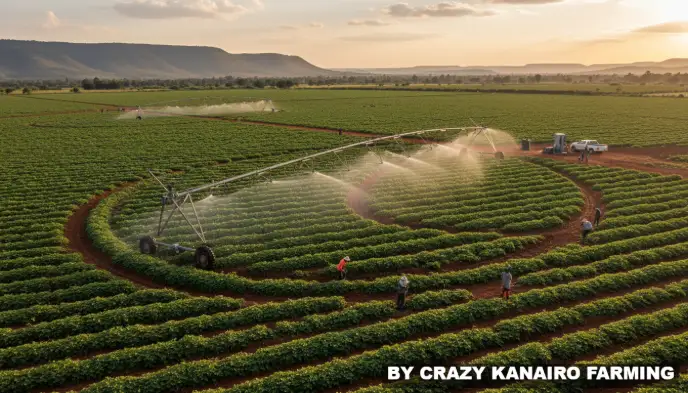
Dependence on rain is another major risk. While sweet potatoes are drought-tolerant, they cannot produce a good crop without any water. Farmers who do not have a plan for supplemental irrigation during a dry spell are essentially gambling with their investment.
Finally, many farmers fail because they don’t understand their costs. They sell at whatever price the broker offers without knowing their “break-even” point. Keeping a simple record of every shilling spent on the farm is the only way to ensure you are actually making money.
Conclusion: Is This Investment Right for You?
Sweet potato farming is ideal for individuals who want a high return on investment in a short time. It is perfect for those with limited water but access to fertile, well-drained land. However, it is not a “get rich quick” scheme and requires consistent effort and management. Only invest if you are willing to learn the science of soil and the art of marketing.
The “Hard Truth” is that farming is difficult and full of unexpected challenges. You will face pests, weather changes, and difficult buyers along the way. However, the demand for healthy food in Kenya is only going to grow. Sweet potatoes are a key part of the solution for food security in 2026. Those who master the production cycle will find it very rewarding.
Start small if you are a beginner to learn the ropes of the business. One acre is a manageable size for a first time commercial project. Use the profits from your first harvest to expand your acreage and invest in tools. Focus on the Orange Fleshed varieties for the best long term growth potential. With the right mindset, you can build a very profitable enterprise in the sweet potato industry.
In summary, sweet potato farming offers a unique opportunity for Kenyan entrepreneurs. It combines low entry costs with high market demand and relatively fast returns. By following the steps in this guide, you can minimize your risks and maximize your profits. The future of Kenyan agriculture is in nutritious, resilient, and profitable crops like the sweet potato.
Frequently Asked Questions
How profitable is sweet potato farming in Kenya?
It is very profitable, with net gains of KES 120k to 250k per acre within 4 months. Success depends on using certified vines and timing the market peaks.
How many bags of sweet potatoes can one acre produce in Kenya?
An acre yields between 40 and 80 bags of 90kg each. High yields require ridging, manure, and certified disease-free planting materials.
What is the cost of sweet potato farming per acre in Kenya?
The total cost is KES 65,000 to KES 85,000. This covers land preparation, vines, organic manure, and labor for harvesting and bagging.
Which sweet potato variety has the highest yield in Kenya?
The Kabode variety is currently the highest yielding in Kenya. It is an orange-fleshed type that is also resistant to common viruses.
How many months do sweet potatoes take to mature?
Most modern varieties take 3.5 to 5 months. Traditional yellow varieties take slightly longer, often up to 6 months in cooler regions.
Which counties are best for sweet potato farming in Kenya?
Homa Bay, Migori, Busia, and Bungoma are the best. Meru and Embu are also excellent for farmers using irrigation.
How do farmers increase sweet potato yield per acre?
Yield is increased by using clean vines, building high ridges, applying potassium-rich fertilizers, and consistent weeding.
Where can farmers buy certified sweet potato vines in Kenya?
Buy from KALRO Katumani, the International Potato Center (CIP), or registered multipliers in Migori and Homa Bay counties.
Is sack farming or ground farming better for sweet potatoes?
Ground farming is better for commercial profit. Sack farming is only suitable for small urban spaces and home consumption.
What are the most common sweet potato diseases and pests in Kenya?
The Sweet Potato Weevil and the Sweet Potato Virus Disease (SPVD) are the most common and destructive threats.


Related posts

Featured Product

Hot
-24%Hot
Hot
Hot
Hot

Hot
-14%Hot

-50%Hot

-50%Hot