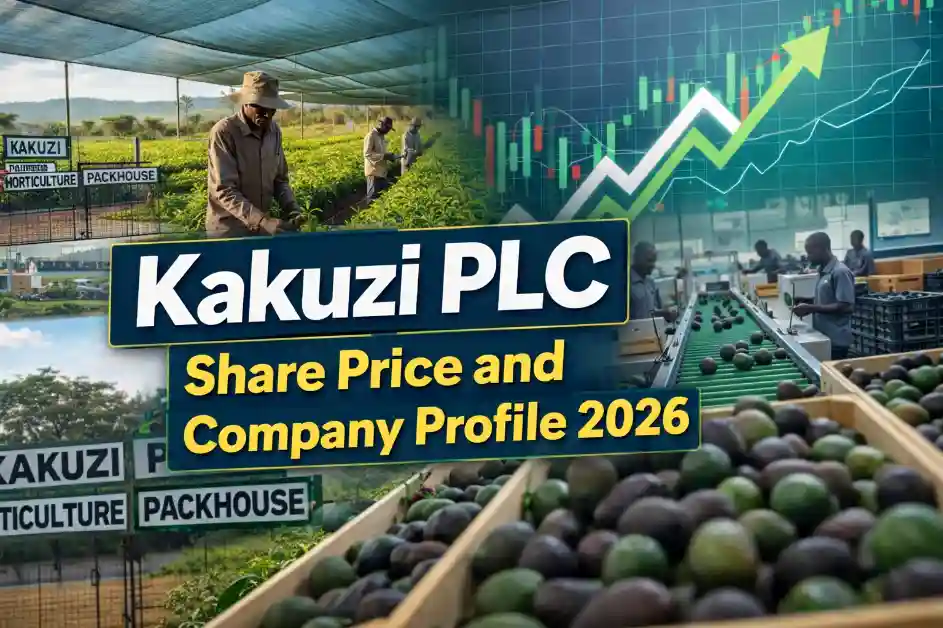

- 2026 Profit Turnaround: Kakuzi PLC reported a robust KES 387.6 million net profit for the FY2025 to 2026 period, bouncing back strongly from previous losses.
- Share Price & Dividends: The stock trades around KES 427.75 on the NSE, with the board doubling the dividend payout to KES 16.00 per share in 2026.
- Avocado Export Dominance: Avocado operations remain the core revenue driver, generating KES 709 million in segment profits from 525 exported containers.
Table of Contents
1. Introduction
Kakuzi PLC is a leading Kenyan agricultural firm listed on the Nairobi Securities Exchange. The company cultivates, processes, and exports superfoods like avocados, macadamia nuts, and blueberries. It offers significant opportunities for stock market investors through dividends and for local farmers through outgrower contract programs.
Kakuzi PLC has cemented its position as a powerhouse on the Nairobi Securities Exchange and a vital pillar of Kenya’s agricultural export economy. As global demand for superfoods continues to surge, understanding the Kakuzi PLC Share Price and Company Profile 2026 is essential. This comprehensive guide breaks down the financial health, share performance, and farming prospects based on the latest 2026 market data.
In simple terms, Kakuzi PLC is a massive, vertically integrated farming business that grows high-value crops and exports them globally. The company controls every step of its supply chain, from KEPHIS-certified seedling propagation to final shipment out of the Port of Mombasa. This strict level of control allows Kakuzi to maintain the exact quality standards that top-tier international buyers demand.
The company matters heavily to Kenya’s stock market because it is one of the few consistently profitable agricultural firms on the NSE. For retail and institutional investors, Kakuzi represents a tangible asset backed by high-demand export commodities. From what many farmers experience in Muranga and Kiambu, Kakuzi also offers unmatched stability as a reliable buyer of export fruit.
This guide will cover everything you need to know about Kakuzi operations in 2026. We will analyze current share price trends, evaluate the core avocado business, and explore direct opportunities for outgrowers. Whether you want to buy shares or supply export-grade avocados, this breakdown provides actionable, grounded insights.
2. Quick Summary
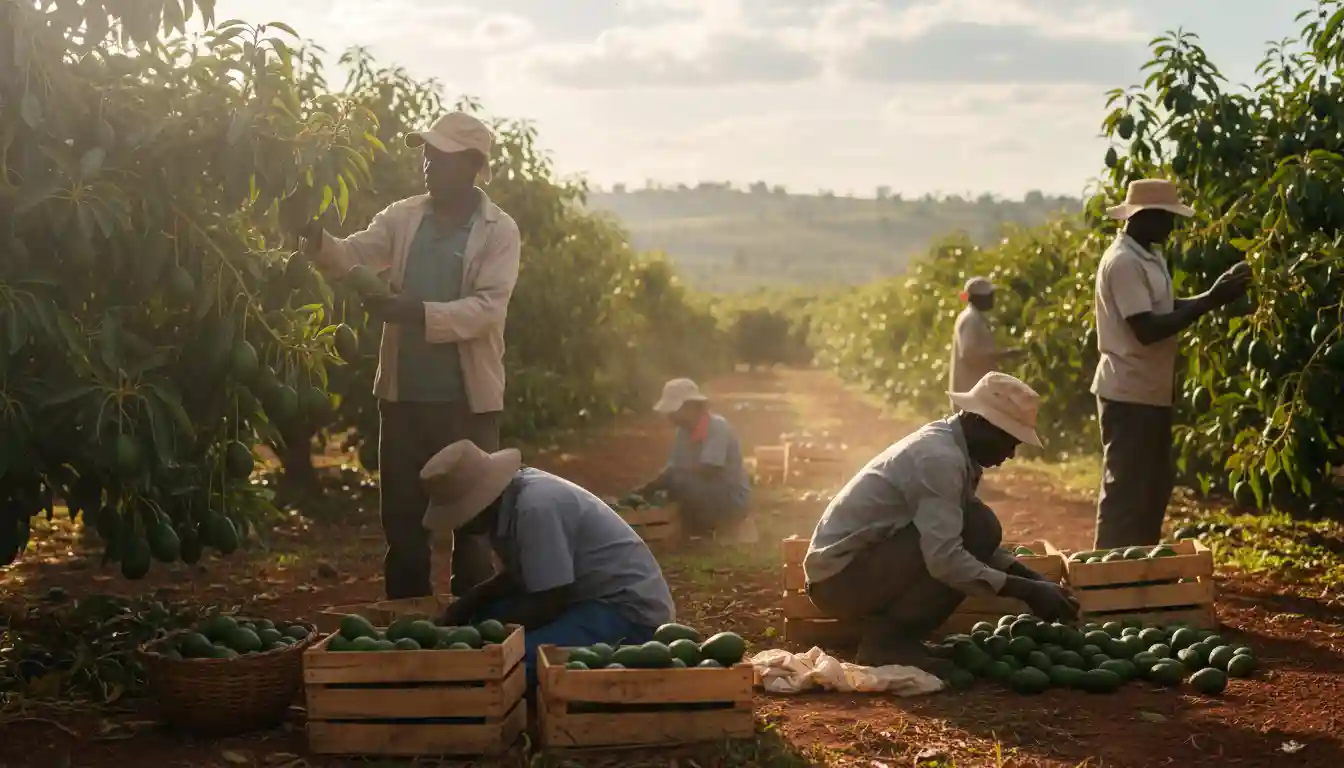
Kakuzi currently holds the position of East Africa’s largest avocado exporter. In 2026, the company posted a pre-tax profit of KES 568.4 million. Their business strategy relies heavily on crop diversification, reliable dividend payouts, and strict fruit traceability standards.
Kakuzi has successfully transitioned from a traditional mixed farm into a highly specialized superfood export machine. The company’s recent financial performance highlights a sharp recovery, driven primarily by a 96 percent surge in avocado segment profits. This turnaround is particularly impressive given the logistical challenges in the Red Sea and unpredictable local weather patterns.
Read Also: 2026 Seeds & Seedling Price List Kenya: KALRO, Kakuzi & ICIPE Certified Sources
The firm’s role in the avocado business extends well beyond its own massive estate borders. By integrating smallholder farmers into their supply chain, Kakuzi ensures a steady volume of export-grade fruit while uplifting local communities. Their outgrower model has become a realistic blueprint for sustainable, export-driven agriculture in Kenya.
In the stock market, Kakuzi is widely regarded as a patient wealth stock for long-term investors. Its share market position is securely anchored by reliable dividend payouts and strong institutional backing. The combination of high land asset value and consistent foreign exchange earnings makes it an appealing hedge against local currency inflation.
3. About Kakuzi PLC (Company Overview)
Kakuzi PLC was founded in 1906 and has evolved into a premier agro-industrial firm. Its core business model centers on exporting Hass avocados, processing macadamia nuts, cultivating commercial forestry, and pioneering large-scale blueberry farming in Kenya.
3.1 History and Background
Kakuzi traces its origins back to 1906 when it started as a small landholding in the Makuyu area of Muranga County. Over the decades, it evolved through various agricultural phases, initially focusing on sisal, coffee, and beef cattle. The company was formally incorporated in 1927, marking the beginning of its long corporate journey.
The real transformation occurred in the late 1990s when the company shifted its strategic focus toward high-value horticultural exports. Recognizing shifting global dietary trends, management heavily invested in sprawling Hass avocado orchards. This evolution into a modern agro-industrial firm required massive capital expenditures in automated irrigation and cold chain logistics.
Currently, Kakuzi is dual-listed on the Nairobi Securities Exchange and the London Stock Exchange. It operates primarily out of Makuyu and Nandi Hills, managing thousands of hectares of highly productive land. The company is majority-owned by Camellia Plc, which provides robust international backing and strict corporate governance.
3.2 Core Business Model
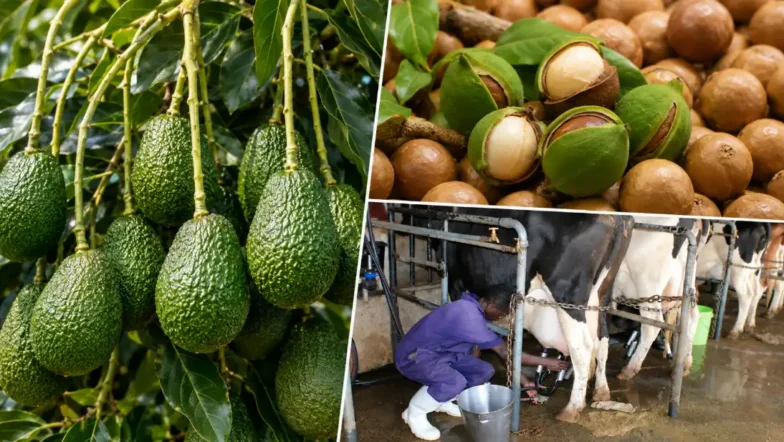
Avocado exports remain the absolute crown jewel of the Kakuzi business model. The company operates a fully integrated system where they grow, harvest, pack, and ship the fruit. Their state-of-the-art packhouse in Makuyu is FSSC 22000 certified, allowing them to sell directly to top-tier European retailers.
Beyond avocados, Kakuzi has aggressively expanded its macadamia nut operations to diversify its revenue streams. The macadamia division processes nuts from their own orchards and local farmers, exporting them under premium brands. In 2026, the macadamia segment recorded a massive profit jump to KES 365 million, fueled by better global pricing.
The company also maintains strategic investments in commercial forestry, livestock, and a newly profitable blueberry venture. Forestry provides a steady domestic income through the sale of treated poles and timber. Meanwhile, the blueberry project recently turned its first notable profit, proving that Kakuzi’s diversification strategy is bearing fruit.
4. Kakuzi PLC Share Price Performance (2026 Update)
As of early 2026, Kakuzi PLC shares trade around KES 427.75, showing strong recovery momentum toward a 52-week high. Key price drivers include the KES 387.6 million net profit, increased dividend payouts, and robust avocado export revenues.
4.1 Current Share Performance Overview
In the first quarter of 2026, the Kakuzi share price on the NSE is experiencing a solid upward trajectory. Trading at approximately KES 427.75, the stock reflects renewed investor confidence following stellar FY2025 financial results. With a market capitalization exceeding KES 8.38 billion, Kakuzi remains one of the most valuable agricultural counters in the region.
The market positioning of Kakuzi is unique because its shares are relatively illiquid compared to banking or telecom stocks. The top two shareholders control over 84 percent of the company, leaving a small free float for retail investors. This tight supply often means that when positive news hits, the share price can jump quickly.
Read Also: Why KUKZ is the Top Agribusiness Stock on the NSE IN 2026
Investors looking to enter this counter in 2026 must purchase a minimum of 100 shares. At current market rates, this requires an initial capital outlay of roughly KES 42,775, excluding standard brokerage commissions. Most local brokers facilitate these trades seamlessly through online platforms or mobile apps linked to M-Pesa.
4.2 Historical Share Performance
Kakuzi’s historical share performance is a classic study of agricultural cyclicality. In 2024, the company faced a perfect storm of excessive rainfall, a strong Kenyan Shilling, and Red Sea logistical delays. These factors pushed the company into a KES 131.6 million net loss, causing the share price to stagnate briefly.
The narrative flipped entirely in the 2025 to 2026 financial cycle. Management implemented strict cost controls and expanded irrigation water storage to 13 million cubic meters. As global avocado prices stabilized and the macadamia market rebounded, profits soared back into the green.
Looking at a five-year horizon, Kakuzi has proven to be a highly resilient asset. Even during severe droughts or global shipping crises, the underlying value of its land and biological assets keeps the stock anchored. It remains a defensive play for institutional investors who prioritize asset backing over short-term speculative gains.

4.3 Key Drivers of Share Price
The primary driver of Kakuzi’s share price is global avocado demand and the resulting export pricing. Because the company prices its exports in Euros and US Dollars, any favorable exchange rate movement boosts local earnings. Conversely, when the Kenyan Shilling artificially strengthens, it temporarily eats into the reported KES profits.
Dividend announcements act as the second major catalyst for stock movement. The board’s decision to double the dividend to KES 16.00 per share in 2026 sent a massive signal of financial health. When a company with such high capital expenditures can still afford a high payout ratio, institutional investors take serious notice.
Finally, operational efficiency and geopolitical stability dictate long-term valuations. The ongoing Red Sea shipping disruptions force Kakuzi to use longer transit routes to Europe. Any future resolution to these global logistical bottlenecks would immediately lower freight costs and boost profit margins.
5. Dividend Policy & Investor Returns
Kakuzi maintains a consistent dividend policy favored by patient investors. In 2026, the company declared a dividend of KES 16.00 per share. This payout is supported by strong operating cash flows and a commitment to returning value to shareholders.
Kakuzi has long been regarded as a reliable dividend payer on the Nairobi Securities Exchange. For the financial year ending December 2025, the Board of Directors recommended a first and final dividend of KES 16.00 per share. This figure represents a 100 percent increase from the KES 8.00 paid during the difficult 2024 trading year.
The consistency of Kakuzi’s payouts is exactly why market analysts categorize it as a patient wealth stock. Instead of relying purely on rapid share price appreciation, investors hold Kakuzi to collect reliable annual cash flows. Based on the current trading price, the dividend yield sits around 3.7 percent.
Management’s ability to fund these dividends is backed by incredibly strong cash generation. In 2025, operating cash flows surged by nearly 80 percent to KES 853.2 million. This liquidity allows Kakuzi to comfortably reward shareholders while simultaneously funding massive capital projects like their new macadamia oil extraction plant.
Before investing, review the financial highlights summarized in the table below. This data tracks the company’s recent recovery phase.
| Financial Metric | 2024 Performance (KES) | 2025/2026 Performance (KES) | Trend Analysis |
|---|---|---|---|
| Total Revenue | 4.79 Billion | 5.37 Billion | +12.0% Growth |
| Pre-Tax Profit | (166.7 Million) Loss | 568.4 Million Profit | Massive Turnaround |
| Net Profit After Tax | (131.7 Million) Loss | 387.6 Million Profit | Strong Recovery |
| Dividend Per Share | 8.00 | 16.00 | Doubled Payout |
6. Kakuzi Avocado Business Performance
Avocados are Kakuzi’s primary revenue source, contributing heavily to total earnings. In 2026, the avocado division posted a KES 709 million profit. The company exported 525 containers, maintaining a strong competitive edge through strict quality certifications.
6.1 Role of Avocado in Revenue
The Hass avocado is the undisputed engine of Kakuzi PLC, historically accounting for over 70 percent of total revenue. In the latest 2026 financial disclosures, avocado segment profits surged by 96 percent to hit KES 709 million. This phenomenal growth was achieved despite intense global market competition and severe localized weather challenges.
This revenue dominance is built on massive economies of scale and total vertical integration. Because Kakuzi owns the land, the packhouses, and the cold storage facilities, they capture margins at every step. By relying less on third-party aggregators, the company protects its bottom line from unpredictable local broker pricing.
Read Also: Kenya Seed Company Price List 2026 (Maize, Grass & Crop Seeds Prices in Kenya)
However, this heavy reliance on a single crop presents a structural concentration risk. To mitigate this, Kakuzi uses the massive cash flows generated by avocados to fund experimental crops like blueberries. Until these new ventures mature fully, the financial health of the entire operation remains tied to the European price of Hass avocados.
6.2 Export Markets
Kakuzi’s primary export destinations are the United Kingdom and Continental Europe. These traditional markets are highly lucrative but demand flawless quality and strict traceability. In 2025, the company successfully exported 525 refrigerated containers, securing an impressive average price of Euro 7.13 per carton.
Beyond Europe, the company is aggressively targeting new frontiers in the Middle East and Asia. Market access agreements with China and India present massive volume opportunities for Kenyan growers. While these Asian markets offer easier logistical routes, management notes that their current purchasing power does not yet substitute the European market.
Global demand trends for avocados remain aggressively positive, driven by health-conscious consumers. However, Kakuzi faces fierce competition from mega-producers in Peru, Mexico, and South Africa. To survive, the company cannot compete on volume alone; they must continuously win on fruit quality and shelf-life reliability.
6.3 Production & Farming Scale
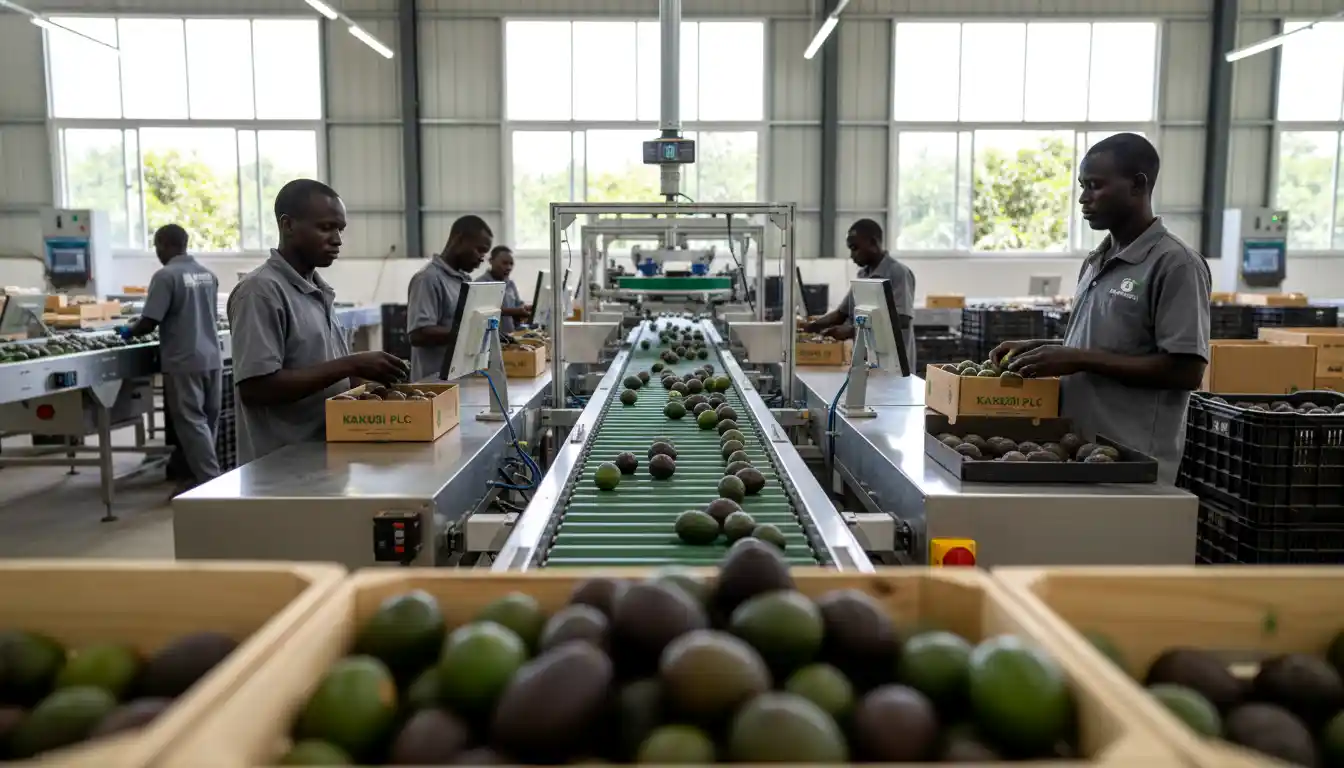
Kakuzi operates one of the most sophisticated estate farming models in Africa. Their dedicated avocado orchards span well over 997 hectares in the Makuyu region. This massive scale allows for precision agriculture, where automated drip irrigation and soil moisture sensors dictate precise water application.
Quality control systems at Kakuzi are ruthlessly efficient. From the moment a fruit is picked, it is tracked via a digital batch code. In the packhouse, automated optical sorters discard any fruit with physical blemishes or incorrect sizing.
This estate farming model is highly capital-intensive but completely necessary for global export compliance. Small-scale farmers cannot independently afford FSSC 22000 certified packhouses. Therefore, Kakuzi’s infrastructure acts as a centralized processing hub that elevates the quality of the entire surrounding agricultural community.
6.4 Why Kakuzi Avocado is Competitive
Kakuzi’s competitive edge is anchored entirely in its global quality certifications. The estate holds GlobalG.A.P, SMETA, SPRING, Halal, and Rainforest Alliance certifications. European supermarkets use these exact certifications as a baseline requirement for procurement.
Logistically, Kakuzi has an undeniable advantage over smaller Kenyan exporters. By shipping hundreds of containers annually, they negotiate favorable freight rates with major shipping lines. Furthermore, their deep pockets allow them to absorb the sudden freight cost spikes caused by geopolitical tensions.
Finally, the company’s agronomy team utilizes integrated pest management to control fruit flies without leaving heavy chemical residues. When sourcing chemicals, Kakuzi strictly adheres to guidelines set by the local Pest Control Products Board. This guarantees that their fruit never faces rejection at European border inspections due to residue violations.
Read Also: Top 10 Hass Avocado Diseases in Kenya: Causes, Symptoms & Treatment Guide (2026)
The table below highlights the performance of Kakuzi’s primary crop segments. It outlines the key growth drivers for each agricultural division.
| Crop Segment | 2026 Profit Contribution (KES) | Key Growth Drivers |
|---|---|---|
| Hass Avocado | 709 Million | High export volumes (525 containers); Premium Euro pricing. |
| Macadamia Nuts | 365 Million | Value addition; Higher global demand; Brand expansion. |
| Blueberries | 5 Million | First profitable year; High domestic premium prices. |
| Commercial Forestry | 122 Million | Consistent local demand for treated poles and timber. |
7. Farmer Opportunities with Kakuzi
Kakuzi empowers local farmers by selling certified Hass seedlings and offering contract farming partnerships. They provide free maturity testing to outgrowers and integrate local harvests into their global export supply chain, ensuring reliable payments.
7.1 Seedlings & Contract Farming
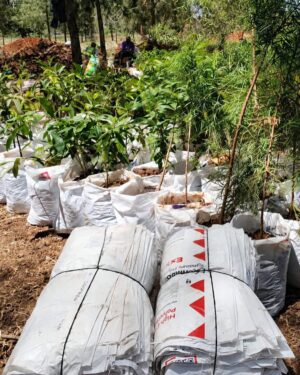
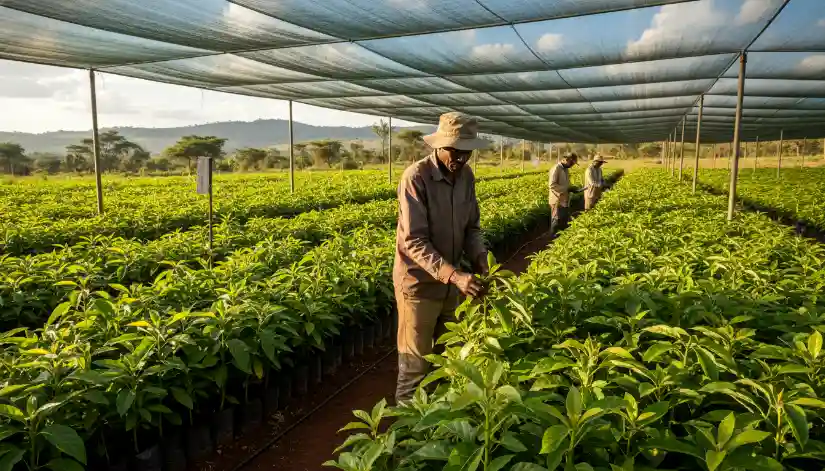
For beginner farmers in Kenya looking to enter the export market, starting with the right genetics is non-negotiable. Kakuzi operates a massive, KEPHIS-certified nursery where they propagate disease-free Hass avocado seedlings. Farmers can purchase these high-quality grafted seedlings directly from the Makuyu estate to ensure their orchards start strong.
Kakuzi actively encourages partnership models through their smallholder outgrower programs. Farmers who purchase seedlings from Kakuzi often get prioritized when the company is sourcing export fruit. This creates a closed-loop system where the farmer gets reliable genetics and a guaranteed market upon harvest.
To engage in contract farming, interested growers must adhere to strict agronomic guidelines. Kakuzi occasionally hosts an Avocado Farmers Day to educate locals on pruning, nutrition, and pest control. By building this knowledge base, Kakuzi ensures that fruit grown in surrounding counties matches the quality of their own estate produce.
7.2 Supply Chain Opportunities
The outgrower system at Kakuzi is designed to eliminate exploitative middlemen from the rural supply chain. During the harvest season, Kakuzi offers free avocado maturity testing to smallholder farmers. This critical service prevents farmers from harvesting immature fruit, which often gets rejected and damages Kenya’s global reputation.
There are also significant supply chain opportunities in local transport and aggregation. Reliable transporters are needed to move harvested fruit from rural farms in Nyeri and Kiambu to the Kakuzi packhouse. Vehicles must be clean, covered, and capable of transporting the fruit without causing mechanical bruising.
Once accepted into the outgrower scheme, farmers receive transparent payouts based on the graded weight of their fruit. In previous years, Kakuzi distributed tens of millions of shillings in smallholder bonuses. Payments are often processed efficiently through bank transfers or M-Pesa, ensuring farmers have immediate access to their capital.
7.3 What Farmers Need to Know
If you want to supply Kakuzi, you must treat your farm like a serious agribusiness. The most critical requirement is strict adherence to spray diaries. If you use unapproved pesticides that violate European standards, your entire harvest will be permanently rejected.
Quality expectations from Kakuzi are brutally high. Exporters are looking for size 12 to 18 fruits with unblemished green skin. Farmers in drier regions like Nakuru must invest in supplemental drip irrigation to achieve these export sizes, as relying purely on erratic rainfall usually results in small fruit.
The biggest challenge for beginners is keeping meticulous farm records. Traceability is the strict law in modern export farming. You must be able to prove exactly where your seedlings came from, what fertilizers you applied, and when you harvested.
Below is a quick checklist for farmers aiming to join the outgrower program. It highlights standard expectations versus common mistakes.
| Requirement Area | Kakuzi Standard Expectation | Common Farmer Mistake |
|---|---|---|
| Fruit Maturity | Minimum dry matter content of 21 to 23 percent. | Harvesting early to chase quick cash from brokers. |
| Pest Management | Use only approved, export-safe chemicals. | Using cheap, banned chemicals that cause residue failure. |
| Fruit Sizing & Handling | Sizes 12 to 18, harvested with clippers. | Pulling fruit by hand, causing skin tears and bruising. |
| Farm Traceability | Maintained spray diaries and harvest records. | No written records or inability to prove farm practices. |
7.4 Kakuzi Avocado Varieties Grown
Farmers partnering with Kakuzi primarily cultivate the Hass avocado variety. This specific cultivar is favored globally for its tough skin, long shelf life, and high market demand. Other minor varieties like Fuerte are grown in smaller quantities strictly for domestic market consumption and oil extraction.
Where to Buy Kakuzi PLC Shares In 2026
To invest in this asset, you must open a CDS account with a licensed Kenyan stockbroker. The Nairobi Securities Exchange facilitates all official stock purchases for local and international investors. Always consult an accredited financial advisor before making any stock market commitments or purchasing agribusiness shares.
7.5 Fertilizer Guidelines for Outgrowers
Proper plant nutrition is absolutely critical for achieving export-grade fruit sizes. From what many farmers experience in Kiambu, applying balanced NPK during the flowering stage drastically improves overall fruit set. The table below outlines recommended fertilizers for optimal avocado yields. Always conduct a soil test through KALRO before applying these nutritional inputs.
| Growth Stage | Recommended Fertilizer | General Application Rate |
|---|---|---|
| Planting Stage | TSP or DAP | 200g per planting hole mixed with manure. |
| Vegetative Growth | CAN or Urea | 300g per tree applied before rains. |
| Flowering Stage | NPK 17:17:17 | 500g per mature tree for better fruit set. |
8. Investment Analysis (Is Kakuzi Worth It?)
Kakuzi is highly worthwhile for long-term investors seeking dividend stability and agricultural asset exposure. While susceptible to weather risks, its strong cash flows, low debt, and diversified crop portfolio make it a defensive stock on the NSE.
Investing in Kakuzi requires a clear understanding of the agricultural risk versus reward matrix. The primary reward is acquiring a stake in thousands of acres of highly productive Kenyan real estate and a world-class export operation. At a share price of KES 427.75, you are buying into a company that generates substantial foreign exchange, providing an excellent hedge against local inflation.
However, the market stability of agricultural stocks is inherently volatile. Earnings are entirely at the mercy of the weather, global shipping rates, and international commodity pricing. Investors must have the stomach to ride out natural cyclical downturns, such as the profit dip experienced during the 2024 floods.
The long-term outlook for Kakuzi is overwhelmingly positive. By aggressively expanding into blueberries and domestic value-addition, management is actively de-risking the business. For an investor with a multi-year horizon, Kakuzi represents a solid, fundamentally sound anchor for any well-diversified stock portfolio.
9. Kakuzi PLC Contacts & How to Engage
You can contact Kakuzi PLC via their Makuyu Head Office or through their Nairobi corporate branch. For seedling orders and farmer inquiries, call +254 748 555777. Official corporate email correspondence is handled through [email protected].
Direct communication with Kakuzi is straightforward, whether you are a prospective shareholder or a local farmer. Their main operations and Head Office are located along the Thika to Sagana Highway in Makuyu, Muranga County. They also maintain a corporate office in Nairobi specifically to handle administrative and high-level corporate affairs.
Read Also: 15 Most Profitable Agribusiness Ideas in Kenya to Start in 2026
For farmers looking to purchase seedlings or join the outgrower program, direct phone lines are the most efficient route. You can call the dedicated farmer inquiry channels at +254 748 555777. When visiting the farm to purchase inputs, ensure you call ahead to confirm stock availability, as high-quality Hass seedlings frequently sell out.
Investor relations and corporate governance issues are handled with high transparency. Shareholders can direct their inquiries to the official email at [email protected]. Kakuzi also maintains a strict corporate whistleblowing policy to ensure ethical business dealings across its entire agricultural supply chain.
10. Risks & Challenges
Kakuzi faces significant risks from unpredictable weather patterns, global shipping disruptions, and foreign exchange volatility. The company’s heavy reliance on the European avocado market also exposes it to regional pricing shocks.
The most immediate operational risk for Kakuzi is extreme weather dependency. While the company has mitigated drought risks by expanding water storage, excessive unseasonal rainfall remains a major threat. Heavy rains cause poor flowering, increase fungal diseases, and severely disrupt daily harvest logistics.
Export market fluctuations present a constant external challenge. Currently, a massive portion of Kakuzi sales goes to the UK and Continental Europe. This single-market concentration means that any economic downturn or regulatory shift in Europe directly impacts the company’s bottom line.
Finally, governance and public scrutiny remain an inherent risk for large landowners in Kenya. Kakuzi has historically navigated complex land claims and public relations challenges with a heavily regulated approach. Management continuously emphasizes shared prosperity, ethical labor practices, and community development to foster goodwill.
11. Future Outlook (2026 and Beyond)
Kakuzi’s future outlook is highly optimistic, driven by rising global avocado demand and aggressive diversification into blueberries. The company plans to triple its blueberry acreage in 2026 and expand its value-added product lines for the domestic market.
The global avocado demand growth shows absolutely no signs of slowing down, particularly in emerging health-conscious markets. Kakuzi is perfectly positioned to capitalize on this trend by leveraging its new market access to China and India. Establishing early dominance in Asian markets will ensure long-term volume absorption as local Kenyan production increases.
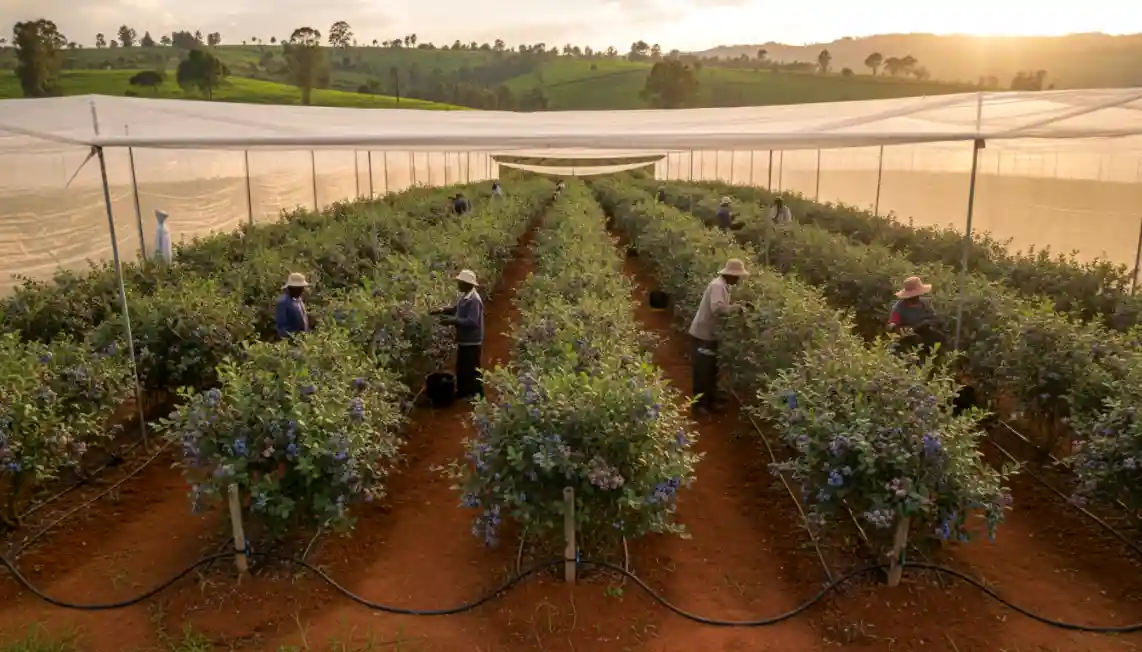
Expansion potential lies heavily in the company’s aggressive diversification strategy. The board’s decision to triple blueberry acreage to 25 hectares in 2026 is a massive vote of confidence in this new high-value crop. This bet on berries will eventually reduce the company’s historical over-reliance on single-crop avocado revenues.
Kenya’s export positioning will continue to strengthen thanks to anchor companies like Kakuzi. Furthermore, the company is tapping into domestic value-addition through its retail farm markets. By selling cold-pressed oils and loose-leaf tea locally, they capture daily retail margins that secure steady operational cash flow.
12. Final Verdict
Kakuzi PLC is a robust, well-managed company offering excellent opportunities. Investors gain a defensive, dividend-paying asset, while farmers secure a reliable partner for high-quality seedlings and export-grade avocado aggregation.
From an investor’s perspective, Kakuzi PLC is a definitive hold for patient wealth creation. The remarkable financial recovery in 2026 proves that management knows how to navigate severe agricultural crises. While the share price is high and daily liquidity is low, the underlying land assets make it an essential defensive stock.
For Kenyan farmers, partnering with Kakuzi is one of the safest routes into the lucrative export market. Briefcase exporters will always offer quick cash, but Kakuzi offers long-term agronomic support and reliable, structured payouts. By purchasing their certified seedlings, smallholders can dramatically increase their chances of passing strict European quality audits.
The hard truth is that agribusiness is never easy and rarely guarantees overnight riches. Whether you are buying shares or planting trees, you must have immense patience to see returns. However, if you are willing to think long-term, Kakuzi offers a proven, highly profitable blueprint for success in Kenya’s agricultural sector.
📌 FAQs: Kakuzi PLC (2026)
Who owns Kakuzi PLC in Kenya?
Kakuzi PLC is majority-owned by Camellia Plc with a 50.7 percent stake. Dr. John Kibunga Kimani holds roughly 33 percent. The remaining shares are traded publicly on the NSE.
What does Kakuzi PLC do in Kenya?
Kakuzi PLC is a prominent agribusiness company. It cultivates, processes, and exports Hass avocados, macadamia nuts, and blueberries. The firm also manages commercial forestry and livestock.
Who is the chairman of Kakuzi PLC?
Mr. Nicholas Nganga serves as the Chairman of Kakuzi PLC. He leads the board of directors in guiding corporate governance, sustainability initiatives, and the company’s global export strategy.
How big is Kakuzi Farm in Kenya?
Kakuzi operates on vast land holdings across Kenya. The dedicated avocado orchards alone cover over 997 hectares. The entire agricultural estate spans thousands of acres in Makuyu and Nandi.
How can I contact Kakuzi PLC via email?
You can contact Kakuzi PLC via their official email at [email protected]. For corporate sustainability or community issues, reach out directly to [email protected].
Where is Kakuzi PLC located in Kenya?
Kakuzi PLC is headquartered at Makuyu along the Thika to Sagana Highway in Muranga County. The company also maintains a corporate administrative office in Nairobi.
What products does Kakuzi PLC produce?
Kakuzi primarily produces and exports Hass avocados, macadamia nuts, and blueberries. They also produce commercial forestry products, livestock, tea, and cold-pressed macadamia oils.
What is the current Kakuzi PLC share price in Kenya?
As of 2026, the Kakuzi PLC share price on the Nairobi Securities Exchange trades around KES 427.75. It remains one of the highest-priced agricultural stocks on the local market.
Does Kakuzi PLC offer job vacancies in Kenya?
Yes, Kakuzi offers seasonal and permanent jobs in farm operations, agronomy, packing, and corporate roles. Open vacancies are regularly advertised on their official website and local dailies.
What is Kakuzi PLC known for in Kenya’s agriculture sector?
Kakuzi is renowned as East Africa’s largest producer and exporter of Hass avocados. They are also widely recognized for pioneering large-scale blueberry farming and sustainable forestry.
What are Kakuzi treated posts prices in Kenya in 2026?
Kakuzi treated fencing posts in 2026 typically range depending on size, length, and treatment grade, with prices commonly starting from approximately KES 800 to KES 3,500 per pole in Kenya, depending on specifications and market conditions.