
- Average Project Cost: A complete, functional borehole in 2026 ranges from KES 850,000 for shallow 100m setups to over KES 2.8 million for deep commercial systems with solar infrastructure.
- Current Drilling Rates: Standard prices per metre currently fluctuate between KES 6,500 and KES 9,000, depending heavily on the geological formation and mobilization distance.
- Mandatory Compliance: Legal permits from WRA and NEMA, including the hydrogeological survey, typically cost between KES 85,000 and KES 150,000 before drilling commences.
Table of Contents
Investing in a borehole in 2026 is a significant capital expenditure that requires more than just a passing interest in water security. For the serious Kenyan farmer, this is a strategic infrastructure asset that determines the viability of high-value crops like avocados, macadamia, or greenhouse tomatoes. Many landowners mistakenly believe that the cost of drilling is simply the depth multiplied by a rate, but this narrow view often leads to project abandonment.
The reality of a borehole project involves a complex chain of professional services including hydrogeological mapping, multi-agency permitting, and sophisticated mechanical installations. A failed project usually stems from underestimating these secondary costs or hiring contractors who cut corners on casing quality and pump sizing. In this guide, we provide a brutally honest financial blueprint for drilling in the current Kenyan economic landscape.
Whether you are planning a small-scale dairy unit in Kiambu or a massive irrigation scheme in Laikipia, understanding the granular costs is essential. By the end of this resource, you will have a professional-grade budget that accounts for everything from the first geological strike to the final solar panel installation. This is not just about finding water; it is about securing a reliable, long-term commercial asset for your agribusiness.
Quick Borehole Cost Summary in Kenya (2026)
A standard 150-metre borehole project in 2026 costs approximately KES 1.4 million to KES 1.9 million. This all-inclusive figure covers hydrogeological surveys, WRA and NEMA permits, mobilization, drilling, uPVC casing, test pumping, and a high-quality solar-powered pump system with basic piping.
Read Also: Davis & Shirtliff Price List 2026 (Pumps, Solar & Borehole Costs Kenya)
The following table provides a high-level overview of what different types of borehole projects cost in the current market. These figures are based on average depths and standard equipment specifications used by reputable Kenyan contractors. It is important to note that these are total project estimates, not just the drilling fee.
The variation in price reflects the differences in pump horsepower, the complexity of the power system, and the depth required to reach a sustainable aquifer. Larger commercial projects often include more robust storage solutions and filtration systems which drive the price toward the higher end of the spectrum.
| Borehole Type | Estimated Total Cost (KES) | Typical Depth Range | Power Source |
|---|---|---|---|
| Shallow Domestic Well | KES 450,000 – KES 750,000 | 40m – 80m | Single Phase Electric |
| Small Farm / Greenhouse | KES 950,000 – KES 1,400,000 | 80m – 120m | Solar Direct Drive |
| Deep Commercial / Irrigation | KES 1,600,000 – KES 2,900,000 | 150m – 300m | Solar Hybrid / 3-Phase |
| Community Water Project | KES 2,500,000 – KES 4,500,000 | 200m – 400m | High-Yield Hybrid |
How Much Does Borehole Drilling Cost Per Metre in Kenya?
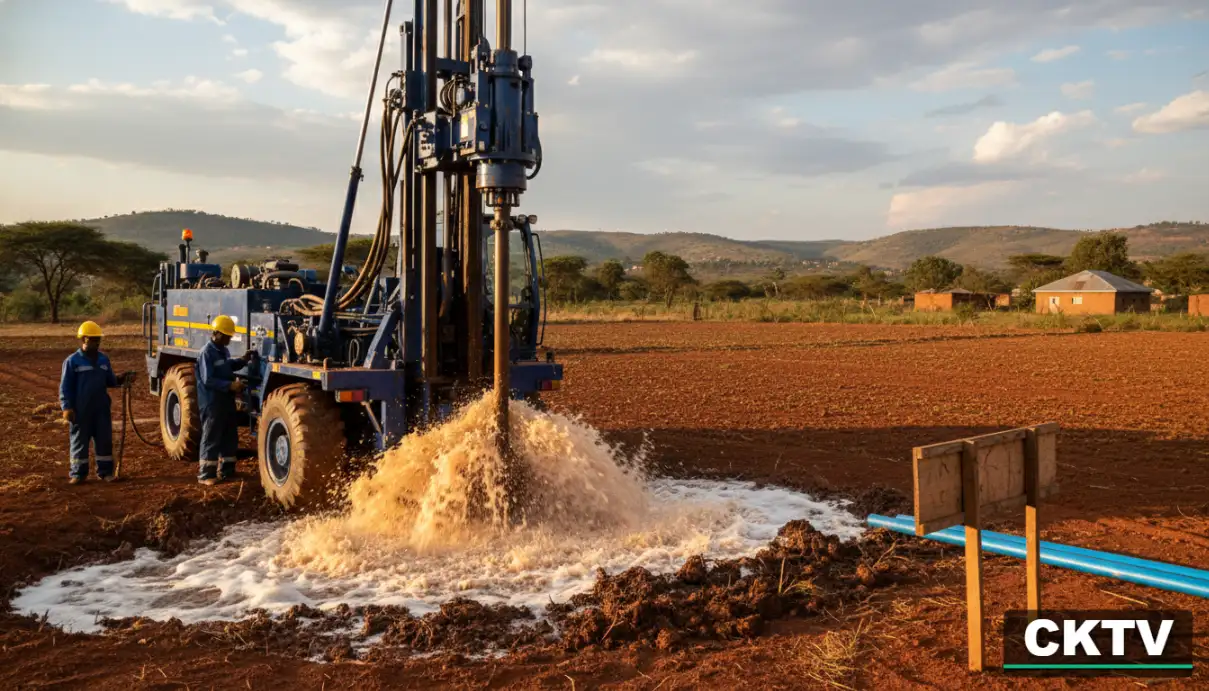
Drilling rates in 2026 range from KES 6,500 to KES 9,500 per metre. The variation is driven by regional geology; soft sedimentary soils at the Coast require expensive specialized casing, while the hard volcanic rock of the Rift Valley demands more fuel and heavy-duty drill bits.
The “price per metre” is the most common quote you will receive, but it rarely tells the whole story. This rate typically covers the mobilization of the rig, the actual drilling process, and the installation of standard uPVC casing. If you encounter “collapsing” formations, you may be required to pay for temporary steel casing or double casing, which can increase the per-metre rate by 30 percent or more.
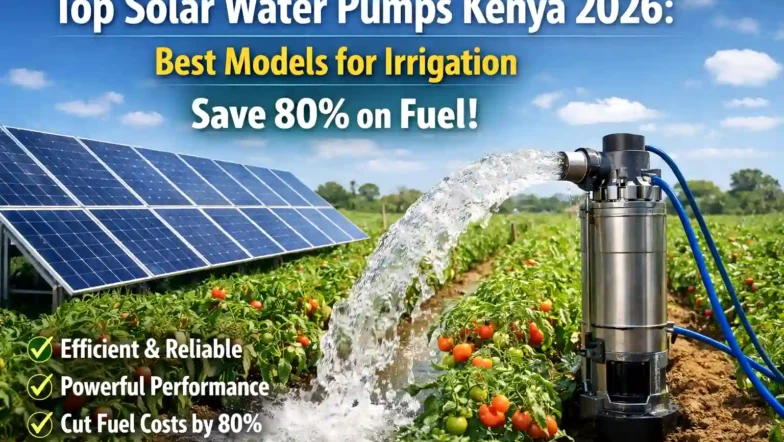
Read Also: Top Solar Water Pumps Kenya 2026: Best Models for Irrigation, Save 80% on Fuel
Geology is the primary driver of these costs across different Kenyan counties. For example, drilling in the hard basalt layers of Kajiado or Nakuru is slow and wears down equipment rapidly, leading to higher rates. Conversely, drilling in the softer formations of Western Kenya might be faster, but the risk of hole collapse requires more careful engineering and specialized gravel packing to keep the water clean.
Regional price variations in 2026 are summarized below:
- Nairobi & Kiambu: KES 7,000 – KES 8,500 per metre. High competition among drillers keeps prices moderate, though site access can be a challenge.
- Kajiado & Machakos: KES 7,500 – KES 9,500 per metre. These areas often feature very hard rock and require deeper drilling to reach productive aquifers.
- Uasin Gishu & Trans Nzoia: KES 6,800 – KES 8,000 per metre. Favorable geological conditions and a high density of agricultural projects support competitive pricing.
- Coast Region (Kilifi/Kwale): KES 6,500 – KES 9,000 per metre. While the soil is softer, the need for corrosion-resistant casing and salinity management adds complexity.
Complete Borehole Budget Breakdown for Farmers
A comprehensive borehole budget allocates roughly 10% to permits and surveys, 55% to drilling and casing, 10% to testing and development, and 25% to the pump and power infrastructure. Failing to budget for the final pump phase is a common reason for project stalls.
Successful farmers view a borehole as a complete utility system. If you only budget for the hole, you will find yourself with a capped well and no way to get the water to your crops. In 2026, costs for imported components like submersible pumps and solar inverters remain high, making it crucial to have a transparent line-item budget before signing any contracts.
The following table outlines the specific costs you should expect for a standard 150-metre commercial borehole. These figures represent the current market average for high-quality materials and professional labor. Using cheaper, sub-standard materials like thin-walled pipes can lead to borehole collapse within five years, which is a total loss of investment.
| Project Phase | Component Description | Estimated Cost (KES) |
|---|---|---|
| Planning & Permits | Survey, WRA Authorization, NEMA EIA | KES 95,000 – KES 145,000 |
| Drilling Services | Mobilization, Drilling (150m), Well Cleaning | KES 1,050,000 – KES 1,200,000 |
| Well Lining | uPVC Casing (Class D), Screens, Gravel Pack | KES 250,000 – KES 400,000 |
| Testing Phase | 24-Hour Test Pumping & Lab Analysis | KES 55,000 – KES 85,000 |
| Pumping System | Submersible Pump, Cables, Control Box | KES 180,000 – KES 450,000 |
| Power Infrastructure | Solar Array, Stand, Inverter / KPLC Link | KES 350,000 – KES 750,000 |
| Water Storage | 10,000L Tank, Elevated Steel Stand, Piping | KES 200,000 – KES 450,000 |
Recommended Borehole Drilling & Water Infrastructure Companies in Kenya (2026)
Disclaimer: The companies listed below maintain active digital platforms and visible service operations within Kenya’s water infrastructure sector. Readers should independently verify current WRA licensing, NCA registration, project references, and quotation terms before entering into agreements or making payments.
| Company Name | Primary Website | Verified Contact |
|---|---|---|
| WaterLink Limited | https://waterlink.co.ke | +254 722 740 522 |
| Grekkon Limited | https://grekkon.co.ke | +254 715 157 132 |
| Grekkon Eldoret | https://grekkon-eldoret.co.ke | +254 711 895 635 |
| Rana Team Services | https://rana.co.ke | +254 702 585 656 |
| Agile Boreholes | https://agileboreholes.com | +254 706 756 333 |
| Knight & Hammer Contractors | https://knhcontractors.co.ke | +254 799 696 913 |
| Davis & Shirtliff | https://davisandshirtliff.com | +254 711 079 000 |
| Raeli Hydro Systems | https://raelihydro.com | +254 700 666 888 |
Important Warning: Protecting Your Borehole Investment
Never select a drilling contractor based purely on the lowest quotation.
Cheap borehole projects often fail because of:
- weak or substandard casing
- poor gravel packing
- incorrect pump sizing
- fake hydrogeological surveys
- hidden mobilization fees
- poor after-sales support
A failed borehole project can easily result in losses exceeding KES 1 million.
How to Verify a Borehole Contractor Before Payment
Before paying any deposit, ask the contractor:
- Can you share your current WRA drilling license?
- Are you registered with the National Construction Authority (NCA)?
- Can I speak to two recent clients from my county?
- Which class of uPVC casing do you use?
- Does your quotation include test pumping and water analysis?
- Do you provide a written warranty for drilling and pump systems?
Safe Borehole Payment Structure
Avoid contractors demanding 100% upfront payment.
A safer industry structure is:
- 30% after signing agreement and rig mobilization
- 40% after reaching agreed drilling depth and casing installation
- 30% after successful test pumping and inspection
Always tie payments to physical project milestones.
Hydrogeological Survey Cost in Kenya
A hydrogeological survey in 2026 costs between KES 25,000 and KES 45,000. This mandatory study uses geophysical equipment to locate the best drilling point and estimate the depth of the water table. The resulting report is a legal requirement for obtaining drilling permits from the Water Resources Authority.
Never allow a contractor to drill without a professional survey report from a registered geologist. Some old-school drillers claim to “know the area,” but groundwater is localized and can vary significantly even between neighboring plots. A survey uses electrical resistivity or seismic mapping to identify the presence of water-bearing fractures in the rock, significantly reducing the risk of a dry hole.
A dry borehole is a financial catastrophe, as you still have to pay the driller for the depth reached. In 2026, the Water Resources Authority (WRA) has integrated survey data into their monitoring systems to prevent over-abstraction. Using a certified geologist ensures that your survey will be accepted for permit applications and provides you with a realistic expectation of the water yield you can expect for your farm.
WRA & NEMA Borehole Permit Requirements in Kenya
Legal borehole drilling requires a WRA Authorization to Drill and a NEMA Environmental Impact Assessment (EIA) license. These permits ensure your water use is sustainable and compliant with environmental laws. The total compliance process takes 4 to 8 weeks and costs between KES 85,000 and KES 150,000.
The regulatory landscape for water in Kenya is increasingly strict as the government seeks to protect declining aquifers. Drilling without permits is a criminal offense that can lead to equipment seizure, massive fines, and the permanent sealing of your borehole. Furthermore, without these permits, you cannot apply for a commercial water abstraction license or use your borehole as collateral for agricultural loans.
Read Also: 15 Most Profitable Agribusiness Ideas in Kenya to Start in 2026
The standard permitting process involves several steps. First, the geologist’s report is submitted to the WRA for an “Authorization to Drill.” Simultaneously, an environmental expert must conduct an EIA to ensure the drilling won’t harm the local ecosystem. Once these are granted, you have a specific window (usually 12 months) to complete the drilling. After the work is done, you must submit a completion report and a water analysis certificate to receive your final abstraction permit.
Borehole Drilling Cost by Depth Scenarios
Project costs do not increase linearly with depth; deeper wells require more powerful rigs and significantly more expensive pumps. A 200m borehole can cost twice as much as a 100m borehole because the friction and weight of the water column require high-head pumps and heavy-duty cabling.
Depth is the most significant variable in your budget. In 2026, the price of fuel and high-pressure uPVC casing means that every extra 10 metres of depth adds roughly KES 90,000 to KES 110,000 to the final project cost when accounting for all materials. Farmers must work closely with their geologists to determine the most cost-effective depth that balances yield with initial capital outlay.
Below are four common drilling scenarios found in different agricultural zones of Kenya. These estimates include the drilling, casing, and a suitable solar pump system for that specific depth.
Scenario 1: The 60m Shallow Farm Well
Typical for areas with high water tables like the Lake Victoria basin or parts of Central Kenya near permanent rivers. Total Estimated Cost: KES 650,000 – KES 850,000. Application: Best for 1-acre drip irrigation systems, poultry units, or small-scale dairy farming with up to 10 cows.
Scenario 2: The 120m Standard Commercial Borehole
The most common depth for mid-sized farms in the Rift Valley and Nairobi outskirts. Total Estimated Cost: KES 1,100,000 – KES 1,500,000. Application: Perfect for 2 to 5 acres of avocados, medium-sized greenhouses, and large-scale dairy operations with 30-50 cows.
Scenario 3: The 180m Deep Aquifer Borehole
Necessary in semi-arid regions like Kajiado, Machakos, and parts of Laikipia where shallow water is either unavailable or highly saline. Total Estimated Cost: KES 1,700,000 – KES 2,300,000. Application: Required for commercial horticultural exports, large-scale orchards, and multi-user community water supplies.
Scenario 4: The 250m+ Industrial/Large Irrigation Project
Reserved for massive agricultural enterprises or areas with extreme water scarcity. Total Estimated Cost: KES 2,800,000+. Application: Used for pivot irrigation systems, large industrial processing plants, and major housing developments.
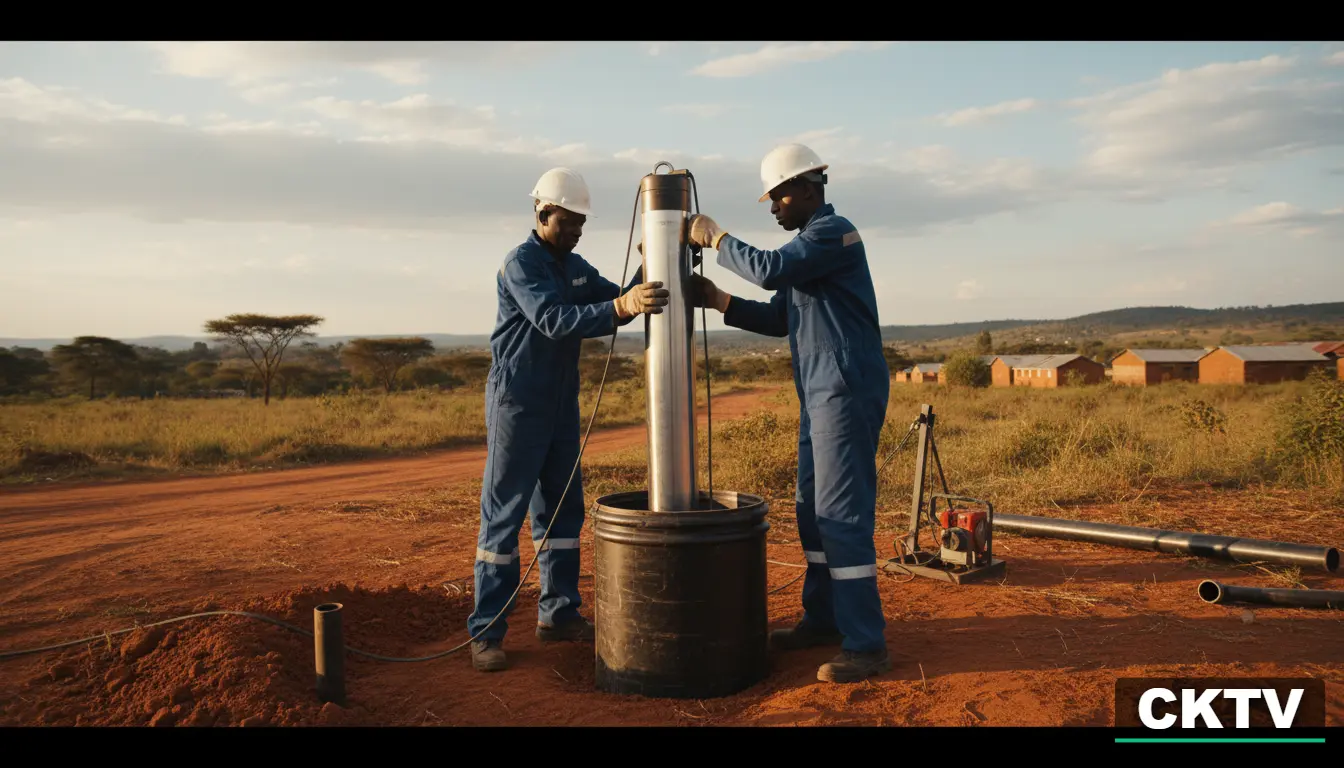
Solar Borehole Pump Setup Cost in Kenya
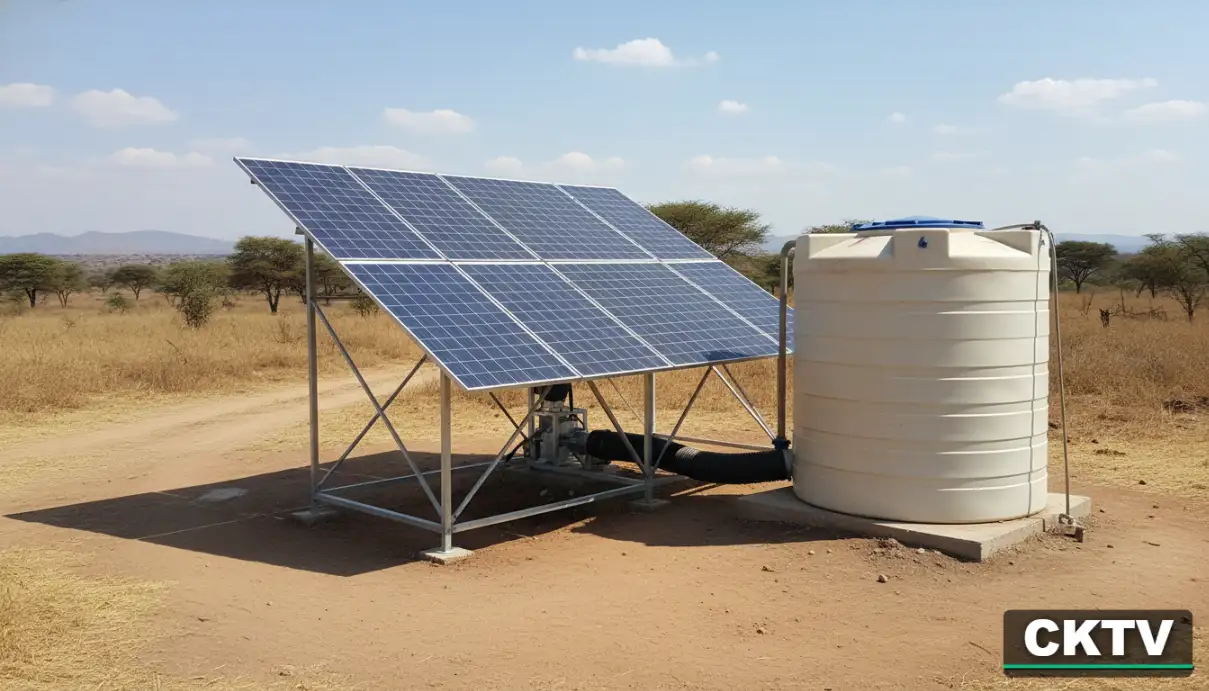
A professional solar pump setup in 2026 costs between KES 350,000 and KES 850,000. This includes the submersible pump, high-efficiency solar panels, a specialized pump inverter (VFD), and a galvanized steel support structure. Solar is the most economical power choice for Kenyan farmers due to rising electricity tariffs.
The most significant shift in 2026 is the near-universal adoption of solar pumping for agricultural boreholes. While the initial investment is higher than an electric pump, the “running cost” is zero. In a country where electricity prices are volatile, solar provides a predictable cost of production for your crops. Most modern systems are “direct-drive,” meaning they pump water whenever the sun is shining without the need for expensive and short-lived batteries.
Poor solar sizing is a common cause of pump failure. If you under-power your pump, it will struggle to start or run at low RPMs, leading to motor overheating. A correctly engineered system will include a “Variable Frequency Drive” (VFD) that adjusts the pump speed based on available sunlight, ensuring you maximize water output even on cloudy days. In 2026, many farmers are also adding “hybrid” controllers that allow for a backup generator or KPLC connection for night-time pumping during emergencies.
Electric vs Solar Borehole Pumps: Which Is Better?
Electric pumps have a lower initial cost (KES 150,000 – 300,000) but high monthly operating expenses. Solar pumps have high upfront costs (KES 350,000 – 800,000) but zero monthly bills. For any farm operating for more than 24 months, solar is the superior financial investment with a higher ROI.
The choice between grid electricity and solar power depends on your proximity to power lines and your daily water requirement. If you already have a 3-phase KPLC connection on-site and only need to pump water for an hour a day, an electric pump is the cheaper entry point. However, for irrigation where you need thousands of litres daily, the monthly electricity bill will quickly exceed the cost of a solar installation.
The following table compares the two systems based on a 5-year operational window. It is clear that while solar seems expensive today, it is the only way to shield your agribusiness from the rising energy costs predicted for the late 2020s.
| Comparison Metric | Electric (KPLC) System | Solar Powered System |
|---|---|---|
| Initial Setup Cost | Lower (KES 200,000 range) | Higher (KES 500,000 range) |
| Monthly Running Cost | KES 15,000 – KES 45,000 | KES 0 |
| Maintenance Level | Moderate (Surge risks) | Low (Panel cleaning only) |
| 5-Year Total Cost | KES 1.5M – KES 2.8M | KES 550,000 – KES 650,000 |
| Reliability | Subject to blackouts | Excellent (Daylight hours) |
Davis & Shirtliff Borehole Pump Prices in Kenya
Davis & Shirtliff’s Dayliff brand remains the gold standard in Kenya, with pump prices ranging from KES 48,000 for small domestic units to over KES 500,000 for high-head commercial pumps. Their advantage lies in a nationwide service network and ready availability of spare parts like impellers and motor seals.
Choosing a pump is a 10-year decision. While there are many “no-name” imports from Asia that cost 30 percent less, they often lack a local service center. When a pump fails in the middle of a drought, you cannot afford to wait weeks for a spare part to be shipped from abroad. Davis & Shirtliff has built an infrastructure that allows for same-day repairs in most major Kenyan towns, which is why they dominate the commercial farming sector.
Read Also: Greenhouse Prices in Kenya: 2026 Construction Costs and Profit Analysis
In 2026, the most popular choice for farmers is the Dayliff DS series. These pumps are designed with “floating impellers” that are highly resistant to sand. Sand is the number one killer of borehole pumps in Kenya, as it grinds down internal components. Investing in a sand-resistant pump from a reputable dealer like Davis & Shirtliff or Grundfos is the most effective way to protect your borehole investment from premature failure.
How Much Water Can a Borehole Produce?
Borehole yield is measured in cubic metres per hour (m3/h) or litres per hour (L/h). A “good” borehole for irrigation produces at least 3,000 L/h, while high-yield commercial boreholes can exceed 20,000 L/h. Yield is a property of the aquifer, not the diameter of the hole.
The yield of your borehole determines how many acres you can irrigate. A common mistake is assuming that a deeper hole always means more water. Sometimes, you may hit a high-yield aquifer at 80 metres, and drilling further to 150 metres only adds more salt or fluoride to the water. A professional “test pumping” exercise is required after drilling to determine the “sustainable yield”-the rate at which you can pump without the well running dry.
For financial planning, you should match your crop’s water requirements to the borehole’s yield. Here are some realistic estimates for common Kenyan farming ventures:
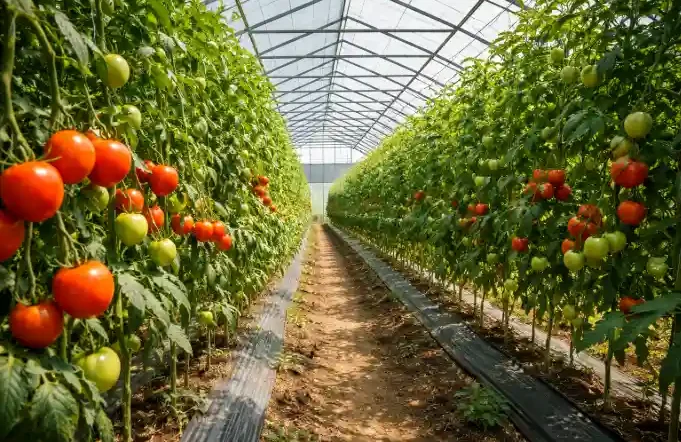
- Greenhouse Tomatoes: A single 8m x 30m greenhouse needs about 1,000 litres per day. A borehole yielding 2,000 L/h can support up to 15 greenhouses comfortably.
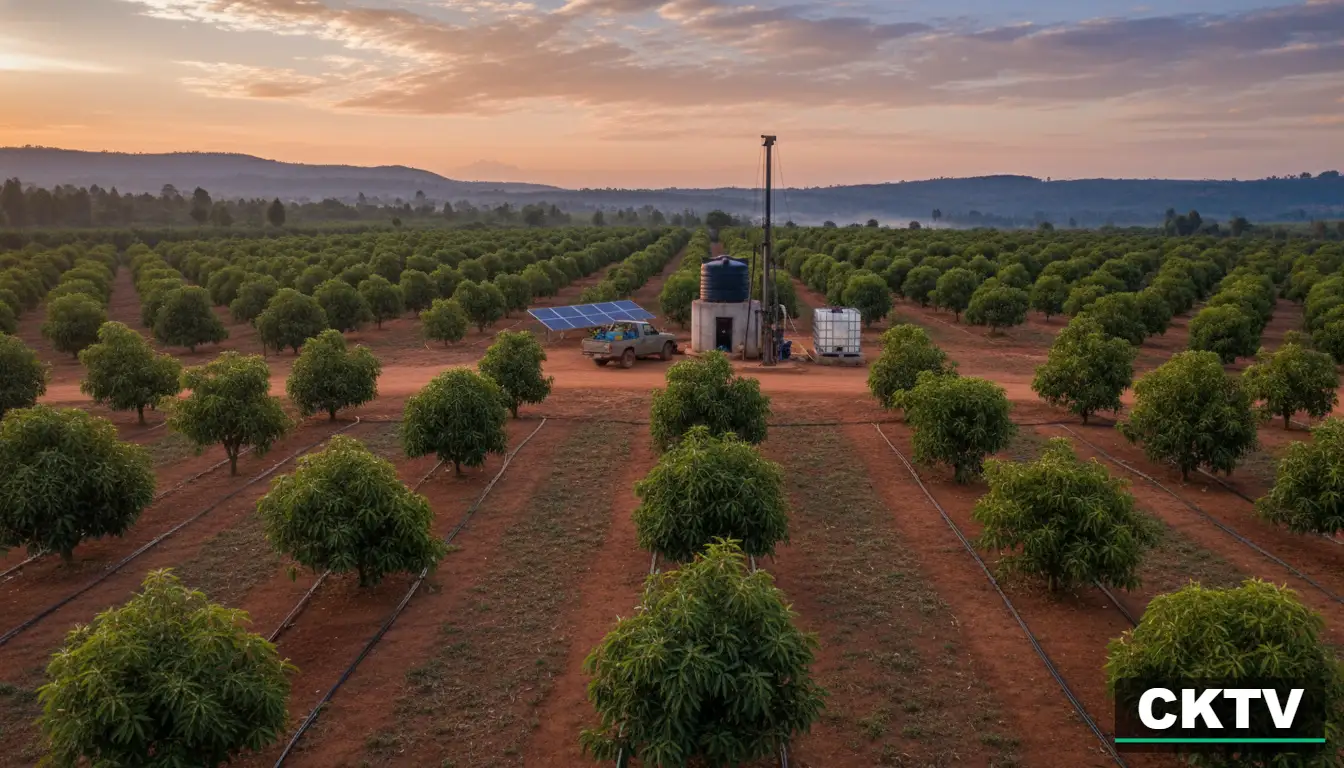
- Avocado Orchard (5 Acres): Mature trees need roughly 30,000 to 45,000 litres daily during the dry season. You will need a yield of at least 5,000 L/h to irrigate during daylight hours.
- Dairy Unit (20 Cows): Including drinking water and cleaning, you need about 3,000 litres daily. Even a low-yield borehole (1,000 L/h) is more than sufficient.
Best Areas in Kenya for Borehole Water
The Central Highlands and Rift Valley offer the highest yield potential, though drilling is difficult due to hard rock. The Coastal and North Eastern regions have high water tables but face severe salinity and fluoride challenges. Nairobi and Kiambu are “stressed” zones where depth and yield are increasingly unpredictable.
Water quality is just as important as quantity. In the Rift Valley (Nakuru, Naivasha, Baringo), water is often high in fluoride. While this is acceptable for most crops, it can cause “browning” in certain flowers and is unhealthy for human consumption without expensive de-fluoridation filters. In contrast, the Coastal strip frequently yields saline water, which can kill sensitive crops like avocados and ruin soil structure over time.
If you are drilling in a “saline zone,” you must budget for a Reverse Osmosis (RO) system. In 2026, RO technology has become more compact, but a system capable of treating 2,000 litres per hour still costs between KES 600,000 and KES 1.2 million. Always wait for the official laboratory water analysis before purchasing your irrigation equipment, as the chemical composition of the water dictates which pipes and drippers will last.
Biggest Borehole Mistakes Farmers Make
The most expensive mistake is choosing a contractor based solely on the lowest price. Cheap drillers often use thin, non-standard casing that collapses under pressure or skip the gravel packing process, leading to “sandy” water that destroys your pump in months.
In the agribusiness sector, a “cheap” borehole is usually the most expensive one in the long run. I have seen countless farmers lose KES 1 million because they hired a driller who used Class B uPVC casing (intended for surface drainage) instead of Class D or E (intended for deep wells). When the earth shifts, the weak casing buckles, and the borehole is permanently lost. There is no way to “repair” a collapsed borehole; you have to start again from zero.
Other common pitfalls include:
- Skipping the Yield Test: Buying a high-capacity pump for a low-yield well. The pump will suck the well dry in minutes, overheat, and burn out its motor.
- Poor Tank Elevation: Not building a high enough stand. For drip irrigation to work efficiently, your tanks should be at least 3 to 6 metres above the highest point of the farm.
- Ignoring the Capping: Failing to properly seal the top of the borehole. This allows surface runoff and bacteria to enter the well, contaminating your entire water supply.
How to Choose a Borehole Drilling Company in Kenya
Verify that the company is registered with the National Construction Authority (NCA) and the Water Resources Authority (WRA). Ask for a list of at least five successfully completed boreholes in your specific county and visit them. A reputable firm will provide a detailed contract with clear warranties on the hole and the equipment.
The drilling market in Kenya is flooded with “independent operators” who own a rig but lack the engineering expertise to handle complex geological challenges. When vetting a company, look for those who employ their own geologists and technicians rather than outsourcing every phase. A good company will conduct a site visit before giving you a final quote and will be transparent about the risks of encountering “lost circulation” or “collapsing sand.”
The Professional Red Flag Checklist: 1. They don’t ask for your WRA or NEMA permits before moving the rig to the site. 2. They offer a “flat price” that includes drilling to any depth (this is financially impossible and suggests they will stop early). 3. They cannot provide a manufacturer’s certificate for the casing they intend to use. 4. They don’t have a dedicated “test pumping” unit and try to use the drilling rig’s air compressor to estimate yield. 5. They demand 100% of the payment before the rig arrives.
Is Drilling a Borehole Worth It for Kenyan Farmers?
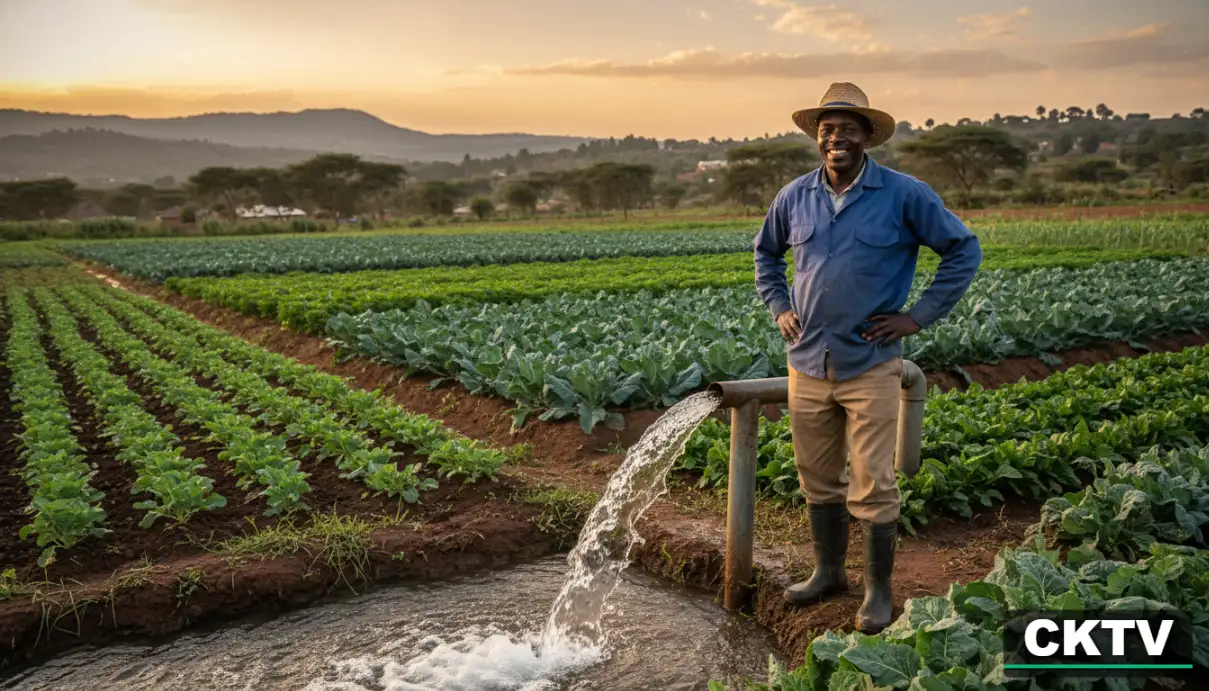
Yes, for commercial high-value farming, a borehole typically pays for itself within 3 to 5 years. By allowing for off-season production when market prices are 2x higher, a borehole transforms a farm from a weather-dependent gamble into a predictable, year-round manufacturing business.
The financial justification for a borehole is simple: market timing. In 2026, rainfall patterns in Kenya have become so erratic that “rain-fed” farming is now considered a high-risk activity. A farmer with a borehole can plant in June and harvest in October when the market is dry and prices are at their peak. This “price premium” is what pays back the KES 1.5 million investment in a borehole.
Read Also: Top 5 High-Yield 3-Month Crops in Kenya (2026 Profit Guide + ROI Breakdown)
Consider the case of Hass avocados. A 5-acre orchard requires consistent water during the flowering and fruit-setting stages. If the rains fail during these three weeks, you lose 80 percent of your crop. With a borehole, you ensure a full harvest every year regardless of the weather. For a serious commercial investor, a borehole isn’t an “option”-it is the foundation of the entire business model.
Final Thoughts for 2026 Investors
The cost of drilling a borehole in Kenya has stabilized in 2026, but the complexity of the project remains high. As groundwater levels in major agricultural zones continue to fluctuate, the precision of your planning becomes the difference between success and failure. Do not look for the cheapest way to dig a hole; look for the most professional way to build a water utility. Your farm’s survival for the next thirty years depends entirely on the quality of the infrastructure you put in the ground today.
Ensure you work with licensed professionals, use high-grade materials, and prioritize solar energy to keep your long-term costs manageable. A well-constructed borehole is more than just a source of water; it is the ultimate insurance policy for your agricultural legacy in Kenya.
Farmers Also Ask (FAQ)
How much does drilling a borehole cost in Kenya in 2026?
A complete project including permits, 150m drilling, and solar pump setup averages KES 1.4 million to KES 1.8 million depending on the specific location and geology.
What is the borehole drilling cost per metre in Kenya?
The current market rate is KES 6,500 to KES 9,500 per metre. This covers drilling and standard uPVC casing but excludes mobilization and pump costs.
How much does a 100 metre borehole cost in Kenya?
A 100m borehole project typically costs between KES 900,000 and KES 1.2 million fully equipped with a solar pumping system and basic storage.
How much are WRA and NEMA permits for borehole drilling in Kenya?
Total regulatory and professional fees for surveys and permits currently range from KES 85,000 to KES 150,000 in 2026.
Is borehole drilling cheaper in Ngong, Kajiado or Nairobi?
Nairobi is generally cheaper for mobilization, but Kajiado and Ngong often require deeper drilling and harder rock penetration, increasing the total bill.
What are the hidden costs of drilling a borehole in Kenya?
Hidden costs include mobilization fees, test pumping for 24 hours, water lab analysis, elevated tank stands, and the main plumbing to your irrigation field.
Is solar or electric borehole pumping cheaper for farmers?
Solar is the cheaper option long-term. While it costs more to install, it has zero monthly electricity bills, making it far more profitable for irrigation.
How long does a borehole last in Kenya?
A professionally constructed borehole using Class D uPVC casing can last 30 to 50 years. Pump life is typically 10 to 15 years with proper maintenance.
Can a borehole dry up during drought seasons in Kenya?
Yes, if it is too shallow or if the aquifer is over-exploited. A deep borehole into a confined aquifer is much more resilient during extended droughts.
What should farmers check before hiring a borehole drilling company in Kenya?
Check for valid WRA and NCA licenses, verified references in your county, and ensure they provide a detailed contract with casing specifications and warranties.