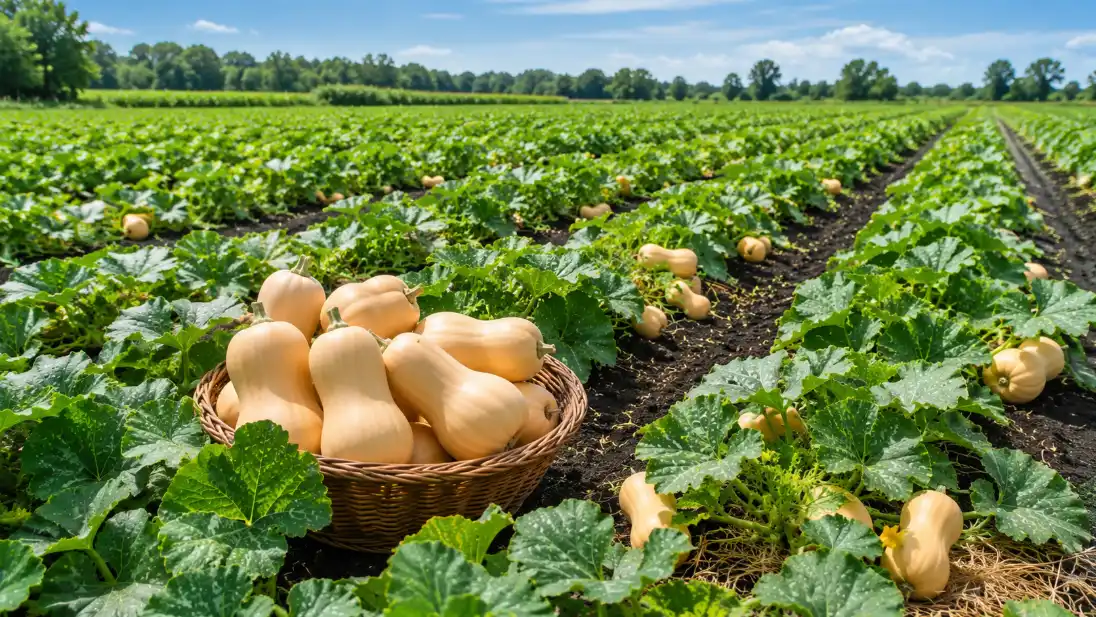

- 2026 Profitability: Commercial butternut farming in Kenya currently yields net profits between KES 250,000 and KES 550,000 per acre, driven by high urban demand and export potential.
- Production Standard: High-performing hybrid varieties like Atlas F1 can produce 12 to 18 tonnes per acre within 90 days when managed under drip irrigation and strict nutrient protocols.
- Strategic Advantage: Unlike highly perishable vegetables, the long shelf life of butternuts allows Kenyan farmers to bypass brokers and wait for price peaks in the local market.
Table of Contents
Butternut farming has evolved from a secondary kitchen garden activity into a high-stakes commercial powerhouse within the Kenyan horticultural sector. In 2026, the crop stands as a beacon of stability for farmers looking to escape the volatility of traditional maize or tomato farming. The shift is primarily fueled by a growing middle class in Nairobi, Mombasa, and Kisumu seeking nutrient-dense alternatives to starch-heavy diets.
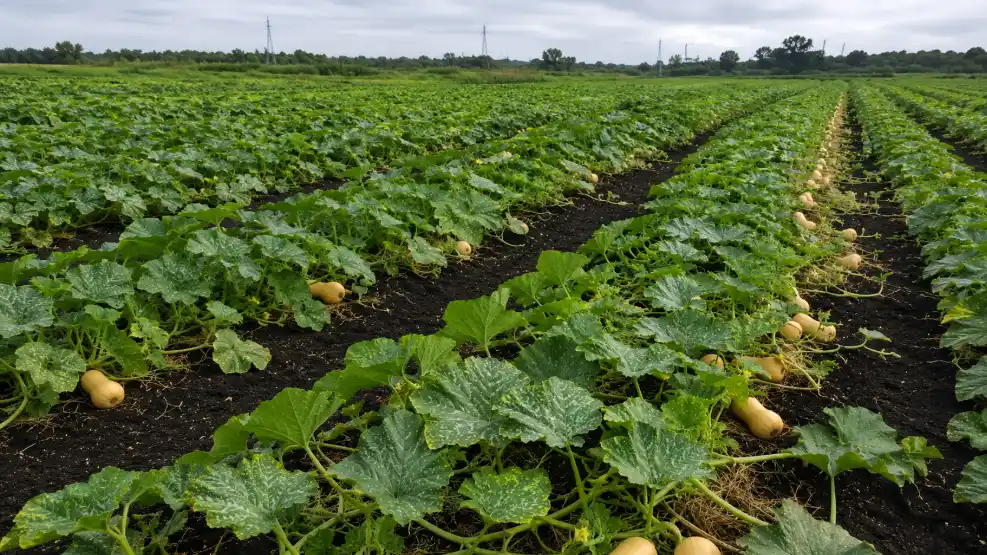
The Kenyan agricultural landscape is currently witnessing a professionalization of the “squash business.” Small-scale growers are transitioning into medium-scale commercial entities by adopting hybrid seeds and precision irrigation. This guide strips away the agricultural fluff and provides a brutally honest, data-driven analysis of what it takes to succeed in the butternut market today.
Success in this venture is no longer about having land and rain. It is about market timing, soil chemistry, and rigorous pest management. Farmers who treat butternut as a “plant and forget” crop are failing, while those implementing technical precision are reaping massive rewards. The 2026 market rewards quality, uniformity, and consistency above all else.
Why Butternut Farming Is Becoming a Serious Agribusiness in Kenya
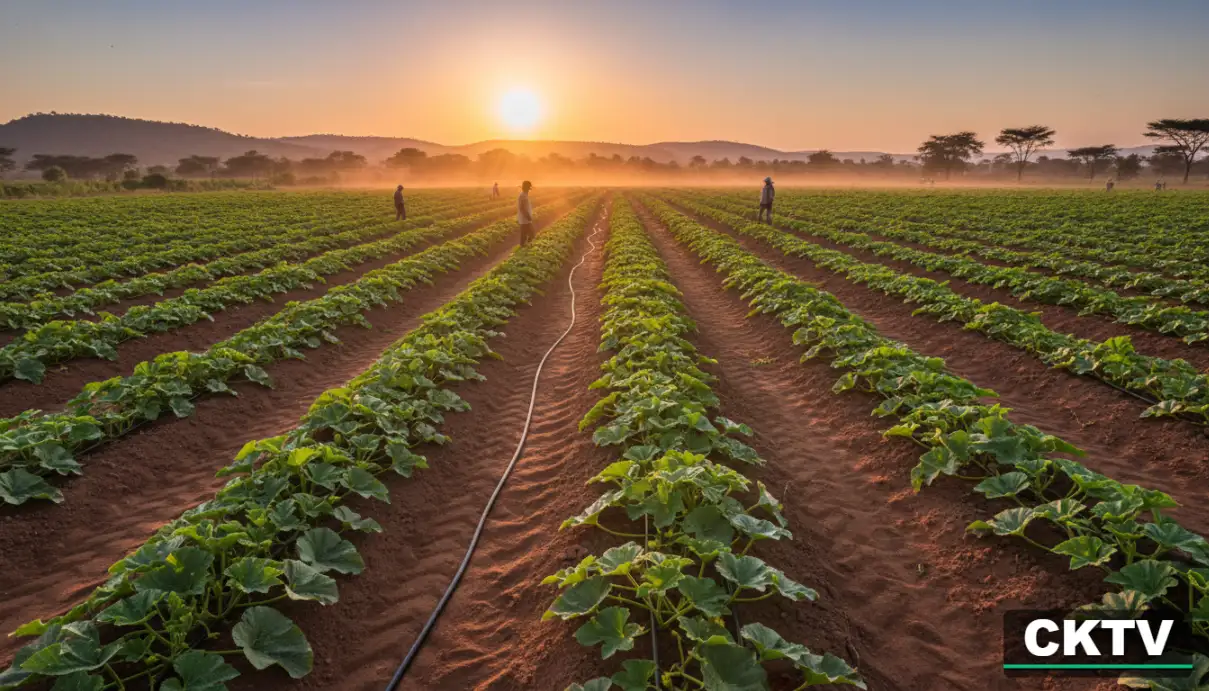
Butternut farming is surging in Kenya due to its low water requirements, 6-month shelf life, and high resistance to common bacterial wilts. With rising food prices, consumers are choosing butternuts for their versatility and nutritional value, creating a consistent market gap for professional growers.
The rise of food prices in Kenya has forced a significant shift in household consumption habits. Butternut squash is increasingly viewed as a premium yet affordable food source that serves as a base for soups, weaning foods, and side dishes. This growing local demand is supplemented by a robust institutional market including hospitals, schools, and the hospitality industry.
Processors are also entering the fray, seeking butternuts for the production of fortified flours and pre-packaged vegetable mixes. In the export sector, Kenyan butternuts are finding their way into regional markets like the UAE and Europe during the winter months. This diversified demand profile provides a safety net that most other horticultural crops simply cannot offer.
Read Also: Sweet Potato Farming in Kenya 2026: Complete Guide From Planting to Profit
Counties in semi-arid regions like Kajiado, Machakos, and parts of Taita Taveta are leading the production surge. The crop’s inherent drought tolerance makes it a safer bet than tomatoes or capsicums in the face of erratic rainfall patterns. However, the difference between a surviving crop and a profitable one lies in the farmer’s ability to supply supplemental irrigation during critical growth stages.
Is Butternut Farming Profitable in Kenya?
Yes, it is exceptionally profitable. A well-managed acre costs approximately KES 140,000 to produce and can generate a gross revenue of KES 450,000 to KES 800,000. Net margins frequently exceed 200 percent when harvests coincide with the dry season price spikes.
Profitability in 2026 is determined by three factors: variety choice, water management, and market timing. While many farmers focus solely on the cost of seeds, the real profit drivers are the yield per plant and the final fruit weight. A single hybrid plant can produce up to 10 fruits if fed correctly, significantly lowering the cost of production per kilogram.
The average market price in Nairobi’s Wakulima Market currently fluctuates between KES 40 and KES 75 per kilogram. During the glut season, prices may dip, but the butternut’s ability to be cured and stored for months means a smart farmer can wait for the market to recover. This storage capability is the ultimate “profit insurance” in the Kenyan context.
Investors must account for transport and brokerage fees, which can eat into margins if not planned. Direct-to-retailer models are becoming more popular, where farmers supply supermarkets like Naivas or Carrefour directly. This bypasses the traditional broker system, allowing the farmer to retain an additional 15 to 20 percent of the final retail price.
The table below outlines a realistic financial projection for a one-acre butternut enterprise based on 2026 input costs and average market realizations.
| Expense Category | Estimated Cost (KES) | Notes on Expenditure |
|---|---|---|
| Land Lease & Prep | 20,000 | Includes tractor ploughing and harrowing. |
| Hybrid Seeds (1.5kg) | 25,000 | Based on high-yield Atlas F1 pricing. |
| Fertilizers (Base & Top) | 40,000 | DAP, CAN, and NPK Stage 2. |
| Pest & Disease Control | 15,000 | Fungicides, fruit fly traps, and insecticides. |
| Labor & Irrigation | 45,000 | Weeding, spraying, and pump fuel. |
| Total Cost | 145,000 | Standard commercial production cost. |
| Gross Revenue | 500,000 | Based on 10 tons at KES 50/kg. |
| Net Profit | 355,000 | Realistic profit for an organized farmer. |
Climate, Soil and Site Selection Requirements
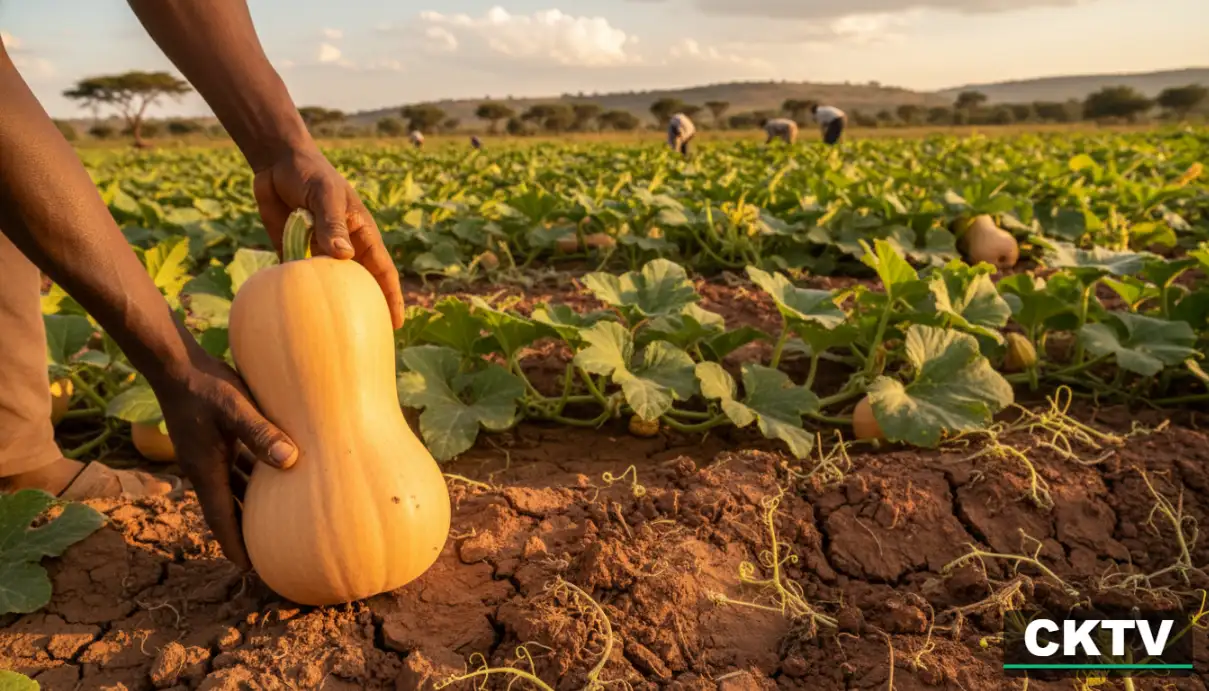
Butternuts require warm temperatures (18 to 30 degrees Celsius) and well-drained soils with a pH of 6.0 to 7.5. Poor site selection in waterlogged or frost-prone areas will lead to total crop failure regardless of seed quality or fertilizer application.
The ideal location for butternut farming in Kenya is characterized by high solar radiation and low humidity. Areas like Narok, Kajiado, Nakuru, and the lower zones of Meru and Embu provide the perfect thermal environment. High humidity is the enemy of the butternut farmer, as it encourages the rapid spread of powdery and downy mildew.
Soil structure is more important than soil fertility. While fertility can be added through amendments, poor drainage will cause root rot (Pythium) that kills plants overnight. If your soil has high clay content, you must invest in raised beds. Sandy loam soils are preferred because they allow for deep root penetration and easy nutrient uptake.
Read Also: Tomato Farming in Kenya 2026: Complete Guide From Nursery to Harvest
Site selection also involves assessing the historical use of the land. Avoid planting butternuts on land that recently hosted other cucurbits like watermelons, cucumbers, or pumpkins. This rotation is vital to avoid soil-borne diseases and pests like nematodes. A soil test is mandatory before the first planting to determine the exact lime and manure requirements.
Best Butternut Varieties in Kenya
In the 2026 market, the distinction between hybrid and open-pollinated varieties (OPV) has never been more critical. While OPVs like Waltham are cheaper to purchase, they lack the uniformity and disease resistance required for high-end retail markets. Most successful commercial farmers have fully transitioned to F1 hybrids.
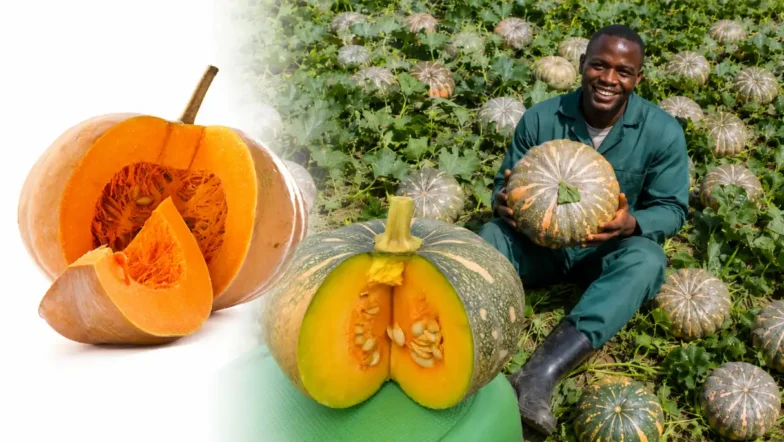
Atlas F1 remains the gold standard in Kenya due to its vigorous growth and massive yield potential. It produces large, uniform fruits with a deep orange flesh that consumers prefer. Pluto F1 is another popular choice, often favored for its slightly smaller, retail-ready fruit size that fits perfectly into supermarket weighing scales. These hybrids are bred specifically to withstand the heat of the Kenyan plains.

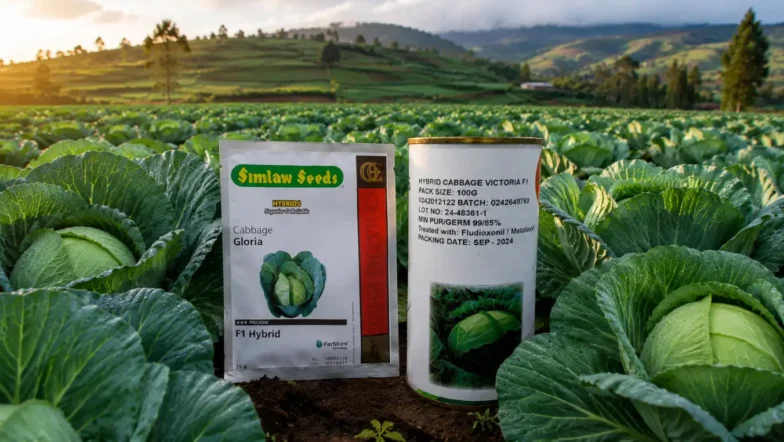
Farmers must be wary of “fake seeds” or recycled seeds sold in informal markets. Recycled seeds lose their hybrid vigor, leading to unpredictable fruit sizes and high susceptibility to viruses. Always source seeds from reputable distributors like Sakata, Simlaw, or East African Seed, and ensure the KEPHIS certification sticker is intact and valid.
| Variety | Maturity (Days) | Yield Potential (Tons/Acre) | Market Preference |
|---|---|---|---|
| Atlas F1 | 90 – 105 | 12 – 18 | Highest (Supermarkets & Exports) |
| Pluto F1 | 85 – 95 | 10 – 14 | High (Local Retail & Hotels) |
| Barbara F1 | 90 – 100 | 11 – 15 | High (Processing & Flours) |
| Waltham (OPV) | 105 – 120 | 6 – 9 | Medium (Informal Markets) |
Where to Source butternut Quality Seeds
For commercial butternut farming, avoid informal “open-market” seeds. Stick to KEPHIS-certified distributors to ensure you are getting genuine F1 hybrid varieties with guaranteed germination rates and disease resistance.
- Seed Co Kenya: A premier supplier known for its research-backed vegetable seeds. They offer a wide range of vegetable portfolios and can provide specific guidance on seed rates and yield potential. Visit their website at seedcogroup.com/ke to view their catalog.
- Royal Seed (Kenya Highland Seed): An ISO-certified company that maintains a “Centre of Excellence” in Athi River to support farmers with practical knowledge. They have an extensive distribution network across the country. Explore their latest high-yield varieties at royalseed.biz.
- AgriJibu: An online marketplace that simplifies the purchase of farm inputs, offering a one-stop-shop experience for seeds, tools, and fertilizers. You can browse their selection of vegetable seeds and place orders directly via agrijibu.co.ke.
- Simlaw Seeds: A trusted pillar in the Kenyan agricultural sector, Simlaw offers professional-grade butternut seeds backed by years of regional performance data. You can view their available squash varieties and order directly through their official portal at simlaw.co.ke.
- AgroPests: This supplier provides high-quality vegetable seeds tailored for the modern Kenyan farmer. Their butternut offerings are curated for commercial success; you can source your planting material through their online catalog at agropests.com.
Professional Agri-Input Suppliers
Beyond seeds, you will need consistent access to specialized fertilizers, drip irrigation kits, and crop protection products. The following suppliers are recognized for their technical support and product reliability:
Kuza Agrochem: A Nairobi-based supplier of essential farming inputs, ranging from foliar fertilizers to farm machinery. For inquiries or support, you can contact them at (+254) 759-896-408 or visit kuzaagrochem.co.ke.
Elgon Kenya Ltd: As one of the largest agri-input suppliers in East Africa, Elgon Kenya provides a comprehensive range of products, including fertilizers, irrigation systems, and greenhouse solutions. They are highly regarded for their technical expertise and “one-stop-shop” model. Visit them at elgonkenya.com.
Lachlan Kenya Limited: Focuses on premium agricultural solutions, providing effective crop protection, nutrition, and high-quality seeds. You can reach their toll-free support line at 0800 721 498 or visit lachlankenya.com for their full product catalog.
Kenagro Suppliers Limited: A trusted name in the supply of high-quality crop protection products, specialty fertilizers, and agricultural disinfectants. They emphasize on-time delivery and provide support via email at [email protected] or their website at kenagrosuppliers.co.ke.
Land Preparation and Soil Management
Commercial land preparation starts with deep ploughing to break any hardpans and allow for maximum root expansion. Butternuts have a deep taproot system that can reach over a meter into the soil if unobstructed. Following the initial plough, harrowing is necessary to achieve a fine tilth, which ensures better seed-to-soil contact during germination.
Incorporating organic matter is the secret to high-quality fruit skin and long shelf life. Apply well-rotted cattle or goat manure at a rate of 5 to 10 tonnes per acre at least two weeks before planting. Manure improves the soil’s cation exchange capacity, making the synthetic fertilizers you apply later far more effective. Avoid fresh manure as it can introduce pathogens and weed seeds.
Raised beds or ridges are highly recommended for butternuts, especially in areas prone to sudden heavy downpours. Ridges should be at least 30cm high. This practice prevents the fruits from sitting in mud, which causes soil scarring and rot. It also makes the installation of drip tapes more organized and helps in targeted fertilizer application.
Butternut Spacing in Kenya
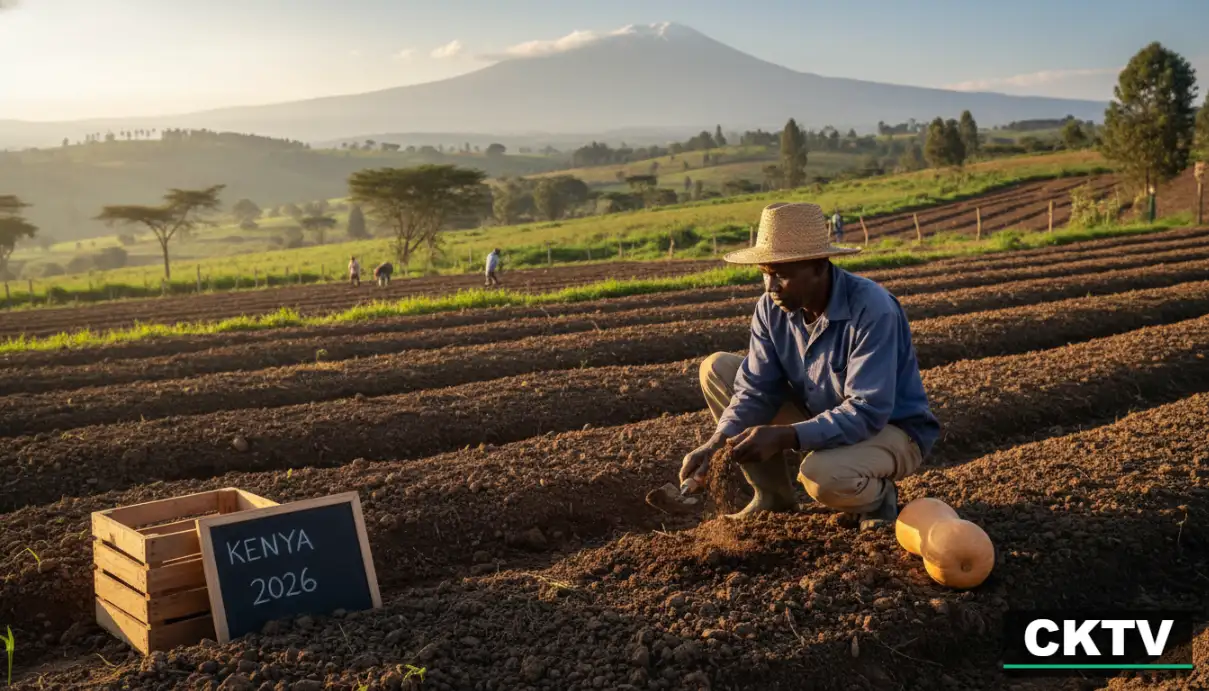
Optimal spacing for butternut is 60cm between plants and 150cm between rows. This spacing achieves a population of roughly 4,400 plants per acre, which balances individual plant productivity with effective field management and airflow.
Spacing is not just about fitting as many plants as possible; it is about managing the microclimate under the leaf canopy. If plants are too close, humidity levels rise, creating a breeding ground for fungal diseases. Proper spacing allows for sunlight to reach the lower parts of the vine, which is essential for the development of healthy female flowers.
In 2026, many farmers are experimenting with wider row spacing (up to 200cm) if they are using mechanized equipment for weeding or spraying. However, for manual farming, the 150cm inter-row distance remains the sweet spot. This allows the vines to fully cover the ground, which naturally suppresses weeds through shading once the canopy is established.
Read Also: Vegetable Farming for Profit in Kenya: Okra, Spinach & Dhania Guide (2026)
Overcrowding is the primary cause of small, unmarketable fruits. When plants compete for light and nutrients, they prioritize vine growth over fruit bulking. By sticking to the recommended 60cm by 150cm spacing, you ensure each plant has enough “territory” to produce at least four to five high-quality fruits weighing between 1kg and 1.5kg each.
Seed Rate and Plant Population Per Acre
To achieve the target population of 4,400 plants per acre, you will require approximately 1kg to 1.5kg of seed depending on the seed size and variety. Most hybrid seeds are sold by count (e.g., packs of 1,000 seeds). For an acre, buying 5,000 seeds is the safest bet to account for potential germination issues and early-stage pest damage.
Direct sowing is the most common method in Kenya. Place two seeds per hole at a depth of 2 to 3 cm. Once the seedlings have reached about 10cm in height, thin them out to leave the single strongest plant per station. Thinned plants can be discarded; do not try to transplant them as butternuts have sensitive roots and rarely survive the move.
Germination usually takes 5 to 10 days depending on soil temperature and moisture. If the soil is too cold or too wet, seeds may rot before they sprout. To ensure a 95 percent germination rate, treat the soil with a mild fungicide drench during the first watering. This protects the vulnerable seeds from damping-off pathogens during their first few days in the ground.
Fertilizer Program and Feeding Schedule
A commercial feeding schedule must include DAP at planting (75kg/acre), CAN for top-dressing at week 4 (50kg/acre), and NPK 17:17:17 during fruit set (75kg/acre). Foliar feeds rich in Boron and Calcium are essential to prevent flower drop and ensure fruit density.
Butternuts are hungry crops. They require a steady supply of nutrients to build the massive biomass needed to support heavy fruits. The initial phosphorus from DAP is critical for root development. Without a strong root system, the plant will struggle to take up water during the heat of the day, leading to stunted growth and small fruit sizes.
Nitrogen is the fuel for vine growth, but it must be managed carefully. Over-application of nitrogen after the flowering stage will result in “all leaves and no fruit.” This is a common mistake where farmers see lush green vines but very few butternuts. Transitioning to potassium-rich fertilizers once the first fruits appear is vital for sugar accumulation and skin hardening.
Micronutrients are the silent yield killers. Boron deficiency leads to poor pollination and deformed fruits, while calcium deficiency causes blossom end rot. Use high-quality foliar sprays every 14 days starting from the onset of flowering. These sprays should be applied early in the morning when the stomata are open for maximum absorption.
| Growth Stage | Fertilizer Type | Application Rate |
|---|---|---|
| Planting | DAP + Manure | 75kg DAP / 5 Tons Manure per acre |
| Vegetative (Week 3) | CAN | 50kg per acre (Side dressing) |
| Flowering (Week 6) | NPK 17:17:17 + Boron Foliar | 75kg NPK / Foliar as per label |
| Fruit Bulking (Week 9) | Multi-K (Potassium Nitrate) | Foliar spray for fruit weight |
Irrigation and Water Management
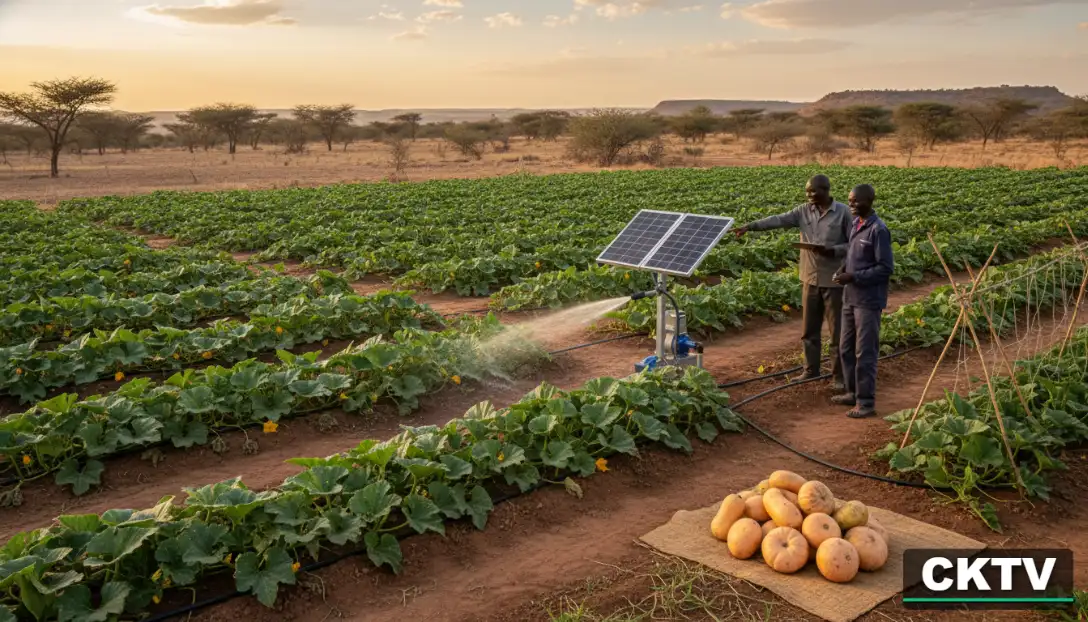
The transition to drip irrigation is the single biggest factor separating profitable butternut farmers from those who fail. Rain-fed butternut farming is becoming increasingly risky in Kenya due to the unpredictability of the seasons. Drip systems allow for precise water delivery to the root zone, reducing wastage and keeping the foliage dry to prevent fungal outbreaks.
Butternuts have specific water “critical periods.” The first is during germination and early establishment. The second, and most important, is during flowering and fruit set. If the plant experiences water stress during flowering, it will abort the female flowers to conserve energy. This results in a “low fruit count” that destroys the season’s profitability.
Irrigation should be consistent but not excessive. Over-watering can lead to fruit cracking and a reduction in the sugar content (Brix level) of the flesh. In 2026, smart farmers are using soil moisture sensors to trigger their irrigation pumps, ensuring the soil remains in the “moist but not saturated” zone. Mulching with dry grass further helps in retaining moisture and keeping the fruits off the damp soil.
Pollination and Fruit Formation
Butternuts rely entirely on bees for pollination. Each female flower must be visited multiple times by bees to ensure full pollination. Poor pollination results in small, misshapen fruits or young fruits that turn yellow and fall off the vine.
A common frustration for new farmers is seeing plenty of flowers but no fruits. Butternut plants produce separate male and female flowers on the same plant. The female flowers are easily identified by a tiny fruit-like swelling at the base of the petals. If this swelling does not grow after the flower closes, it means pollination failed.
To maximize pollination, commercial farmers often place beehives near their butternut fields. Avoid spraying any insecticides during the day when bees are active. If you must spray, do it late in the evening after the bees have returned to their hives. Using bee-attractant foliar sprays can also help in areas where natural bee populations are low.
Cold weather or prolonged rain can also interfere with pollination, as bees do not fly in these conditions. While there is little a farmer can do about the weather, ensuring the plants are healthy and well-fed makes the flowers more attractive to pollinators. A healthy flower produces more nectar, ensuring that every bee in the vicinity pays a visit.
Common Diseases and Pests in Butternut Farming
In the 2026 Kenyan context, the fruit fly is the most devastating pest. The female fly stings the young butternut and lays eggs inside. As the larvae hatch, they eat the fruit from the inside, causing it to rot and drop. Management requires the use of pheromone traps (like Fruit Fly Mania) and strict field hygiene. Any infested fruit must be buried deep or burnt immediately.
Powdery mildew is the most common disease, appearing as white spots on the leaves. It thrives in hot, dry conditions with high humidity at night. If left unchecked, it kills the leaves, leading to sunscald on the fruits and reduced yields. Preventative spraying with sulfur-based fungicides or systemic options like Azoxystrobin is the standard commercial practice.
Read Also: Top 5 High-Yield 3-Month Crops in Kenya (2026 Profit Guide + ROI Breakdown)
Bacterial wilt, though less common in butternuts than in cucumbers, can still be a threat. It is often spread by beetles. Once a plant has wilt, there is no cure. The only solution is to uproot the affected plant and control the vector insects. Rotating with non-cucurbit crops like onions or garlic is the best long-term prevention strategy.
Weed Management and Mulching
Weeds are the silent thieves of fertilizer and water. In the first four weeks, butternuts are very poor competitors. If weeds are allowed to establish, they will shade out the young seedlings and harbor pests like aphids and whiteflies. Manual weeding must be done carefully to avoid damaging the shallow root system of the butternut plants.
Once the vines begin to “run,” manual weeding becomes difficult without stepping on the plants. This is where mulching becomes invaluable. Plastic mulch is gaining popularity in commercial farms in Nakuru and Kajiado. It suppresses weeds entirely, conserves moisture, and ensures the harvested fruits are clean and free from soil stains, which is a requirement for the export market.
If using herbicides, extreme caution is required. Butternuts are highly sensitive to drift from broadleaf herbicides. Most farmers prefer to use a pre-emergence herbicide before planting and then rely on manual spot-weeding or mulching thereafter. A clean field not only yields more but also makes harvesting much faster and cheaper.
How Long Does Butternut Take to Mature?
Most hybrid butternuts take 85 to 105 days to reach full maturity. Factors such as altitude, temperature, and variety can shift this timeline by up to 14 days. Proper maturity is signaled when the vine begins to dry and the fruit skin turns a dull, uniform tan.
Maturity is a biological process that cannot be rushed. Some farmers attempt to harvest early to catch a high market price, but immature butternuts have poor flavor and a shelf life of only a few days. The fruit is ready when the “ground spot” (the part of the fruit touching the soil) turns from white to a creamy yellow or light orange.
Temperature plays a massive role in maturity. In warmer areas like the Coast or the Lake Basin, butternuts will mature faster than in the cooler highlands of Nyandarua. Nutrient deficiencies, particularly a lack of potassium, can delay ripening and result in fruits that remain green-streaked for too long. Ensuring a balanced NPK program is the best way to hit your harvest targets on time.
During the final two weeks of maturity, it is advisable to reduce irrigation. This “hardening off” process encourages the fruit to develop a thicker, tougher skin. It also concentrates the sugars in the flesh, leading to a better-tasting product that will command a premium at the market. A well-matured butternut should sound hollow when tapped, similar to a ripe watermelon.
Yield Expectations Per Plant, Acre and Hectare
Yield is the ultimate metric of success. In 2026, a “good” yield for a commercial farmer in Kenya is 10 to 12 tonnes per acre. Exceptional farmers using high-tech irrigation and premium hybrids are hitting 18 tonnes per acre. On a per-plant basis, you should aim for a minimum of 3kg of marketable fruit per station.
Rain-fed yields are significantly lower, often averaging 4 to 6 tonnes per acre. This is because the plants often suffer from intermittent water stress which limits fruit size and count. For those looking to supply supermarkets, the goal is not just tonnage but “uniformity.” A crop of 10 tonnes of same-sized fruits is far more profitable than 15 tonnes of mixed, misshapen fruits.
The table below provides a realistic yield comparison based on different management levels commonly found in the Kenyan agricultural landscape today.
| Management Level | Yield Per Acre (Tons) | Avg. Fruit Weight (kg) | Primary Market |
|---|---|---|---|
| Low (Rain-fed/OPV) | 4 – 6 | 0.8 – 2.5 | Local Informal Markets |
| Medium (Hybrid/Partial Irrigation) | 8 – 11 | 1.0 – 1.5 | Wholesale/Brokers |
| High (Drip/Hybrid/IPM) | 12 – 18 | 1.1 – 1.3 | Retail/Export/Processors |
Harvesting, Curing and Storage
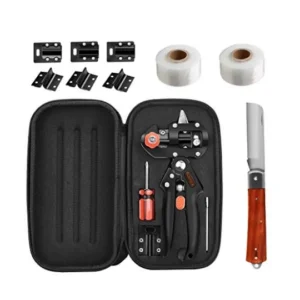
Harvesting is a manual process that requires care. Use sharp pruning shears to cut the fruit from the vine, leaving at least 2 to 3 cm of the stem attached. This “handle” is not for carrying the fruit; it is a seal that prevents bacteria from entering the fruit. If the stem is broken off at the base, the fruit will likely rot within two weeks.
Curing is the most overlooked secret of the butternut business. After harvest, the fruits should be left in a dry, well-ventilated area for 10 to 14 days. During this time, the skin hardens, and the starches convert to sugars. Cured butternuts have a much longer shelf life and a superior taste. This process can be done in a simple shaded shed with racks that allow for airflow around each fruit.
Storage conditions for the 2026 market must be impeccable. Avoid stacking fruits in large piles, as the weight can bruise the ones at the bottom. Store them on wooden pallets or racks in a cool, dry place. Regularly check for any signs of rot and remove affected fruits immediately to prevent the spread of pathogens. Properly cured butternuts can stay fresh for up to 6 months without refrigeration.
Market Opportunities and Buyer Intelligence
The best market opportunities in 2026 are found in direct supply contracts with urban supermarket chains and specialized vegetable exporters. Bypassing the traditional broker-led markets in Gikomba or Wakulima can increase a farmer’s profit margin by as much as 40 percent.
Understanding your buyer is as important as understanding your soil. Supermarkets want 1.2kg fruits with clean, tan skin. Schools and hospitals are less concerned about appearance and more concerned about price per kilogram. Processors look for high dry-matter content and deep orange flesh for flour production. Tailor your variety and management to your target buyer.
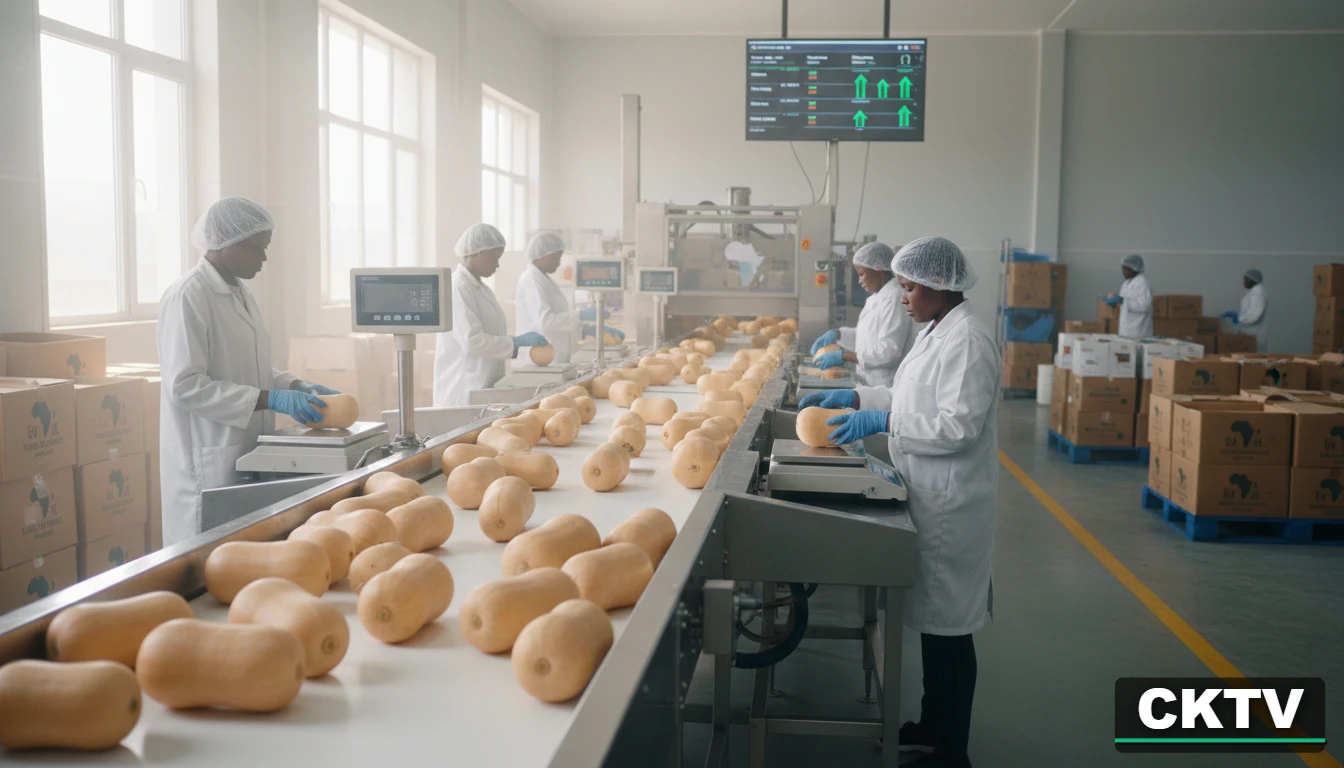
Contract farming is becoming a popular way to de-risk the business. Several companies in Kenya now offer “buy-back” agreements where they provide the seeds and technical support in exchange for a guaranteed harvest at a pre-agreed price. While this might limit your “upside” during price spikes, it protects you from the devastating losses of a market glut.
Digital platforms are also changing the game. Apps that connect farmers directly to restaurants and hotels are proliferating in Nairobi. By using these platforms, farmers can secure orders before they even begin harvesting. This “pull” marketing approach is the future of Kenyan agribusiness, reducing post-harvest losses and ensuring cash flow.
Common Mistakes Destroying Butternut Farming Profits
- Planting in the wrong season: Many farmers plant during the long rains, leading to massive fungal outbreaks and poor pollination. The best profits are made in the off-season under irrigation.
- Ignoring the Fruit Fly: Thinking fruit flies only affect mangoes or watermelons is a fatal error. They can destroy 90 percent of a butternut crop in a matter of days.
- Over-fertilizing with Nitrogen: Excessive Urea or CAN creates beautiful green leaves but zero fruits. Follow a balanced NPK program.
- Poor Post-Harvest Handling: Throwing fruits into the back of a truck like stones causes internal bruising that only shows up when the fruit reaches the customer’s kitchen.
- Relying on “Brokers”: Waiting for a broker to show up at your farm gate gives them all the power. A professional farmer secures their market weeks before harvest.
Risk Management & Crop Insurance
In commercial farming, relying on favorable weather is a gamble, not a business strategy. To secure your investment, you must treat risk management as a non-negotiable operational cost.
- Financial Buffers: Maintain an emergency fund equivalent to 10–20% of your total production cost to cover unexpected spikes in input prices or labor needs.
- Crop Insurance: Protect your farm against total loss from climate disasters like drought, floods, or uncontrollable pest outbreaks.
- Types of Coverage:
- Index-Based Insurance: Uses satellite or weather data to trigger automatic payouts when rainfall or vegetation levels drop below a certain threshold, ideal for small-to-medium operations in remote areas.
- Multi-Peril Crop Insurance (MPCI): Provides comprehensive coverage for high-value crops by assessing field-specific losses, though it is more intensive to implement.
2. Record Keeping & Financial Tracking
Being a good producer is no longer enough to stay in business. Without accurate records, you are merely guessing, which makes it impossible to identify your true profit margins or diagnose inefficiencies.
- Input & Yield Tracking: Record every bag of fertilizer, liter of pesticide, and seed variety used on a field-by-field basis. This allows you to perform year-to-year comparisons to see which techniques actually drive profit.
- Labor & Time Management: Track man-hours for tasks like weeding and harvesting to understand your true “cost of production per ton”.
- Digital Tools: In 2026, you don’t need expensive software to start. Simple Excel templates or farm-management platforms (like Farmis Kenya) are standard tools used by commercial farmers to manage administrative tasks and data collection.
- Financing Advantage: Accurate financial records are mandatory when approaching banks or SACCOs for credit. Lending institutions view organized farmers as “low-risk” borrowers.
Sustainability Note: Crop Rotation
- Why: Alternating crops (e.g., following butternut with legumes) prevents the depletion of specific soil nutrients and disrupts the life cycles of soil-borne pathogens and pests.
- Benefit: It reduces your long-term reliance on synthetic fertilizers and pesticides, effectively lowering your production costs over time.
Final Verdict: Is Butternut Farming Worth It in Kenya in 2026?
The final verdict is a resounding yes, but with a caveat: it is only worth it for those who treat it as a disciplined commercial enterprise. The days of “luck-based” farming in Kenya are over. The 2026 market is competitive, and input costs are too high to allow for sloppy management. Butternut farming rewards the organized and punishes the lazy.
Read Also: Top 10 Best Maize Seeds in Kenya 2026: Prices, Yields & Highest Profit Varieties
If you have access to at least one acre of land, a reliable water source for irrigation, and the capital to invest in high-quality hybrid seeds, the returns are among the best in the horticultural sector. It is a crop that offers a unique combination of drought resilience and high market value. It is the perfect entry point for young “agripreneurs” looking to make a serious mark in the Kenyan economy.
The key is to start with the market in mind. Visit your local supermarkets, talk to the vegetable procurement officers, and understand what they are looking for. Once you have a market target, follow the technical steps in this guide with precision. Butternut farming is not just about growing food; it is about growing a profitable, sustainable business for the future.
Frequently Asked Questions (FAQ)
How profitable is butternut farming in Kenya?
It is highly profitable, with net margins often exceeding KES 300,000 per acre for well-managed commercial farms using hybrid seeds and irrigation.
How many tonnes can one acre of butternut produce?
A commercial acre typically produces 10 to 12 tonnes. High-tech farms using hybrids like Atlas F1 can reach up to 18 tonnes per acre.
What is the best spacing for butternut?
The industry standard is 60cm between plants and 150cm between rows, ensuring a population of approximately 4,400 plants per acre.
How long does butternut take to mature?
Most hybrid varieties take between 85 and 105 days to reach full maturity, depending on the local climate and temperature.
Which fertilizer is best for butternut farming?
Start with DAP for roots, use CAN for vine growth, and switch to NPK 17:17:17 and potassium-rich foliars for fruit development and weight.
How many fruits does one butternut plant produce?
A healthy hybrid plant under irrigation can produce 5 to 10 fruits, though commercial farmers target 4 high-quality fruits for uniformity.
What causes butternut flowers to drop?
Flower drop is primarily caused by water stress during the flowering stage, lack of bee pollination, or Boron deficiency in the soil.
Which diseases affect butternut most?
Powdery mildew and downy mildew are the most common fungal threats, while fruit flies are the most destructive insect pests.
Can butternut farming work under irrigation?
Yes, irrigation is actually the preferred method for commercial farming as it allows for off-season production and consistent yields.
Where can farmers sell butternut in Kenya?
Major markets include Nairobi’s Wakulima, supermarket chains like Naivas, schools, hospitals, and specialized vegetable exporters.