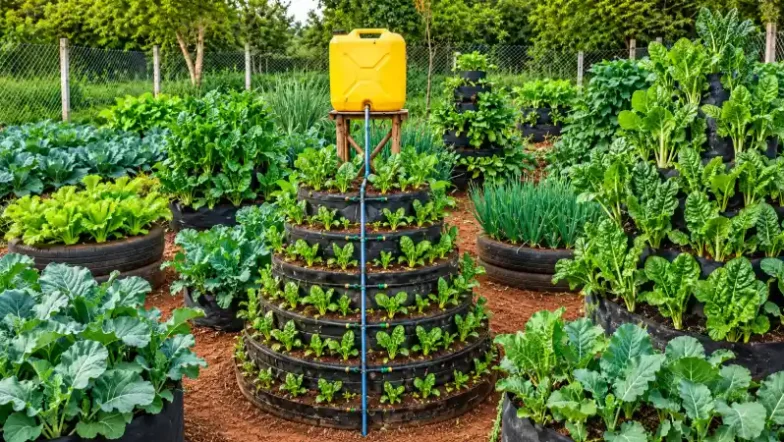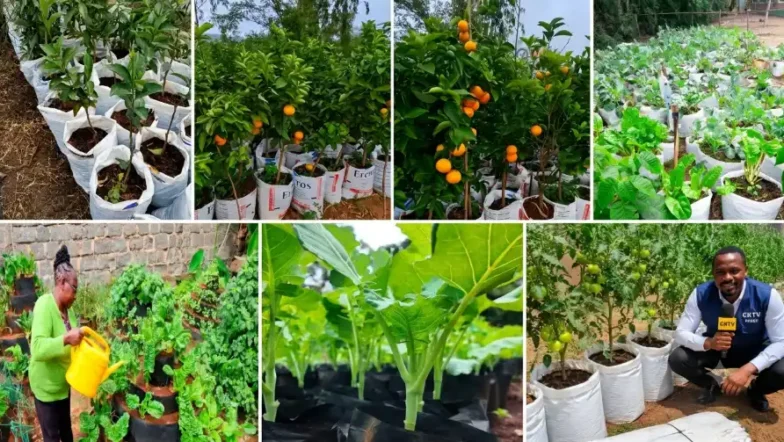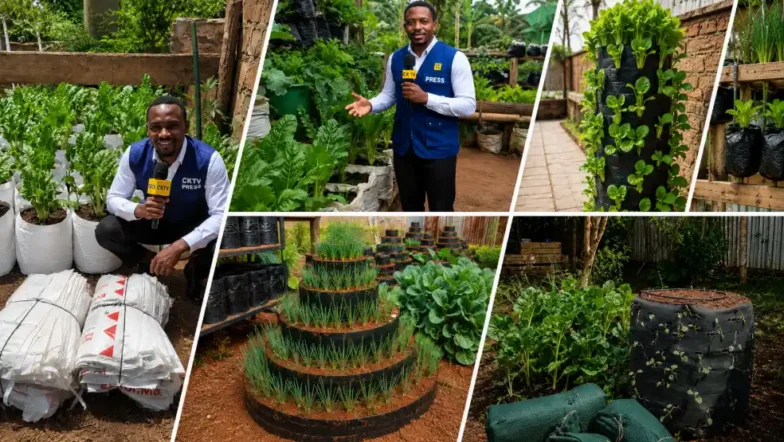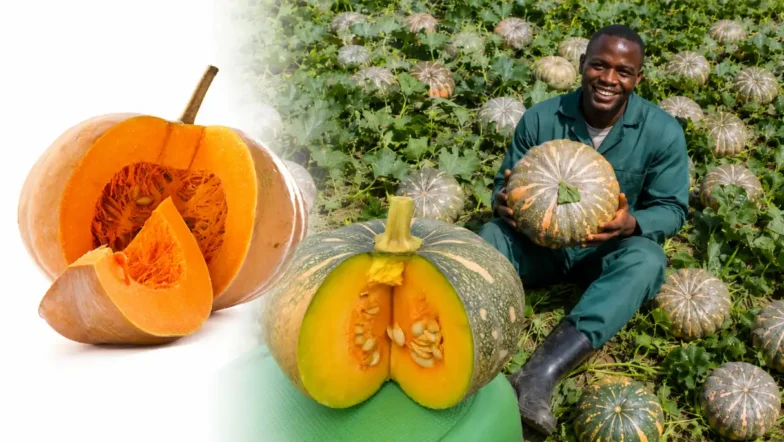
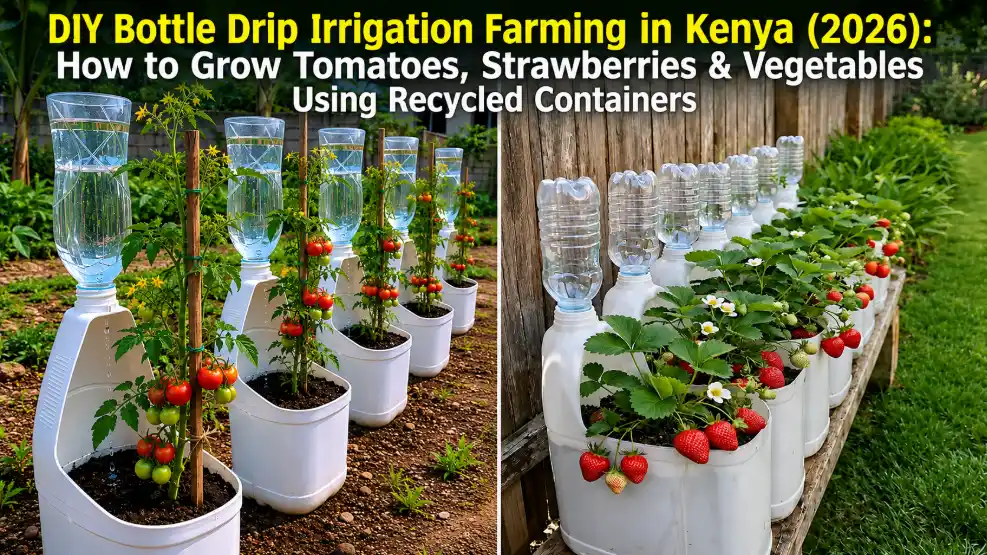

- Resource Efficiency: Recycled bottle drip systems reduce water consumption by 65 percent compared to overhead irrigation, allowing urban farmers in Nairobi and Mombasa to thrive despite rising water tariffs.
- Low Capital Entry: A productive 50-container setup costs approximately KSh 4,800, utilizing recycled plastic waste and locally sourced organic manure to minimize startup expenses.
- High Yield Potential: Using hybrid seeds like Anna F1 and Chandler, a single vertical container garden can produce enough vegetables to offset household grocery costs by KSh 6,000 monthly.
Table of Contents
The agricultural landscape in Kenya has undergone a radical transformation as we navigate 2026. Rapid urbanization in peri-urban areas such as Syokimau, Ruaka, and Kitengela has squeezed traditional farming land into tiny residential plots.
Rising food prices at markets like Muthurwa and Kongowea have forced many households to reconsider their food sources. This shift has birthed a massive movement toward smart, low-cost farming systems that prioritize efficiency over acreage.
Traditional farming is becoming prohibitively expensive for the average Kenyan. The cost of commercial irrigation kits, combined with the labor intensity of manual watering, makes small-scale farming feel out of reach.
However, DIY Bottle Drip Irrigation has emerged as the practical solution for 2026. This system allows you to grow high-value crops like strawberries and tomatoes in recycled containers, turning balconies and backyards into profitable green spaces.
Bottle drip irrigation is a localized watering technique where discarded plastic bottles are repurposed to deliver water slowly to a plant’s root zone.
By controlling the flow through micro-perforations or cotton wicks, farmers maintain constant moisture levels while using minimal water. This method is ideal for container farming on balconies, rooftops, and small urban compounds across Kenya.
Why DIY Bottle Drip Irrigation Farming Is Going Viral in Kenya
The trend is driven by extreme land scarcity, the high cost of living in 2026, and a surge in eco-conscious youth agribusiness. It offers a zero-waste farming model that works in tiny spaces like corridors and fences.
Social media platforms like TikTok have amplified these success stories, showing how recycled waste can generate significant household income.
Read Also: Maximizing Small Spaces: A Practical Guide to Productive Home Gardening in Kenya
Kenyan youth are no longer waiting for large tracts of land in the Rift Valley to start their agribusiness journey. The 2026 “Green Revolution” is happening in 20-liter paint buckets and 2-liter soda bottles.
This method has gone viral because it removes the financial barrier to entry. If you can find a discarded jerrycan and a handful of certified seeds, you are essentially in business. It is the ultimate “lean startup” for the modern Kenyan farmer.
Environmental factors also play a major role in this viral adoption. Kenya faces localized droughts and strict water rationing in major cities. A bottle drip system is not affected by these restrictions because it uses so little water.
Furthermore, it solves the plastic waste problem. By upcycling containers that would otherwise clog drainage systems in estates like Embakasi, farmers are contributing to a cleaner environment while feeding their families.
Food security at the household level is the final driver. With inflation affecting the price of basic greens like Sukuma Wiki and Spinach, having a “living pantry” on your balcony provides a safety net.
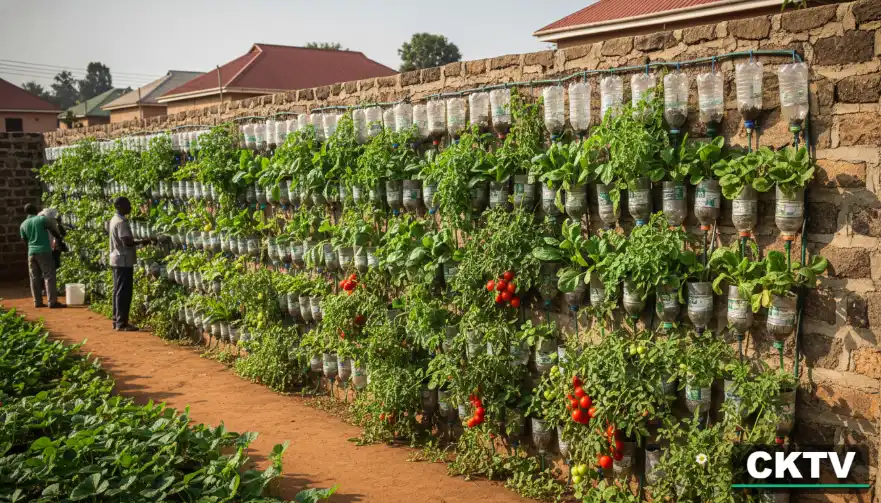
It is common now to see residential fences in areas like Eldoret and Nakuru covered in vertical bottle gardens. These systems provide fresh, organic, and pesticide-free produce daily, which is a major health priority for the modern middle class.
How the DIY Bottle Drip Irrigation System Works
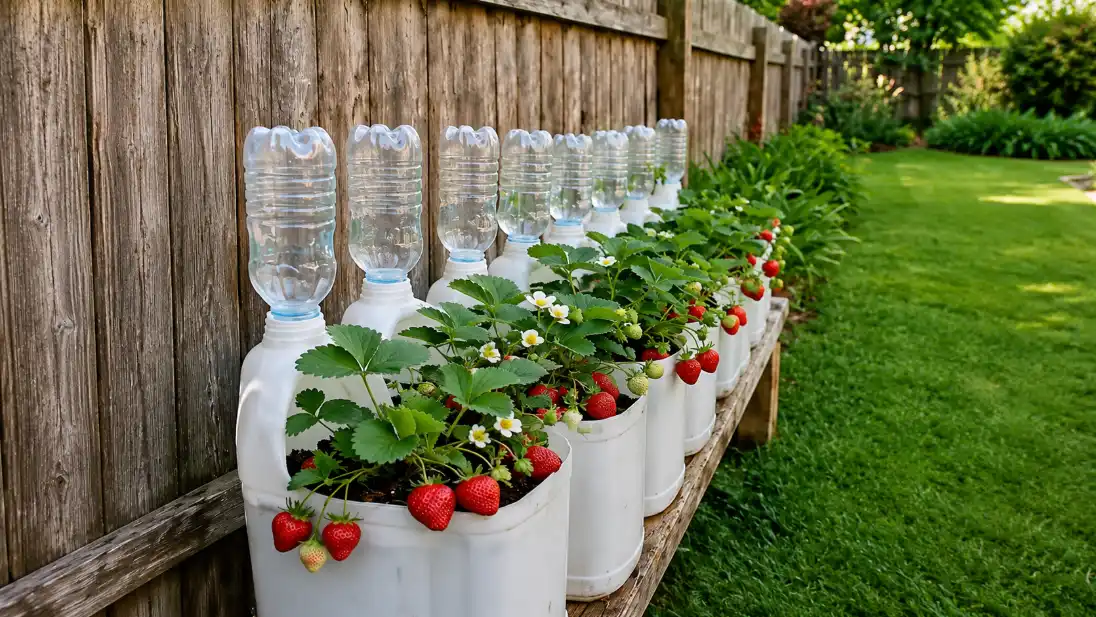
The system utilizes gravity to move water from an inverted bottle into the soil. A small hole in the cap, often fitted with a regulator, allows water to exit drop by drop. This prevents soil saturation while ensuring the roots stay hydrated. The vacuum created inside the bottle regulates the release speed based on soil dryness.
The mechanics of the system are rooted in simplicity and physics. When you invert a water-filled bottle into the soil, the water only escapes when air can enter or when the soil tension pulls it out. This creates a self-regulating mechanism.
In the hot Kenyan afternoon sun, the soil dries faster and pulls more water. During the cooler nights in places like Limuru, the drip rate naturally slows down, preventing waterlogged roots.
Read Also: Tomato Farming in Kenya 2026: Complete Guide From Nursery to Harvest
Consistent moisture is the secret to high yields in container farming. Unlike manual watering, which causes a “flood and drought” cycle, bottle drips provide a steady supply. This is particularly important for tomatoes, which often crack or develop rot if the water supply is inconsistent.
The slow release also ensures that the water reaches the deep roots instead of just wetting the surface and evaporating into the atmosphere.
The Science of Slow Irrigation
Slow irrigation improves root development by encouraging roots to grow deeper in search of the consistent moisture source. In a container, space is limited, so efficient root placement is vital.
By placing the bottle neck 3 to 4 inches into the soil, you bypass the top layer where most evaporation occurs. This ensures that 95 percent of every drop you provide is actually used by the plant for growth and fruit production.
Benefits of Bottle Drip Irrigation Farming
The shift from traditional watering to bottle drip irrigation offers significant advantages for the urban agribusiness entrepreneur. The table below highlights the practical differences that impact your bottom line and time management in a typical Kenyan setting.
| Feature | Traditional Manual Watering | DIY Bottle Drip System |
|---|---|---|
| Water Consumption | High (10-15 Liters per m2) | Low (3-4 Liters per m2) |
| Labor Requirement | Daily (Morning and Evening) | Refill bottles every 3 days |
| Weed Growth | Heavy (Water promotes weeds) | Minimal (Water is localized) |
| Plant Health | High risk of fungal blight | Low risk (Leaves stay dry) |
| Initial Cost | Low (Watering can) | Zero (Recycled materials) |
Beyond the data, the reduction in labor is the most celebrated benefit among Kenyan “side-hustle” farmers. You do not need to be home at 6:00 AM every day to water your plants. The bottles do the work for you.
This allows professionals to maintain a large garden while working full-time jobs in the city. Additionally, because the water is targeted, you will find that you almost never have to weed your containers, saving even more time.
Fertilizer wastage is also minimized. In 2026, fertilizers like NPK and DAP are expensive. When you water with a hose, much of the dissolved fertilizer is washed away. With a bottle system, you can practice “fertigation.”
By mixing your liquid fertilizer directly into the drip bottle, you ensure every cent of your fertilizer investment goes straight to the plant roots. This precision leads to faster growth and heavier harvests.
Best Crops for DIY Bottle Drip Irrigation Farming in Kenya
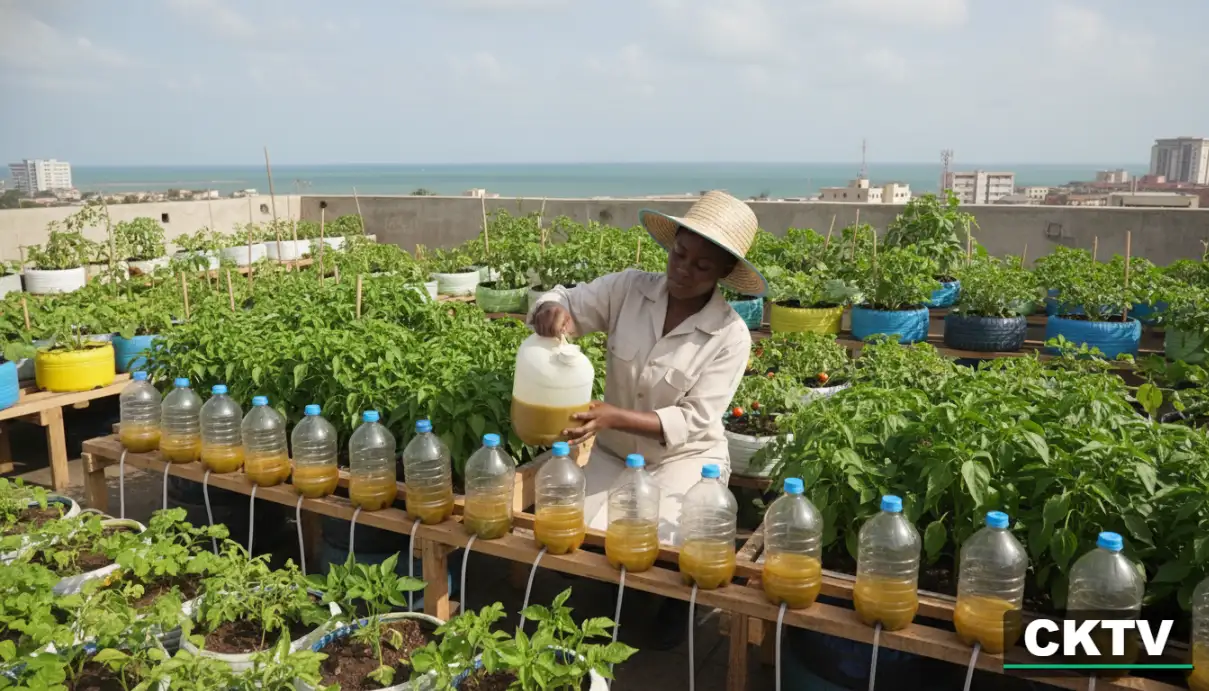
High-value, compact crops like tomatoes, strawberries, peppers, and leafy greens are the best choices. These crops have manageable root systems and respond well to container growth. Strawberries, in particular, are a favorite for 2026 urban farmers due to their high market price and long harvest period in small vertical spaces.
Tomatoes: The Commercial Powerhouse
Tomatoes are the most profitable crop for Kenyan container farmers. With varieties like Anna F1, you can harvest for up to six months. In a 20-liter bucket, a single tomato plant can produce 10 to 15 kilograms of fruit if managed correctly.
Given the 2026 market prices in Nairobi, where a kilo of tomatoes rarely drops below KSh 100, a small backyard with 50 containers can generate significant revenue.
Strawberries: The High-Value Niche
Strawberries are the “gold mine” of small-space farming. They require very little soil depth, making them perfect for horizontal bottle gardens or wall-mounted containers.
Varieties like Chandler or Albion are popular because they produce large, sweet fruits that are in high demand in supermarkets and high-end restaurants. A well-maintained strawberry patch in a balcony can produce fruit every week for several years.
Read Also: Tomato & Potato Leaves Turning Yellow? 48-Hour Fungus Control Plan (Kenya April 2026)
Leafy Vegetables and Herbs
Sukuma Wiki, Spinach, and Managu are essential for household consumption. These crops are “thirsty” but sensitive. The bottle drip ensures they remain turgid and fresh even during hot afternoons in Mombasa or Kisumu.
Herbs like Coriander (Dania), Mint, and Rosemary are also excellent choices. They take up very little space and have a high profit margin when sold in small bundles to neighbors or local grocery stores.
Best Tomato, Strawberry & Vegetable Varieties for Container Farming
Success in container farming starts with the right genetics. For tomatoes, Anna F1 and Zara F1 are the top choices for their disease resistance and high yields.
For strawberries, Chandler is the gold standard in Kenya. For leafy greens, Fordhook Giant spinach and hybrid Sukuma Wiki varieties offer the best performance in confined soil.
When selecting tomato varieties for containers in 2026, look for “determinate” or “semi-determinate” types. These varieties grow to a certain height and then focus all their energy on fruit production.
which is ideal for balconies with limited vertical space. Anna F1 is particularly favored because it is resistant to Fusarium wilt and Tobacco Mosaic Virus, two common enemies of the Kenyan farmer. It also produces firm fruits with a long shelf life.
Strawberry varieties like Chandler are preferred because they are “day-neutral” or have high adaptability to Kenyan altitudes. They produce runners that can be easily replanted to expand your garden for free.
In the vegetable category, focus on “Cut and Come Again” varieties. This means you harvest the outer leaves while the center keeps growing, providing a continuous supply for months rather than a single harvest.
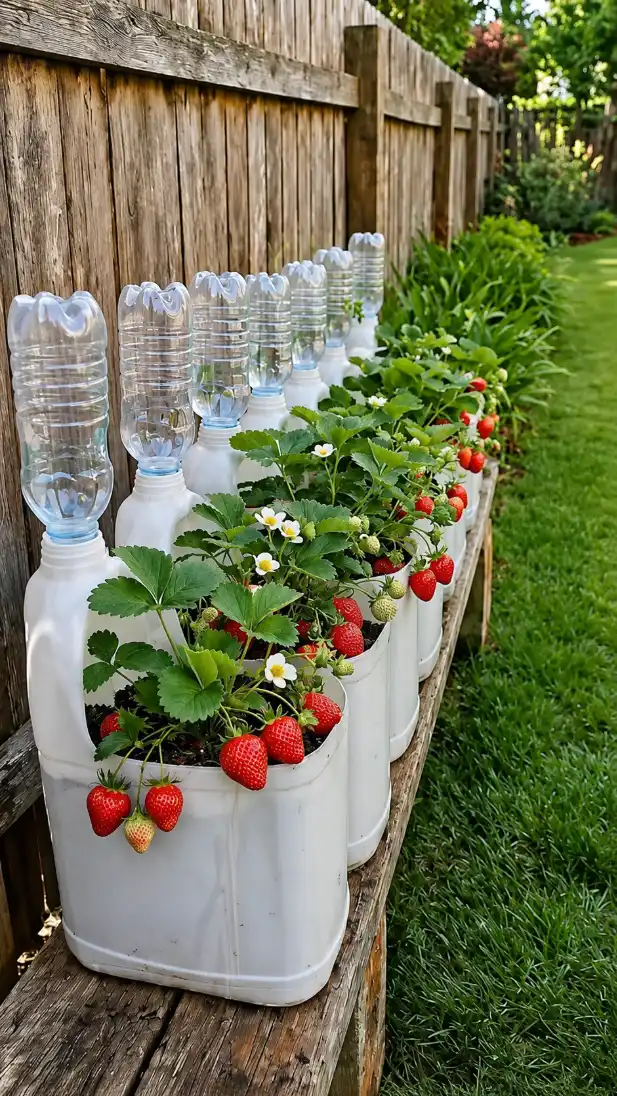
| Crop Type | Recommended Variety | Maturity Period | Key Performance Trait |
|---|---|---|---|
| Tomato | Anna F1 (Hybrid) | 75 Days | Very high yield, wilt resistant |
| Strawberry | Chandler | 60-90 Days | Large fruit, sweet flavor |
| Spinach | Fordhook Giant | 50 Days | Continuous harvesting, heat tolerant |
| Sukuma Wiki | Mfalme F1 | 45 Days | Large leaves, slow to bolt |
| Capsicum | Admiral F1 | 80 Days | Thick walls, deep green color |
Where to Buy Seeds and Seedlings in Kenya
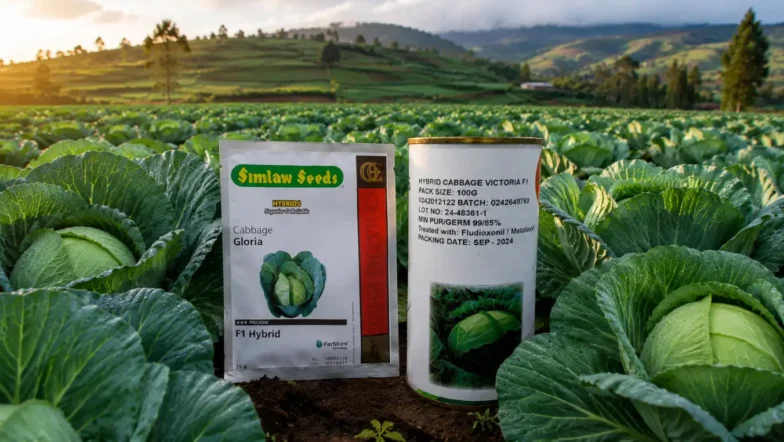
Genuine seeds are critical for success. Buy only from KEPHIS-certified agrovets or directly from established companies like Simlaw Seeds, East African Seed Company, and Royal Seed. For strawberries, source healthy runners from reputable nurseries in Limuru or Nakuru to avoid bringing diseases into your container garden.
The “fake seed” problem has intensified in 2026, with many unscrupulous vendors selling market produce as “high-quality seeds.” To protect your investment, always check for the KEPHIS (Kenya Plant Health Inspectorate Service) seal on the packet.
If you are in Nairobi, the best place to source is the Simlaw Seeds flagship store on Kijabe Street or the various authorized distributors in the CBD. They offer smaller sachets specifically designed for kitchen gardeners.
For strawberry farmers, it is often better to buy “seedlings” (runners) rather than starting from seeds. Strawberry seeds are notoriously difficult to germinate for beginners.
Buying a healthy runner for KSh 30 to KSh 50 from a certified nursery ensures you have a productive plant within two months. Established nurseries in the central highlands offer the best stock, often free from the viruses that plague low-quality backyard seedlings.
Trusted Seed and Seedling Suppliers Contacts
- Simlaw Seeds Company
- Location: Simlaw House, Kijabe Street, Nairobi
- Contact: +254 722 200 545 / +254 734 811 861
- Website: simlaw.co.ke
- Royal Seed (Royal Seed Africa)
- Location: Royal Seed Complex, Transview Estate, Athi River
- Contact: +254 725 549 997
- Website: royalseed.biz
- Amiran Kenya Limited
- Location: Amiran House, Old Airport North Road, Nairobi
- Contact: +254 719 095 000
- Website: amirankenya.com
- East African Seed Company (EAS)
- Location: 29 Dakar Road, Industrial Area, Nairobi
- Contact: +254 722 207 747 / +254 734 333 161
- Website: easeed.com
Regulatory Authority
- Kenya Plant Health Inspectorate Service (KEPHIS)
- Location: Oloolua Ridge, Karen, Nairobi (Headquarters)
- Contact: +254 709 891 000 / +254 020 661 8000
- Email: [email protected]
- Website: kephis.go.ke
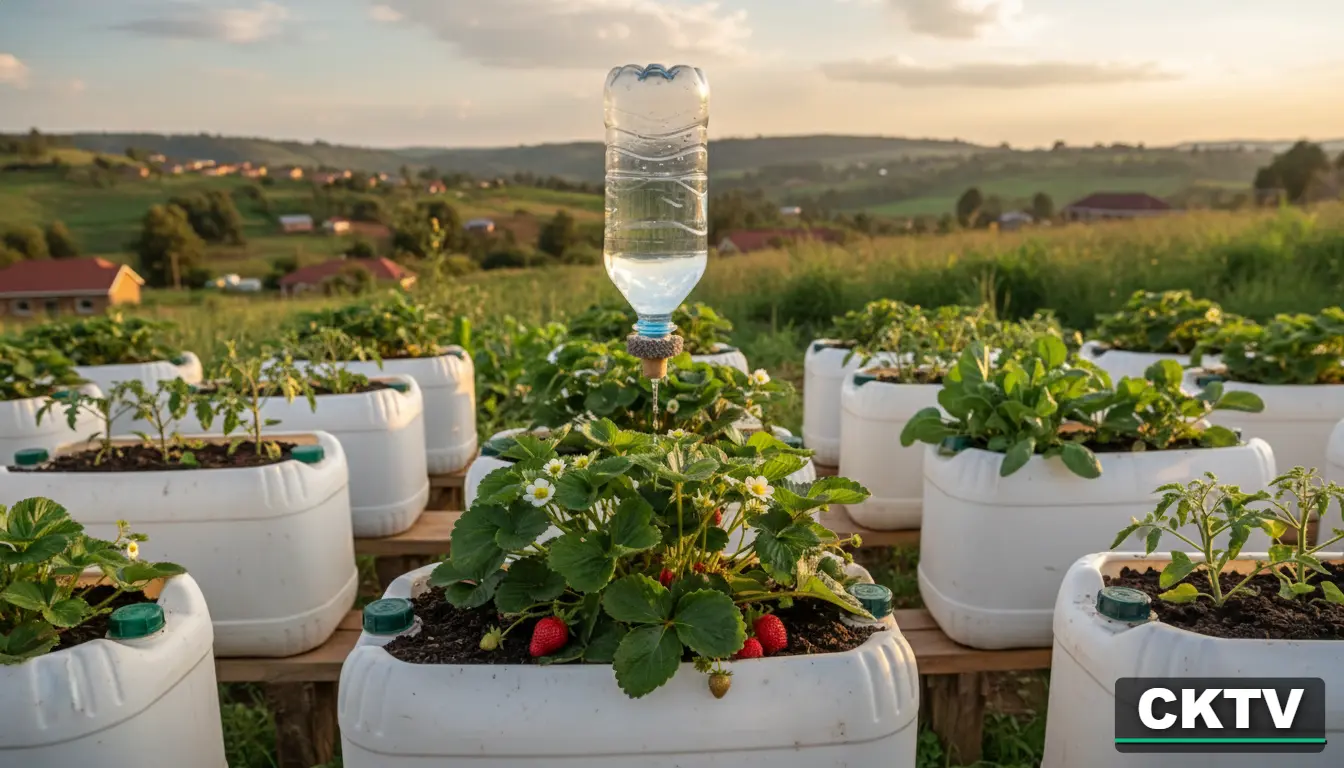
Materials Needed to Build the Bottle Drip Irrigation System
The beauty of this system lies in its use of recycled materials. Most of these items are likely already in your home or can be purchased for a few shillings from neighbors. Below is a detailed list of what you need to get started with a professional-grade DIY setup in 2026.
- Plastic Bottles: 2-liter soda bottles are the standard for individual plants. 5-liter bottles work better for thirsty crops like spinach.
- Growth Containers: 10-liter or 20-liter buckets, discarded paint tins, or 20-liter cooking oil jerrycans.
- Potting Soil: A mixture of red topsoil, well-rotted manure, and cocopeat or river sand.
- Drip Regulators: You can use cotton wicks, small sponges, or commercial “drip spikes” sold in agrovets for KSh 20.
- Support Stakes: Bamboo sticks or strong wooden poles to keep tomatoes and peppers upright.
- Mulch: Dry grass, wood shavings, or sawdust to cover the top of the container soil.
- Tools: A sharp knife, a hammer and small nail (to make holes), and a marker pen.
The estimated cost for a 10-plant starter kit is surprisingly low. If you source your containers from “boda boda” riders or local “mama mbogas” who have extra buckets, you might only spend money on soil, manure, and seeds. In 2026, expect to spend about KSh 1,200 for a fully equipped 10-container garden including high-quality hybrid seeds and organic fertilizer.
Step-by-Step Guide to Building DIY Bottle Drip Irrigation Containers
This process requires precision to ensure the water flow is consistent. Follow these steps carefully to build a system that can sustain your plants even if you are away for a weekend trip to the village.
Step 1: Selecting and Cleaning Containers
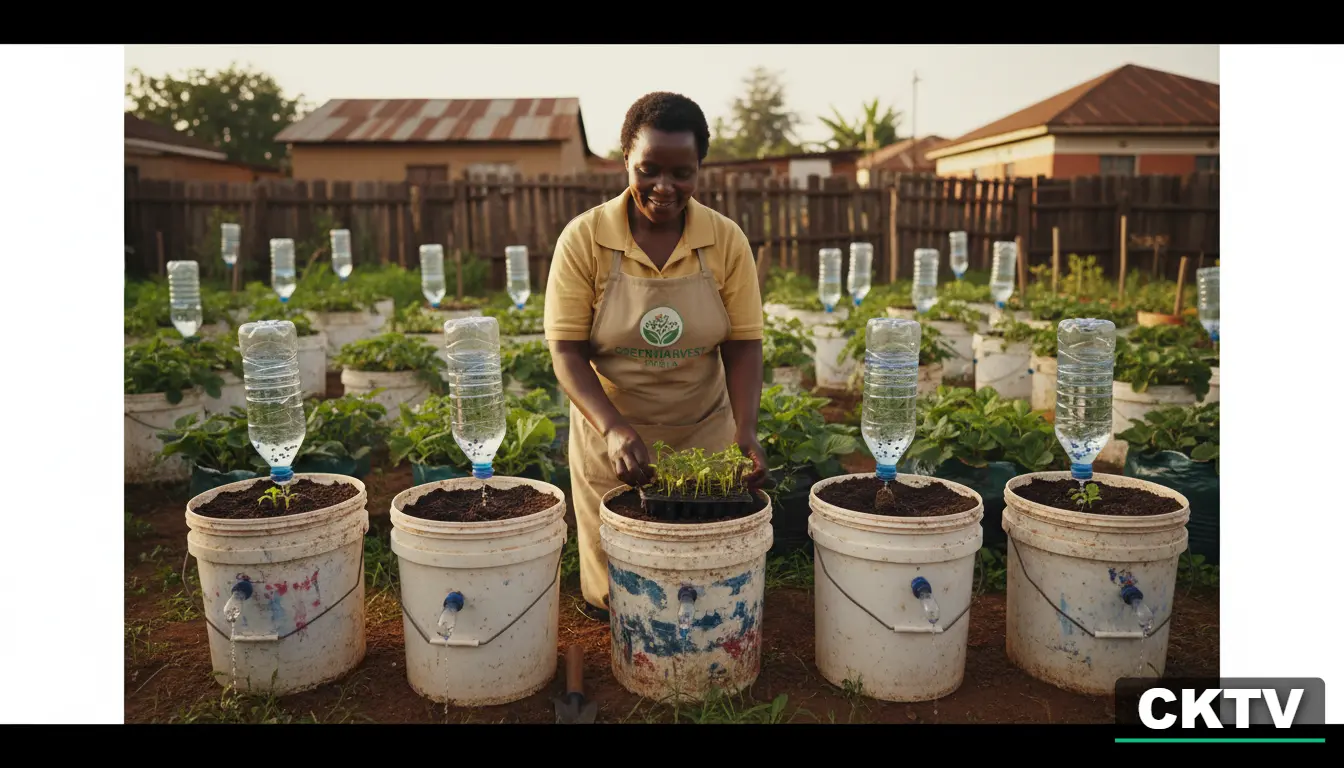
In 2026, the most popular container is the 20-liter white paint bucket. It is durable and does not heat up the roots as much as black containers. Wash the buckets thoroughly with soap to remove all chemical residues.
If you are using cooking oil jerrycans, ensure every trace of oil is gone, as oil can clog soil pores and suffocate the roots. Cut the top off the jerrycan to create a wide opening for planting.
Read Also: How to Grow Tomatoes in Sacks: A Complete Step-by-Step Guide for 2026
Step 2: Creating Drainage Holes
Drainage is the difference between a thriving plant and a rotting one. Use a hot nail or a drill to make 5 to 8 holes at the bottom of your growth container. Each hole should be about the diameter of a pencil.
This allows excess water to escape, preventing root rot. If you are placing containers on a balcony, consider placing a tray underneath to catch the drainage and avoid staining the floor.
Step 3: Preparing the Soil Mix
Do not use backyard soil alone; it is usually too “heavy” and will compact in a bucket. In 2026, the expert ratio is 2 parts red soil, 2 parts well-rotted goat or chicken manure, and 1 part river sand or cocopeat.
This creates a “fluffy” soil texture that holds water but also allows air to reach the roots. Mix in a handful of organic ash to help balance the pH and provide trace minerals.
Step 4: Modifying the Drip Bottle
Take your 2-liter bottle and clean it. Using a very thin needle, poke two tiny holes in the plastic cap. If the holes are too big, the water will empty in ten minutes. To test, fill the bottle with water, screw the cap on, and hold it upside down.
It should drip at a rate of roughly 1 drop every 15 seconds. To prevent the holes from clogging with soil, wrap a small piece of old nylon stocking or mesh over the cap before screwing it on.
Step 5: Installing the Irrigation System
Dig a hole in the center of your prepared soil mix, about 4 inches deep. Place the bottle into the hole with the cap facing down. Ensure the bottle stands firmly and does not lean. You want the water to drip directly into the middle of the root zone.
Once the bottle is secure, you can plant your seedlings about 3 to 5 inches away from the bottle neck. This positioning ensures the roots grow toward the moisture source.
Step 6: Planting and Staking
When transplanting your tomato or pepper seedlings, handle the roots gently. If you are planting strawberries, ensure the “crown” (the part where the leaves meet the roots) is just above the soil surface.
After planting, insert your support stake into the soil. For tomatoes, this is critical. Use soft sisal string to tie the plant to the stake as it grows. Do not use wire, as it will cut into the stem during the windy months of July and August in Kenya.
Step 7: Mulching and Final Setup
Cover the surface of the soil with a layer of dry grass or wood shavings. This mulch acts as a blanket, keeping the soil cool and reducing evaporation by up to 30 percent. Finally, fill your drip bottle to the top and monitor it for the first 24 hours.
If it empties too quickly, your cap holes are too large. If it does not drip at all, you may need to loosen the cap slightly to allow air to enter the bottle from the bottom (which is now the top).
Best Soil Mixture for Container Farming
The ideal mixture for 2026 Kenyan container farming consists of 40 percent red forest soil, 40 percent well-composted manure, and 20 percent cocopeat or river sand. Adding a small amount of bone meal or crushed eggshells provides long-term calcium, which is vital for preventing blossom end rot in tomatoes.
Soil quality in a container is more important than in an open field because the plant cannot “search” for nutrients beyond the bucket walls. You must provide a complete nutrient package from day one.
Many urban farmers in Nairobi source their soil from areas like Kiambu or Muguga where the red soil is rich in minerals. However, this soil is often acidic. Adding a bit of agricultural lime or wood ash helps neutralize the acidity, making nutrients more available to the plant.
Manure must be “well-rotted,” meaning it should look and smell like dark earth. Using fresh manure will “burn” your seedlings and attract pests like flies and beetles. Goat and sheep manure are highly recommended because they are “cooler” and contain more potassium,
which is excellent for fruiting crops like strawberries. If you are in a city and cannot find manure, 2026 agrovets sell “Vermicompost” (worm compost), which is a powerful organic alternative.
Water Management and Irrigation Scheduling
While the bottle drip system is automated, you must monitor the refill schedule based on the weather. In hot regions like Kisumu or Garissa, a 2L bottle may need daily refills. In cooler highland areas, once every three days is sufficient. Always use the “finger test” to check soil moisture 2 inches deep before refilling.
The goal is to maintain soil that feels like a wrung-out sponge: moist but not dripping wet. Overwatering is a common mistake that leads to “Yellow Leaf” syndrome and root rot. If you see water pooling on top of the mulch, your drainage holes might be blocked or you are refilling too often.
In the peak of the dry season (January to March in Kenya), you might consider using two bottles per 20-liter bucket to ensure the plant never experiences moisture stress.
Water quality matters too. If you are using borehole water in areas like Athi River, it might be “hard” (salty). Over time, this salt builds up in the container and kills the plant.
To prevent this, occasionally “flush” the container by watering heavily with fresh rainwater until it runs out the bottom. This washes away the excess salts and keeps the soil healthy for the next crop cycle.
Fertilizer Program for Tomatoes & Strawberries in Containers
Container plants deplete nutrients quickly. Apply DAP at planting (10g per bucket), top-dress with CAN (5g) after 3 weeks, and switch to NPK 17-17-17 during flowering.
For organic farming, use liquid seaweed or “Compost Tea” every two weeks to maintain high yields without synthetic chemicals.
Fertilization in 2026 must be strategic. Because the bottle drip system delivers water slowly, it is the perfect vehicle for “fertigation.” Dissolve your water-soluble fertilizer into the drip bottle.
This ensures the nutrients are delivered in a “spoon-feeding” manner, which is much more efficient than traditional top-dressing. This method prevents the “nutrient spikes” that can stress delicate plants like strawberries.
Calcium is the “secret ingredient” for high-quality tomatoes. Without it, you will get Blossom End Rot, where the bottom of the tomato turns black and soft.
Since containers are prone to calcium leaching, use a foliar spray like EasyGro Calcium or add crushed eggshells to your soil mix every month.
This ensures your fruits are firm and have a long shelf life, making them easier to sell to neighbors or transport to the market.
Pest and Disease Management in Container Farming
Container plants are less prone to soil-borne diseases but highly attractive to airborne pests like aphids, whiteflies, and spider mites. Use a mixture of neem oil and liquid soap as a weekly preventative spray.
Ensure good airflow between containers to prevent fungal issues like Early Blight and Powdery Mildew.
In 2026, many Kenyan farmers are moving away from heavy chemical pesticides. A simple “home remedy” for most container pests is 1 tablespoon of liquid dish soap and 1 tablespoon of vegetable oil mixed in 1 liter of water.
Spray this under the leaves where pests hide. For tougher pests like Tuta Absoluta (the tomato leaf miner), you may need specialized organic sprays like Bacillex, which are now widely available in local agrovets.
Sanitation is your best defense. Remove any yellow or diseased leaves immediately and do not throw them back into the garden. Dispose of them far away or burn them. Keeping the area around your containers clean prevents pests from finding a “home” near your crops.
If you notice a plant is severely infested with a virus, the best course of action is to pull it out and replace the soil to prevent the disease from spreading to the rest of your balcony shamba.
How Many Plants Can Fit in Small Spaces?
One of the biggest questions for urban dwellers in 2026 is how much they can actually produce. With smart vertical stacking and fence-mounted bottles, the capacity of a small space is surprising. Below are realistic examples based on common Kenyan residential layouts.
- Standard Balcony (2m x 1m): Can fit 12 to 15 10-liter buckets or up to 40 horizontal strawberry bottles on a wall rack.
- Typical Fence Line (10m): Can support 30 to 50 vertical bottle units, perfect for Sukuma Wiki, Spinach, and Herbs.
- Rooftop (5m x 5m): Can host 100+ 20-liter buckets, essentially creating a small commercial farm capable of producing 200kg of tomatoes per season.
- Apartment Corridor: Two or three buckets near a sunny window can provide all the Dania and Mint a family needs for daily cooking.
Spacing is vital. While it is tempting to crowd the plants, they need sunlight and air. For tomatoes in 20-liter buckets, keep a distance of at least 1.5 feet between buckets.
This prevents the “jungle effect” where humidity builds up and encourages fungal diseases. For strawberries in horizontal bottles, you can stack them vertically with only 1 foot of clearance between rows.
Can DIY Bottle Farming Reduce Food Costs at Home?
Yes, it can. A well-managed container garden with 20 plants can save a Kenyan family KSh 3,000 to KSh 5,000 per month on groceries. By growing high-value items like tomatoes, capsicums, and strawberries, you bypass the expensive middleman prices at supermarkets and local stalls.
Food security in 2026 is about resilience. When the price of tomatoes spikes due to transport strikes or heavy rains in the growing regions, your balcony shamba remains unaffected. You are essentially “fixing” your food price at the cost of seeds and a little bit of water.
For many Kenyans, the psychological benefit of knowing their food is “clean” and pesticide-free is just as valuable as the monetary savings.
Read Also: Vegetable Farming for Profit in Kenya: Okra, Spinach & Dhania Guide (2026)
Furthermore, the “survival” aspect cannot be ignored. During times of economic hardship, having a steady supply of nutrient-dense greens like Spinach and Managu ensures the family remains healthy.
It also provides a great educational opportunity for children in urban areas to learn where their food comes from and the value of resourcefulness and recycling.
How Much Can You Earn from Bottle Drip Irrigation Farming?
Agribusiness in Kenya is a game of numbers. While a single bottle might seem small, scaling to 100 or 500 containers turns a hobby into a serious commercial venture. The following projections show the potential income from a modest 50-container tomato setup in a peri-urban backyard in 2026.
| Expense/Income Item | Estimated Cost (KSh) | Projected Income (KSh) |
|---|---|---|
| Startup (Recycled buckets, seeds, soil) | 4,500 | – |
| Maintenance (Water, fertilizer, pest control) | 2,000 | – |
| Harvest (8kg per plant x 50 plants = 400kg) | – | – |
| Sales (400kg @ KSh 100 per kg) | – | 40,000 |
| Net Profit (One Season / 6 Months) | – | 33,500 |
The beauty of this model is that once you have the buckets and the system, your costs for the second season drop significantly. You only need to buy new seeds and a little more manure.
If you transition to strawberries, the profit potential increases because you can sell to “high-end” markets. In 2026, selling a 250g punnet of organic strawberries for KSh 250 to your neighbors can easily net you KSh 15,000 a month from just a small balcony setup.
Is DIY Bottle Irrigation Better Than Expensive Drip Kits?
For small-scale urban farmers, the DIY bottle system is superior due to its zero-cost maintenance and lack of mechanical complexity.
Commercial drip kits often require pumps and filters that can clog with Kenyan borehole water. Bottles offer localized control, allowing you to give each plant exactly what it needs without expensive hardware.
Commercial kits are designed for long rows in an open field. They require a certain “water head” (pressure) to work correctly, which usually means elevating a heavy 1,000-liter tank.
For someone on a rented property or a small rooftop, this is often impossible. Bottle drip irrigation is “modular.” You can start with one bottle today and add 50 more tomorrow without changing your plumbing or structural setup.
Maintenance is another factor. If a commercial emitter clogs, you might need a specialized tool or a replacement part. If a bottle cap clogs, you simply poke it with a needle or replace the cap with a fresh one from a soda bottle.
This “repairability” makes it the most sustainable choice for the average Kenyan household in 2026. It empowers the farmer rather than making them dependent on a technician.
Can Bottle Drip Irrigation Work Commercially?
While often seen as a “backyard” solution, the principles of bottle irrigation are being scaled up in 2026. Some innovative farmers in Central Kenya are using large 20-liter water dispensers to feed multiple vertical pipes in a greenhouse.
This hybrid approach combines the precision of bottle dripping with the scale of vertical farming, allowing for massive production in tiny spaces.
Another commercial application is in “Nursery Production.” Using small 500ml bottles for individual seedling trays ensures that delicate young plants never suffer from moisture stress.
This leads to much higher “survival rates” and healthier seedlings that can be sold to other farmers at a premium. In 2026, the demand for “pre-potted” vegetable plants is high among busy urbanites, creating a whole new niche market for bottle-drip entrepreneurs.
Why Most Farmers Fail Even with Good Farming Systems
The primary reason for failure is “Inconsistency.” Many farmers start with high energy but neglect to refill bottles or check for pests once the initial excitement wears off.
Successful agribusiness in 2026 requires daily monitoring and a disciplined approach to nutrient and water management, regardless of the system’s simplicity.
Hard truth: A bottle drip system is not a “set it and forget it” machine. It is a tool. If you let your bottles run dry for three days in the March heat, your strawberry plants will die.
If you see aphids on Monday and wait until Saturday to spray them, they will have taken over the whole garden. The most successful container farmers in Kenya are those who treat their 10 buckets with the same seriousness a commercial farmer treats 10 acres.
Another major failure point is using “Fake Seeds” or poor soil. No amount of perfect irrigation can make a bad seed produce a good tomato. Similarly, if your soil is just hard clay from a construction site, the roots will never develop.
Invest in the best inputs. In 2026, the price difference between a “mystery sachet” of seeds and a certified F1 hybrid is less than the price of a cup of tea, yet it determines 80 percent of your success.
Conclusion
DIY bottle drip irrigation farming is proving that modern agriculture in Kenya is no longer about owning massive acres of land. In 2026, the smartest farmers are the ones maximizing tiny spaces, minimizing water wastage, and turning recycled materials into productive food systems.
A balcony, rooftop, corridor, or small backyard can now become a reliable source of vegetables, strawberries, herbs, and even household income.
What makes this system powerful is not just the low cost, but the efficiency. With a few recycled bottles, proper soil preparation, certified seeds, and disciplined management, even beginner farmers can produce healthy crops throughout the year.
Rising food prices, shrinking urban spaces, and water shortages are forcing Kenyans to rethink farming, and bottle drip irrigation is becoming one of the most practical solutions available today.
However, the hard truth is that the system alone will not guarantee success. Most farmers fail because of inconsistency, poor-quality seeds, weak soil preparation, overwatering, and neglecting pests.
Successful container farming still requires discipline, observation, and proper planning. The farmers making real money from urban farming in Kenya are treating their containers like serious agribusiness units, not decorative hobbies.
The opportunity is massive. Whether your goal is reducing household grocery expenses, growing clean food for your family, or building a profitable urban farming business,
DIY bottle drip irrigation offers one of the cheapest and most scalable entry points into agriculture today. Start small, master the system, then scale gradually. In modern farming, efficiency now beats acreage.
Farmers Also Ask (FAQ)
What are the best crops for DIY bottle drip irrigation farming in Kenya?
Tomatoes, strawberries, capsicums, spinach, sukuma wiki, lettuce, and herbs like mint and basil perform best under bottle drip irrigation systems. These crops thrive with slow, consistent root-zone moisture and grow well in small containers or recycled jerrycans.
Can tomatoes grow successfully in containers in Kenya?
Yes. Tomatoes grow extremely well in containers when managed properly. Hybrid varieties like Anna F1, Zara F1, and cherry tomatoes are highly productive in 20-liter containers with proper staking, sunlight, feeding, and drip irrigation.
Which tomato variety is best for container farming in Kenya?
Anna F1 is currently one of the best tomato varieties for container farming in Kenya due to its high yield potential, disease resistance, strong adaptability, and excellent fruit quality. Cherry tomato varieties also perform very well in small-space farming systems.
Which bottle size is best for DIY drip irrigation farming?
2-liter plastic bottles are ideal for single tomato or strawberry plants, while 5-liter bottles and recycled jerrycans are better for larger containers or crops with higher water demand like sukuma wiki and spinach.
How often should bottle drip irrigation bottles be refilled?
Most bottle irrigation systems require refilling every 2 to 4 days depending on weather conditions, crop type, container size, and soil moisture retention. Hot and dry regions in Kenya may require more frequent refilling.
Does bottle drip irrigation save water?
Yes. DIY bottle drip irrigation can reduce water usage by up to 70% compared to traditional watering methods because water is delivered slowly and directly to the root zone with minimal evaporation losses.
Can bottle drip irrigation farming work during drought seasons in Kenya?
Absolutely. Bottle drip irrigation is one of the most water-efficient farming methods for drought-prone areas because it minimizes water wastage and maintains consistent soil moisture around plant roots.
Can I use recycled jerrycans instead of plastic bottles for container farming?
Yes. Recycled 5L, 10L, and 20L jerrycans are excellent for DIY container farming because they are stronger, more durable, and hold more soil and moisture than ordinary plastic bottles.
Is container farming profitable in Kenya?
Yes. Container farming can be highly profitable due to low startup costs, efficient water use, fast crop cycles, and high urban demand for fresh vegetables, herbs, strawberries, and tomatoes.
How much sunlight do container crops need?
Most vegetables and fruiting crops require at least 6 to 8 hours of direct sunlight daily for healthy growth, flowering, and fruit production. Tomatoes and strawberries especially require strong sunlight for maximum yields.
Is strawberry farming possible in containers in Kenya?
Yes. Strawberries perform very well in containers and vertical systems because they require controlled moisture, good drainage, and clean growing conditions. Varieties like Chandler and Albion are popular among Kenyan farmers.