

- Extreme Durability: Recycled plastic fence posts last for over 40 years because they are entirely immune to termites, rot, and moisture, which are the primary causes of timber fence failure in Kenya.
- Superior ROI: While the initial purchase price is higher than untreated timber, farmers save up to 70 percent on long-term costs by eliminating the need for periodic replacements and chemical treatments.
- Eco-Friendly Utility: These posts are made from high-density polyethylene waste, meaning they do not leach toxic chemicals into the soil and are compatible with standard farm tools like drills and nails.
Table of Contents
The traditional model of fencing in Kenya is currently undergoing a massive structural shift due to economic pressure. For decades, the standard choice for smallholders and large scale estates alike was cedar or eucalyptus. However, the rising cost of timber combined with a nationwide push for forest conservation has made wood an expensive and unsustainable liability. Many farmers in 2026 are finding that their fencing budgets are being consumed by the constant need to replace rotten or termite infested posts every three to five years.
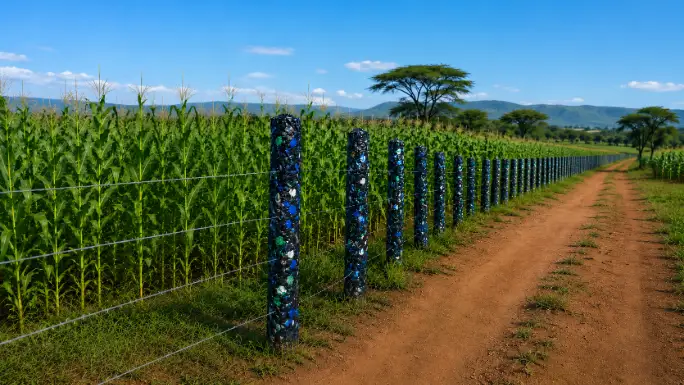
In regions such as Machakos, Nakuru, and the Coastal strip, the termite pressure is so intense that untreated timber can lose its structural integrity within a single rainy season. This has led to the adoption of recycled plastic fence posts as a permanent agricultural asset. These posts are not just a green alternative, they are a strategic financial tool used by savvy agribusiness owners to lock in infrastructure costs and protect their boundaries for decades without further investment.
Read Also: Top 10 Best Agrovets in Kenya (2026 Guide): Where to Buy Genuine Inputs in Nairobi, Eldoret & Nakuru
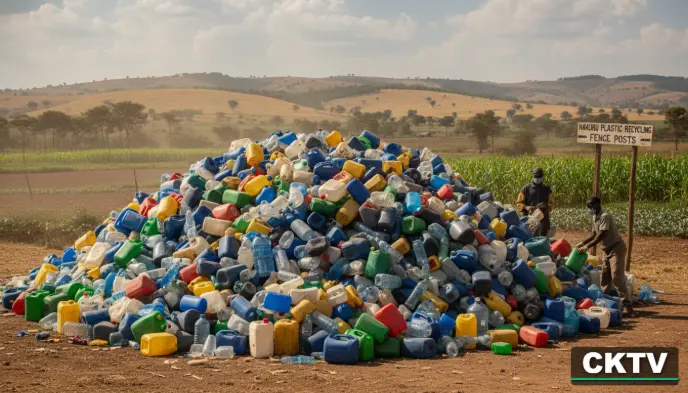
Recycled plastic fence posts are industrial grade poles manufactured from diverted plastic waste like detergent bottles and industrial scrap. They provide a lifetime solution for Kenyan farmers because they cannot rot, do not attract termites, and require zero maintenance. By switching to plastic, a farmer effectively ends the cycle of paying for the same fence multiple times over a ten year period.
The Economic Breaking Point of Timber Fencing
As of early 2026, the price of quality cedar posts in markets like Nairobi and Eldoret has reached record highs. Strict logging regulations and the high demand for biomass fuel have driven prices to a point where a single seven foot post can cost over 1,000 shillings. When you multiply this by the hundreds of posts needed for a multi acre farm, the capital requirement is staggering. If that investment rots away in five years, the farm’s profitability is severely compromised.
Furthermore, the hidden costs of timber fencing are often overlooked by beginners. You must account for the labor of digging out old stumps, the cost of new staples and wire, and the potential loss of livestock or crops when a fence fails. Recycled plastic posts remove these variables from the farm ledger. They remain as solid in year twenty as they were on the day of installation, allowing the farmer to divert their cash flow into high yield seeds or modern irrigation systems.
The Cost Reality: Timber vs. Recycled Plastic
To truly understand the value proposition, a farmer must look past the initial price tag and evaluate the total cost of ownership. The following table provides a clear breakdown of how the expenses accumulate over a ten year period for a standard perimeter fence.
| Feature | Treated Timber (Eucalyptus) | Recycled Plastic Post |
|---|---|---|
| Initial Cost per Post | KES 650 to 800 | KES 1,100 to 1,400 |
| Lifespan in Wet Soil | 3 to 6 Years | 40 to 50 Years |
| Termite Resistance | Low (requires chemicals) | 100 Percent Immune |
| Maintenance Needed | Painting or Re-treating | None |
| Replacement Frequency | At least twice in 10 years | Zero times |
The math is undeniable for any commercial operation. If you spend 800 shillings today on wood and another 900 shillings in five years for a replacement, you have already outspent the cost of a single high quality plastic post. This does not even include the labor costs which have also risen significantly in 2026. A plastic post is a one time purchase that secures the land for a generation.
Long Term Financial Resilience
In the current Kenyan economy, inflation and supply chain disruptions make future prices unpredictable. By installing recycled plastic posts today, a farmer is essentially hedging against future increases in timber prices. You are buying a finished product that will not require further cash injections. This stability is particularly important for farmers in Nyandarua or Kiambu who are managing tight margins in the dairy and vegetable sectors.
What Are Recycled Plastic Fence Posts?
These posts are structural beams made through the extrusion or molding of recycled High-Density Polyethylene (HDPE) and Polypropylene (PP). They are designed to mimic the dimensions of traditional timber but possess the physical properties of heavy duty plastics, including high tensile strength and resistance to UV degradation and extreme weather.
Read Also: 15 Most Profitable Agribusiness Ideas in Kenya to Start in 2026
Most of the recycled plastic used in these posts comes from household and industrial waste that would otherwise end up in landfills or polluting the Nairobi River. Manufacturers collect milk jugs, oil containers, and discarded water pipes, which are then cleaned and processed. The result is a solid, dense material that is significantly heavier and more durable than the flimsy plastics people encounter in daily life.
Material Properties and Agricultural Suitability
The manufacturing process in 2026 has evolved to include advanced UV stabilizers. This is a critical technical detail because early versions of plastic posts would sometimes become brittle under the intense equatorial sun. Modern posts are engineered to handle the high solar radiation of the Rift Valley without cracking. They also have a natural slight flexibility, which means they can absorb the impact of a leaning cow or a stray tractor without snapping.
Because they are non porous, these posts do not absorb water. In the black cotton soils of Kajiado or the red volcanic soils of Central Kenya, this is a major advantage. Wood absorbs moisture, which leads to internal rot and structural failure. Plastic remains inert, ensuring that the post hole does not become a breeding ground for fungi or moisture seeking pests that could eventually migrate to your crops.
Key Benefits for the Kenyan Farmer
The primary reason farmers are making the switch is the absolute immunity to biological threats. Termites are a devastating reality in many parts of Kenya, particularly in the lower altitudes. Even chemically treated timber eventually loses its potency as the chemicals leach into the ground. Plastic offers no nutritional value to insects, meaning your fence will never be eaten from the inside out.
The most significant benefits are the 50 year lifespan, zero moisture absorption, and the fact that they do not leach toxic chemicals into the soil. These features make them ideal for organic farmers and those operating in high humidity or termite prone regions across Kenya.
Fire Resistance and Safety
In many parts of Laikipia and Narok, bushfires are a seasonal hazard during the dry months. A traditional timber fence can be wiped out in minutes, leaving livestock vulnerable and boundaries unprotected. High quality recycled plastic posts are often manufactured with fire retardant additives. Even without additives, the density of the plastic makes it much harder to ignite than dry cedar, providing a crucial layer of protection for the farm’s perimeter.
Workability and Ease of Use
There is a common misconception that plastic posts are difficult to work with. In reality, they can be handled using the same tools as wood. You can use a standard hand saw or a circular saw to cut them to size. Most importantly, they hold staples and nails exceptionally well. Because the material is consistent throughout, there are no knots or grain patterns to cause splitting, which is a frequent problem when driving large staples into eucalyptus.
Setting Up Your Production: Sourcing Waste, Machinery, and Safety Gear
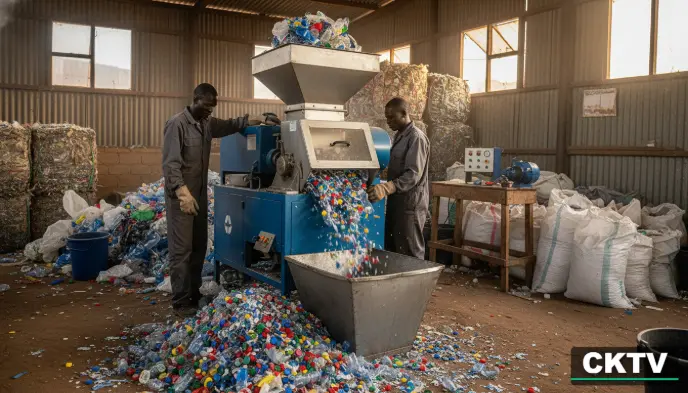
Venturing into the manufacturing of recycled plastic fence posts requires an organized supply chain. To produce high-density, solid-core posts, you need reliable raw waste input and robust industrial machinery capable of handling heavy high-density plastics.
1. Sourcing Plastic Waste in Bulk
You cannot rely on picking small bottles from the streets yourself if you are looking for commercial volume. You need consistent tons of HDPE (High-Density Polyethylene) and PP (Polypropylene).
- Sourcing from Waste Collectors: Form partnerships with organized youth and women groups at major municipal dumpsites like Dandora (Nairobi), Gioto (Nakuru), or Kibuye (Kisumu). Large factories buy raw plastic scrap particularly HDPE and PP polythenes from local independent suppliers. To understand the exact specifications, cleanliness grades, and sub-types required, review the EcoPost Raw Material Procurement Guidelines.
- Industrial and Commercial Scrap: Target local bottling plants, FMCG manufacturers, and cosmetic companies to buy their rejected packaging, industrial crates, and production scraps in bulk. Expect buying prices for raw, sorted plastic scrap from commercial sources to range between KSh 20 to KSh 40 per kilogram, depending on cleanliness and sorting accuracy.
- Agricultural Waste Pipelines: Reach out to large-scale irrigation schemes or greenhouse farms to collect or cheaply buy discarded plastic mulch films, drip pipes, and chemical jerrycans.
2. Buying Recycling Machinery in Kenya
For a functional micro-factory, you need three core machines: a heavy-duty shredder/crusher, an agglomerator (for thin film plastics), and a heating extruder with custom molding dies.
- Locally Fabricated Jua Kali Machinery: If you are operating on a tighter startup budget, local engineering workshops fabricate heavy-duty industrial shredders and extruders tailored for plastic processing. You can request custom configurations and direct quotes from Kafum Engineering Services based along Koma Rock Road in Nairobi (Contact: +254 727 131184). Local Jua Kali fabrications for standalone heavy-duty scrap plastic shredders typically cost between KSh 150,000 to KSh 350,000, while custom locally-made heating extruders range from KSh 400,000 to KSh 800,000 depending on motor capacity and heating elements.
- Commercial and Imported Production Lines: For high-volume factories requiring standardized multi-screw extruders or high-capacity plastic granulators, specialized commercial equipment suppliers list ready-to-deploy options on local industrial marketplaces. Commercial plastic extruders engineered for HDPE/PE processing range from KSh 1,200,000 to KSh 2,500,000, while industrial plastic crushers/shredders cost around KSh 500,000 to KSh 750,000. You can view dynamic pricing and machine specifications for heavy-duty crushers and extruders directly on the Jiji Kenya Recycling Equipment Listings.
3. Essential Protective Gear and Operational Workshop Tools
Melting and processing plastic involves handling extreme high-temperature molten liquids, sharp cutting blades, and heavy metal molds. Do not compromise on worker safety.
- Personal Protective Equipment (PPE): Your crew requires high-temperature heat-resistant welding gloves, heavy-duty industrial aprons, steel-toed boots, and dual-cartridge respirators/masks to protect against harmful airborne plastic fumes during the heating phase. Outfitting a team of four workers with professional industrial safety gear costs approximately KSh 15,000 to KSh 25,000 in total.
- Workshop Tools and Gears: You will need industrial cooling water pumps to feed your cooling baths, heavy-duty chain hoists for lifting and stripping long metal extrusion molds, and heavy-duty angle grinders and circular saws to neatly trim the finished posts to standard agricultural lengths (6ft, 7ft, and 8ft). These tools can be easily procured through local industrial hardware hubs in Nairobi’s Industrial Area or Kisumu’s manufacturing zones.
How Recycled Plastic Fence Posts Are Made: A Step by Step Guide
The production of these posts is a fascinating example of the circular economy in action. It involves taking low value waste and transforming it into a high value agricultural asset. For farmers interested in the quality of their inputs, understanding this process is essential to distinguish between premium posts and low grade imitations.
Step 1: Waste Collection and Sorting
The process begins with the collection of various types of plastic waste. However, not all plastic is suitable for fence posts. Manufacturers primarily look for HDPE (coded as number 2) and Polypropylene (coded as number 5). Sorting is the most critical stage because mixing incompatible plastics can lead to weak spots in the final post. In 2026, many Kenyan companies employ local youth groups to perform this sorting at the source.
Step 2: Shredding and Cleaning
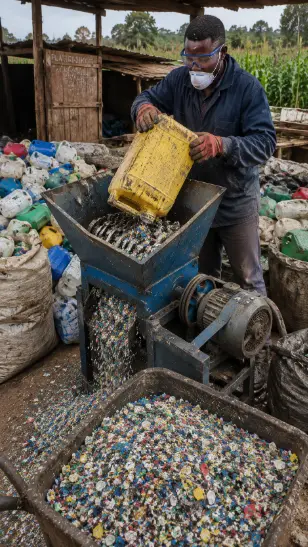
Once sorted, the plastic is fed into heavy duty shredders that turn jerrycans and crates into small, uniform flakes. These flakes are then washed in large agitation tanks to remove contaminants like dirt, residual liquids, or paper labels. This cleaning ensures that the final post is a pure mass of plastic, which is necessary for achieving the high density required for fencing applications.
Step 3: Melting and Extrusion
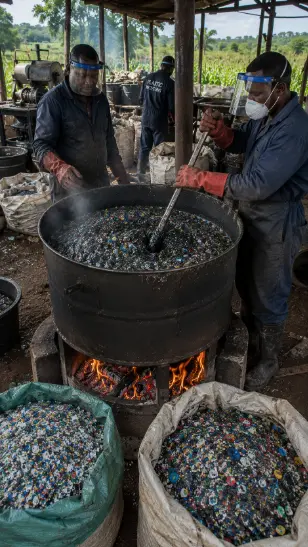
The clean flakes are fed into an extruder, where they are heated to a molten state. In this liquid form, the plastic is pushed through a die that determines the shape of the post. Some manufacturers in Nairobi use a process called intrusion molding, where the molten plastic is pumped into a cold mold under high pressure. This creates a very solid core, which is superior to hollow or “honeycombed” posts often seen in cheaper imports.
Step 4: Cooling and Quality Control
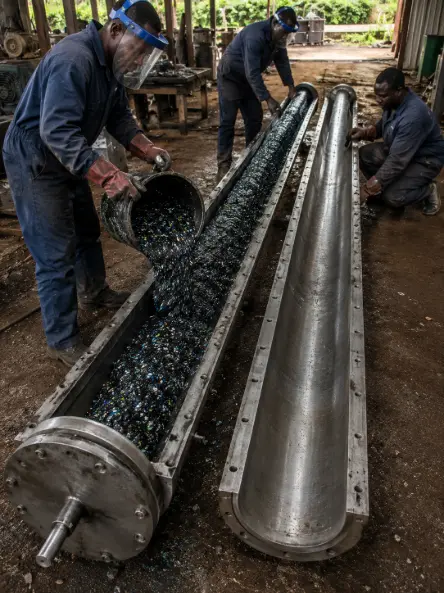
The molds are cooled, often in water baths, to solidify the plastic. During this phase, the post shrinks slightly, which is accounted for in the mold design. After cooling, the posts are ejected and inspected for straightness and surface consistency. A high quality post will have a solid, heavy feel and a consistent color. Any posts that fail the quality check are simply shredded and put back through the process, ensuring zero waste.
Installation Realities: Where Farmers Commonly Fail
While recycled plastic posts are incredibly durable, they require a specific approach to installation to perform at their best. Many farmers make the mistake of treating them exactly like steel or wood, which can lead to sagging or leaning if the physical properties of plastic are not respected.
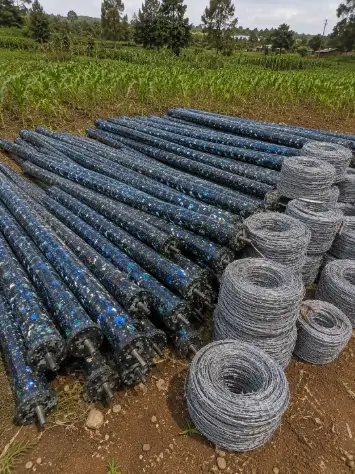
Successful installation depends on three factors: deep anchoring (at least 2.5 feet), proper corner bracing with H-frames, and managing thermal expansion. Unlike wood, plastic expands slightly in the sun, so wires should be tensioned during the heat of the day to prevent the fence from sagging during cooler periods.
Dealing with Thermal Expansion
One of the unique characteristics of plastic is that it expands and contracts more than timber. In the intense midday sun of the Rift Valley, a post can expand slightly in volume. If you tension your barbed wire to the absolute limit in the cold morning, the expansion of the post and the wire during the heat of the day can cause the posts to bow. The professional secret is to use spring tensioners or to do the final wire tightening in the afternoon.
Read Also: How to Build a Low-Cost Gravity-Fed Irrigation System Using Jerry Cans : Smart Farming on a Budget
Proper Bracing and Spacing
Because plastic is slightly more flexible than cedar, your corner and end posts must be reinforced. We recommend the H-brace method, where two vertical posts are connected by a horizontal rail and a diagonal tension wire. This structure absorbs the pull of the long fence line. For spacing, we suggest placing posts every 3 meters for standard boundaries, or 2.5 meters if you are containing heavy livestock like Boran cattle.

Soil Anchoring Techniques
In soft or sandy soils, plastic posts can sometimes “creep” or lean over time due to the tension of the wire. To prevent this, many Kenyan farmers are now using a small amount of concrete at the base of the corner posts. For line posts, tamping the soil down in six inch layers (ramming) is usually sufficient. In very wet areas, the fact that the post does not rot means you can bury it deeper than wood to gain extra stability without fear of the bottom decaying.
Where to Buy Recycled Plastic Posts in Kenya
The market for recycled plastic posts has matured significantly over the last few years. There are now several reliable manufacturers and distributors across the country. It is important to buy from verified sources to ensure you are getting solid core posts that have been treated for UV resistance.
When selecting a supplier, always ask if you can see a cross section of the post. A high quality post should be solid all the way through with no large air bubbles or voids. Voids are a sign of poor manufacturing and will lead to the post snapping under pressure. Here are some of the most established players in the Kenyan market:
1. EcoPost Limited
The pioneer of recycled plastic lumber in Kenya, manufacturing premium solid HDPE posts completely immune to termites and moisture.
- Baba Dogo Rd, Ruaraka, Opposite Roy Transporters Depot,
P.O Box 3703 – 00506 Nyayo Stadium , Nairobi, Kenya
Phone: 254(0)725 351 032, 254(0)721 953 768 - Email: [email protected]
- Website: EcoPost Official Website
2. Polytanks & Containers Kenya Ltd (Mohinani Group)
A major manufacturer handling industrial and agricultural plastics, offering bulk processing and heavy-duty structural agricultural product variants.
- Location: Off Old Mombasa Road (After Mlolongo, next to Bamburi Cabro Factory)
- Contacts: +254 799 695122 / +254 787 306317
- Email: [email protected]
- Website: Polytanks Africa
3. Asha Recycling
A community-focused recycling initiative serving farmers and agribusinesses looking for infrastructure materials within the region.
- Location: Eldoret / North Rift
4. Coastal Plastic Hub
Specializes in manufacturing dense, weather-hardened posts ideal for coastal humidity and saline environments.
- Location: Mombasa
For farmers in remote areas, many of these companies have established distribution networks through local hardware stores and agricultural cooperatives. It is often cheaper to buy in bulk (for example, a pallet of 100 posts) to save on transport costs from the major hubs. Always verify the weight of the post before purchasing; a standard 100mm by 100mm by 2.1m post should weigh roughly 13 to 15 kilograms.
The Opportunity for Youth and Small Businesses
The rise of recycled plastic fencing is not just a benefit for farmers; it is a massive opening for entrepreneurship in rural Kenya. The technology required to produce these posts is relatively accessible, and the raw material is literally lying in the streets of every major town. This has created a new niche for youth groups to turn waste into wealth.
Kenyan youth are finding profitable opportunities in the “trash to cash” pipeline by setting up local collection and shredding centers. By processing plastic waste in towns like Nakuru and Kisumu, they can supply local manufacturers or even start small scale molding operations to meet the growing demand for durable fencing.
Income Opportunities in the Value Chain
There are several ways for young entrepreneurs to enter this market without needing millions of shillings in capital. The first is specialized collection and sorting. By organizing waste pickers and providing high quality, sorted plastic flakes to large factories, small businesses can generate consistent revenue. The second is the installation service. As mentioned earlier, plastic posts require specific techniques, and many farmers are willing to pay for an expert team to do the job right.
Small Scale Manufacturing Potential
In towns like Thika and Eldoret, small workshops are appearing that use locally fabricated machines to produce fence posts. A basic extruder and mold set can be built by a skilled jua kali artisan for a fraction of the cost of imported industrial equipment. While the output volume is lower, these micro factories can serve their immediate communities, eliminating the high cost of transporting heavy posts from Nairobi.
Monetizing the Asset: Where to Sell Your Manufactured Plastic Posts
If you decide to venture into the production of recycled plastic fence posts, your success depends heavily on targeting the right buyers. Because this is an infrastructure product, you are not selling single pieces; you are looking for bulk orders.
The primary high-value sales channels in Kenya include:
1. B2B and Contract Supply
- Agricultural Cooperatives and Dairy SACCOs: Partner with established cooperative societies (like Githunguri Dairy, Meru Dairy, or regional coffee and tea cooperatives). These groups often buy inputs in bulk for their members or allow you to market directly to their network.
- Commercial Ranches and Conservancies: Vast properties in Laikipia, Narok, and Nakuru require thousands of posts for boundary lines and wildlife paddocks. Winning a single contract for a conservancy perimeter can secure your business for months.
- Electric Fencing Specialists: Companies like Electric Fences Kenya Ltd routinely supply and install high-tensile, solar-powered security barriers. Pitching your solid-core posts directly to these installers creates a steady, recurring business-to-business pipeline.
2. Retail and Real Estate Developers
- Gated Community Developers: Real estate firms buying vast tracts of land in areas like Kamulu, Joska, Kitengela, or Juja need to secure their plots immediately to prevent encroachers and squatters. They prefer plastic because it is vandal-proof and has zero resale value as firewood.
- Local Agro-dealers and Hardwares: Distribute your stock through regional hardware stores on a wholesale or consignment basis. Focus your supply chain on counties with high termite infestations or coastal humidity where wood fails instantly.
3. Government and NGO Tenders
- Road Signage and Infrastructure: Government agencies (like KeNHA and KURA) and county governments are transitioning away from metal road sign posts due to scrap metal vandalism. Recycled plastic lumber is the standard alternative for road markers and public park fencing.
- Environmental and Conservation NGOs: Organizations working on reforestation or river cleanup projects frequently purchase eco-friendly fencing materials to protect newly planted seedlings from livestock.
Pro-Tip for New Sellers: Do not compete on price alone. Your best marketing tool is a structural cross-section sample. Show your clients a clean cut of your post to prove it has a completely solid core with zero air pockets. This physical proof of quality is what closes high-volume commercial contracts.
Case Study: A Commercial Dairy Success in Githunguri
To see the impact of this technology, one only needs to look at the dairy sector in Kiambu County. Githunguri is one of the most productive dairy zones in Africa, but the small land sizes and high rainfall make fence maintenance a constant struggle. Moisture from the lush grass and frequent rains typically rots timber posts within four years.
One commercial farmer, Mr. Kamau, decided to transition his entire five acre farm to recycled plastic posts in 2024. He was tired of his high grade Friesian cows breaking through rotten cedar posts and getting into his Napier grass or wandering into the road. The total cost of the transition was significant, approximately 450,000 shillings for the posts and professional installation.
The Resulting Savings
Two years later, Kamau reports that his maintenance budget for fencing has dropped to zero. In previous years, he would have spent at least 50,000 shillings per year on repairs and replacements. More importantly, he has seen a reduction in veterinary bills because his cows are no longer getting injured on the jagged edges of broken timber or old rusted wire. The fence is as straight and sturdy as the day it was built, proving that for a serious business, plastic is the only logical choice.
Challenges and Realistic Considerations
No agricultural solution is perfect, and it is important for farmers to understand the limitations of recycled plastic. The most obvious challenge is the upfront cost. If you are a farmer on a very tight budget, spending 1,200 shillings on a post when you only have 700 shillings is difficult. However, many microfinance institutions and SACCOs in Kenya are now recognizing plastic posts as a depreciable asset and are offering “infrastructure loans” to help farmers make the switch.
Read Also: How to Grow Tomatoes in Plastic Containers with a Self-Watering System (Beginner’s Guide 2026)
Realistic challenges include the higher initial capital requirement, the need for specialized installation techniques to manage expansion, and the varying quality of products from different suppliers. Farmers must prioritize “solid core” posts over cheaper, hollow alternatives to ensure long term success.
Supplier Quality Variance
As the market grows, some unscrupulous manufacturers are entering the space. They may use inferior plastic mixes or “puff” the plastic with air to save on material costs. These posts might look fine on the outside, but they will fail under the weight of a heavy animal. Always perform a “weight test” and a “flex test” before buying. A quality post should feel heavy for its size and should not feel flimsy or soft when you try to bend it by hand.
Flexibility and Livestock Pressure
While the flexibility of plastic is a benefit in terms of durability, it can be a challenge if you are trying to restrain very aggressive or large bulls. In these cases, the fence design must be more robust. Using more frequent posts (closer spacing) and ensuring the wire is properly stapled will prevent the animals from pushing the fence over. For extremely high pressure areas like stockyards or squeeze chutes, traditional steel or very thick timber might still be necessary, but for perimeter and paddock fencing, plastic is more than sufficient.
Risks and Reality Check
There is a risk of theft in some regions, though it is lower than with cedar. Cedar is often stolen because it can be sold as firewood or used for charcoal. Plastic posts have almost no resale value once they have been used and drilled, which actually makes them less likely to be stolen. However, in areas with high crime, it is still recommended to secure the base of the posts with a small amount of concrete to make uprooting them nearly impossible.
Another reality check involves the fire resistance. While they are harder to burn than wood, they are still plastic. In an extreme, high temperature fire, they will eventually melt. They are a “fire resistant” solution, not a “fire proof” one. Farmers in high risk fire zones should still maintain a firebreak (a cleared strip of land) around their perimeter to protect their investment from the direct heat of a bushfire.
Conclusion: The Future of Kenyan Fencing
The evidence from the field in 2026 is clear: the era of disposable timber fencing in Kenya is coming to an end. Between the rising cost of wood, the ecological need to protect our forests, and the relentless pressure of termites and rot, recycled plastic fence posts have emerged as the only sustainable choice for the modern farmer. They represent the perfect intersection of environmental responsibility and hard nosed business logic.
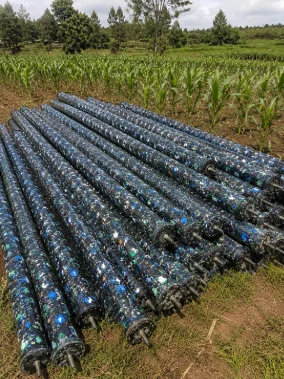
By investing in plastic today, you are not just building a fence; you are installing a permanent asset that will serve your farm for forty years or more. You are choosing to spend your money once rather than every five years. For any Kenyan farmer looking to cut costs and increase the professional standard of their agribusiness, the transition to recycled plastic is the most impactful infrastructure decision they can make. The initial “sting” of the price is quickly forgotten when the first rainy season passes and your fence remains as perfect as the day it was installed.
Frequently Asked Questions About Recycled Plastic Fence Posts in Kenya
Are recycled plastic fence posts better than treated timber posts in Kenya?
Yes. They are superior because they are 100 percent immune to termites and rot, which are the leading causes of timber fence failure across the country.
How long do recycled plastic fence posts last on a farm?
Most high quality recycled plastic posts are designed to last between 40 and 50 years, significantly outlasting even the best treated timber.
How much does a recycled plastic fence post cost in Kenya in 2026?
In 2026, prices typically range from KES 1,100 to 1,400 depending on the dimensions, density, and your distance from the manufacturer.
Can recycled plastic fence posts handle cattle, goats, and sheep pressure?
Yes, they are highly durable and have enough flexibility to absorb pressure from livestock without snapping, unlike dry or rotten timber.
Do recycled plastic fence posts rot or get damaged by termites?
No. They are made from non organic material, meaning they cannot rot and provide no food source for termites or other wood boring insects.
Are recycled plastic fence posts suitable for waterlogged or rainy areas?
They are the ideal choice for swamps and rainy regions because they do not absorb moisture and will not decay even when permanently submerged.
How far apart should plastic fence posts be installed on a farm?
A spacing of 3 meters (10 feet) is recommended for most farms. In high pressure livestock areas, a spacing of 2.5 meters is more effective.
Can farmers make recycled plastic fence posts at home in Kenya?
It is difficult without specialized shredding and melting machinery, but farmer groups can invest in small scale production kits to make them locally.
What machines are needed to manufacture recycled plastic fence posts?
The essential machines include a plastic shredder, a washing unit, a heating extruder, and heavy duty steel molds for the cooling process.
Where can farmers buy recycled plastic fence posts in Kenya?
Key suppliers include EcoPost in Nairobi, Polytanks, and various recycling centers in major towns like Eldoret, Kisumu, and Nakuru.