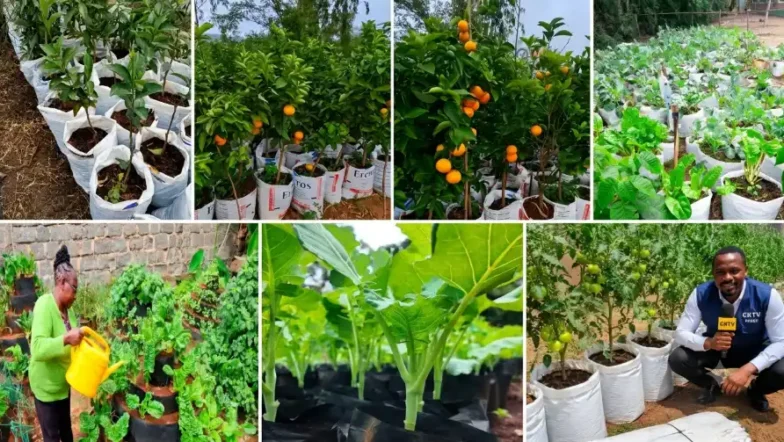

- Water Efficiency: Vertical hydroponics uses 90 to 94 percent less water than traditional soil farming by recirculating nutrients in a closed-loop system, making it ideal for water-scarce regions like Kajiado and Machakos.
- Spatial Productivity: You can produce up to 10 to 15 times more yield per square meter compared to soil farming by stacking crops vertically, allowing urban dwellers in Nairobi to farm on balconies or small backyard plots.
- Growth Speed: Crops in vertical hydroponic systems reach maturity 20 to 50 percent faster than soil-grown plants because nutrients are delivered directly to the roots, eliminating the energy plants usually spend searching for food in the ground.
Table of Contents
The agricultural landscape in Kenya has reached a tipping point in 2026. As land fragmentation in high-potential areas like Kiambu and Nakuru makes traditional large-scale soil farming nearly impossible for new entrants, the shift toward vertical hydroponics has moved from an experimental hobby to a commercial necessity. For the modern Kenyan agribusiness entrepreneur, the question is no longer about whether to farm, but how to maximize every square inch of available space.
Traditional soil farming is increasingly burdened by unpredictable rainfall, soil-borne diseases, and the rising cost of land preparation. Vertical hydroponics offers a controlled, data-driven alternative that removes the guesswork from farming. By moving upwards rather than outwards, you can turn a 40 by 60 plot into a high-output factory for leafy greens and herbs. This evolution is driven by the need for consistency in a market that demands high-quality produce year-round.
Read Also: Multi-Storey Vertical Garden Farming in Kenya: Complete Setup Guide 2026
In the following sections, we will break down why 2026 is the year that vertical systems officially overtake soil for small to medium-scale vegetable production. We will look at the financial realities, the technical requirements, and the practical steps you need to take to transition from traditional dirt farming to a modern vertical setup. This is not just about technology; it is about the survival and profitability of your farm in a changing climate.
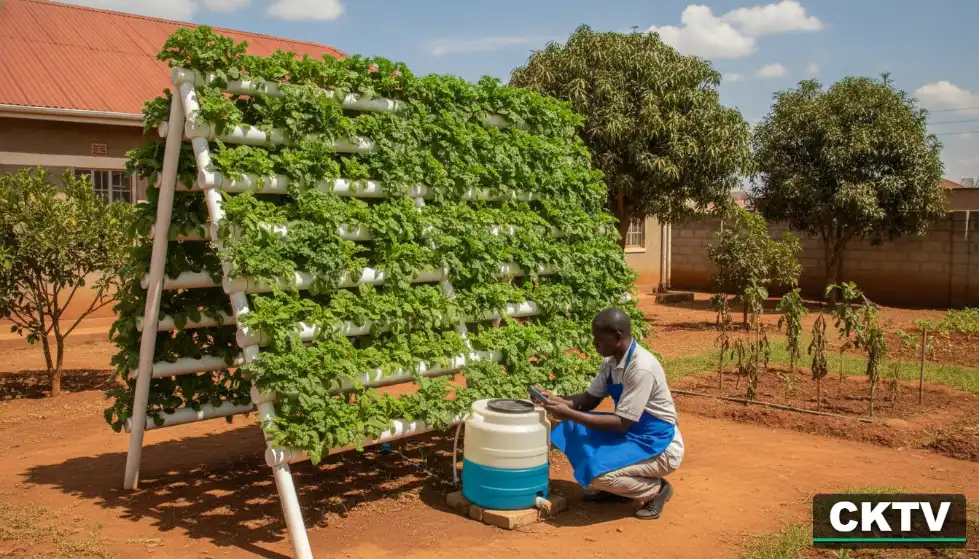
1. The Massive Advantage of Spatial Efficiency in Vertical Systems
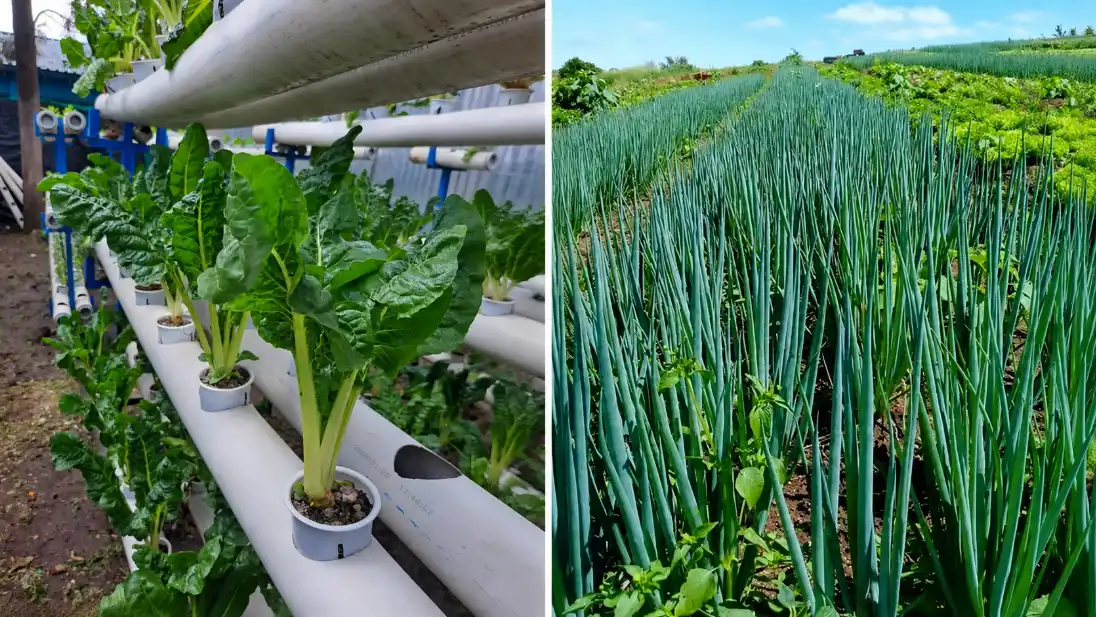
Vertical hydroponics wins on spatial efficiency by allowing farmers to stack crops in multiple layers, effectively multiplying the planting area. While soil farming is limited to a single horizontal plane, vertical systems use A-frames or towers to grow hundreds of plants in the same footprint that would normally only hold twenty.
In the urban and peri-urban corridors of Kenya, land is the most expensive input. If you are looking at a small plot in Kitengela or Syokimau, traditional soil farming is rarely profitable due to the limited number of plants you can fit per square meter. A standard soil-based kale (sukuma wiki) farm requires significant spacing to allow for root expansion and airflow. In contrast, a vertical pipe system uses space that was previously wasted.
From a commercial perspective, the math is simple. In a 10-meter by 10-meter space, a soil farmer might manage to plant 400 to 500 heads of lettuce. A vertical hydroponic farmer using a five-tier A-frame system can comfortably fit over 2,500 to 3,000 plants in that same space. This 5x to 6x increase in plant density translates directly to higher revenue per square foot. This is why urban farming in Nairobi has shifted so aggressively toward these systems.
Read Also: How to Grow Profitable Pineapples in Containers Using Recycled Materials (Step-by-Step Guide)
Most beginners in Kenya struggle with the initial cost of the racks, but once the structure is built, the cost per plant drops significantly. The shamba has effectively grown five times larger without you buying another inch of land. This vertical expansion is the only way for small-scale holders to compete with large commercial farms in the Rift Valley that have thousands of acres of flat land.
What guides rarely tell you is that spatial efficiency also simplifies management. When your plants are stacked vertically at waist and eye level, scouting for pests and harvesting becomes much faster. You no longer have to spend hours bending over or kneeling in the dirt. This ergonomic advantage reduces labor fatigue and allows a single person to manage a much larger number of plants than they could on a traditional horizontal soil farm.
The following table provides a clear comparison of how density changes when you switch from horizontal soil rows to vertical pipe stacking in a standard Kenyan backyard setup.
| Metric | Traditional Soil Farming | Vertical Hydroponics |
|---|---|---|
| Plants per 100sq Meters | 600 – 800 | 3,500 – 5,000 |
| Harvest Cycles per Year | 3 – 4 | 6 – 8 |
| Labor Intensity | High (Weeding/Tilling) | Low (Monitoring/Harvesting) |
| Yield per Square Meter | 2kg – 4kg | 15kg – 25kg |
2. Dramatic Water Savings Through Closed-Loop Recirculation
Vertical hydroponics saves up to 94 percent of water compared to soil farming by recirculating a nutrient-rich film through pipes. In soil, water is lost to evaporation and deep drainage into the ground. In vertical systems, the water stays within the pipes and reservoir, only being used by the plants.
Water scarcity is the biggest threat to Kenyan agriculture in 2026. Traditional soil-based irrigation, even with drip lines, loses a significant amount of moisture to the surrounding earth and the hot Kenyan sun. In regions like Machakos or the drier parts of Laikipia, the cost of trucking in water or pumping from deep boreholes can eat up all your profits. Vertical hydroponics solves this by using a closed-loop system.
The 94 percent rule is not just a theoretical number; it is a survival strategy. For every 1,000 liters a soil farmer uses to grow a crop of spinach, a hydroponic farmer only needs about 60 to 100 liters. Because the water is contained within food-grade PVC pipes, there is almost zero evaporation. Furthermore, because there is no soil to absorb the water, every drop you provide is available for the plant to drink.
This makes vertical farming the only viable option for dryland agribusiness where water is sold by the jerrycan or the bowser. Real-world experience shows that managing a hydroponic reservoir is much easier than managing soil moisture levels. In soil, you often deal with dry spots or waterlogged zones that stress the plants. In a vertical system, the pump ensures a consistent film of water touches the root tips at all times.
As long as your pump is running on a timer, your plants never experience thirst. This consistency leads to lush, heavy leaves that fetch premium prices in Nairobi markets like Zucchini or Carrefour. In these markets, quality and crispness are prioritized over bulk. A water-stressed plant in soil often becomes bitter or tough, whereas a hydroponic plant remains succulent and sweet due to its constant hydration status.
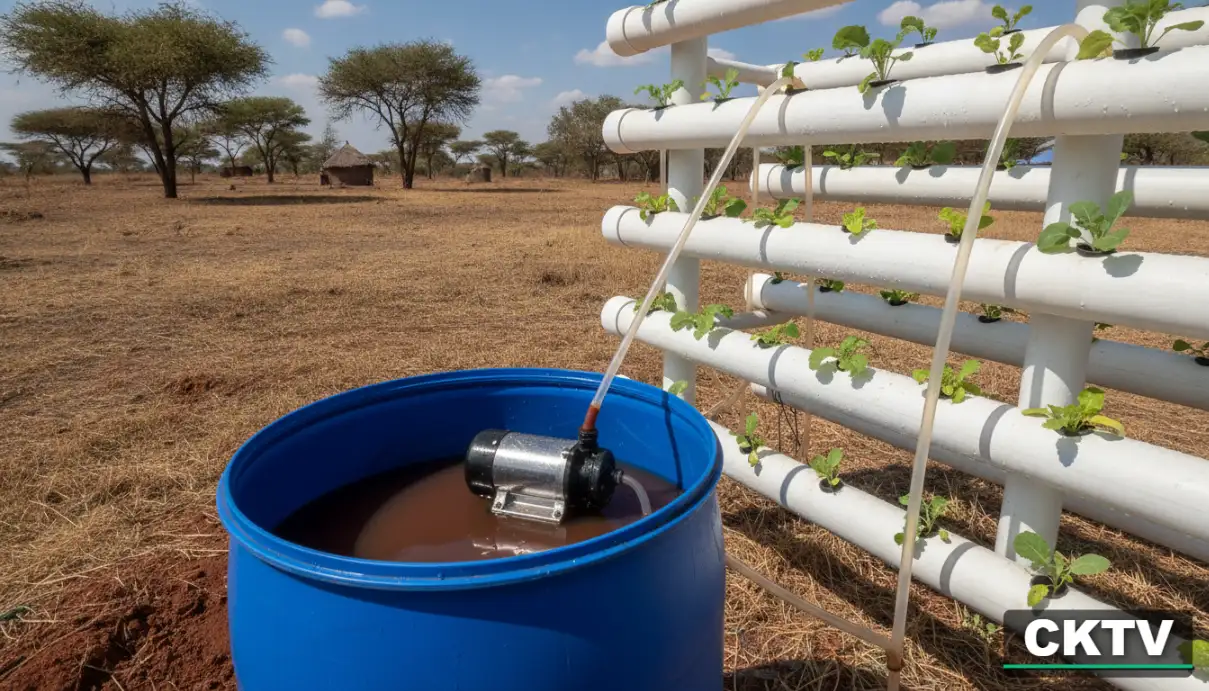
3. Accelerated Growth Cycles and Faster Market Turnaround
Plants in vertical hydroponic systems grow 20 to 50 percent faster because they have constant, direct access to oxygen and dissolved nutrients. Without the need to grow massive root systems to find food in the soil, the plant directs all its energy into leaf and fruit production.
In the world of commercial farming, time is money. If you can harvest your lettuce in 35 days instead of 60 days, you can fit more crop turns into a single year. Vertical hydroponics allows for this acceleration because the plants are essentially spoon-fed. In soil, a plant must expend a huge amount of metabolic energy growing a complex root network to seek out pockets of nitrogen, phosphorus, and potassium.
If the soil is hard or poor, the plant stays small while the roots work overtime. In a vertical pipe system, the roots sit in a shallow stream of nutrient-rich water. They have immediate access to everything they need, including high levels of oxygen. This direct-injection method of feeding means the plant can focus entirely on growing its foliage. For a beginner farmer in Kenya, this means you can start seeing a return on your investment much sooner.
While your neighbor is still waiting for their soil-grown kale to reach a harvestable size, you are already on your second harvest, heading to the market with fresh produce. This speed is especially profitable during the long-tail periods of the Kenyan market. For instance, in the dry months of January and February, leafy green prices usually spike because soil farmers are struggling with water.
Read Also: DIY Bottle Drip Irrigation Farming in Kenya (2026): Grow Tomatoes, Strawberries & Vegetables Using Recycled Containers
If you have a vertical system, you can produce three harvests during this window of high prices while others are waiting for the rains. Agribusiness is about hitting the market when the supply is low, and the speed of hydroponics gives you the first-mover advantage every single season. The predictability of the growth cycle also allows for better financial planning and labor management throughout the year.
The maturation gap is widening as improved varieties are optimized for liquid nutrients. The following list highlights expected timelines for common Kenyan crops in 2026.
- Lettuce (Grand Rapids/Iceberg): 30-35 days in Hydroponics vs. 55-70 days in Soil.
- Spinach (Fordhook Giant): 40 days in Hydroponics vs. 65 days in Soil.
- Kale (Marrow Stem): 35 days in Hydroponics vs. 60 days in Soil.
- Strawberries (Chandler): Continuous harvest starts 2 months earlier in vertical towers.
- Coriander (Dania): 25-30 days in Hydroponics vs. 45-50 days in Soil.
4. Eliminating Soil-Borne Diseases and Reducing Chemical Use
Vertical hydroponics eliminates the need for soil, which is the primary carrier for pests like nematodes and diseases like bacterial wilt. By removing the soil, you remove about 80 percent of the common problems that force Kenyan farmers to spend thousands on expensive farm chemicals.
If you talk to any seasoned tomato or potato farmer in Nakuru, their biggest nightmare is Bacterial Wilt or Nematodes. Once these pathogens enter your soil, they are incredibly difficult and expensive to get rid of. You often have to leave the land fallow or rotate crops for years. Vertical hydroponics completely sidesteps this issue. Since you are using an inert medium like cocopeat or simply bare-root in pipes, there is no dirty environment for these diseases to thrive.
This clean environment leads to a massive reduction in the need for chemicals. In 2026, Kenyan consumers are becoming more health-conscious and are increasingly looking for pesticide-free or organic-adjacent produce. By farming vertically in a controlled environment, you can often grow crops without a single spray of toxic pesticides. Any pests that do appear, like aphids or whiteflies, are much easier to spot on a vertical rack than in a tangled mess of soil-grown plants.
You can often manage them with simple organic solutions like neem oil or soap water. The hard truth that most beginners ignore is the cost of soil sterilization and fertilizer leaching. In traditional farming, you might apply fertilizer, only for a heavy rain to wash it away into the water table. This is both a waste of money and an environmental hazard. In vertical hydroponics, the nutrients stay in the water.
If the plant does not eat them today, they circulate and stay available for tomorrow. You are essentially running a zero-waste operation where every shilling spent on nutrients goes directly into the plant’s veins. This efficiency is critical as the cost of imported fertilizers continues to fluctuate in the East African market. By containing the root zone in a sterile PVC environment, you create a fortress that keeps out the majority of traditional agricultural headaches.
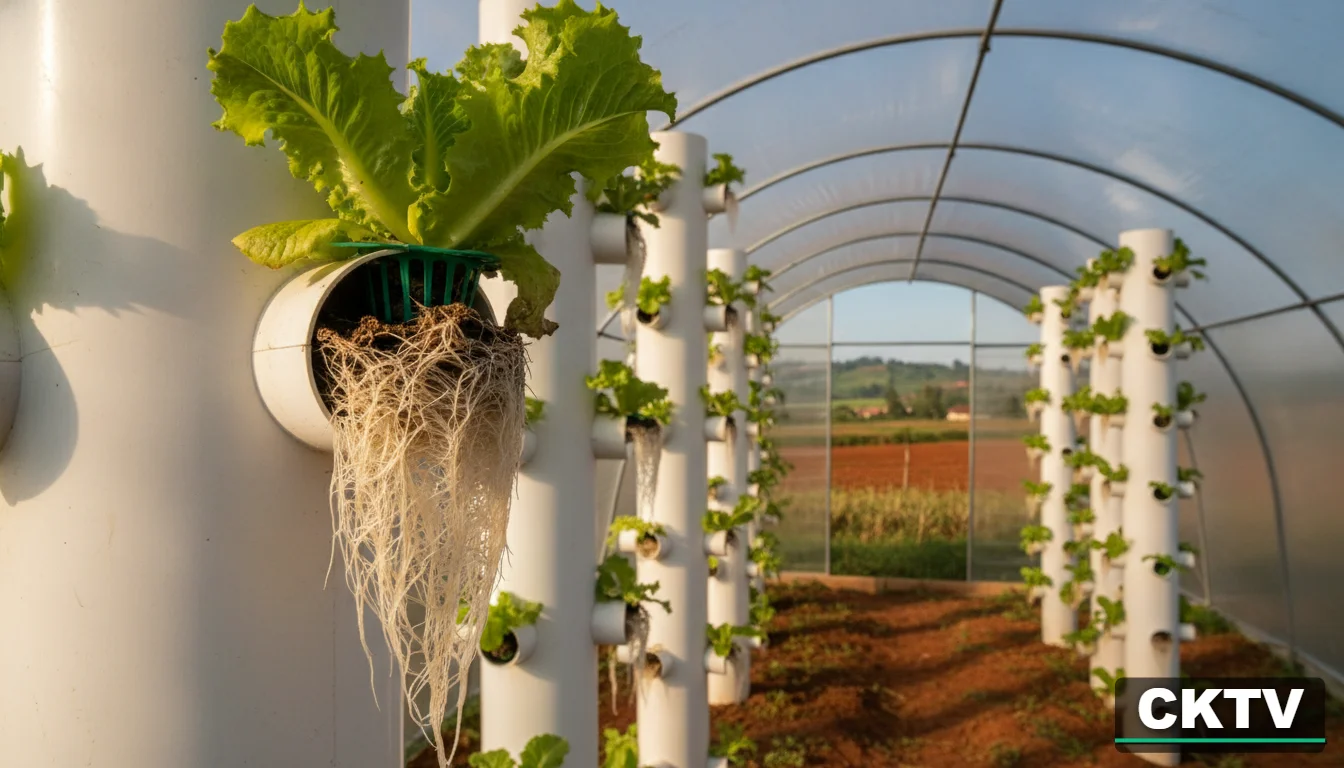
5. Predictable Year-Round Yields and Climate Resilience
Vertical hydroponic systems provide a stable environment that is less affected by the extreme weather shifts common in Kenya today. Because the water temperature, nutrient levels, and light can be managed, you can produce high-quality harvests regardless of whether it is a drought or a flood.
The 2026 climate in East Africa has become increasingly erratic. We see flash floods followed by months of heatwaves. For a soil farmer, a flood can drown the roots and rot the crop, while a heatwave can bake the soil hard and kill the seedlings. Vertical hydroponics acts as a shield against these extremes. The pipes are usually elevated, keeping the plants safe from ground-level flooding.
If you have a simple shade net or greenhouse over your vertical racks, you can also control the temperature and prevent the sun-scald that ruins leafy greens during the hot months. This predictability is what allows you to sign contracts with hotels, schools, or supermarkets. A supermarket like Naivas wants a steady supply of 100kg of spinach every Tuesday. If you are a soil farmer, you might have to call them and say you cannot deliver due to the rain.
If you are a vertical hydroponic farmer, you can guarantee that supply because your system does not care about the rain. You control the water, you control the food, and you control the harvest date. Commercial realism dictates that stability is more profitable than occasional abundance. It is better to have a steady, predictable harvest that sells at a good price than to have a massive bumper crop when everyone else has one.
Read Also: Maximizing Small Spaces: A Practical Guide to Productive Home Gardening in Kenya
Bumper crops usually crash the market price. Vertical systems allow you to time your planting so that you are always harvesting. By having multiple racks at different stages of growth, you create a rolling harvest that provides a daily or weekly M-Pesa income. This consistent cash flow is the holy grail of farming and is much easier to achieve when you are not dependent on the clouds to open.
The Technical Deep-Dive: Best Varieties for Vertical Systems
Not every seed that grows well in the dirt of Kinangop will thrive in a vertical pipe. For 2026, you want varieties that are compact and have high foliar efficiency. You do not want a plant that grows 2 meters tall and falls over; you want something that stays bushy and productive within the limits of the pipe spacing. Selecting the right genetics is half the battle in hydroponic success.
The following table outlines the top-performing varieties for Kenyan vertical systems based on 2026 yield data and pest resistance profiles.
| Crop Category | Top 2026 Variety | Maturity (Days) | Resistance Profile |
|---|---|---|---|
| Leafy Greens | Anna F1 (Spinach) | 35 – 40 | Downy Mildew Resistant |
| Lettuce | Exaudio (Red Oak) | 30 – 35 | Tipburn & Aphid Resistant |
| Herbs | Genovese (Basil) | 25 – 30 | Fusarium Wilt Resistant |
| Traditional | Improved Managu | 40 – 45 | High Heat Tolerance |
When selecting seeds, always look for the KEPHIS certification on the packet. In 2026, many farmers are moving toward Pelleted Seeds for hydroponics. These are seeds coated in a light material that makes them easier to handle and ensures they have a tiny bit of initial nutrition. This is particularly helpful when using small net cups where precision planting is required to avoid overcrowding.
If you are a beginner, buying nursery-ready seedlings from a reputable vendor like Alpha Hydroponics or Grekkon Limited can save you 2 weeks of stress and ensure a 99 percent survival rate in your vertical pipes. Starting from seeds at home requires a dedicated nursery area with very fine-tuned moisture control. For most commercial entrants, outsourcing the seedling stage is a smart way to reduce early-stage risk.
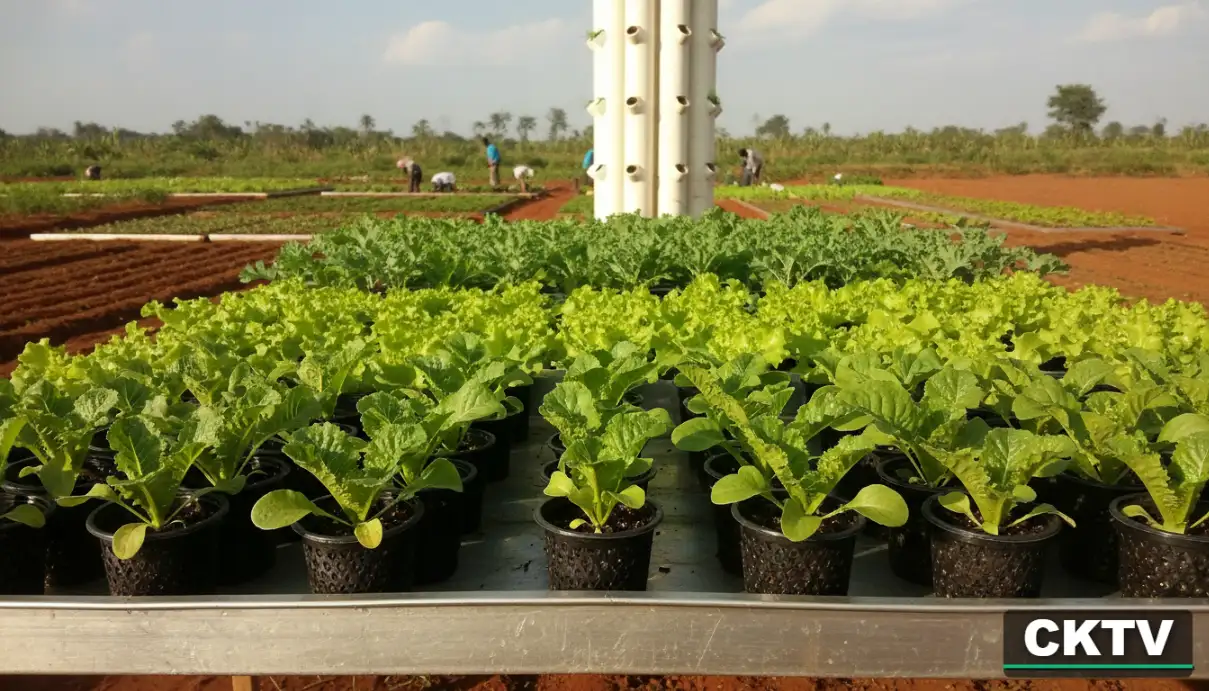
Step-by-Step: Setting Up Your Vertical Pipe System
Building a vertical NFT system involves constructing a sturdy A-frame rack, installing food-grade PVC pipes with pre-drilled holes, and connecting a pump-driven water circuit. The critical factor is the 1:30 slope, which ensures the nutrient film flows steadily over the roots without pooling or stagnant areas.
Phase 1: The Support Structure
The foundation of your vertical farm is the Ladder or A-frame. You can use treated timber or galvanized steel. Most commercial setups in Kenya use 1-inch square tubes for the frame. The frame should stand about 1.5 to 1.8 meters tall. This height allows you to have 4 to 5 levels of pipes on both sides of the A, maximizing the vertical space while keeping the top pipe reachable without a ladder. Ensure the feet of the frame are set on a level concrete base or firmly compacted ground to prevent tilting as the plants get heavy with water.
Phase 2: Pipe Preparation and Sloping
Use 3-inch or 4-inch PVC pipes. The 4-inch pipes are better for crops with larger root systems like kale or spinach, while 3-inch pipes are fine for lettuce and herbs. Drill 50mm (2-inch) holes along the top of the pipe, spaced 20cm apart. Use a hole saw for clean edges. When mounting the pipes to the frame, ensure a slight downward slope of about 2 to 3 percent. If the pipes are perfectly level, the water will not flow, and the roots at the far end will starve for oxygen and eventually rot.
Phase 3: The Plumbing and Reservoir
Place a 100-liter or 200-liter plastic tank at the lowest end of your rack. This is your reservoir. Use a small submersible pump to push the nutrient solution through a 16mm header pipe to the highest point of each pipe run. The water then flows down the slope, through the pipes, and falls back into the reservoir via a return manifold. This creates the closed loop that saves your water. Make sure to keep the reservoir covered to prevent sunlight from entering, which causes algae to grow and clog your pump.
Nutrient Management: Sourcing and Precision Mixing
Success in vertical hydroponics relies on replacing soil biology with a precise liquid diet. Because plants in PVC pipes have no access to secondary soil minerals, you must provide a balanced, highly soluble nutrient solution to prevent deficiencies.
1. Sourcing Your Nutrients in Kenya
- Commercial Hydroponic Salts: Always use water-soluble, hydroponic-grade nutrients (typically labeled as Part A and Part B). These are readily available at specialized Kenyan retailers such as Hydroponics Africa in Ruiru or Grekkon Limited in Nairobi, Eldoret, and Kisumu.
- Avoid Granular Fertilizer: Never attempt to use standard soil-based granular fertilizers like DAP or CAN in your pipe system. They are not fully water-soluble and will create insoluble sediment that clogs your submersible pump and irrigation emitters.
- Starter Kits: If you are a beginner, purchase pre-formulated two-part (A+B) liquid nutrient starter kits. These are chemically balanced to prevent the “nutrient lockout” that happens when minerals react with each other improperly.
2. The Golden Rules for Mixing
- Separate Dilution: Never mix the concentrated Part A and Part B liquids directly together. Doing so triggers a chemical reaction that creates a chalky white sludge, making the nutrients unavailable to your plants.
- Step-by-Step Mixing:
- Fill your reservoir with clean, room-temperature water. If using tap water, let it sit for 24 hours to allow chlorine to evaporate.
- Add the recommended amount of Part A to the water and stir thoroughly.
- Add the recommended amount of Part B and stir again until completely dissolved.
- The Metering Command: Use an EC (Electrical Conductivity) meter to target a range of 1.2 to 1.8 for leafy greens. After mixing, always check your pH level with a digital meter, aiming for the “sweet spot” of 5.5 to 6.5.
- pH Adjustment: Use specialized “pH Down” or “pH Up” solutions to reach the target range. If your pH is too high or low, your plants will suffer from nutrient lockout—meaning they literally cannot “eat” the food in the water.
- Maintenance: Flush your entire pipe system with plain, clean water every two weeks to prevent salt buildup, which can burn root tips and reduce yield.
Financials: Vertical Hydroponics vs. Soil Farming Costs (KES)
To be commercially realistic, we must look at the Unit Economics. While vertical hydroponics has a higher Upfront Capex (Capital Expenditure), it has much lower Opex (Operating Expenditure) per plant harvested. In 2026, the efficiency of liquid nutrients in hydroponics still provides a better margin than traditional broadcasting of fertilizer in the field. The following table compares a small-scale soil plot to a similar-sized vertical setup.
| Expense Item | Soil Farming (1/8 Acre) | Vertical System (100 Holes) |
|---|---|---|
| Infrastructure | KES 5,000 (Tools/Fencing) | KES 18,000 (Pipes/Pumps/Frame) |
| Seedlings/Seeds | KES 2,000 | KES 1,500 |
| Water (4 Months) | KES 12,000 (If buying) | KES 800 (Tap water) |
| Fertilizer/Nutrients | KES 4,500 | KES 2,200 |
| Total Initial Cost | KES 23,500 | KES 22,500 |
| Revenue (1st Harvest) | KES 15,000 | KES 25,000 |
The Break-even Analysis shows that a vertical system usually pays for its infrastructure within the first 2 to 3 harvests. In the average case scenario, a farmer in Nairobi selling premium lettuce at KES 50 per head can net a profit of KES 100,000 per year from a very small 5-meter rack. This ROI is nearly impossible to achieve with soil farming on such a small footprint, especially when you factor in the high cost of manual weeding and soil preparation.
Sourcing Your Materials: Where to Buy in Kenya
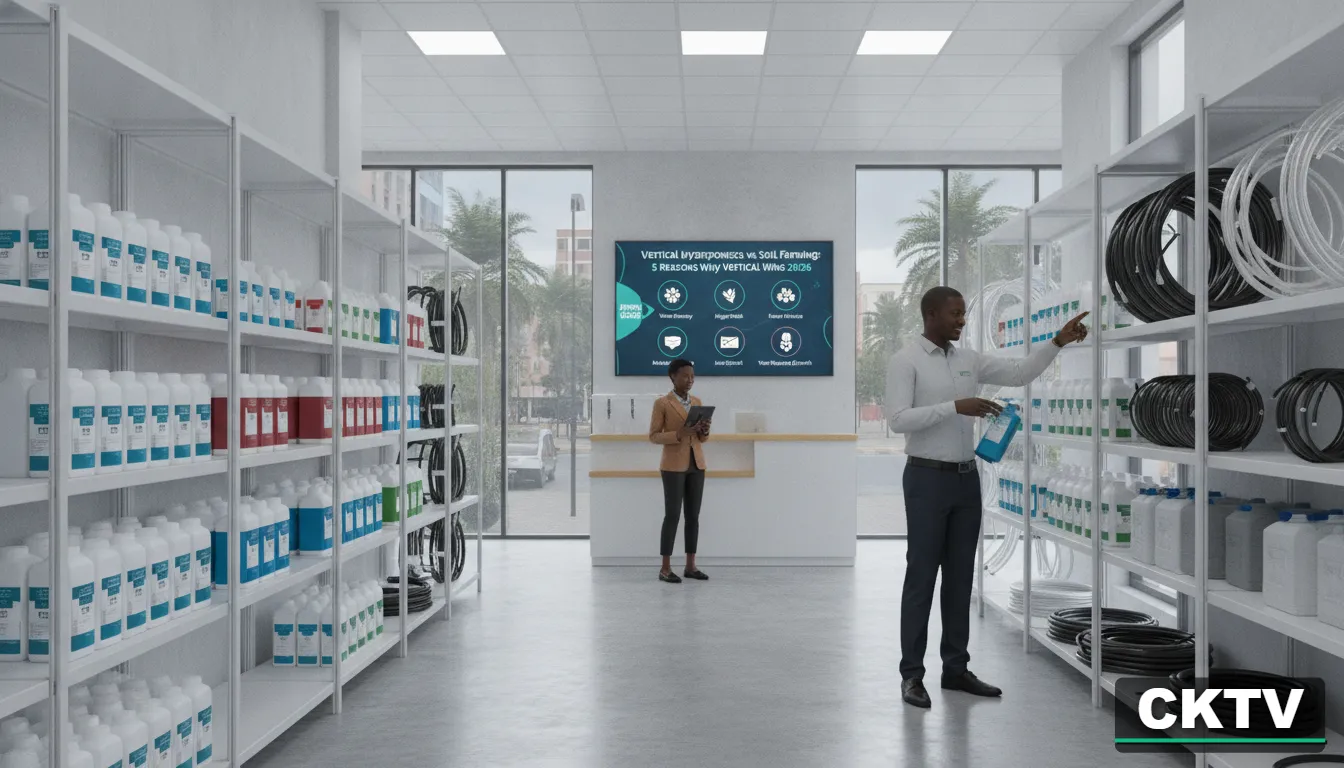
You can source complete vertical hydroponic kits and components from specialized agricultural innovators in Nairobi and Nakuru. Key vendors include Hydroponics Africa for nutrients, Alpha Hydroponics for ready-made NFT pipes, and Grekkon Limited for irrigation pumps and greenhouse covers.
Do not buy cheap PVC pipes from local hardware stores that are not UV-stabilized. After six months in the Kenyan sun, they will become brittle and crack. Go to Elgon Kenya or Doshi Hardware for industrial-grade pipes that can withstand the heat. For specialized items like Net Cups and EC/pH Meters, you can find them on Jumia or at Hydroponics Africa. Their retail outlet on Thika Road is a goldmine for beginners who need to see the systems in person before buying.
If you are in the Rift Valley, Grekkon Limited in Eldoret is the go-to for high-quality pumps and timers. They also provide consultation on solar-powered pumping systems, which are becoming a standard in 2026 due to electricity costs. Always ask for food-grade plastic whenever possible, as some cheap plastics can leach chemicals into your nutrient solution, affecting the taste and safety of your vegetables. Investing in quality materials from the start prevents expensive repairs later.
- Alpha Hydroponics (Nairobi): Specialized in NFT kits and pre-grown seedlings. They offer great support for urban farmers.
- Hydroponics Africa (Ruiru): Best for Easy-Grow nutrient salts and expert-level training sessions.
- Grekkon Limited: Specialists in irrigation and greenhouse tech with branches in Nairobi, Eldoret, and Kisumu.
- Local Agrovets: Useful for general items like shade nets. Use 50 percent to 70 percent shade for best results in vertical systems.
Real-World Risks and Reality Checks
The primary risks in vertical hydroponics include power outages that stop the water pump, nutrient imbalances (pH drift), and high initial setup costs. Without a backup plan for electricity or a disciplined testing schedule for your water, a single mistake can kill an entire crop in hours.
Let us be blunt: Vertical hydroponics is not a set and forget system. It is a technical operation. If the power goes out in Nakuru for 12 hours and your pump stops, the roots in your pipes will dry out. Because there is no soil to hold moisture, your plants can wilt and die very quickly. Successful farmers in 2026 always have a small Solar Backup or a battery-powered pump to keep the water flowing during KPLC outages.
If you cannot afford solar yet, you must manually pour water through the pipes every few hours if the power fails. This is the labor-intensive side of the business that people rarely mention in shiny brochures. Another hard truth is pH Management. Kenyan water, especially from boreholes, is often very hard with high pH levels. If your water pH rises above 7.0, the plants cannot eat the nutrients, even if the pipes are full of them.
Read Also: 15 Most Profitable Agribusiness Ideas in Kenya to Start in 2026
This is called nutrient lockout. You must buy a pH meter and check your reservoir at least every three days. You will need pH Down to keep the water in the sweet spot of 5.5 to 6.5. If you are too lazy to test your water, stick to soil farming. Hydroponics will frustrate you if you do not follow the chemistry. Discipline in monitoring is the difference between a lush harvest and a pile of dead brown leaves.
Expert Fertilizer Advice for Vertical Systems
In a vertical hydroponic setup, you are replacing the complex biology of the soil with a precise liquid diet. You cannot use standard granular fertilizers like DAP or CAN in these systems because they will not dissolve completely and will clog your pump and emitters. You must use water-soluble nutrients specifically formulated for hydroponics. These usually come in a two-part or three-part system (Part A and Part B) to prevent certain minerals from reacting and precipitating before they reach the plant.
The golden rule for 2026 is to use the EC (Electrical Conductivity) meter to measure the strength of your solution. For leafy greens, you want an EC between 1.2 and 1.8. If the EC is too low, your plants will be pale and grow slowly. If it is too high, the tips of the leaves will burn. Always mix your Part A and Part B in separate containers of water before adding them to the main reservoir. Never mix the concentrates together directly as they will turn into a useless sludge that cannot be absorbed by the roots.
I recommend starting with a premixed solution from a vendor like Hydroponics Africa until you understand the specific needs of your water source. Over time, you can learn to blend your own salts to save money. Remember to flush your system with plain water every two weeks to prevent salt buildup in the pipes. This simple maintenance step ensures your pipes stay clean and your plant roots stay healthy and white throughout the entire growing season.
Is Vertical Hydroponics Worth It in 2026?
The answer is a resounding Yes, but only if you treat it as a business and not a hobby. If you are in an urban area where land is scarce and water is expensive, vertical hydroponics is the only way to achieve a meaningful ROI. The ability to produce 10 times the yield with 94 percent less water is a mathematical win that soil farming simply cannot match in a modern economy.
As we look toward 2027 and beyond, the gold standard for Kenyan agribusiness will be these climate-resilient, space-saving systems. The farmers who master vertical stacking today will be the ones supplying the growing urban middle class with fresh, clean, and consistent produce. If you have a balcony, a backyard, or a small unused plot, start with a 50-hole system. Learn the chemistry, master the pump, and then scale upwards. The sky is the limit.
Frequently Asked Questions (FAQ)
How do I start vertical hydroponic farming in Kenya as a beginner?
Start by attending a basic training at Alpha Hydroponics or watching local tutorials. Buy a small starter NFT kit (20-50 holes) to learn nutrient mixing and pH testing before scaling up.
What are the main advantages of using vertical hydroponics over soil farming?
The main benefits are 94% water savings, 10x higher yield per square meter, faster growth cycles, and the complete elimination of soil-borne diseases like bacterial wilt or nematodes.
Which crops are the most profitable for hydroponic farming in Kenya?
High-value leafy greens like lettuce, spinach, kale (sukuma wiki), and herbs like basil, coriander (dania), and mint offer the fastest returns and highest market demand in 2026.
How much does it cost to set up a basic pipe-based hydroponic system?
A small 100-hole A-frame system costs between KES 15,000 and KES 25,000, depending on whether you use timber or steel for the frame and the quality of the pump and pipes.
What are the essential requirements for a successful hydroponic setup?
You need a reliable water source, a submersible pump, food-grade PVC pipes, a reservoir tank, liquid nutrients, net cups, a growing medium (like cocopeat), and a pH/EC meter for testing.
Can I set up a vertical hydroponic system at home using PVC pipes?
Yes, DIY systems are common. You can buy standard 3 or 4-inch PVC pipes from a hardware store, drill holes, and mount them on a wooden frame for a low-cost home setup.
What are the common challenges or disadvantages of hydroponic farming?
The biggest challenges are the high initial cost, the risk of crop loss during power outages, and the need for constant monitoring of water pH and nutrient levels to prevent lockout.
How often should I monitor nutrient and pH levels in my hydroponic system?
For best results, you should test your water every 2 to 3 days. Professional commercial farmers often test daily to ensure the plants are always in the optimal 5.5-6.5 pH range.
Is hydroponic farming better than traditional soil-based agriculture for leafy greens?
Yes, for leafy greens, hydroponics is superior because it produces cleaner, crunchier leaves much faster and without the grit or soil-borne pests found in traditional dirt farming.
Where can I buy materials for vertical hydroponic systems in Nairobi?
You can find materials at Hydroponics Africa (Thika Road), Alpha Hydroponics, and Grekkon Limited. Major hardware stores like Doshi also stock the necessary industrial-grade PVC piping.