
- Profit Potential: Under optimal management in 2026, farmers can realize a net profit of 250,000 to 450,000 KES per acre within a 90 day cycle.
- Best Varieties: Hybrid seeds like Gloria F1 and Victoria F1 remain the market leaders for their high weight, disease resistance, and excellent transportability.
- Seasonal Strategy: Success in the 2026 market requires timing harvests for the dry season scarcity or utilizing raised beds and strict fungicide programs during the rains.
Table of Contents
Cabbage farming in Kenya has evolved into a highly technical and lucrative business as we move through 2026. With the rising cost of living, consumers are looking for affordable, nutrient dense vegetables, keeping the demand for cabbage consistently high in every corner of the country. This crop is favored by both small scale and large scale growers because it offers a short production cycle and a predictable market compared to other horticultural crops.
For a new farmer, the appeal lies in the high density planting potential. You can fit thousands of plants on a small piece of land, making it one of the most profitable uses of an acre. In regions like Nyandarua, Nakuru, and the highlands of Meru, cabbage farming has become the primary source of income for thousands of households. However, success in 2026 requires more than just planting; it requires a deep understanding of soil nutrition, pest management, and market timing.
This guide provides a comprehensive roadmap for anyone looking to invest capital into cabbage production this year. We will look at the financial breakdowns, the best fertilizer regimes, and how to navigate the challenges of the rainy season. By following these evidence based practices, you can minimize your risks and maximize your returns in the competitive Kenyan agricultural landscape.
Why Cabbage Farming Is Profitable in Kenya
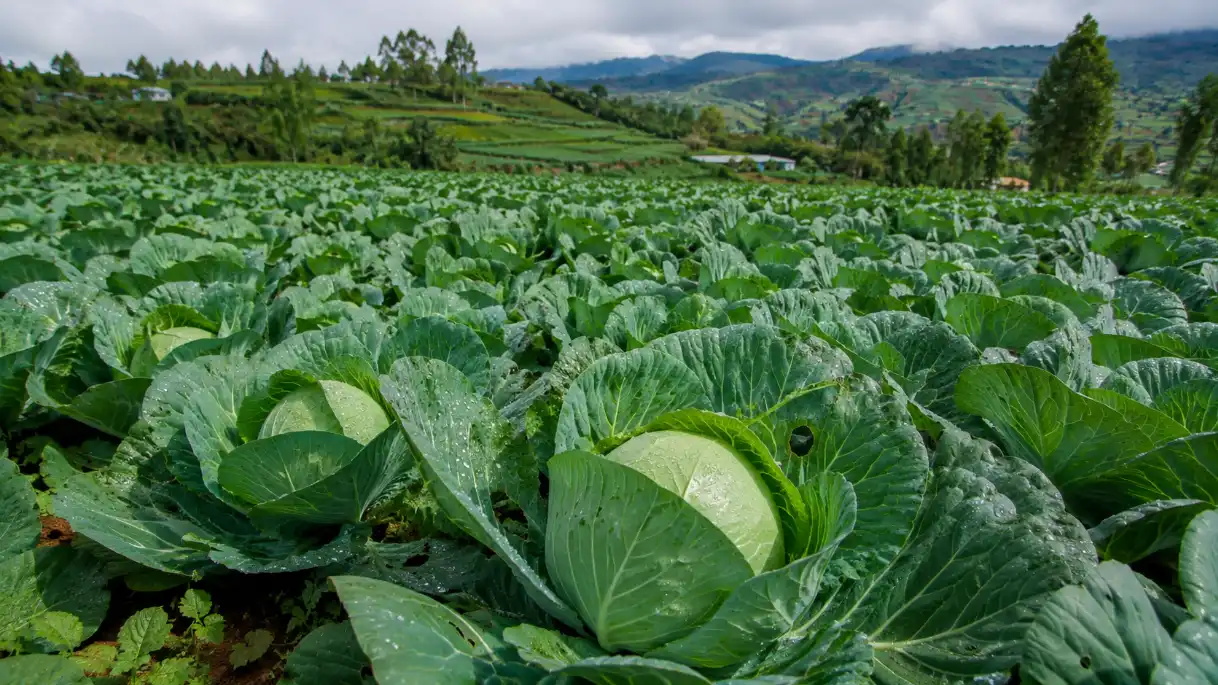
Cabbage farming is profitable in Kenya due to its high yield per unit area and rapid maturity of 75 to 100 days. With an average production cost of 100,000 KES per acre and potential gross revenue exceeding 400,000 KES during peak seasons, it remains a top choice for commercial horticulture.
Read Also: Avocado, Macadamia or Dairy? Best Export-Ready Agribusiness Ventures in Kenya for 2026
The primary driver of profitability is the frequency of harvest. Because cabbages mature so quickly, a farmer with reliable irrigation can complete three full cycles in a single year. This means your land is constantly generating revenue rather than sitting idle. In the 2026 economic environment, fast cash flow is essential for maintaining a sustainable farm business and reinvesting in better technology or more land.
Another factor is the versatility of the market. Cabbages are a staple in Kenyan schools, hospitals, and prison systems, providing a massive institutional market. Beyond institutions, every local “mama mboga” and supermarket in urban centers like Nairobi and Mombasa requires a steady supply. The crop is also relatively hardy, meaning it can be transported over long distances from high altitude farms to dry lowland markets with minimal post-harvest loss compared to tomatoes or leafy greens.
Land efficiency is the third pillar of cabbage profit. On a single acre, a farmer can plant between 12,000 and 18,000 cabbages depending on the variety and spacing. Even if you sell each head at a conservative farm-gate price of 30 KES, the gross income is substantial. During times of scarcity, such as the dry months of January and February, these prices can easily double, turning a standard harvest into a massive financial windfall for the prepared farmer.
Best Cabbage Varieties for Kenyan Farmers
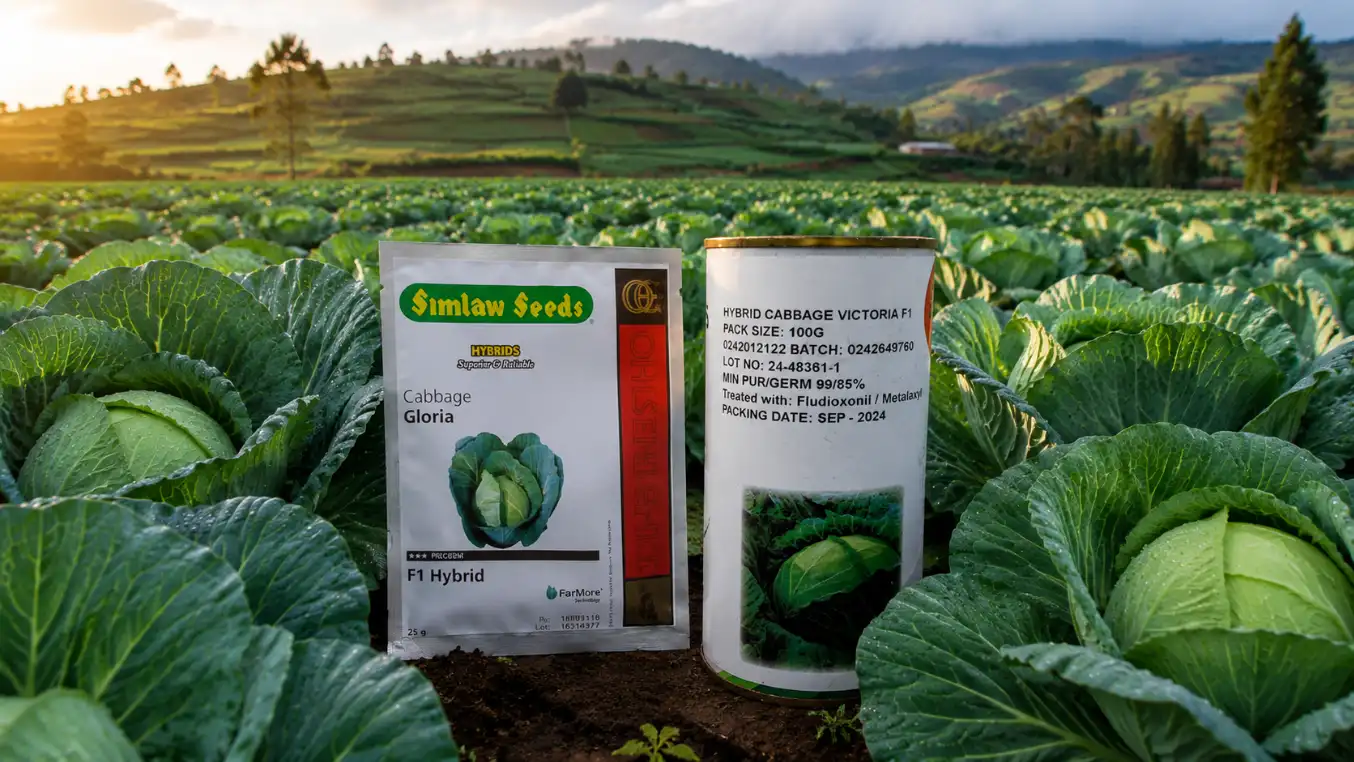
The most successful cabbage varieties in Kenya for 2026 are Gloria F1, Victoria F1, and Riana F1. These hybrids are preferred for their heavy head weight, resistance to Black Rot, and ability to remain fresh during long distance transport to urban markets.
Selecting the right seed is the foundation of your entire project. In 2026, Kenyan farmers have moved almost entirely away from open pollinated varieties like Copenhagen Market toward high performing hybrids. While hybrid seeds carry a higher initial cost, their uniform growth and disease resistance far outweigh the savings of cheaper seeds. A uniform crop means all your cabbages are ready for harvest at the same time, which is crucial for bulk buyers and efficient labor use.
Victoria F1
Victoria F1 has become a favorite for those targeting the fastest possible turnaround. It matures in approximately 70 to 75 days after transplanting, which is significantly faster than most other hybrids. The heads are attractive, bright green, and can reach weights of up to 5kg or 6kg under excellent management. It is also known for its “field holding” ability, which allows the farmer to delay harvest for a few days if the market prices are temporarily low without the heads splitting.
Gloria F1
Gloria F1 is the industry standard for durability. It is specifically bred to withstand the rough handling associated with Kenyan transport systems. The heads are incredibly dense and blue-green in color, typically weighing between 3kg and 4.5kg. It has a high tolerance for Black Rot, making it a safer bet for farmers in wetter regions. Its maturity period is slightly longer, at 85 to 90 days, but the consistency of the head size makes it a favorite for supermarket contracts.
Riana F1
For farmers in lower altitude or warmer areas, Riana F1 is a top recommendation. It is designed to be heat tolerant and resistant to the splitting that often occurs when temperatures fluctuate. Riana F1 produces slightly flattened but very heavy heads. It is often praised for its sweet taste, which gives it a competitive edge in retail markets where flavor is a selling point for household consumers. It matures in about 80 to 85 days.
Pruktor F1
Pruktor F1 is widely recognized for its superior disease resistance package, particularly against Ring Spot and Black Rot. This variety is often the go-to choice for the rainy season when fungal and bacterial pressures are at their peak. It matures in about 85 to 95 days and produces very solid, medium to large heads. It is highly reliable for farmers who may not have the budget for intensive chemical spray programs during the wet months.
Red Cabbage (Red Dynasty F1)
While green cabbage dominates the market, Red Dynasty F1 offers a high value niche opportunity. Red cabbage is increasingly popular in urban salads and high-end restaurants. It takes longer to mature (up to 100 days) and requires more precision in fertilizer application. However, the price per head is often significantly higher, making it a great choice for farmers who want to diversify their income and target premium buyers in Nairobi or Eldoret.
The following table provides a clear comparison of these top varieties to help you decide which one fits your specific farm conditions and market goals for the 2026 season. Use this data to plan your planting cycles and expected harvest dates.
| Variety Name | Maturity (Days) | Avg Head Weight (Kg) | Primary Benefit |
|---|---|---|---|
| Victoria F1 | 70 – 75 | 4.5 – 6.0 | Fastest maturity and largest size |
| Gloria F1 | 85 – 90 | 3.0 – 4.5 | Best for long distance transport |
| Riana F1 | 80 – 85 | 3.5 – 5.0 | Superior heat and split resistance |
| Pruktor F1 | 85 – 95 | 3.5 – 5.0 | High tolerance to Black Rot |
| Red Dynasty F1 | 95 – 105 | 1.5 – 2.5 | Premium price for niche markets |
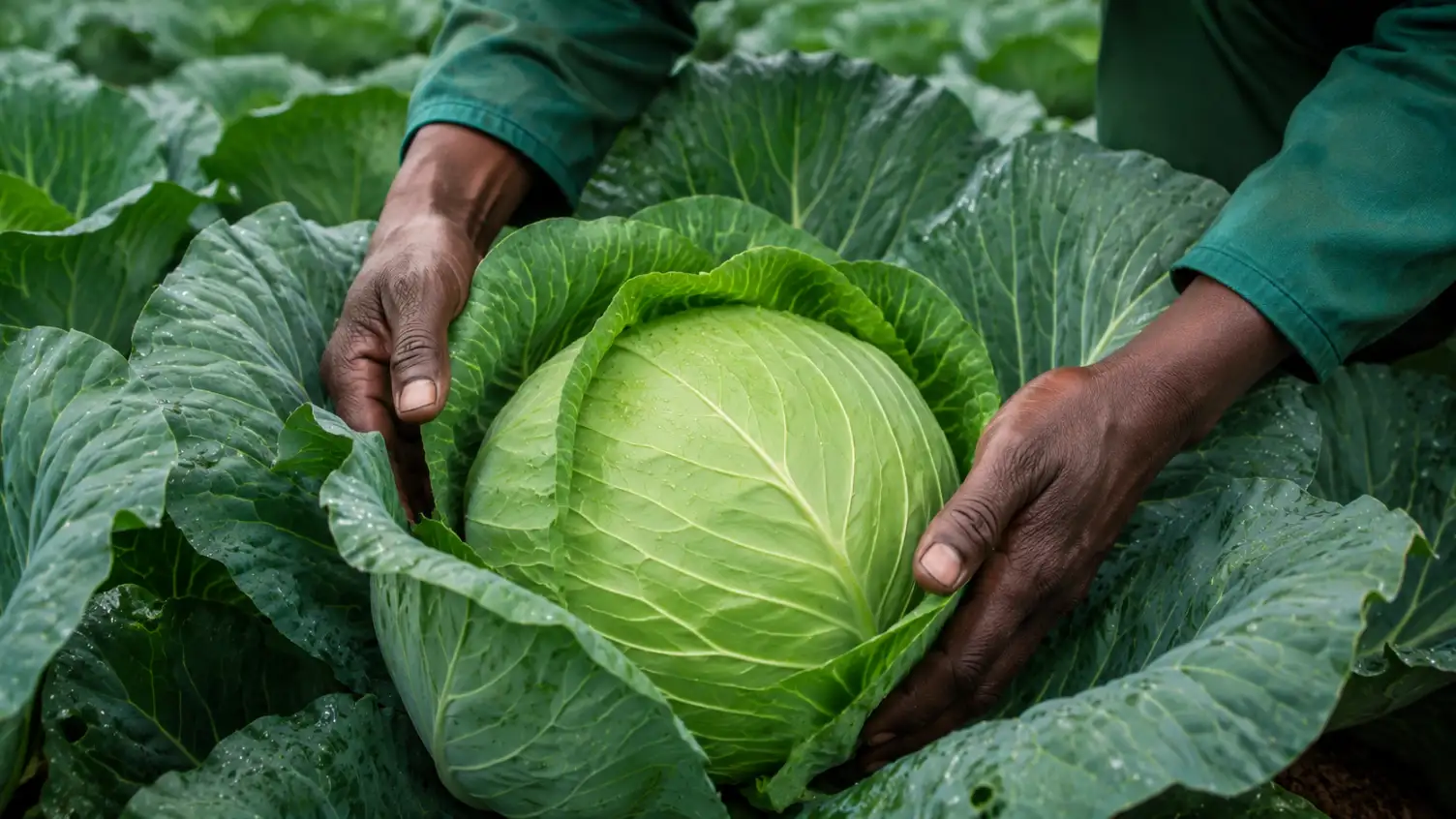
Where to Buy Certified Cabbage Seeds in Kenya (2026 Trusted Sources)
Success starts with the seed. In 2026, the market is unfortunately flooded with counterfeit products that look like the real thing but fail to germinate or carry disease. To protect your investment, only purchase from authorized distributors and ISO-certified companies.
Read Also: Top 10 Best Agrovets in Kenya (2026 Guide): Where to Buy Genuine Inputs in Nairobi, Eldoret & Nakuru
Never buy “loose” seeds from unmarked packets at local markets. Always look for factory-sealed packaging with visible batch numbers and expiration dates.
1. Royal Seed (Kenya Highland Seed)
Royal Seed is a leader in the Kenyan horticultural space, known for its focus on trialing varieties specifically for local soil conditions. They offer a strong support system including free agronomy training.
- Best For: Reliable hybrid cabbages like Jabali F1, Fabiola F1, and Pretoria F1.
- Website: royalseed.biz
- Technical Support: 0800 720 250 (Toll-free)
- Why them: Their “Centre of Excellence” in Athi River provides practical, real-world data that helps you understand how a variety will perform before you plant it.
2. Seed Co Kenya
Seed Co is a powerhouse in African agriculture, focusing on varieties bred for our specific climatic challenges. They provide detailed technical data, including expected yields and seed rates, which is vital for commercial planning.
- Best For: High-performance varieties like Dixit F1, Malkia F1, and Tsavorite F1.
- Website: seedcogroup.com/ke
- Why them: They provide clear, actionable data on seed rates (e.g., 75–100g per acre for their main cabbage hybrids), helping you avoid over-buying or under-planting.
3. SimLaw Seeds
A staple in the Kenyan market, SimLaw offers a wide catalog and has a long-standing reputation for reliability. Their platform is easy to navigate, and they maintain a physical presence on Kijabe Street in Nairobi for those who prefer face-to-face service.
- Best For: A vast variety of both hybrid and open-pollinated vegetable seeds.
- Website: simlaw.co.ke
- Contact: +254 794 546 935 | [email protected]
- Why them: They are highly accessible and provide a “one-stop-shop” experience where you can often source your initial chemicals and fertilizers alongside your seeds.
4. Kenya Seed Company (KSC)
As a state corporation, KSC is the foundation of many large-scale agricultural projects in Kenya. While they are famous for maize, their horticultural department is a trusted source for certified seeds.
- Best For: Government-certified seeds backed by rigorous national research.
- Website: kenyaseed.com / ksc.ecitizen.go.ke
- Why them: Their integration with eCitizen makes it easier to track orders and ensure you are dealing with an official entity.
⚠️ Pro-Tip: The “Anti-Counterfeit” Checklist
Before you hand over your cash, verify these three things to ensure you aren’t being scammed:
- The Seal: Does the packet look tampered with? If it is a generic plastic baggie, do not buy it.
- The Expiry Date: Always check the back of the foil packet. If the date is faded, smudged, or missing, it is a red flag.
- The Source: If a shop is selling seeds at half the market price of the official company websites listed above, they are likely selling low-quality fakes. A few thousand shillings saved on cheap seeds can cost you millions in lost harvest revenue.
Final Advice: If you are planning a large-scale project, call the Sales Agronomist numbers provided on these official websites. Tell them your specific region (e.g., Nyandarua vs. lower Meru) and they will often recommend the exact hybrid that is currently performing best in your specific micro-climate.
Cabbage Farming Profit Per Acre in Kenya (2026 Breakdown)
An acre of cabbage in Kenya can yield between 12,000 and 15,000 marketable heads. With an average production cost of 110,000 KES and a wholesale price of 35 KES per head, the net profit is roughly 310,000 KES per acre per harvest.
To succeed as a commercial farmer in 2026, you must understand your numbers. Many farmers fail because they do not track their expenses, leading to “leaking” profits through inefficient labor or wasted inputs. The cost of production includes everything from the nursery stage to the final transport to the market. In 2026, while fertilizer prices have stabilized, labor and fuel costs remain significant factors that must be managed carefully to ensure a high return on investment.
Input Costs Breakdown
Your largest upfront cost will be seeds and fertilizer. High quality hybrid seeds for one acre will cost between 15,000 and 22,000 KES. Fertilizer, including basal application and two rounds of top-dressing, will total about 35,000 to 45,000 KES. Land preparation using a tractor or heavy manual labor costs around 10,000 KES. Additionally, you must budget for pesticides and fungicides, which can cost 12,000 KES, and labor for transplanting, weeding, and harvesting, which typically adds another 15,000 to 20,000 KES.
Expected Yield and Revenue
The yield depends heavily on your spacing. If you use a 60cm by 60cm spacing, you will have roughly 11,000 plants. If you move to a tighter 45cm by 45cm spacing, you can reach 19,000 plants, though the heads will be smaller. Most commercial farmers opt for a middle ground, targeting 14,000 to 15,000 heads per acre. In the 2026 market, large heads sell for 50 to 80 KES retail, but for bulk farm-gate sales, a price of 30 to 40 KES is more realistic. Selling 14,000 heads at 35 KES each results in a gross revenue of 490,000 KES.
The Risk of Price Volatility
Market timing is the biggest factor in determining your actual profit. During a “glut” (when everyone is harvesting at once), the price can drop to 15 KES per head. During a “scarcity” (usually during dry months), the price can soar to 70 KES. Successful farmers use irrigation to plant when others cannot, ensuring they harvest when supply is low. The following table summarizes three potential financial outcomes based on market conditions in 2026.
| Market Condition | Price Per Head (KES) | Gross Revenue (KES) | Net Profit (KES) |
|---|---|---|---|
| Low Market (Glut) | 18 | 252,000 | 142,000 |
| Average Market | 35 | 490,000 | 380,000 |
| Peak Market (Scarcity) | 65 | 910,000 | 800,000 |
Land Preparation and Planting Guide
Proper land preparation for cabbage starts with deep plowing followed by the incorporation of well-rotted manure at a rate of 10 tons per acre. Seedlings should be transplanted from the nursery after 4 to 6 weeks, ensuring they are placed in moist soil during the cool of the afternoon.
The health of your cabbage crop is determined in the first 30 days of its life. Land preparation should begin at least three weeks before transplanting. You must plow the land to a depth of at least 30cm to allow for deep root penetration. Cabbages are heavy feeders, so incorporating organic matter is not optional; it is a requirement for high yields. Well-rotted cow, chicken, or goat manure helps the soil retain moisture and provides a slow release of nutrients that chemical fertilizers cannot match.
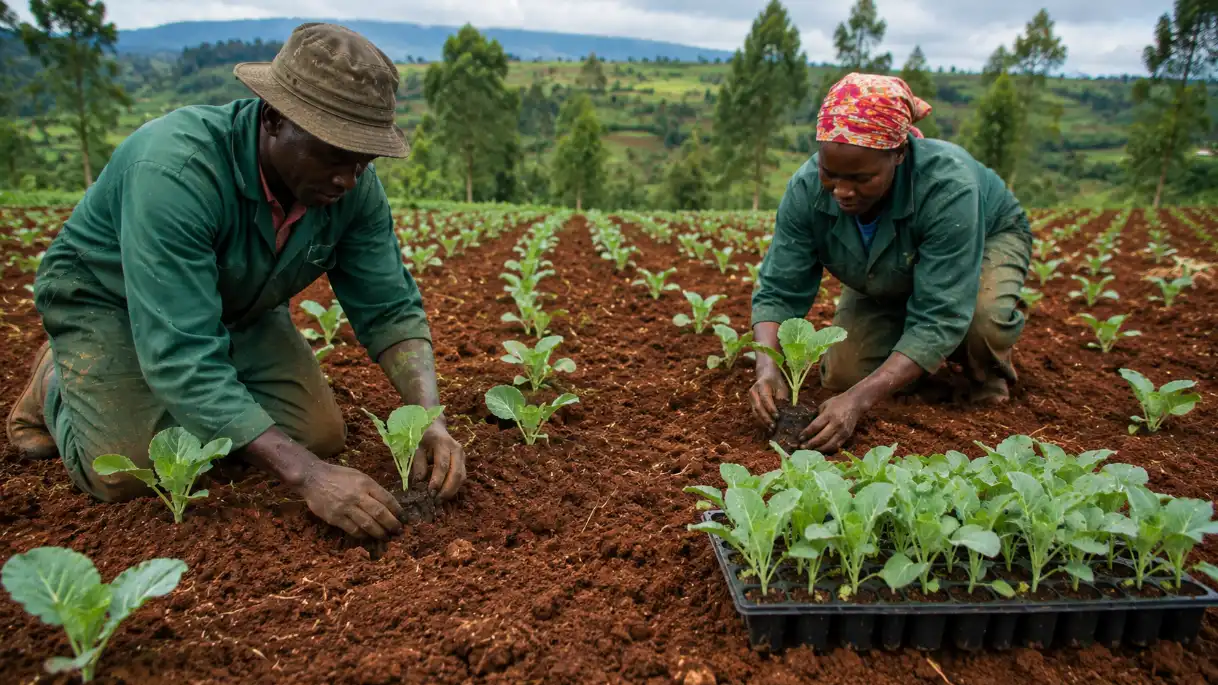
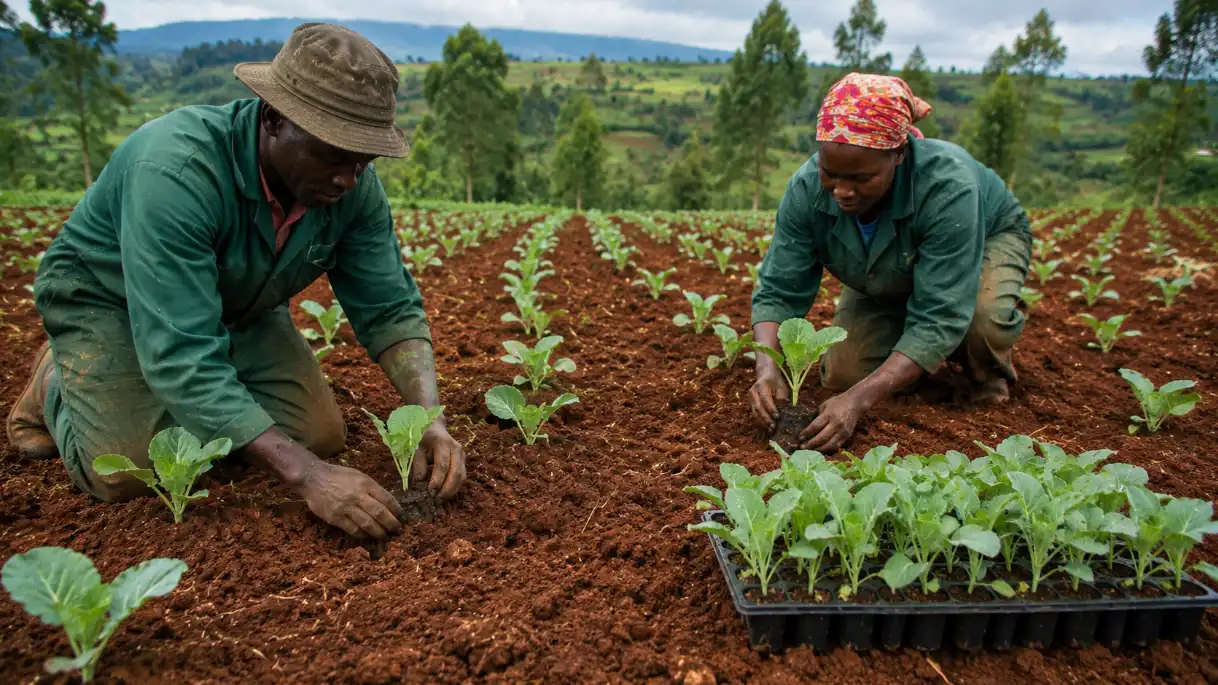
While many farmers still use traditional ground nurseries, using seedling trays has become the best practice in 2026. Seedling trays prevent root damage during transplanting, which significantly reduces the “shock” period where the plant stops growing. This ensures a more uniform crop. Your nursery soil should be treated to prevent soil-borne diseases like Damping Off. Seedlings are ready for the main field when they have reached about 10cm to 15cm in height and possess four to five strong, true leaves.
When transplanting, the spacing you choose will dictate the size of the final product. A spacing of 60cm by 60cm is ideal for farmers targeting wholesale buyers who want large, heavy heads. If your target is the urban supermarket or household market, 45cm by 45cm is often better because it produces medium sized heads that are easier for a single family to consume in one meal. Always ensure the soil is moist before transplanting, and if possible, apply a light watering immediately after the seedlings are in the ground.
Cabbage Farming Fertilizer Program (2026 Guide)
The 2026 fertilizer program for cabbage in Kenya requires 50g of DAP or NPK per hole at planting, followed by top-dressing with 150kg of CAN per acre in two splits. Vital micronutrients like Boron and Calcium must be applied via foliar sprays to prevent head splitting and internal rot.
Cabbages are among the most nutrient-demanding crops in the horticultural sector. To achieve the 5kg heads that fetch top prices, you must follow a disciplined feeding schedule. Basal fertilizer, usually DAP (Diammonium Phosphate) or a balanced NPK, provides the phosphorus necessary for early root development. In 2026, many experts recommend NPK 17:17:17 for planting because it gives the seedling a balanced start with nitrogen and potassium alongside phosphorus.
Top-dressing is where the leaf mass is built. Cabbages need a massive amount of nitrogen to expand their leaves before they begin “folding” to form the head. The first round of CAN (Calcium Ammonium Nitrate) should happen 3 to 4 weeks after transplanting. The second round should follow 3 weeks later. Be careful not to apply nitrogen too late in the cycle, as this can lead to heads that are soft or prone to rotting during transport. Always apply fertilizer in a ring around the plant, about 5cm from the stem, and cover it with soil to prevent loss through evaporation.
Read Also: Butternut Farming in Kenya (2026): Complete Guide on Yields, Profits, Spacing & Market Opportunities
Micronutrients are the “secret weapon” for quality. Boron deficiency is a common problem in many parts of Kenya, leading to hollow stems and brown spots inside the cabbage head. To prevent this, use a foliar spray containing Boron and Calcium twice during the growth cycle. Calcium is particularly important for cell wall strength, ensuring the cabbage stays firm and has a long shelf life after harvest. The following feeding schedule is designed for maximum yield in 2026.
| Growth Stage | Timing (Days After Transplant) | Recommended Fertilizer | Application Rate |
|---|---|---|---|
| Planting | Day 0 | NPK 17:17:17 or DAP | 10g – 15g per plant |
| Vegetative Growth | Day 25 – 30 | CAN | 10g per plant |
| Head Formation | Day 50 – 55 | CAN + Potassium Rich Foliar | 10g per plant + Spray |
| Quality Finish | Day 70 | Boron & Calcium Foliar | As per manufacturer instructions |
Growing Cabbage in the Rainy Season
To grow cabbage successfully during the rainy season, you must use raised beds to improve drainage and prevent root rot. A preventive fungicide spray program targeting Black Rot and Downy Mildew is essential every 7 to 10 days to combat the high humidity and wet soil conditions.
Rainy season farming in Kenya is a double-edged sword. On one hand, you save significantly on irrigation costs and electricity. On the other hand, the pressure from pests and diseases increases tenfold. Black Rot, caused by the Xanthomonas bacteria, is the most common threat. It spreads through splashing rain and can wipe out an entire acre if the field becomes waterlogged. To avoid this, your land must be perfectly leveled or, better yet, your cabbages should be planted on raised beds that are at least 15cm high.
Disease management must be proactive rather than reactive. If you wait to see signs of yellowing or mold, you have already lost a portion of your yield. In 2026, many farmers use copper based fungicides as a protective shield on the leaves. These should be applied after every major rainfall to replace the coating that may have been washed away. It is also important to avoid working in the field when the plants are wet, as walking through the rows can spread bacterial spores from one plant to another on your clothes and tools.
Fertilizer timing also changes during the rains. Heavy downpours can wash away nitrogen (leaching) before the plant has a chance to absorb it. During the rainy season, it is better to apply smaller amounts of fertilizer more frequently rather than one large dose. This ensures the plant has a steady supply of nutrients even if some are lost to the weather. Also, keep a close eye on weeds; they grow twice as fast in the rains and can quickly choke your young cabbages if not managed every two weeks.
Organic Cabbage Farming Methods
Organic cabbage farming in Kenya focuses on soil health through compost and the use of botanical extracts like Neem oil for pest control. While yields may be 20% lower than conventional farming, the premium prices in urban organic markets can result in higher overall profit margins.
In 2026, there is a growing segment of health conscious consumers in Nairobi, Kisumu, and Mombasa who are willing to pay a premium for “chemical free” vegetables. Organic cabbage farming requires a different mindset. Instead of feeding the plant directly with synthetic salts, you focus on feeding the soil. This involves heavy use of high quality compost, green manures, and crop rotation to maintain a balanced ecosystem that naturally resists pests.
Pest control is the biggest challenge in organic systems. The Diamondback Moth (DBM) is particularly aggressive. Organic farmers use a combination of methods, including intercropping with strong smelling plants like onions or garlic to confuse the moths. Neem based sprays (derived from the Muarubaini tree) are highly effective at disrupting the life cycle of the caterpillars without leaving toxic residues on the leaves. Many organic growers also use sticky traps and pheromone traps to monitor and reduce pest populations without the use of harsh synthetics.
Read Also: Top 5 High-Yield 3-Month Crops in Kenya (2026 Profit Guide + ROI Breakdown)
Transitioning to organic takes time, as the soil needs to recover its natural microbial life. However, once established, the input costs are often lower because you are not buying expensive imported fertilizers. To succeed commercially, you must find a dedicated buyer, such as an organic grocery store or a direct-to-consumer delivery box service. Proper record keeping is essential if you want to be certified as an organic producer, which is necessary to command the highest prices in the market.
Common Cabbage Pests and Diseases
Major threats to cabbage include the Diamondback Moth, Aphids, and Clubroot disease. Managing these requires Integrated Pest Management (IPM) practices, including crop rotation, scouting for early signs of infestation, and using targeted, safe pesticides when necessary.
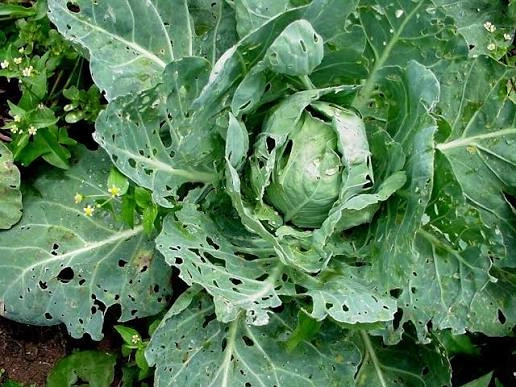
The Diamondback Moth (DBM) is the most notorious pest for Kenyan cabbage farmers. The larvae are small green caterpillars that eat the underside of the leaves, leaving transparent “windows.” In 2026, DBM has developed resistance to many common chemicals, so rotating your pesticide classes is mandatory. If you use the same spray every week, the moths will eventually ignore it. Biological options like Bacillus thuringiensis (Bt) are highly effective and safe for the environment.
Aphids are another frequent problem, especially during dry spells. These tiny insects suck the sap from the leaves, causing them to curl and turn yellow. They also secrete a sticky substance that encourages the growth of sooty mold, which ruins the appearance of the cabbage. Aphids can be managed with systemic insecticides or simply by encouraging natural predators like ladybirds. Keeping the farm free of weeds, which act as “bridge hosts” for aphids, is a critical preventive measure.
Clubroot is a soil-borne fungus that is becoming more common in the acidic soils of the Central Highlands. It causes the roots to swell into “clubs,” preventing the plant from taking up water. The plant will look wilted during the day but recover at night. There is no cure for Clubroot once it is in the field. The only management strategies are to apply lime to raise the soil pH and to rotate the land with non-brassica crops like potatoes or maize for at least three to four years.
Harvesting and Post-Harvest Handling
Cabbages are ready for harvest when the heads feel firm and solid to the touch. They should be cut with a sharp knife, leaving two or three wrapper leaves intact to protect the head from bruising and drying out during the journey to the market.
Knowing exactly when to harvest is an art. If you harvest too early, the heads are light and will not fetch a good price. If you harvest too late, the heads may split, rendering them unmarketable. A mature cabbage will have a tight, firm feel when you press the top with your thumb. For hybrid varieties, this usually occurs between 75 and 90 days. Always harvest in the early morning or late evening when the temperatures are cool to ensure the heads remain crisp.
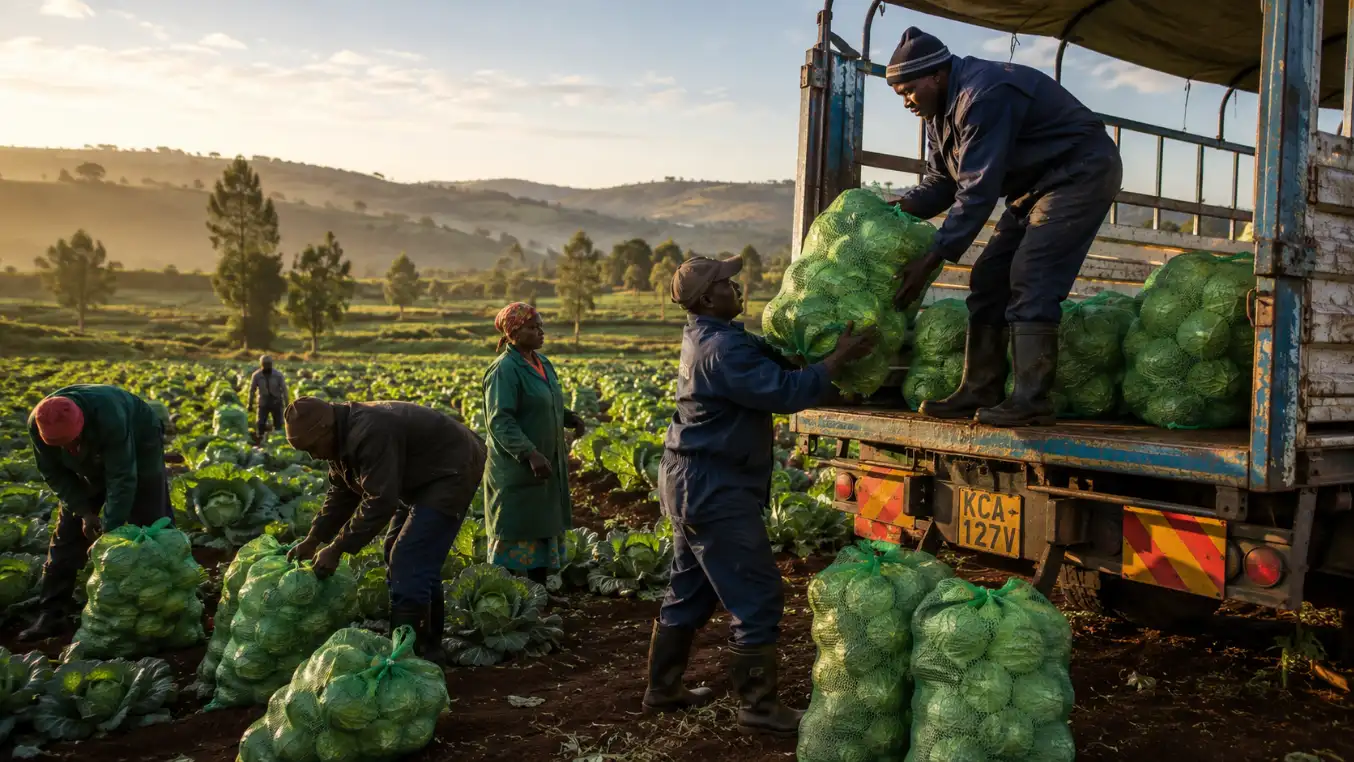
Post-harvest handling is where many Kenyan farmers lose up to 20% of their potential income. Cabbages are often tossed roughly into lorries, causing bruising that leads to rot. Keeping the outer “wrapper leaves” on is the best way to protect the inner, edible part of the head. These leaves act as a natural cushion. If you are selling to a supermarket, you may need to trim these leaves off later and wrap the head in perforated plastic to maintain moisture, but for wholesale transport, the more protection, the better.
If the market price is temporarily low, cabbages can be stored for a short period. Unlike tomatoes, which rot in days, a firm cabbage can stay fresh for one to two weeks if kept in a cool, shaded, and well-ventilated area. However, it is always better to have a buyer lined up before you start cutting. In 2026, many farmers use mobile apps and WhatsApp groups to connect with brokers and wholesalers in Nairobi and Mombasa days before the actual harvest begins, ensuring the crop moves quickly from the farm to the consumer.
Where to Sell Cabbage in Kenya
Cabbages in Kenya are primarily sold through wholesale markets like Wakulima and Marikiti, or directly to institutional buyers like schools and hospitals. In 2026, many farmers are also finding success selling via digital platforms and supermarket contracts for more stable pricing.
The traditional route is to sell to a “broker” who comes to the farm with a lorry. While this is the easiest method, it often results in the lowest price for the farmer. If you have the means to transport the crop yourself, taking it directly to a wholesale market like Wakulima in Nairobi or Kongowea in Mombasa can increase your profit per head significantly. However, you must account for the cost of transport and the “market entry fees” charged by local authorities.
Contract farming is becoming more popular in 2026. Companies like Twiga Foods and various supermarket chains offer contracts where they agree to buy your crop at a fixed price, provided it meets their quality standards. This provides the farmer with price stability, which is a massive advantage in the volatile world of Kenyan agriculture. To get these contracts, you must prove that you can deliver a consistent volume of high quality, uniform heads every week or month.
Finally, do not overlook your local community. Schools, colleges, and local hospitals have a massive daily requirement for cabbage. Establishing a relationship with the procurement officer of a nearby school can provide a steady, reliable market for your entire harvest. These institutional buyers often prefer medium sized heads and are less concerned with the “perfect” cosmetic appearance required by supermarkets, making them an excellent outlet for your entire crop, including the smaller heads.
Risks and Reality Check
While the profit numbers look attractive, it is important to be realistic about the risks. Cabbage farming is not a “get rich quick” scheme; it is a high stakes business. The most common cause of failure in 2026 is a lack of water. If you rely solely on rainfall and the rains fail, you will lose your entire investment. Before you plant even one seed, you must have a plan for irrigation, whether it is a borehole, a water pan, or a nearby river.
Another major risk is the sudden collapse of market prices. If every farmer in your region plants at the same time, the market will be flooded three months later. To mitigate this, you should try to stagger your planting. Instead of planting one whole acre at once, plant a quarter acre every three weeks. This ensures that even if the price is low for one harvest, it might be high for the next, averaging out your risk and providing a more consistent income throughout the year.
Lastly, do not underestimate the importance of security. As harvest time approaches, “shamba theft” can become an issue in some areas. Many commercial farmers hire temporary night guards during the final two weeks of the cycle to ensure their hard work is not stolen just days before it goes to market. Being a successful farmer in Kenya requires being a manager, a scientist, and a security expert all at once.
Frequently Asked Questions
How profitable is cabbage farming in Kenya?
It is very profitable, with average net returns of 200,000 to 400,000 KES per acre per season depending on market timing and management quality.
What is the cost of cabbage farming in Kenya?
In 2026, the total production cost for one acre ranges between 95,000 and 120,000 KES, covering seeds, fertilizer, labor, and chemicals.
How many cabbages can you get per acre in Kenya?
You can get between 12,000 and 18,000 heads per acre depending on the spacing used, such as 60cm x 60cm or 45cm x 45cm.
Is small-scale cabbage farming profitable in Kenya?
Yes, even on a quarter acre, a farmer can make a significant profit by selling directly to local markets and avoiding expensive transport costs.
What is the best fertilizer for cabbage farming?
A combination of DAP or NPK for planting, and CAN for top-dressing, supplemented with Boron and Calcium foliar sprays, is the gold standard.
Is cabbage farming profitable in Kenya during the rainy season?
It is profitable but risky. You must invest more in fungicides and raised beds to prevent losses from diseases like Black Rot.
Is organic cabbage farming profitable in Kenya?
Yes, especially if you have access to high-end urban markets where consumers pay more for chemical-free produce, offsetting the slightly lower yields.
What is Gloria F1 cabbage farming and how does it perform in Kenya?
Gloria F1 is a top performing hybrid known for its massive, solid heads and exceptional ability to withstand long distance transport without damage.
Is red cabbage farming more profitable than green cabbage in Kenya?
It has a higher price per head but a smaller market. It is best suited for farmers who have direct links to hotels and supermarkets.
Can you do vertical cabbage farming in Kenya?
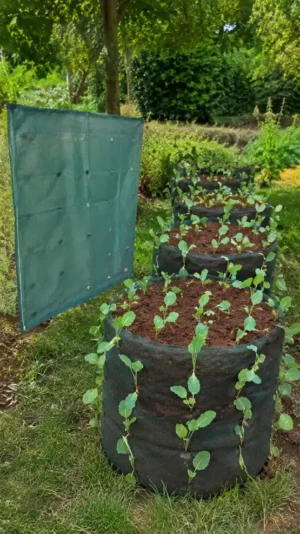
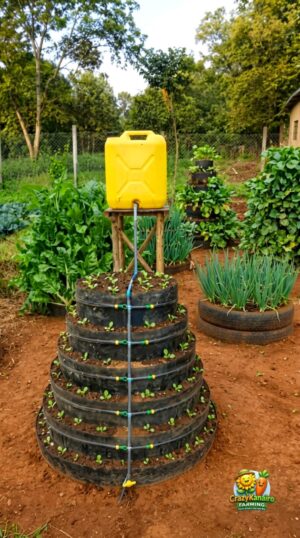
While possible for home gardens using bags, it is not currently practiced on a commercial scale due to the high labor and infrastructure costs.