
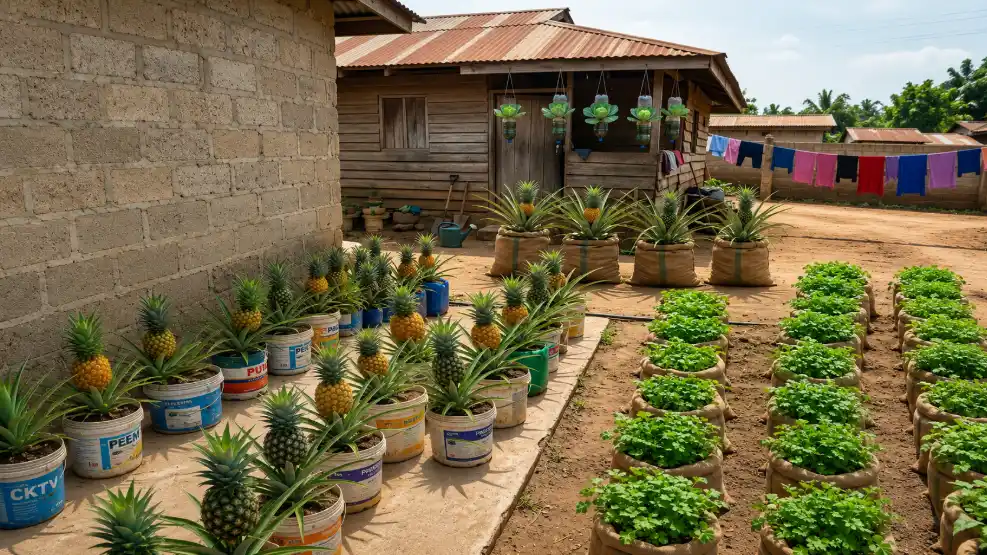

- Minimal Startup Capital: You can start with as little as KES 2,000 by using recycled 20 liter buckets, sacks, or old jerrycans and sourcing crowns from local fruit vendors.
- High Market Value: In 2026, a single high quality MD2 or Smooth Cayenne pineapple fetches between KES 150 and KES 250 in urban markets like Nairobi and Mombasa.
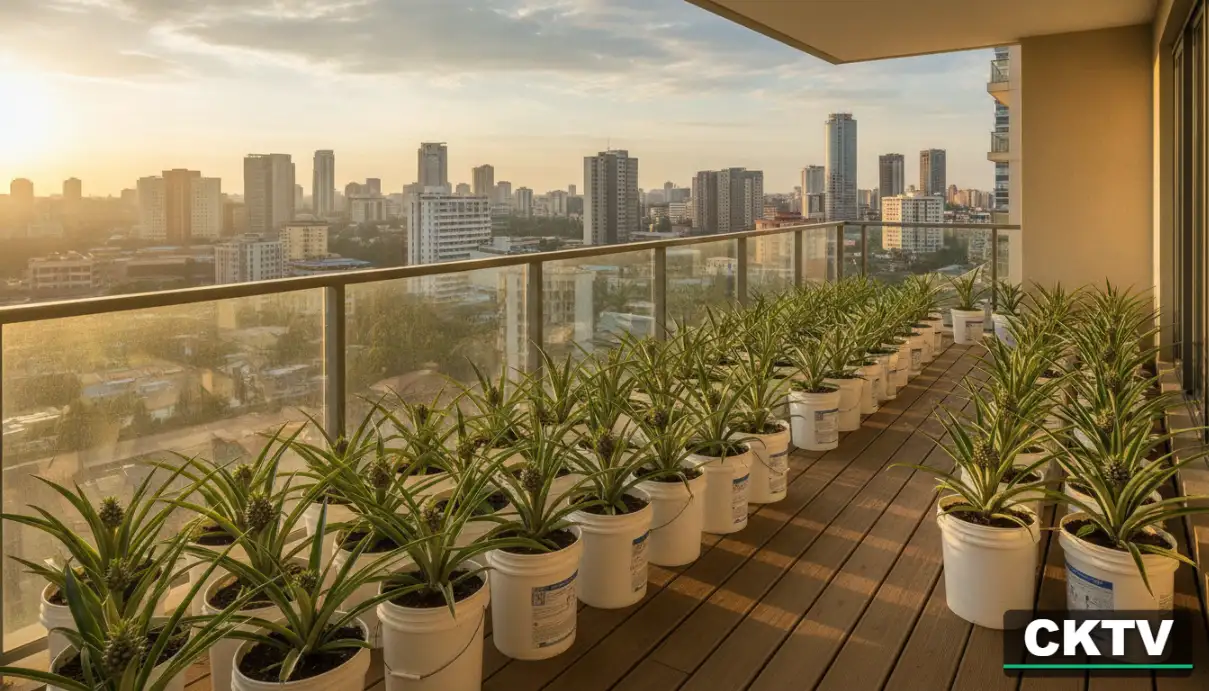
- Space Efficiency: Container farming allows you to grow up to 800 plants on a standard 50 by 100 plot backyard, making it ideal for urban and peri-urban dwellers.
Table of Contents
Pineapple farming has long been seen as a venture reserved for those with vast tracts of land in Thika or Kericho, but the 2026 agricultural landscape in Kenya has shifted toward vertical and containerized systems. With the rising cost of land and the increasing demand for organic Home grown fruits.
Learning how to grow profitable pineapples in containers using recycled materials is no longer just a hobby but a viable micro agribusiness. This guide provides a blueprint for turning household waste and small spaces into a high yielding pineapple garden that requires minimal water and zero land ownership.
The beauty of this method lies in its resilience. While large scale farms struggle with unpredictable rain patterns and soil degradation, container farmers can precisely manage every drop of water and every gram of nutrient. This precision leads to sweeter fruits and faster growth cycles. For the urban dweller in Nairobi, Nakuru, or Kisumu, this is the most efficient way to generate extra income from a balcony or a small concrete backyard.
Why Container Pineapple Farming Works for Profit
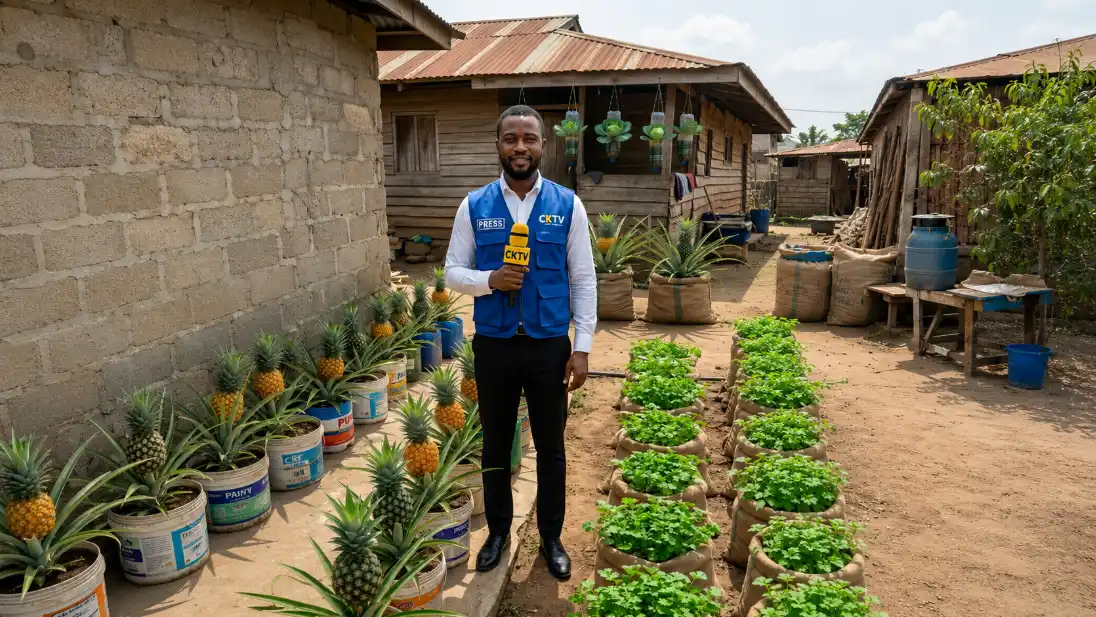
Container pineapple farming works because it eliminates the need for expensive land leases while giving the farmer total control over soil quality and moisture. By using recycled materials like old paint buckets or cement sacks, you slash initial capital costs, allowing you to focus your investment on high quality manure and premium MD2 suckers for maximum returns.
Low Entry Barrier for Urban Farmers
The beauty of using recycled containers is the near zero cost of “pots.” In Kenyan estates, 20 liter white buckets used for paint or cooking oil are often discarded or sold for less than KES 100. When you compare this to the cost of purchasing decorative ceramic pots or leasing an acre of land in Kiambu, the profit margins become clear. Because pineapples have a shallow root system, they do not require deep soil, making these everyday containers the perfect housing for a multi year crop.
Read Also: How to Grow Maize in Buckets: Complete Container Farming Guide 2026
Furthermore, these containers are portable. If you are a tenant in a rental house, you can move your entire “farm” to a new location without losing a single plant. This mobility is a massive advantage in 2026, where urban mobility is high. Your investment stays with you, and your “capital” (the mature plants) continues to appreciate in value regardless of where you live.
Control Over Soil and Pests
When growing in the ground, you are at the mercy of the existing soil health and soil borne diseases like nematodes. Container farming allows you to create a “super soil” mix tailored specifically for pineapple needs. You can ensure the drainage is perfect and the pH level is slightly acidic, which is exactly what pineapples crave. This controlled environment leads to faster growth and heavier fruits compared to neglected traditional plantations.
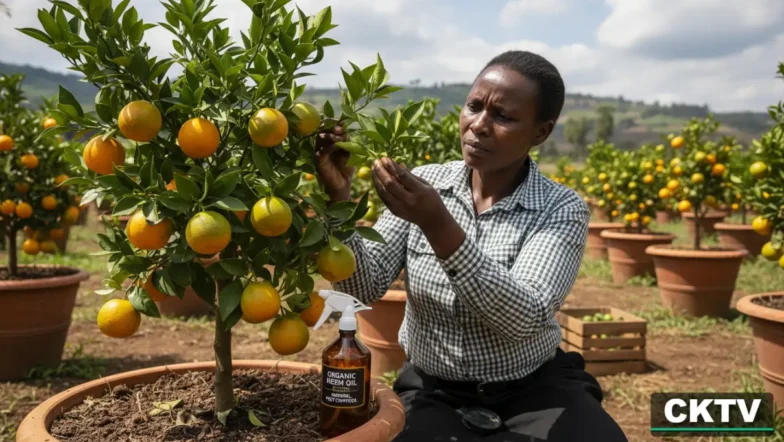
In a container, you are also insulated from wandering livestock and many ground based pests. It is much easier to spot a mealybug infestation on ten buckets on a balcony than on a half acre field. This early detection allows for organic interventions like soapy water or neem oil, which keeps your fruit “organic” and therefore more valuable in the high end 2026 health markets.
Year Round Production Cycles
Unlike large scale rain fed farms that depend on the long rains of April, container farmers can manipulate their harvest cycles. By staggered planting, you can ensure that you have ripe pineapples hitting the market in December or August when supply from the big farms dips and prices skyrocket. In 2026, price fluctuations are sharp, and being able to sell when others cannot is the secret to true profitability.
By planting five crowns every month, you create a perpetual harvest machine. After the initial eighteen month wait, you will have five ripe pineapples ready for sale every single month. This consistent cash flow is much better for a small household than getting one large harvest once a year and then having nothing for the remaining eleven months.
Essential Materials and Sourcing for Recycled Setups
To start, you need 20 liter buckets or heavy duty sacks, a sharp knife for crown preparation, and a well draining soil mix consisting of topsoil, well rotted manure, and river sand. Sourcing crowns is free from fruit sellers, while specialized varieties like MD2 suckers can be bought from KALRO or certified nurseries.
Finding the Right Recycled Containers
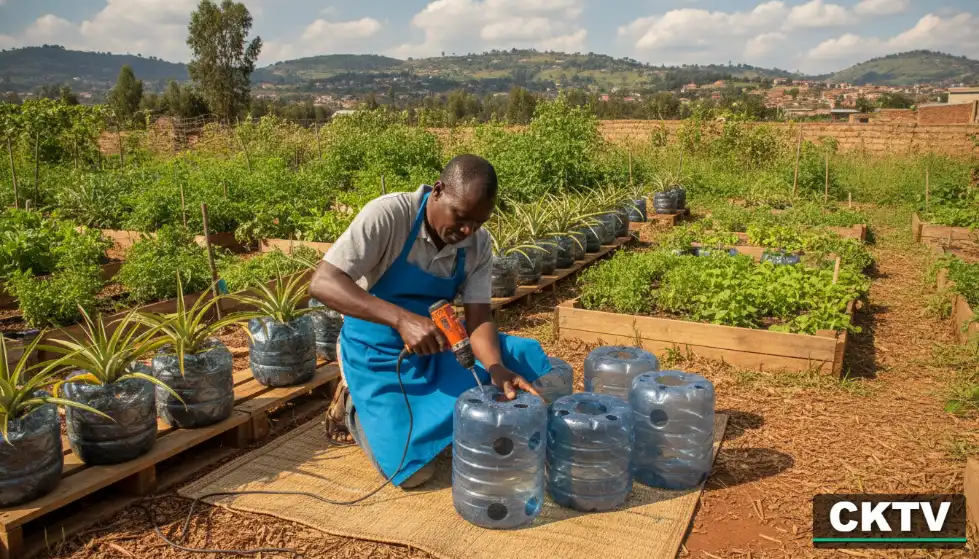
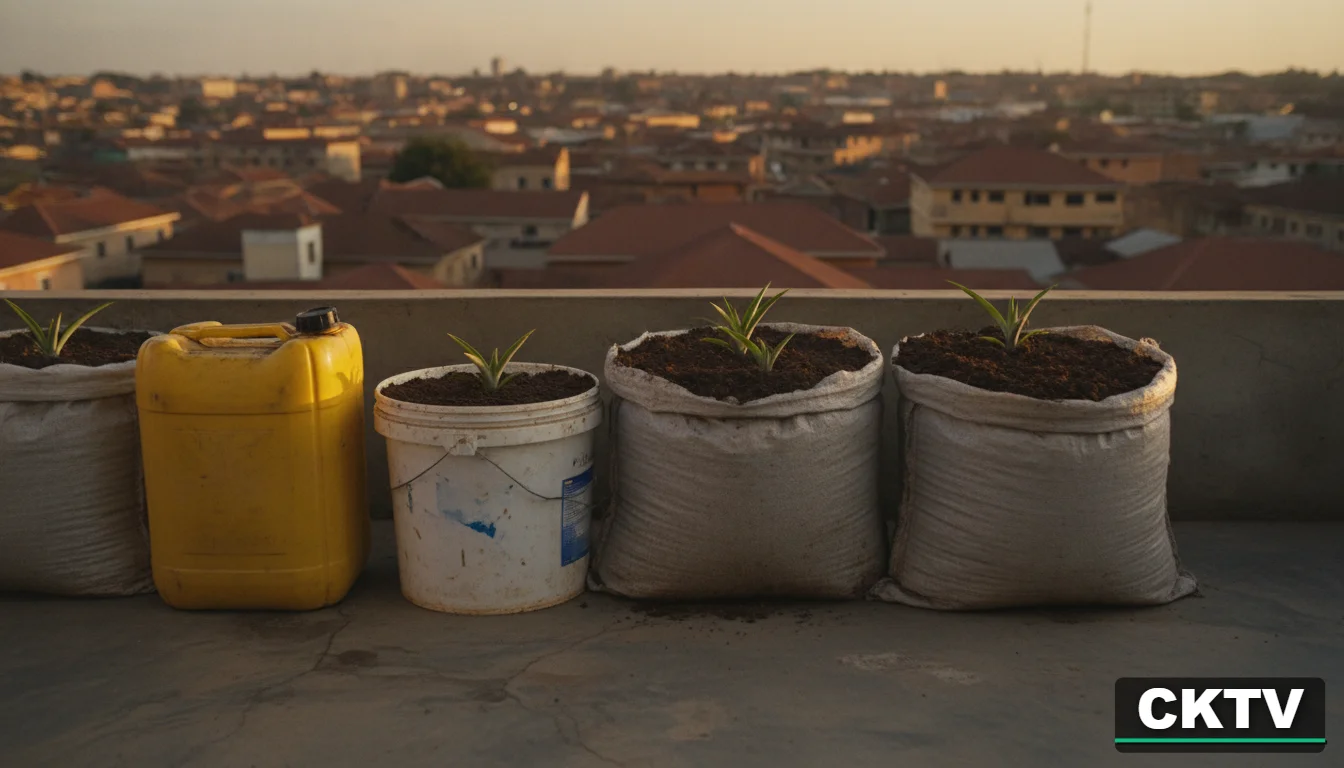
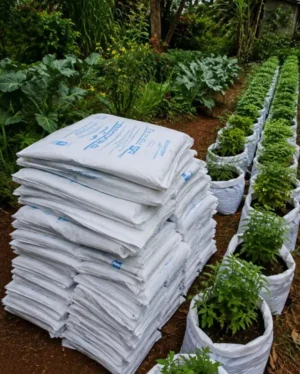
Your primary goal is to find containers with a volume of at least 15 to 20 liters. Old “jerrycans” (20L yellow or blue water containers) are excellent if you cut off the top. Cement sacks are another brilliant option; they are breathable and allow for air pruning of roots, which prevents the plant from becoming root bound. Visit construction sites or local “mali mali” shops to source these items at a fraction of the cost of new equipment.
Read Also: Dwarf Orange Farming in Kenya (2026): How Farmers Are Growing Heavy Fruiting Citrus Trees in Containers
When using cement sacks, ensure you wash them thoroughly to remove any lime or cement residue, as these are highly alkaline and will kill a pineapple plant. If using oil jerrycans, a bit of dish soap and hot water will remove the greasy residue. These materials are built to last for years, providing a stable home for your pineapple through multiple harvest cycles.
Tools for the Job
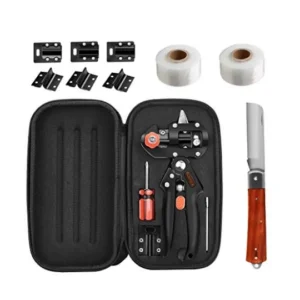
You do not need heavy machinery. A simple hammer and a large nail (or a soldering iron) are enough to create drainage holes in plastic. A sharp kitchen knife is necessary for trimming the pineapple crowns. For the soil, a standard hand trowel and a 20 liter bucket for mixing will suffice. The simplicity of the tool kit means you can start this business today without a trip to an expensive agrovat.
It is also helpful to have a small measuring cup for fertilizer and a 5 liter spray bottle for organic pest control. These tools are one time purchases that will serve you across many planting seasons. In 2026, many Kenyan farmers are also using simple digital pH meters to keep their soil acidity in the sweet spot between 4.5 and 5.5.
Sourcing Premium Planting Materials
While you can start with a crown from a supermarket pineapple, professional farmers in 2026 prefer “suckers” or “slips” from specific varieties. Suckers are the small plants that grow from the base of a mature pineapple plant. They fruit much faster (12 to 14 months) than crowns (18 to 24 months). You can source these from KALRO Thika or private nurseries in Murang’a.
If you are on a budget, talk to the “mama mboga” at your local market; they usually throw away the crowns and will gladly give them to you for free. Ensure the crowns you pick are green and healthy. If the center leaves are brown or pull out easily, the crown is already rotting and will not grow. Quality starts with the selection of your mother material.
Technical Deep Dive and Best Varieties for 2026
Choosing the right variety determines how long you will wait for a harvest and how much the market is willing to pay. In 2026, consumers are moving away from the very acidic older varieties and are willing to pay a premium for “honey sweet” fruits like the MD2. The following table compares the three most common varieties found in Kenya today.
| Variety | Yield (per plant) | Maturity (from crown) | Key Characteristics | Market Demand |
|---|---|---|---|---|
| MD2 (Gold) | 1.5kg to 2.5kg | 14 to 18 months | Extra sweet, low acidity, yellow flesh | Very High (Export and High end) |
| Smooth Cayenne | 2.0kg to 4.0kg | 18 to 24 months | Large size, juicy, slight acidity | High (Local processing/markets) |
| Queen Victoria | 0.8kg to 1.2kg | 12 to 15 months | Small, very crisp, deep yellow | Medium (Niche/Gourmet) |
Smooth Cayenne: The Reliable Workhorse
This is the variety you likely see most in Kenyan markets. It is robust and handles the confined space of a container remarkably well. Its leaves are smooth, which makes handling the plants in a tight balcony or backyard much easier. While it takes longer to fruit than the MD2, the final weight of the fruit is often higher, giving you more “kilos” to sell if you are selling by weight.
Smooth Cayenne is also quite resistant to common soil diseases. If you are a first time farmer using recycled soil that might not be perfect, this variety is more forgiving of beginner mistakes. It produces a large fruit that is perfect for juice making, which is a growing market in urban Kenya as people move away from carbonated sodas.
MD2: The Profit King
If your goal is to sell to high end grocery stores or directly to health conscious urbanites via WhatsApp groups, MD2 is your best bet. It was specifically bred for the fresh fruit market. It stays green on the outside even when ripe, but the inside is a brilliant gold. In containers, MD2 requires a bit more attention to potassium levels in the soil to maintain its signature sweetness.
The MD2 also has a much longer shelf life than other varieties. This is crucial for container farmers who might be delivering their harvest via motorcycle courier (boda boda). The fruit won’t bruise easily and will stay fresh for up to two weeks on a customer’s counter, leading to repeat business and a premium reputation for your “brand.”
Preparing the Pineapple Crown for Planting
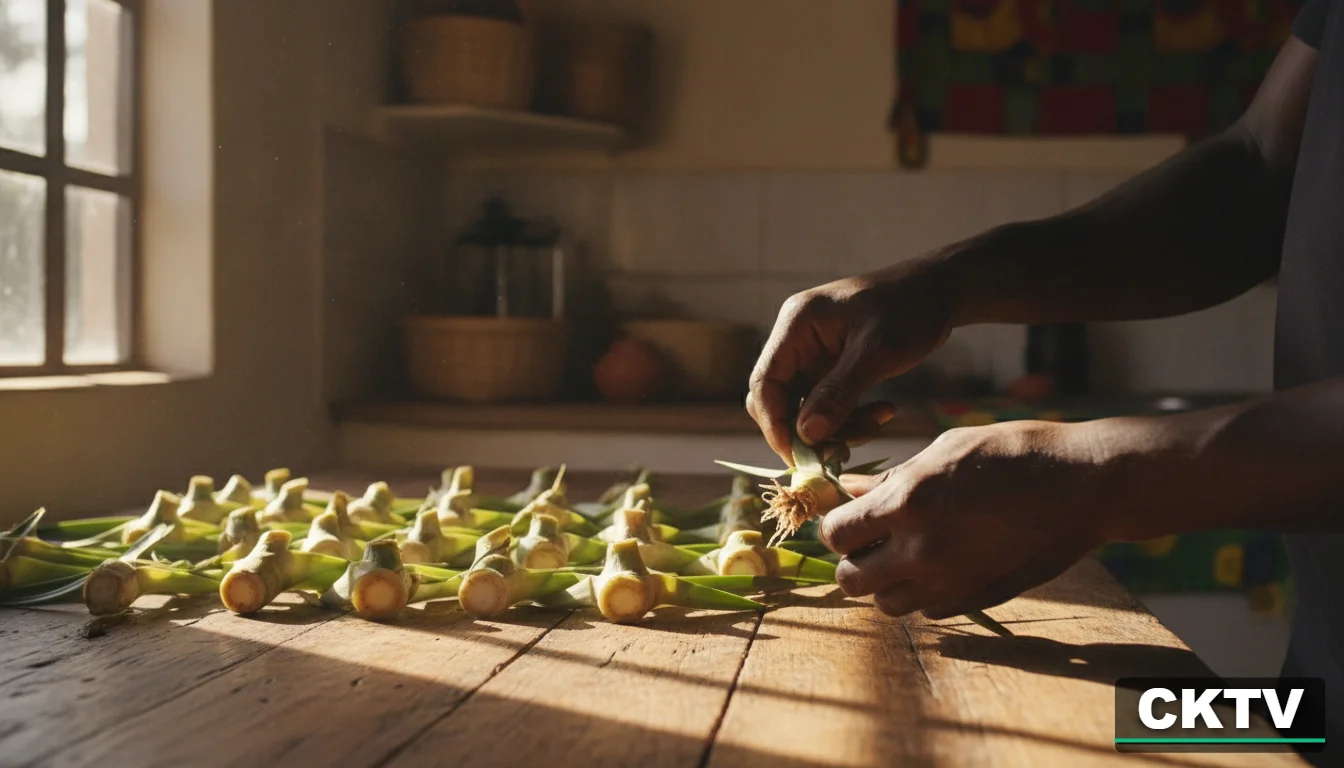
Prepare the crown by twisting it off the fruit, stripping away the bottom inch of small leaves to expose root buds, and letting it air dry for two days. This drying period is non negotiable as it allows the “wound” to callous over, preventing fungal rot once the crown is placed in soil.
The Proper Twist Technique
Never cut the crown off with a knife if you can avoid it. Cutting often leaves fruit flesh attached to the base, which will rot and kill the plant within weeks. Instead, grip the fruit firmly in one hand and the leafy crown in the other, then twist sharply. The crown should pop out with a clean, cone shaped base. This base contains the “primordial roots” that will eventually anchor your plant in the container.
If you find it difficult to twist, you can cut the top off, but you must meticulously scrape away every bit of the yellow fruit flesh. Any sugar left on the base will attract ants and fungi. A clean twist is always the safer bet for beginners who want to ensure their plant survives the first month.
Stripping and Curing
Once you have the crown, pull off the small, brownish leaves at the very bottom. You will notice small bumps or even tiny brownish roots underneath. Expose about an inch of this stem. This process, called “stripping,” gives the roots a direct path to the soil. After stripping, place the crown on a dry shelf out of direct sunlight for 48 hours. This “curing” step is the difference between a 100% success rate and a farm full of rotting leaves.
During these 48 hours, the bottom of the stem will harden and become slightly woody. This is a natural defense mechanism. Think of it like a scab on a wound. Without this scab, the moisture in your container soil will enter the stem and turn it into mush. Patience during the curing phase is the first test of a successful pineapple farmer.
Rooting in Water vs. Direct Soil
Some farmers prefer to place the prepared crown in a glass of water for two weeks until roots are an inch long. While this is visually satisfying, it is often unnecessary in the Kenyan climate. Directly planting a cured crown into a moist soil mix is less labor intensive and avoids the “transplant shock” that occurs when moving a plant from water to soil.
Read Also: DIY Bottle Drip Irrigation Farming in Kenya (2026): Grow Tomatoes, Strawberries & Vegetables Using Recycled Containers
If you choose to root in water, change the water every two days to prevent it from becoming stagnant. Once the roots are visible, be very gentle when moving the plant to its permanent container. Most professional urban farmers in 2026 skip this step and go straight to soil to save time and reduce the risk of root breakage.
Container and Soil Preparation
Success depends on a well draining soil mix consisting of 40% red topsoil, 40% well seasoned goat or cow manure, and 20% river sand. Ensure your recycled container has at least five drainage holes at the bottom to prevent waterlogging, which is the primary cause of pineapple plant death.
The Physics of Drainage
Pineapples are epiphytes by nature, meaning they hate “wet feet.” In a container, water can easily pool at the bottom, cutting off oxygen to the roots. To prevent this, don’t just poke holes; use a hot metal rod to create holes the size of a finger. Place a layer of small stones or broken ceramic pieces (about 2 inches deep) at the bottom of the bucket before adding soil.
This “drainage layer” acts as a buffer. If you accidentally overwater, the excess liquid sits among the stones rather than drowning the roots. In 2026, many farmers are also drilling holes on the lower sides of the buckets, not just the bottom, to improve air circulation within the root zone. This “air pruning” makes the root system much stronger and more efficient.
The Perfect Soil Recipe
In Kenya, the red volcanic soil found in areas like Kiambu or Nakuru is excellent, but it can be heavy and clay like. Mixing it with river sand opens up the texture. The manure must be “cold,” meaning it has sat for at least six months and no longer smells like fresh dung. Fresh manure is too high in nitrogen and will “burn” the delicate new roots of your pineapple crown.
For the best results, mix your soil in a large pile on a plastic sheet before filling your containers. This ensures that the manure and sand are evenly distributed. If you just layer them in the bucket, you will get “hot spots” of nutrients that can harm the plant. A uniform mix leads to uniform growth across your entire container farm.
Adjusting pH for Sweetness
Pineapples prefer a pH between 4.5 and 6.5. If your soil is too alkaline, your fruit will be sour and the leaves will turn yellow. You can naturally lower the pH by adding coffee grounds or pine needles to your compost mix. A slightly acidic environment helps the plant absorb micronutrients like Iron and Manganese, which are crucial for the development of the fruit sugar profile.
In 2026, many urban farmers are also using “biochar.” This is essentially charcoal dust that has been soaked in liquid manure. Adding a handful of this to your 20 liter bucket helps retain nutrients so they don’t wash out every time you water. It also provides a home for beneficial microbes that protect your pineapple from root diseases.
Step-by-Step Planting Process
Plant the cured crown by making a small hole in the center of the container, inserting the stripped stem about one inch deep, and firming the soil around it. Avoid getting soil into the center “cup” of the leaves, as this can cause heart rot and stop growth entirely.
Centering and Depth
When you place the crown in the bucket, ensure it is exactly in the center. A pineapple plant grows wide, and an off center plant will eventually tip the container over once the heavy fruit develops. Only bury the stem up to the point where the leaves begin. If you bury it too deep, the “heart” of the plant will be covered in soil and will likely rot during the first watering.
As the plant grows, it will become top heavy. By planting it in the center, the center of gravity remains stable. If you are using sacks, you might need to “hilling” the soil around the base after six months to give the plant extra support. In plastic buckets, the rigid sides usually provide enough support for the plant to stand upright until harvest.
The First Watering
After planting, water the soil thoroughly until you see water trickling out of the drainage holes at the bottom. This settles the soil around the roots and removes air pockets. Use a watering can with a “rose” head to avoid splashing mud into the center of the plant. In the 2026 Kenyan context, using harvested rainwater is better than chlorinated tap water.
Pineapples are sensitive to high levels of chlorine and fluoride often found in municipal water in Nairobi. If you must use tap water, let it sit in an open bucket for 24 hours before using it. This allows the chlorine to evaporate, making the water much safer for your delicate young plants. This small step can significantly improve the early growth rate.
Labeling and Record Keeping
If you are growing for profit, use a permanent marker to write the planting date on the side of the recycled bucket. This helps you track the growth stages and predict your harvest month. In a commercial setup, even a small one, knowing exactly which plants are 6 months old and which are 12 months old is vital for managing your cash flow and fertilizer schedule.
You should also note the source of the crown. If you find that crowns from “Mama Jane” grow faster than crowns from the supermarket, you will know where to source your materials in the future. Record keeping transforms a hobby into a business. In 2026, many young farmers use simple mobile apps to track their container farm, but a marker on a bucket works just as well.
Care and Maintenance for Maximum Yield
Maintain your plants by providing at least 6 hours of full sunlight daily and watering only when the top two inches of soil are bone dry. Fertilize every two months with a high potassium organic liquid manure or NPK 17-17-17 to support fruit development and ensure high sugar content.
Sunlight Requirements
Pineapples are tropical sun lovers. They cannot produce sugar in the shade. If you are growing on a balcony, ensure they are on the side that gets the most afternoon sun. In 2026, some urban farmers are using reflective aluminum foil or white painted walls to “bounce” extra light onto their plants in crowded estates. Without enough sun, the plant will look healthy and green but will never produce a fruit.
If your balcony is shady, you might need to rotate your containers every few days. This ensures that all sides of the plant receive adequate light. A plant that grows toward the light will become lopsided and might break its stem once the fruit starts to gain weight. Even light distribution is the key to a perfectly symmetrical and healthy pineapple.
Watering Logic
Overwatering is the number one killer of container pineapples. Because the container is a closed system, it retains moisture much longer than a field. In the Nairobi climate, watering once or twice a week is usually sufficient. During the hot months in Mombasa or Kisumu, you might need to water every two days. Always check the soil with your finger first; if it feels damp, do not water.
When you do water, try to pour some water into the “cups” formed by the leaves. Pineapples are unique because they can absorb water through their leaves. However, do not do this in the evening. Water sitting in the leaves overnight in cool weather can encourage fungal growth. Always water in the morning so the sun can evaporate excess moisture from the leaf surfaces.
Fertilizer and Soil Nutrition
While pineapples are not heavy feeders, they need a steady supply of nutrients to produce a large fruit. In 2026, synthetic fertilizer prices in Kenya remain high, making organic alternatives like compost tea very attractive. The following table provides a basic schedule for a high yield container setup.
| Fertilizer Type | Application Timing | Benefit | Estimated Cost (2026) |
|---|---|---|---|
| DAP | At planting (10g per bucket) | Root development | KES 4,800 per 50kg bag |
| CAN | Month 4 and Month 8 | Leaf growth and vigor | KES 3,500 per 50kg bag |
| NPK 17-17-17 | Every 3 months | General health | KES 5,200 per 50kg bag |
| Liquid Compost Tea | Monthly (foliar spray) | Organic micro nutrients | KES 0 (Home made) |
For the best results, apply fertilizer into the “axils” where the leaf meets the stem. Pineapples are uniquely adapted to absorb nutrients through their leaves as well as their roots. Using a liquid “compost tea” made from fermented goat manure and Tithonia leaves is a low cost way to boost yields significantly without buying expensive chemicals at the agrovat.
Read Also: How to Grow Tomatoes in Plastic Containers with a Self-Watering System (Beginner’s Guide 2026)
During the fruiting stage, which usually starts around month 12, increase the potassium. Potassium is what makes the fruit sweet. If you are strictly organic, wood ash mixed with water is a great source of potassium. Just be careful not to overdo it, as too much ash can make the soil too alkaline, which the pineapple will not like.
The 18 Month Growth Timeline
Understanding the life cycle of your container pineapple helps you manage your expectations. Many beginners quit after six months because they don’t see a fruit. Pineapple farming is a game of patience. Here is what to expect during the eighteen month journey from crown to harvest.
Months 0 to 3 (The Rooting Phase): During this time, the plant focuses on establishing roots. You won’t see much leaf growth. In fact, some of the original leaves might turn brown and die. This is normal. As long as the center “heart” is green, the plant is alive and working hard underground to anchor itself in your recycled container.
Months 4 to 10 (The Vegetative Phase): This is when the plant explodes with new leaves. It will get wider and taller. This is the best time to apply nitrogen rich fertilizers like CAN or rabbit urine. The goal is to get as many large, healthy leaves as possible. More leaves mean more solar panels for the plant to create energy for the future fruit.
Months 11 to 14 (The Flowering Phase): You will see a small, red, berry like structure emerging from the center of the leaves. This is the beginning of your pineapple. It will slowly grow upward on a thick stalk. During this phase, stop using high nitrogen fertilizers and switch to high potassium ones. The plant needs “fruit food” now, not “leaf food.”
Months 15 to 18 (The Ripening Phase): The fruit will reach its full size and then begin to change color. It will go from dark green to light green, and then slowly turn yellow from the bottom up. You will also start to smell that classic pineapple aroma. This is the most dangerous time for theft or pests, so keep a close eye on your “gold.”
Harvesting and Post-Harvest Profit Logic
Harvest your pineapple when the bottom half of the fruit has turned yellow and it gives off a sweet fragrance. Cut the stalk about two inches below the fruit. For maximum profit, sell directly to consumers as “tree ripened” organic fruit, which can fetch a 30% premium over supermarket prices.
The Tree Ripened Advantage
Most pineapples in supermarkets are harvested green so they can survive long truck journeys. They never develop their full sugar potential. As a container farmer, you can let the fruit ripen fully on the plant. This “tree ripened” fruit is incredibly sweet and juicy, something consumers in 2026 are willing to pay extra for. Market this difference aggressively.
When you harvest, use a sharp knife to cut the stalk. Do not pull the fruit off, as this can damage the mother plant. Remember, the mother plant is still valuable! After the fruit is removed, the plant will start producing “suckers.” These are your free seeds for the next round of planting. One mother plant can give you three to four suckers, allowing you to triple your farm size for free.
Direct Marketing in 2026
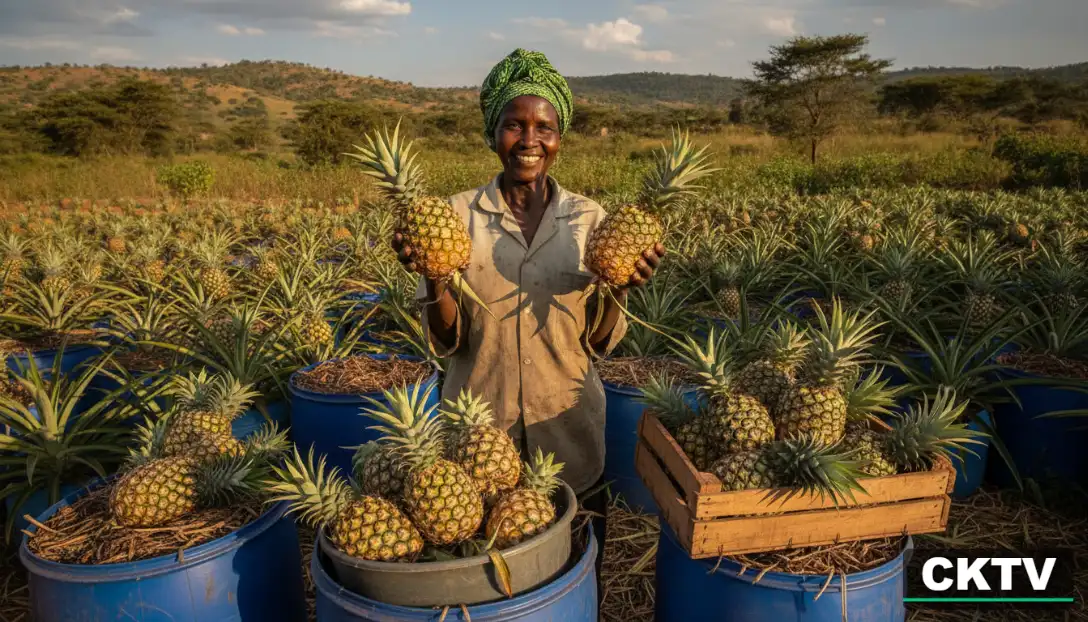
In the modern Kenyan economy, your phone is your storefront. Take high quality photos of your ripe pineapples in their recycled buckets. Post them on estate WhatsApp groups or Facebook Marketplace. People love the story of “recycled urban farming.” You are not just selling a fruit; you are selling a sustainable, locally grown success story. This narrative allows you to charge KES 250 for a fruit that might cost KES 150 at the market.
Consider offering a “subscription.” A customer pays for six pineapples in advance at a slight discount, and you deliver them as they ripen. This gives you upfront capital to buy more buckets or premium manure. In 2026, trust is the most valuable currency, and knowing exactly where your food comes from is a major selling point for urban middle class families.
Financial Model: The 100 Container Setup
If you treat this as a serious business, you should aim for at least 100 containers. This number is manageable for one person working part time but large enough to generate significant profit. The following table breaks down the costs and expected returns over the first two years of operation.
| Expense Item | Unit Cost (KES) | Total Cost (100 units) | Notes |
|---|---|---|---|
| Recycled Buckets/Sacks | 50 | 5,000 | Sourced from construction sites or markets |
| Soil and Manure | 40 | 4,000 | Includes transport of red soil |
| Premium MD2 Suckers | 50 | 5,000 | Initial investment only |
| Organic Fertilizer/Pesticide | 10 | 1,000 | Home made compost tea/neem oil |
| Total Investment | 150 | 15,000 | One time startup cost |
Now, let’s look at the revenue side. Assuming a conservative 90% success rate (90 fruits harvested) and a 10% loss due to pests or theft. In 2026, a high quality MD2 sells for KES 200 on average. Your first harvest will bring in KES 18,000. This means you have fully paid back your investment and have KES 3,000 in profit. But the real money comes in the second cycle.
In the second cycle (the ratoon crop), your costs for buckets, soil, and suckers are zero. You only spend about KES 1,000 on manure and water. Your revenue remains KES 18,000. Now, your profit is KES 17,000. This is the beauty of pineapple farming; it is a long term asset that keeps giving. By the third year, you can have 300 containers by simply using the suckers from your first 100 plants.
Risks and Reality Check
The primary risks include Mealybug infestations, Heart Rot from overwatering, and theft in urban settings. Mitigate these by inspecting leaf axils weekly, ensuring perfect drainage, and using secure balconies or fenced backyards for your container garden.
The Mealybug Threat
These are tiny, white, cotton like insects that hide at the base of the leaves. They suck the sap and cause the plant to wilt. In container farming, they are often brought in by ants. If you see ants crawling on your buckets, you likely have mealybugs. A simple spray of soapy water mixed with neem oil (Muarubaini) is usually enough to clear them out without resorting to harsh chemicals.
Inspection is your best weapon. Once a week, walk through your containers and gently pull back the leaves. If you see white fuzz, spray immediately. If you catch it early, it is a minor nuisance. If you ignore it for a month, the mealybugs will inject a virus into the plant that causes “pineapple wilt,” which is incurable and will force you to throw away the entire plant and the soil.
The Patience Factor
The biggest reason farmers fail is giving up during the “silent year.” For the first 10 months, a pineapple plant just grows leaves. It looks like nothing is happening. Many beginners stop watering or neglect the plants, thinking they are duds. You must view this as a long term savings account rather than a quick return crop like kales or spinach.
To stay motivated, intercrop! While your pineapples are small, you can grow coriander (dhania) or spinach in the same 20 liter bucket. These short term crops will give you something to harvest and eat while the pineapple takes its time. By month eight, the pineapple leaves will be too large for intercropping, but by then, the fruit is only a few months away.
Theft and Vandalism
In 2026, as food prices remain a concern, a ripe pineapple sitting on a front porch is a tempting target. If you are growing in a shared plot or a reachable balcony, consider using “security through camouflage.” Intercrop your pineapples with thorny aloes or hide the ripening fruit with a small mesh bag. This also protects the fruit from birds and monkeys, which are notorious for taking a single bite out of a perfectly ripe fruit.
Read Also: 15 Most Profitable Agribusiness Ideas in Kenya to Start in 2026
You can also use “fruit bags” made of old mosquito nets or breathable fabric. These not only hide the fruit from thieves but also prevent fruit flies from laying eggs in the skin. A protected fruit looks better and sells for more. In the urban context, being a “smart” farmer means protecting your assets until the very moment of sale.
Final Verdict: Turning Waste into Gold
Growing profitable pineapples in containers using recycled materials is a masterclass in modern agribusiness. It proves that you don’t need acres of land to be a farmer; you just need a few buckets, some good soil, and a lot of patience. In the Kenya of 2026, where land is a luxury, the ability to produce high value food in a small space is a superpower. It provides food security for your family and a steady stream of cash for your wallet.
Start small with five or ten buckets. Learn the rhythm of the plant. Once you see that first red flower emerging from the center of a recycled paint bucket, you will be hooked. From there, expansion is free as the plant provides its own seeds through suckers. This is the ultimate “circular economy” venture, turning plastic waste and fruit scraps into a premium product that everyone loves. The “Hard Truth” is that while the materials are free, the time investment is significant. However, for the urban dweller with no land, there is no better way to turn a balcony into a gold mine.
Farmers Also Ask
How long does it take for a pineapple to grow in a container?
From a crown, it takes 18 to 24 months. If you plant a sucker, you can harvest in 12 to 15 months, depending on the sunlight and variety.
Can pineapples grow well in recycled containers like sacks and buckets?
Yes, as long as they hold 15+ liters of soil and have excellent drainage. Sacks are actually better for root health due to better aeration.
What is the best soil mix for growing pineapples at home?
A mix of 40% red soil, 40% well rotted manure, and 20% river sand ensures the perfect balance of nutrients and drainage.
How often should I water pineapple plants in containers?
Water once or twice a week. Only water when the top two inches of soil are dry to the touch. Avoid overwatering at all costs.
Do pineapples need full sun to grow properly?
Yes, they need at least 6 to 8 hours of direct sunlight. Without enough sun, the fruit will be small and very sour.
Can I grow pineapples indoors or only outdoors?
They can grow indoors if placed next to a very sunny south facing window, but they will always grow better and fruit faster outdoors.
What are the common mistakes when growing pineapples in containers?
The most common are using containers without drainage holes, overwatering, and planting the crown too deep in the soil.
How many pineapples can one plant produce?
One plant produces one fruit at a time. However, the plant will produce suckers that can grow into new fruiting plants.
Is pineapple container farming profitable in Kenya?
Yes, especially in the second cycle where costs are zero and fruits sell for KES 150 to KES 250 each.
How do I know when a pineapple is ready to harvest?
The fruit will turn from green to yellow/gold, the skin will yield slightly to pressure, and it will smell sweet at the base.




thank you