
- Drought Resilience: Cactus contains up to 90 percent water, serving as both a feed and a biological reservoir that reduces livestock water consumption by 40 to 60 percent during dry seasons.
- High Energy Yield: While low in protein, spineless cactus (Opuntia ficus-indica) provides 60 to 70 percent Total Digestible Nutrients (TDN), making it a superior energy source for cattle and goats in ASAL regions.
- Economic Viability: In 2026, establishing a one-acre cactus plantation costs approximately KES 45,000 to KES 65,000, with the potential to sustain 5 to 8 cattle throughout a six-month drought period.
Table of Contents
For the modern Kenyan livestock owner, the traditional reliance on rain-fed hay and expensive commercial concentrates is becoming a high-risk gamble. As rainfall patterns in regions like Laikipia, Kajiado, and the entire North Eastern belt become increasingly erratic, cactus has emerged as the ultimate “green gold” for survival and profit. This guide explores how to transform this resilient plant into a high-value fodder system that protects your herd and your bottom line.
Cactus is a succulent fodder crop primarily used as an energy and water supplement for livestock in Kenya’s arid and semi-arid lands. It survives extreme heat, requires minimal input, and provides critical hydration and carbohydrates to cattle, sheep, and goats when traditional pastures fail during prolonged dry seasons.
Livestock deaths during prolonged dry seasons are often not caused by a lack of food alone, but by a combination of dehydration and energy exhaustion. When grass dries up, it becomes mostly lignin, which is hard for the rumen to break down. Cactus provides the soluble sugars needed to kickstart digestion, helping the animal process even the poorest quality dry grass while keeping them hydrated.
Read Also: 10 Best Vegetable Shredder for Animal Feed in Kenya (2026): Prices, Types & Buying Guide
What readers will learn in this guide includes the selection of the best spineless varieties, the technical steps for planting and management, and the exact mixing ratios required to maintain milk production and meat quality. We will also look at the financial realities of 2026, comparing cactus to other popular fodder crops like Napier and Brachiaria grass.
What Is Cactus Used for Livestock Feed?
Cactus for livestock feed refers to specific species, mainly Opuntia ficus-indica, which are grown for their thick, moisture-rich pads. These pads are harvested, processed to remove any spines, and fed to cattle, goats, and sheep as a source of energy, water, and minerals during seasons when green pasture is unavailable.
It is important to distinguish between the ornamental cacti seen in flower pots and the fodder cactus used on the farm. Fodder cactus, often called Prickly Pear, is selected for its high biomass and safety. In Kenya, the push is toward spineless cactus varieties which lack the dangerous, needle-like thorns that can cause mouth sores and internal injuries in livestock.
This plant thrives in Arid and Semi-Arid Lands (ASALs) because of its unique biology. While maize and grass lose water through their leaves during the heat of the day, cactus keeps its pores closed until the cool of the night. This allows it to produce massive amounts of green matter using only a fraction of the water required by traditional crops.
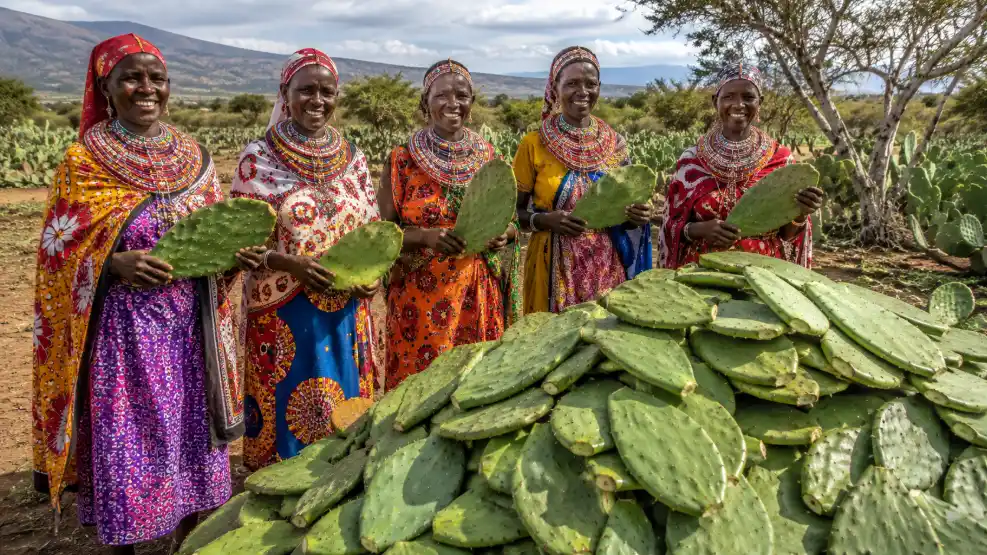
Why Farmers in North Eastern Kenya Are Turning to Cactus
Farmers in North Eastern Kenya use cactus because it is the only crop that remains green and succulent during severe droughts. It serves as a biological water tank, reducing the need for expensive water trucking while providing the energy needed to keep livestock alive and productive.
The livestock sector in Kenya contributes significantly to the national GDP, yet it remains the most vulnerable to climate shocks. In counties like Garissa, Wajir, and Mandera, the 2024-2025 drought cycles decimated nearly 30 percent of the local cattle population. Farmers who had integrated spineless cactus into their feeding regimes saw survival rates of over 95 percent.
Climate change has shortened the recovery window between droughts. Traditional grasses like Napier often wither when the rains fail for more than three months. Cactus has evolved to pause growth and draw on its internal moisture during these times. For a pastoralist in Isiolo, this means having a standing crop that grows while everything else dies.
Furthermore, the rising cost of commercial feeds has forced a rethink of farming strategies. By 2026, many smallholders are treating cactus as a primary energy base. They supplement it with high-protein local legumes like Lucerne or Desmodium. This integrated approach has lowered the cost of milk production by up to 25 percent in semi-arid dairy pockets like Machakos and parts of Nakuru County.
The Impact of Rising Feed Costs
In early 2026, the price of a 90kg bag of dairy meal has stabilized at roughly KES 3,400. Quality hay remains scarce and expensive during the dry months. For a farmer with ten cows, the daily expenditure on traditional fodder is often higher than the milk income. Cactus offers a zero-rated alternative for energy once established.
Water Scarcity and the Biological Reservoir
One of the most overlooked benefits of cactus is its role in hydration. A cow eating 40kg of fresh cactus pads is effectively drinking nearly 35 liters of water. In areas where water pans have dried up, this can be life-saving. It reduces the stress on the animals as they do not have to trek long distances to watering points.
Detailed Benefits of Feeding Cactus to Livestock
Feeding cactus provides high energy content, essential minerals like calcium, and massive water reserves. It reduces livestock mortality during drought, lowers the cost of supplemental watering, and helps maintain milk production and animal weight when traditional grazing lands are completely depleted.
The primary benefit is drought resilience. Unlike maize or Rhodes grass, cactus does not fail if the rains are late. For the Kenyan farmer, this provides a psychological and financial safety net. You are no longer at the mercy of unpredictable weather forecasts from the meteorological department.
Secondly, cactus is a high-energy fodder. Energy is what keeps an animal walking and its heart beating during a drought. The soluble carbohydrates in cactus pads are easily fermented in the rumen, providing a quick burst of energy. When mixed with dry stover or hay, it improves the palatability and digestibility of the entire ration.
Read Also: Hydroponic Fodder vs. Commercial Feed: Slashing Dairy Costs in 2026
Environmental benefits are also significant. Cactus plantations act as excellent soil stabilizers in erosion-prone areas of the Rift Valley and Eastern Kenya. Their deep, fibrous roots bind the soil, while the thick pads provide ground cover. Additionally, cactus acts as a carbon sink, which may eventually allow farmers to participate in carbon credit programs.
- Water Conservation: Minimizes the need for manual watering.
- Year-Round Availability: Can be harvested in any season, even during the peak of January heat.
- Low Maintenance: Requires no pesticides and very little fertilizer compared to maize.
- Soil Health: Reduces wind and water erosion on sloped terrains.
- Easy Propagation: Can be grown from a single pad with almost 100 percent success rate.
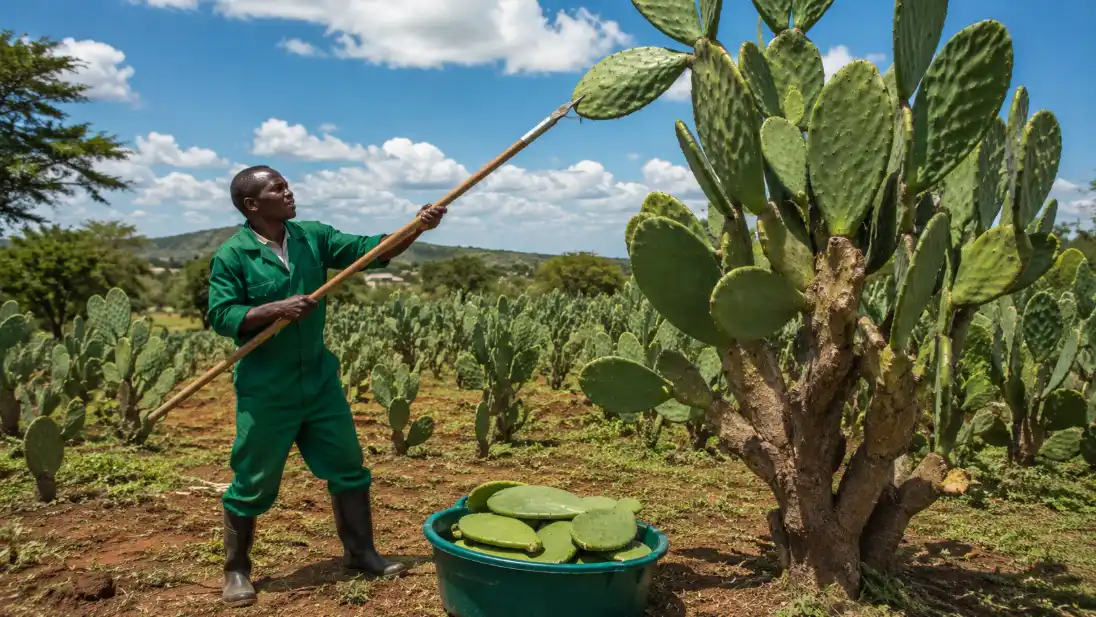
Technical Deep-Dive: Nutritional Value of Cactus
Cactus is nutritionally characterized by its high water (85-90%), energy (60-70% TDN), and mineral content, particularly Calcium and Magnesium. However, it is naturally low in crude protein (3-5%) and fiber, requiring supplementation with protein-rich feeds for a balanced diet.
Understanding the nutritional profile of cactus is vital for preventing malnutrition. While it is a powerhouse of energy and hydration, a cow fed only on cactus will eventually suffer from protein deficiency. The key is to treat it as a component of a Total Mixed Ration (TMR). In 2026, KALRO experts recommend a ratio where cactus provides 40 to 50 percent of the total dry matter intake.
The mineral content is surprisingly high. Cactus is rich in Calcium, which is essential for bone development and milk production. It also contains significant amounts of Vitamin A and Potassium. This makes it an excellent supplement for pregnant or lactating animals that have higher mineral requirements. Below is a detailed nutritional breakdown for Kenyan conditions.
The following table outlines the nutritional components of the spineless cactus based on current agricultural research in Kenya.
| Nutrient Component | Percentage (Dry Matter Basis) | Benefit to Livestock |
|---|---|---|
| Moisture / Water | 85% – 92% | Hydration and Temperature Regulation |
| Crude Protein | 3% – 5.5% | Muscle Maintenance (Needs Supplementation) |
| Energy (TDN) | 60% – 70% | Body Condition and Milk Energy |
| Calcium | 1.5% – 3.5% | Strong Bones and Milk Synthesis |
| Crude Fiber | 8% – 12% | Rumen Health (Requires extra fiber) |
| Ash (Minerals) | 15% – 20% | General Metabolic Health |
Because cactus is low in phosphorus, farmers are advised to provide a mineral lick or salt block rich in phosphorus. To fix the low protein issue, many successful farmers in Laikipia are intercropping cactus with Leucaena or Gliricidia. These are nitrogen-fixing trees that provide high-protein leaves to balance the diet naturally.
Which Livestock Can Eat Cactus?
Cactus is suitable for ruminants including cattle (beef and dairy), goats, sheep, and camels. It is also beneficial for donkeys. However, it is generally not recommended as a primary feed for poultry or pigs due to their different digestive systems and the high fiber and water content.
Cattle: Both dairy and beef cattle benefit significantly. Dairy cows in semi-arid areas show more stable milk production during dry spells when fed cactus. Beef cattle maintain their weight better, ensuring they fetch a higher price at the market. A cow can safely consume 20 to 40 kg of fresh pads daily.
Goats and Sheep: These small ruminants are naturally adapted to eating succulents. Goats, in particular, love the taste of cactus pads. Feeding cactus to goats in the dry season prevents the “shrunken” look often seen in rural herds. It also improves the survival rates of kids and lambs by ensuring the mothers have enough milk.
Camels and Donkeys: In the northern counties, camels have eaten wild cactus for generations. However, providing processed spineless cactus reduces the energy the camel spends foraging and protects its mouth from thorns. Donkeys, the primary transport animals in many villages, maintain better stamina when given cactus as an energy supplement.
Best Cactus Varieties for Livestock Feed in Kenya
The best variety for Kenyan livestock is the Spineless Opuntia (Opuntia ficus-indica), specifically the varieties promoted by KALRO like Ganyure. These varieties lack the dangerous “glochids” or tiny thorns, making them safe for direct consumption without the labor-intensive process of burning or scraping.
When selecting a variety, the spineless trait is the most critical commercial factor. While the wild, thorny prickly pear grows abundantly in places like Naivasha and Laikipia, it is invasive and dangerous. The thorns can cause stomatitis, which is an inflammation of the mouth. In contrast, the Spineless Opuntia can be chopped and fed directly.
KALRO has been at the forefront of distributing high-yielding, drought-tolerant varieties. These varieties have been bred to produce thick, succulent pads with high biomass. Some varieties are also dual-purpose, producing the fruit which can be sold in Nairobi markets. This provides an extra revenue stream for the farmer during the fruiting season.
Top Performing Varieties in 2026
- Ganyure (Spineless): High moisture content and very fast growth in hot climates.
- Copena V1: A Mexican variety adapted for Kenyan soils, known for massive pad size.
- O. ficus-indica (Improved): Varieties selected for high digestibility and low fiber.

How to Grow Cactus in Kenya: Step-by-Step
Growing cactus involves planting mature pads (clads) in well-drained soil during the onset of rains. Space them at 1 meter by 2 meters for easy harvesting. Keep the pads upright or slightly slanted, buried halfway in the soil. Minimal weeding and organic manure are usually the only inputs required.
The beauty of cactus farming is its simplicity. You do not need expensive machinery or complex irrigation. However, proper establishment determines whether you harvest 20 tons or 80 tons per acre. The most critical factor is drainage. Cactus hates wet feet. If you plant in a swampy area, the pads will rot within weeks.
Read Also: Azolla vs. BSF vs. Hydroponic Fodder: Which is the Cheapest Feed in Kenya? (2026 Edition)
For the 2026 season, many farmers are adopting Hedge Planting. Instead of dedicated blocks, they plant cactus along their farm boundaries. This provides fodder while acting as a living fence to keep out stray animals. For commercial fodder production, a dedicated block with organized rows is more efficient for harvesting and manure application.
Climate and Soil Requirements
Cactus prefers sandy or loamy soils that allow water to pass through quickly. It can tolerate very high temperatures, even above 40 degrees Celsius. In terms of rainfall, it can survive on as little as 200mm per year, though it grows much faster with 400mm to 600mm. Most of the Kenyan ASAL counties meet these requirements perfectly.
Planting and Spacing
The standard spacing is 1 meter between plants and 2 meters between rows. This allows enough space for a wheelbarrow to pass through during harvest. When planting, let the pads “heal” or dry in the shade for 3 to 5 days after cutting them from the mother plant. This forms a callus that prevents rotting once they are placed in the soil.
Expert Fertilizer and Weed Advice
While cactus is a survivor, it responds very well to Manure. Applying well-decomposed cow or goat manure at the base of the plant twice a year will double your pad production. In 2026, experts suggest avoiding heavy chemical nitrogen fertilizers as they can make the pads too acidic for the animals. Weeding is only necessary in the first year until the plants are large enough to shade out the grass.
| Activity | Recommendation | Frequency |
|---|---|---|
| Manure Application | 5kg well-decomposed manure per plant | Twice a year (onset of rains) |
| Weeding | Keep 50cm radius around base clear | Every 3 months in year one |
| Harvesting | Cut 2nd and 3rd year pads only | As needed throughout the year |
| Pest Control | Manual removal of Cochineal insects | Monthly inspection |
Where Can Cactus Grow in Kenya?
Cactus thrives in all Arid and Semi-Arid Land (ASAL) counties, including Turkana, Marsabit, Garissa, Isiolo, Laikipia, and Kajiado. It also performs exceptionally well in Eastern Kenya (Machakos, Kitui, Makueni) and parts of the Coast hinterland where rainfall is below 600mm annually.
The Cactus Belt of Kenya is expanding. Previously seen only in the northern frontiers, farmers in Laikipia and Baringo are now leading the way in commercializing spineless varieties. In Laikipia, several community ranches have replaced invasive thorny cactus with fodder-grade varieties, creating a sustainable grazing system that supports thousands of cattle.
In Eastern Kenya (Makueni and Kitui), cactus is becoming a staple for small-scale dairy goat farmers. Because goats are naturally browsers, they take to cactus very quickly. Farmers here report that feeding cactus pads alongside local grasses helps maintain milk yields even when the surrounding bush is completely brown.
The North Eastern Frontier (Wajir, Mandera, Garissa) remains the primary target for large-scale cactus interventions. These areas face the most acute water shortages. The national government and various NGOs have initiated programs in 2025-2026 to set up mother nurseries. This is shifting the culture from pure nomadism to a more semi-settled system where fodder banks are maintained.
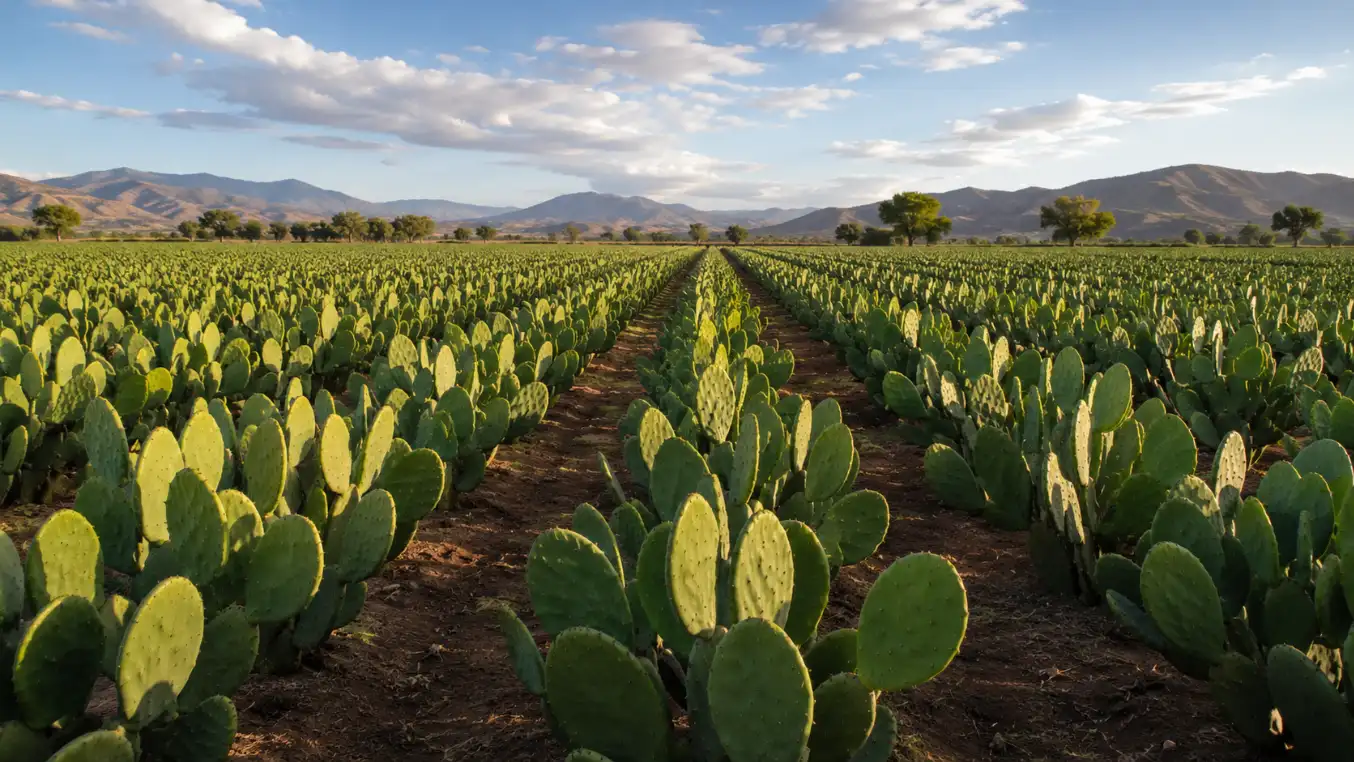
How Farmers Prepare Cactus Before Feeding
Preparation depends on the variety. Spineless cactus only requires chopping into small pieces. Thorny cactus must have its spines removed by singeing them over an open flame (burning) or using a mechanical de-thorner before being chopped and mixed with dry straw or bran.
Safety is the number one priority. If you are using the common prickly pear with thorns, you must be thorough. Cattle are not as selective as goats and will gulp down pads. If thorns are present, they cause abscesses in the mouth. Most farmers use a simple gas torch or a wood fire to quickly singe the surface of the pads.
Once the thorns are gone, or if using spineless varieties, the pads should be chopped. Whole pads are difficult for the animal to chew and lead to significant wastage. Using a sharp panga or a motorized chaff cutter to create small cubes ensures the animal eats the entire portion. Mixing these cubes with dry hay or maize stover creates a balanced meal.
Safety Tips for Preparation
- Fire Safety: When burning thorns, ensure you are in a cleared area to avoid starting a bushfire.
- Protection: Use thick leather gloves even when handling spineless varieties, as they can sometimes have tiny, invisible hairs called glochids.
- Hygiene: Wash the pads if they are covered in heavy dust or insect residues before chopping.
How Much Cactus Should Livestock Eat?
Livestock should consume cactus as a supplement, not the sole diet. For cattle, 30-40kg per day is common, while goats and sheep should receive 5-7kg. Cactus should ideally make up about 40-50% of the daily ration to prevent digestive upsets like diarrhea.
Feeding frequency is important. It is better to feed cactus twice a day (morning and evening) rather than all at once. This allows the rumen microbes to stay active and prevents the laxative effect of the high water content. Always provide some dry fiber, like hay or dry grass, alongside the cactus to slow down digestion.
The following table provides a general guide for daily feeding amounts for different livestock species in Kenya.
| Livestock Type | Cactus Amount (Fresh Weight) | Complementary Feed (Dry Matter) |
|---|---|---|
| Mature Cattle / Cow | 25kg – 40kg | 5kg – 7kg Hay or Straw |
| Dairy Goat | 4kg – 6kg | 1kg Lucerne or Calliandra |
| Sheep / Meat Goat | 3kg – 5kg | 0.5kg Wheat Bran or Maize Stover |
| Camel | 50kg – 80kg | 10kg Dry Bush Browse |
| Donkey | 15kg – 25kg | 5kg Dry Grass |
Challenges and Risks: A Reality Check
The primary challenges include the low protein content of cactus, the risk of diarrhea if overfed, the labor required for de-thorning wild varieties, and the Cochineal insect pest which can devastate plantations if not monitored and managed.
We must be honest that cactus is not a magic bullet. The most common mistake Kenyan farmers make is feeding nothing but cactus during a drought. Within two weeks, the animals start showing signs of protein wasting. You must have a source of roughage like dry grass and a source of protein like cotton seed cake or urea-treated straw.
Another rising threat in 2026 is the Cochineal insect. These are tiny white, fluffy-looking insects that suck the sap from the pads. While they were originally used to control invasive cactus, they also attack fodder varieties. Farmers should regularly scout their shamba and use organic neem-based sprays to keep these pests in check.
Finally, there is the labor challenge. Harvesting and chopping 100kg of cactus daily is hard work. If you are a busy farmer, you will need to invest in a motorized chopper. However, compared to the labor of trekking animals 20km to a drying river, most farmers find the cactus work much more manageable.
Cactus vs. Other Fodder Crops
Compared to Napier grass, cactus uses 80% less water to produce the same amount of energy. While Napier has more protein, cactus survives much longer droughts. When compared to Brachiaria, cactus provides superior hydration, though it lacks the high fiber and protein levels found in the grass.
Farmers often ask if they should replace their Napier grass with cactus. The answer is usually to grow both. Napier is excellent for the rainy season and early dry season, but cactus is what keeps your cows alive when the Napier has turned into dry sticks. Think of cactus as your “insurance crop” and Napier as your “growth crop.”
The following table compares Cactus to Napier grass based on production metrics in semi-arid Kenya.
| Metric | Cactus (Spineless) | Napier Grass |
|---|---|---|
| Water Requirement | Very Low (200mm+) | Moderate to High (800mm+) |
| Drought Tolerance | Excellent (6-9 months) | Poor (3 months max) |
| Crude Protein | Low (4%) | Moderate (8% – 10%) |
| Energy Content | High | Moderate |
| Yield (Tons/Acre) | 20 – 60 tons | 15 – 40 tons |
| Establishment Cost | Moderate (Pads are pricey) | Low (Cuttings are cheap) |
Can Cactus Improve Milk Production?
Cactus improves milk production primarily by preventing the drastic “dry season drop” caused by dehydration and energy deficiency. Research shows that cows fed a balanced cactus ration maintain milk yields 15-20% higher than those fed only on dry hay or poor-quality pasture during drought.
The energy in cactus is high in soluble sugars. This provides the rumen bacteria with the fuel they need to process other dry feeds efficiently. When a cow is hydrated and has enough energy, her metabolic stress levels drop, which naturally leads to better milk let-down. It also improves the butterfat content of the milk, making it creamier and more valuable.
Read Also: Hydroponic Fodder in Kenya 2026: Slash Your Livestock Feed Costs by 50%
In many parts of Brazil and Mexico, cactus is the base for large-scale dairy industries in dry regions. In Kenya, we are starting to see this trend in places like Naivasha. Farmers there use cactus silage mixed with maize bran. This combination provides a steady supply of nutrients that keeps the milk cooling tanks full even when the landscape is scorched.
Economic Benefits and ROI (2026)
Initial setup for one acre of cactus fodder costs between KES 45,000 and KES 65,000. While direct sales of cactus are currently niche, the profit is realized through cost avoidance, saving KES 150,000+ per year in hay and water trucking costs while preventing livestock losses.
To view cactus farming through a business lens, one must look at the opportunity cost. During a drought, a mature cow can lose up to 50kg of weight, reducing its market value by KES 20,000 or more. If the cow dies, the loss is total. An acre of cactus ensures that even in a total pasture failure, your herd remains a productive asset.
The break-even point for a cactus plantation is usually within the first 18 to 24 months. Once established, the plants can produce for 30 to 50 years with almost zero additional investment. This makes it one of the highest-returning long-term assets a farmer in a dry region can own. It is a one-time investment for a lifetime of drought insurance.
Case Studies: Lessons from the Field
In Laikipia County, a group of 50 small-scale farmers collaborated to plant 20 acres of spineless cactus in 2024. During the long dry spell of early 2025, while their neighbors were selling off emaciated cattle at “throw-away” prices, this group maintained their herd in peak condition. They were able to sell their bulls for KES 85,000 each, while the market average for drought-hit cattle was KES 35,000.
In Mexico, which has a similar climate to northern Kenya, cactus is treated as a national security crop. Farmers there have perfected the art of “intensive cactus production,” where they harvest up to 100 tons of green matter per acre by using modern drip irrigation and organic composting. Kenyan farmers can learn from these models to maximize their own yields.
Finally, KALRO has been documenting success stories in the Isiolo region. They found that pastoralists who settled near cactus fodder banks had a 40 percent higher calf survival rate. The availability of energy-rich feed during the first three months of a calf’s life made a permanent difference in the animal’s lifetime growth potential and health.
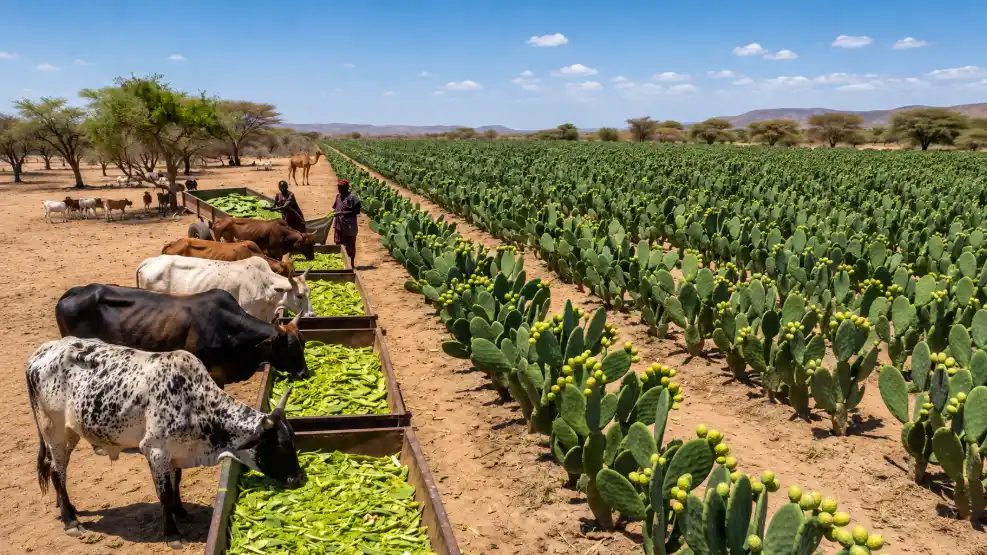
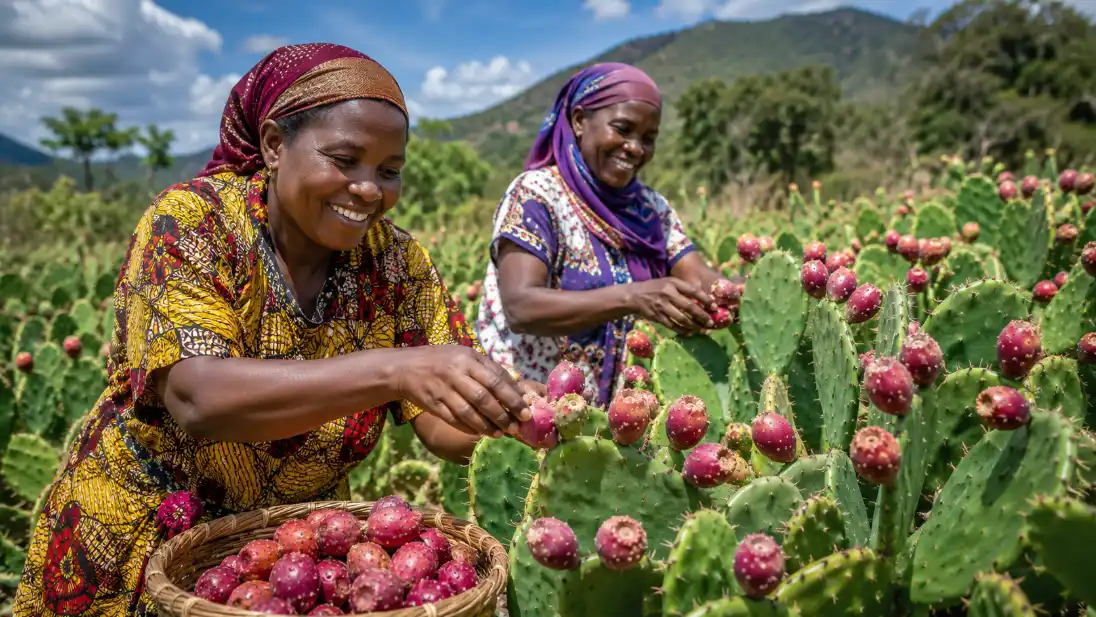
How Farmers Can Earn Extra Income from Cactus Fruits
While most Kenyan farmers grow cactus primarily as livestock feed, many spineless varieties of Opuntia ficus-indica also produce edible fruits that can become an additional source of income. This means farmers can benefit from both the nutritious pads used as fodder and the fruits harvested for human consumption, making cactus one of the few truly dual-purpose crops for arid and semi-arid regions.
Fresh prickly pear fruits are increasingly popular because they are rich in vitamin C, antioxidants, dietary fiber, and essential minerals. Farmers can sell the fruits in local markets, supermarkets, roadside stalls, hotels, and fruit processors. As consumer awareness of healthy and climate-resilient foods continues to grow, demand for cactus fruit is expected to increase across Kenya.
Farmers can significantly increase their profits through value addition instead of selling fresh fruits alone. Prickly pear fruits can be processed into juice, jam, syrup, wine, jelly, dried fruit snacks, fruit powder, and natural food colorants. These products often command higher prices and have a longer shelf life, creating more business opportunities for farmer groups, cooperatives, and agribusiness entrepreneurs.
Even fruits that are damaged, overripe, or unsuitable for the fresh market do not have to go to waste. They can be mixed with livestock feed as an energy supplement or composted to improve soil fertility. This helps farmers minimize losses while maximizing returns from every harvest.
The tiny seeds inside cactus fruits are another valuable resource. They contain oil that is highly sought after by the cosmetic and skincare industry because of its moisturizing and antioxidant properties. Although extracting seed oil requires specialized equipment, farmer cooperatives and processors can create an additional revenue stream by supplying seeds to manufacturers.
Cactus flowers also provide an excellent nectar source for bees, making cactus plantations ideal for beekeeping. Farmers who integrate beehives into their cactus farms can earn additional income from honey, beeswax, and other bee products while improving pollination and biodiversity on their farms.
For farmers in Kenya’s Arid and Semi-Arid Lands (ASALs), cactus offers much more than drought insurance. It provides livestock fodder, edible fruits, opportunities for value addition, honey production, soil conservation, and long-term income diversification. By adopting dual-purpose spineless cactus varieties, farmers can build more resilient and profitable farming enterprises while making better use of dry and marginal land.
Final Thoughts
Cactus is proving to be one of the most valuable climate-smart fodder crops for Kenya’s livestock farmers, especially in Arid and Semi-Arid Lands (ASALs) where drought and feed shortages are becoming more frequent. Its ability to provide both moisture and energy during dry seasons helps farmers reduce livestock losses, lower feeding costs, and maintain productivity when conventional pasture is unavailable.
For the best results, cactus should be fed as part of a balanced diet alongside protein-rich feeds such as hay, legumes, or commercial supplements. Farmers should also prioritize growing spineless varieties, follow proper feeding practices, and manage pests to maximize productivity and animal health.
Beyond livestock feeding, cactus offers additional opportunities through fruit production, value addition, soil conservation, and beekeeping, making it a profitable long-term investment. As climate change continues to reshape agriculture, integrating cactus into your farming system is not just a drought survival strategy but a practical step toward building a more resilient, sustainable, and profitable livestock enterprise.
Frequently Asked Questions (FAQs)
Is cactus good for livestock?
Yes, it is excellent for providing energy and hydration, especially during droughts, provided it is balanced with protein and fiber supplements.
Which animals can eat cactus?
Cattle, dairy cows, goats, sheep, camels, and donkeys can all thrive on a cactus-based diet when properly prepared.
What is the best cactus for livestock feed?
The Spineless Opuntia ficus-indica, such as the KALRO Ganyure variety, is the best due to its safety and high moisture content.
How do farmers prepare cactus for livestock feed?
Spineless varieties are chopped into small cubes. Thorny varieties must have spines burned off with fire before being sliced into bite-sized pieces.
Can livestock eat cactus every day?
Yes, they can eat it daily as part of a mixed ration, but it should not exceed 50-60% of their total daily feed intake.
Where can I buy spineless cactus in Kenya?
You can buy pads from KALRO centers, licensed private nurseries in Laikipia or Machakos, and established commercial cactus farmers.
How long does it take for spineless cactus to mature?
Initial harvest can happen within 10 to 12 months, but full production capacity is reached after about 3 years of growth.
Can cactus replace hay or commercial livestock feed?
It can replace most of the energy and water found in hay but cannot replace the high protein found in commercial dairy meal.
What are the nutritional benefits of cactus for livestock?
It provides 90% water for hydration, soluble sugars for energy, and high levels of calcium and Vitamin A
How much cactus should cattle, sheep, or goats eat daily?
Cattle can eat 30-40kg, while goats and sheep consume 4-7kg daily, supplemented with dry fiber and protein.
Does cactus increase milk yield?
Yes, it helps maintain and slightly increase milk yield during dry seasons by providing the water and energy cows need for lactation.