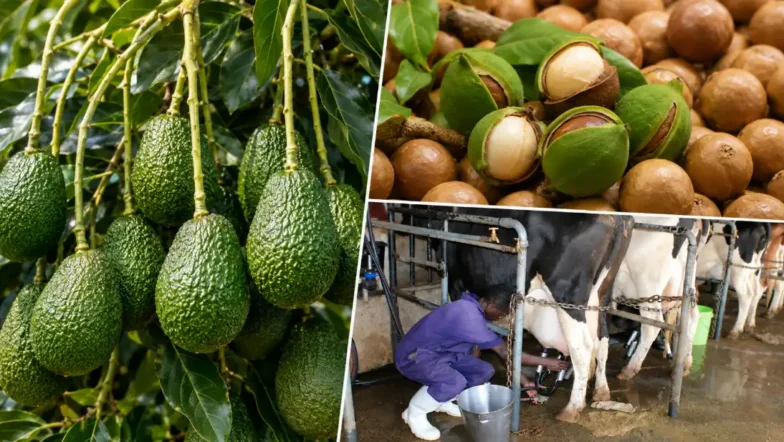

- Grafting allows farmers to harvest high-quality fruits like Hass Avocado or Apple Mango in 2 to 3 years instead of waiting 7 to 10 years for trees grown from seeds.
- The success of any graft depends entirely on the alignment of the cambium layer, which is the thin green living tissue found directly beneath the bark of both the rootstock and the scion.
- Methods like T-Budding and Side Veneer are the gold standards for commercial citrus and mango production in Kenya due to their high success rates and efficient use of scion material.
Table of Contents
Many beginner farmers in Kenya fall into the “busy but broke” trap by planting local fruit seeds and waiting nearly a decade for a harvest that often turns out to be small, stringy, or sour. In 2026, commercial fruit farming is no longer about luck but about precision technology, and grafting is the most important skill in that system. This guide breaks down the technical math and physical steps of the seven best grafting methods to ensure your orchard is profitable from day one.
Grafting is a horticultural technique where tissues from one plant are joined with those of another so that their vascular tissues grow together. This allows a farmer to combine the strong, disease-resistant roots of one tree with the high-yielding, superior fruit-bearing branches of another for faster and better production.
Read Also: Vertical Hydroponics vs. Soil Farming: 5 Reasons Why Vertical Wins 2026
At its core, grafting is a biological body transplant for plants. You take a root system that is adapted to Kenyan soils, often called the rootstock, and join it with a branch from a high-performing variety, known as the scion. This is not just a hobbyist’s trick; it is a vital agribusiness strategy for the modern era.
Seed-grown trees are genetically unpredictable. If you plant a seed from a sweet mango, the resulting tree might produce sour fruit because of cross-pollination. Grafting clones the exact characteristics of the parent tree, ensuring every fruit in your orchard meets market standards. This consistency is what allows for predictable income cycles in commercial farming.
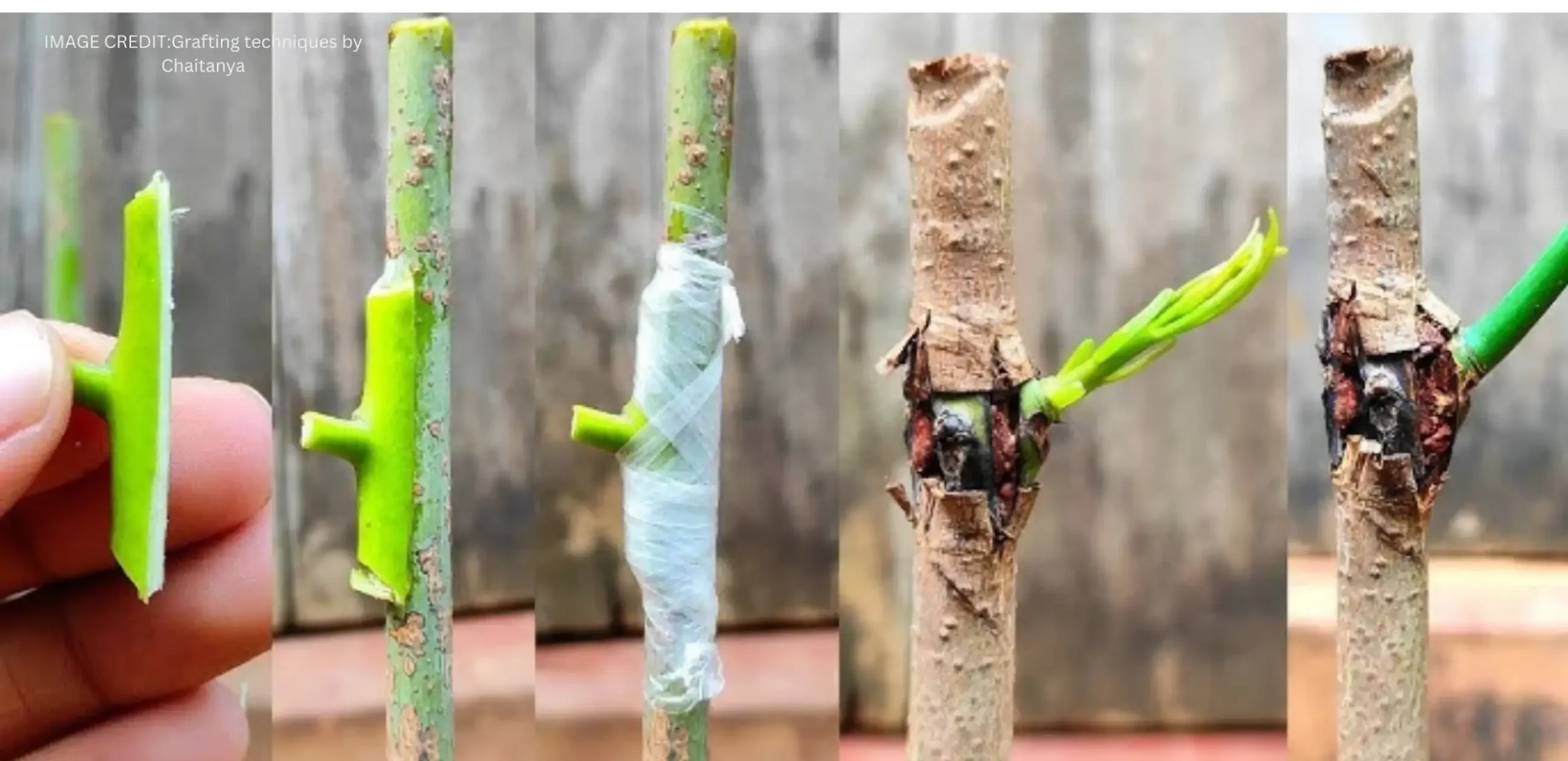
The Biological Foundation: Why Grafting Works
The three pillars of grafting success are a healthy, compatible rootstock for support, a high-quality scion for fruit characteristics, and the perfect alignment of the cambium layers. The cambium is the slippery green engine of the tree that heals the wound and connects the two separate parts into one.
Understanding the rootstock is your first step toward a market-first orchard. The rootstock determines how big the tree will grow, how well it handles drought in places like Kajiado, and its resistance to soil-borne diseases like root rot. Many Kenyan avocado farmers use Lula or local hardy seedlings as rootstocks because they can withstand the fluctuating moisture levels of our highlands.
The scion is the business end of the tree. It carries the DNA for the fruit’s taste, color, and shelf life. When selecting scions in 2026, you must ensure they are dormant but healthy. A common mistake is picking scions with open flowers or active leaves, which drain the branch’s energy before it can bond with the rootstock.
The cambium layer is where the magic happens. If you peel back the bark of a tree, you will see a thin, wet, green layer. This is the only part of the tree where cells are actively dividing. For a graft to take, the cambium of the scion must be pressed firmly against the cambium of the rootstock. Think of it like connecting two water pipes; if the inner channels do not line up, the water will not flow.
Commercial Benefits for the Modern Farmer
Grafting solves the problem of long wait times and unpredictable yields by shortening the juvenile phase of fruit trees. It enables farmers to produce export-quality fruits on smaller pieces of land, improves resistance to local pests, and allows for the repair of damaged but valuable mature trees.
The primary reason to graft is speed. A seed-grown avocado tree can take 8 to 12 years to produce its first fruit. A grafted Hass avocado tree will start producing at 2.5 to 3 years. For a farmer who has taken a bank loan to start an agribusiness, those five years of dead time can lead to financial ruin.
Disease resistance is another critical factor. Many high-value fruit varieties have weak root systems that cannot survive the fungi found in Kenyan soils. By grafting them onto wild or local rootstocks that have survived in our environment for decades, you create a super tree. This reduces your reliance on expensive farm chemicals and soil treatments.
Read Also: Dwarf Orange Farming in Kenya (2026): How Farmers Are Growing Heavy Fruiting Citrus Trees in Containers
Furthermore, grafting allows for multi-variety trees. On a single citrus rootstock, you can graft lemons, limes, and oranges. This is particularly useful for small-scale farmers who want to diversify their kitchen gardens or supply a variety of fruits to local vendors without needing an acre for each fruit type.
The Professional Tool Kit for 2026
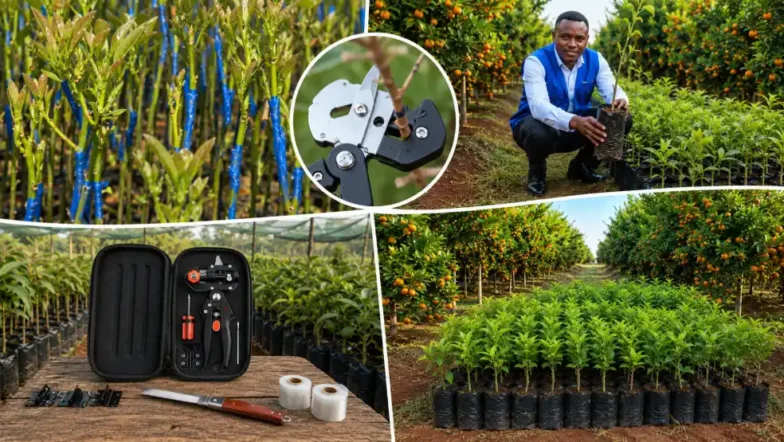
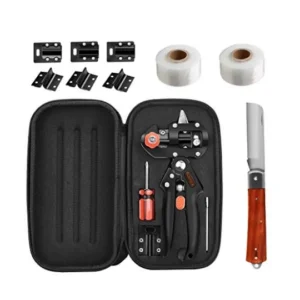
Professional grafting requires a razor-sharp grafting knife, specialized budding tape or Parafilm, high-quality pruning shears, and a sterilization solution like rubbing alcohol. Using the wrong tools, such as dull kitchen knives or ordinary plastic bags, causes jagged cuts that prevent the cambium layers from healing properly.
The quality of your tools determines your success rate. A dull blade crushes the delicate cambium cells instead of slicing them. Once these cells are crushed, they cannot knit together. You need a dedicated grafting knife that is sharp enough to shave hair. These knives are usually beveled on only one side to allow for perfectly flat, straight cuts.
Grafting Tape has evolved significantly. While older farmers used strips of polythene bags, modern Parafilm or biodegradable budding tape is superior. This tape stretches as you wrap it, creating an airtight and watertight seal. More importantly, it is often photo-degradable, meaning it will break down in the sun and fall off naturally as the tree grows.
Sterilization is the most overlooked step in the nursery. Every time you move from one tree to another, you must wipe your blade with alcohol or a mild bleach solution. Bacteria and viruses like Citrus Tristeza can be spread easily by a dirty knife, killing your entire nursery. Keep a small bottle of surgical spirit and a clean cloth in your grafting kit at all times.
The following table outlines the current market prices for essential grafting equipment in major agricultural hubs like Nairobi and Eldoret.
2026 Grafting Input Price Guide
| Item | Quality Level | Price Range (KES) | Where to Buy |
|---|---|---|---|
| Grafting Knife | Professional Steel | 1,800 – 3,500 | Nairobi Agrovets |
| Parafilm / Budding Tape | Self-Adhesive (100m) | 650 – 950 | Online / Major Towns |
| Pruning Shears | High-Carbon Steel | 1,200 – 2,800 | Hardware Stores |
| Grafting Wax/Sealant | 250g Tin | 800 – 1,200 | Specialized Nurseries |
| Rubbing Alcohol | 500ml Bottle | 250 – 400 | Local Pharmacies |
Where to Buy Grafting Tools in Kenya
In Kenya, these tools are widely available through online marketplaces and agrovet suppliers. You can buy grafting knives, pruning shears, and grafting tape from Jumia Kenya (https://www.jumia.co.ke), Kilimall (https://www.kilimall.co.ke), and trusted agricultural input stores across Nairobi, Nakuru, and Eldoret. Local agrovets also stock basic grafting equipment, while pharmacies and supermarkets provide sterilization alcohol. For professional-grade tools, international suppliers such as Amazon (https://www.amazon.com) also ship to Kenya.
Top 7 Grafting Methods for Success
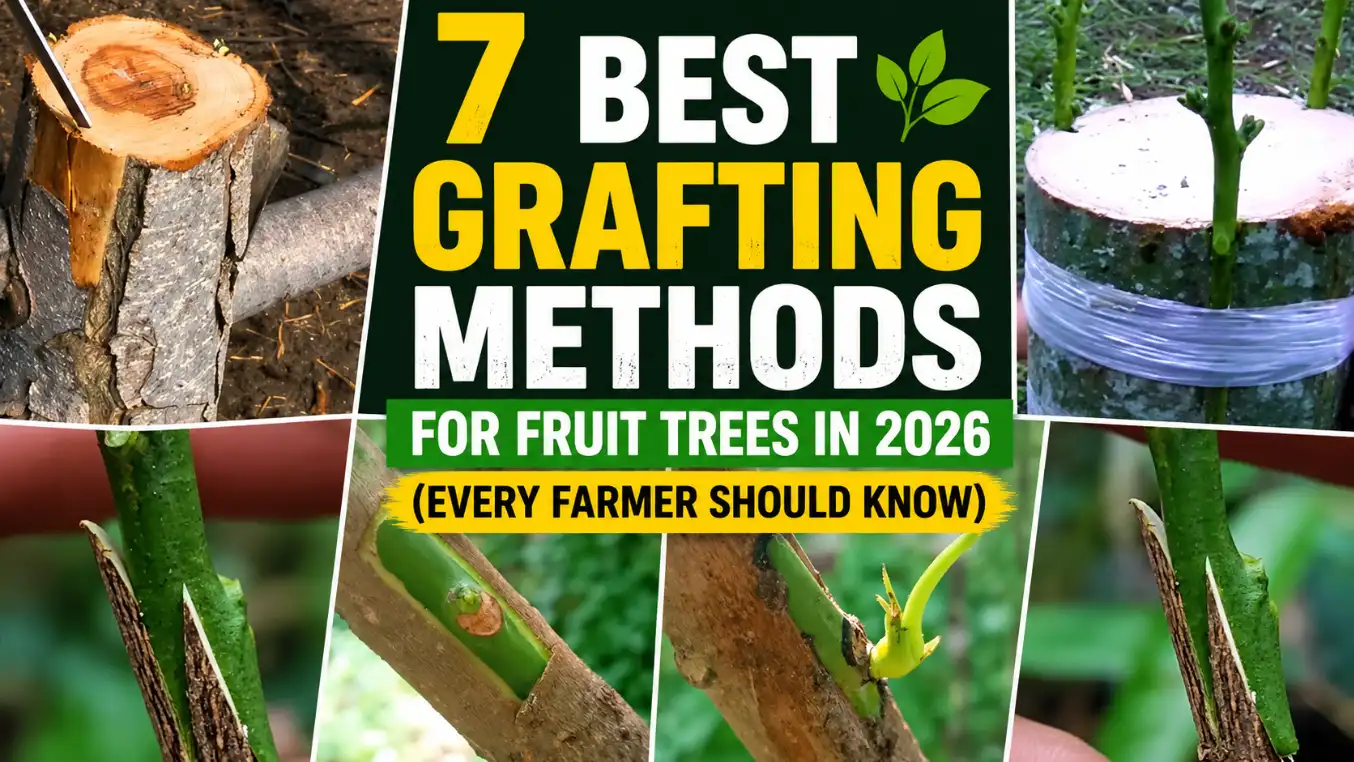
The most effective methods for 2026 include Whip and Tongue for young nursery plants, Cleft Grafting for top-working old orchards, T-Budding for mass citrus production, and Side Veneer for mangoes and avocados. Each method is chosen based on the thickness of the branch and the specific fruit species.
1. Whip and Tongue Grafting
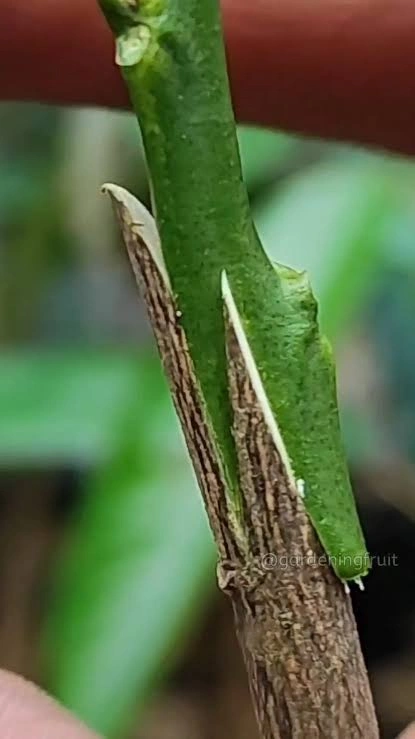
This is arguably the strongest manual graft. It is used when the rootstock and the scion are the same thickness, usually about the width of a pencil. Both pieces are cut at a long angle, and then a small tongue or slit is cut into each face. When joined, these tongues interlock, providing a massive surface area for cambium contact.
Whip and tongue grafts are physically stable even before they are wrapped. This interlocking mechanism prevents the scion from shifting during the wrapping process. It is the preferred method for high-end apple and pear nurseries in Nakuru and Nyandarua. Success depends on the precision of the two matching slits.
2. Cleft Grafting
Cleft grafting is the heavy lifter of the orchard. It is used to change the variety of an established tree, a process called top-working. You saw off a large branch of the rootstock, split the remaining stump down the middle (the cleft), and insert two wedge-shaped scions into the edges of the split.
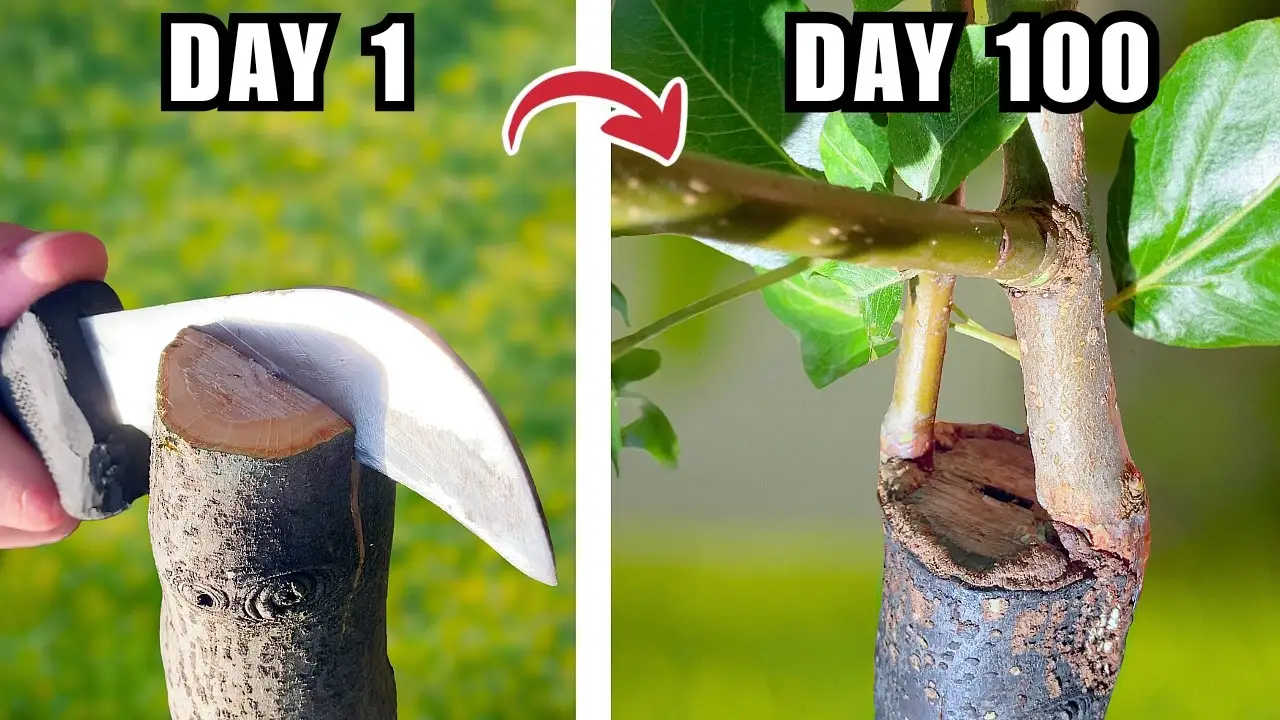
This is very popular for upgrading old local avocado trees to Hass. The main risk here is moisture getting into the split, which can cause fungal decay. Using a high-quality grafting wax to seal the top of the stump and the exposed split is mandatory for success in humid areas like Meru.
Read Also: DIY Bottle Drip Irrigation Farming in Kenya (2026): Grow Tomatoes, Strawberries & Vegetables Using Recycled Containers
3. Bark Grafting
Unlike the cleft graft, bark grafting does not involve splitting the wood of the rootstock. Instead, the scion is inserted between the bark and the wood. This is done during the sap flow season when the bark slips or peels away easily. It is an excellent method for very large stumps where a cleft split would be too deep.
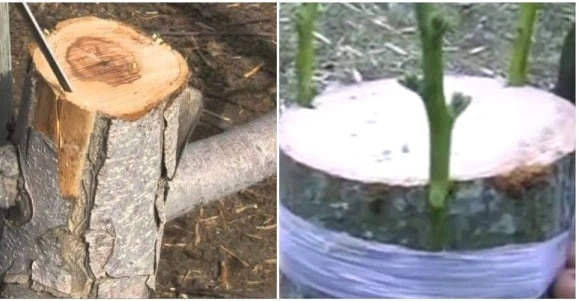
Bark grafting allows you to place multiple scions around the perimeter of a large trunk. This increases the chances that at least one will take and eventually cover the entire wound. It is particularly effective for citrus and macadamia trees that have been damaged by wind or poor pruning in the past.
4. T-Budding (Shield Budding)
T-Budding is the most efficient method for citrus trees like oranges, lemons, and tangerines. Instead of a whole branch, you only use a single bud from the scion tree. You cut a T-shape into the bark of the rootstock, peel back the flaps, and slide the bud inside. It is incredibly resource-efficient.
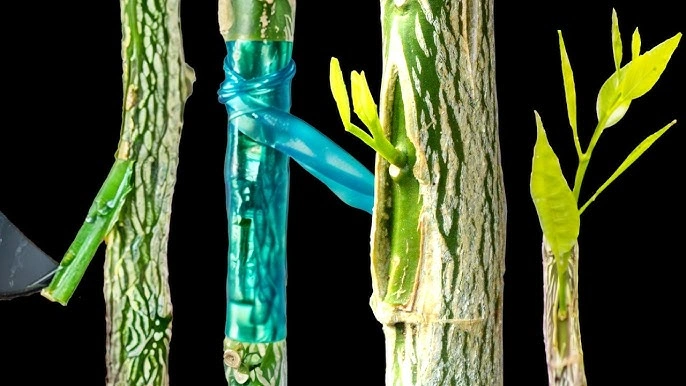
Because it uses so little material, you can produce hundreds of trees from a single parent branch. It is fast, has a high success rate in warm weather, and is the standard for commercial citrus nurseries in Machakos and Kitui. The key is ensuring the bud is fully mature and taken from the middle of a healthy branch.
5. Chip Budding
Chip budding is the smarter alternative to T-budding when the bark is not slipping, which usually happens during drier months. Instead of peeling the bark, you cut a small chip of wood out of the rootstock and replace it with an identical chip containing a bud from the scion. This wood-to-wood contact is very reliable.
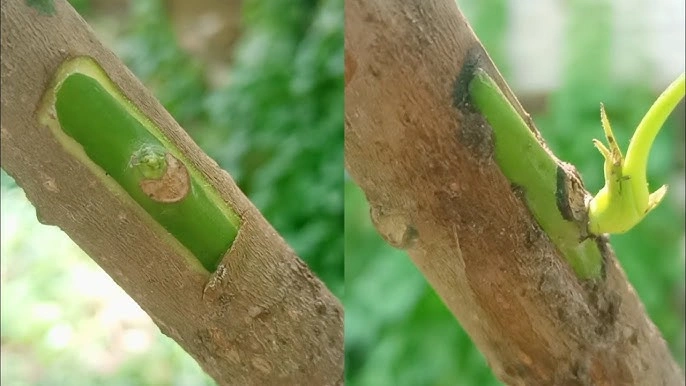
Because you are cutting into the wood, you do not need the sap to be flowing heavily for the graft to work. This allows Kenyan nursery owners to continue production even during the short dry seasons between January and March. It requires a very steady hand to ensure the two chips match in size perfectly.
6. Side Veneer Grafting
This is the undisputed King of Mango and Avocado grafting in Kenya. A shallow, long slice is made on the side of the rootstock, and a matching slice is made on the scion. The scion is then pressed against the side of the rootstock and wrapped tightly. It is highly forgiving for beginners.
The beauty of this method is that the head of the rootstock is not cut off until the graft has successfully healed. This keeps the rootstock’s leaves active, providing energy to the union point. This significantly increases the success rate for difficult species like mangoes which often struggle with sudden moisture loss.
7. Approach Grafting
This is a rescue method used for plants that are notoriously difficult to graft. In approach grafting, both the rootstock and the scion remain attached to their own root systems while they heal together. You bring two potted plants together, slice a small piece of bark off each stem, and tie them together.
Once they have fused, you cut the top off the rootstock and the bottom off the scion. It is nearly 100% successful because both parts are receiving water and nutrients from their own roots during the entire healing process. It is often used for high-value ornamental trees or rare fruit varieties that fail with other methods.
Alternative Propagation Method (Bonus Technique)
Water Air-Layering (Marcotting) – A Simple Alternative Propagation Method
Water-based air-layering (marcotting) technique is used to propagate fruit and ornamental trees. Unlike grafting, this method does not join two plants together. Instead, it encourages a branch to develop roots while still attached to the parent plant using a water-filled container.
This method produces a genetically identical clone of the parent tree and is widely used because it is cheap, simple, and allows direct visual monitoring of root development.
How the Water Air-Layering Technique Works
This propagation method stimulates root growth on a living branch while it remains attached to the mother plant. It is commonly used when farmers want to multiply trees without using grafting skills.
The Setup
A healthy mature branch is selected and a small cut or notch is made on it to expose the inner tissue. This injury triggers natural root formation. The wound may be slightly held open to improve rooting response.
Rooting Medium
Instead of soil or moss, the wounded section is placed into or suspended over a water-filled container such as a plastic bottle. The setup is tightly secured so the cut area remains consistently moist, encouraging root formation.
Maintenance
Water should be replaced every 1–2 weeks to prevent contamination. The setup should be kept in indirect sunlight to avoid overheating and drying stress. Stability is critical to avoid disturbing root development.
Transplanting
Once a strong root system forms, the branch is cut below the rooted section and transplanted into soil where it continues growing as an independent plant.
Key Benefits
- Produces an exact clone of the parent plant
- Low-cost and beginner friendly
- Visible root development (easy monitoring)
- Useful alternative when grafting success is low
Choosing the Right Method for Your Orchard
Selecting a technique depends on the age of your trees and the specific fruit variety you are working with. The following table provides a quick reference for matching methods to common scenarios.
| Situation | Recommended Method | Difficulty Level | Best Season |
|---|---|---|---|
| Young Nursery Seedlings | Whip and Tongue | Medium | Early Rains |
| Mature Tree Overhaul | Cleft Grafting | Low | Dormant Period |
| Mass Citrus Nursery | T-Budding | Low | Warm / Rainy |
| Mango / Avocado Nursery | Side Veneer | Medium | High Humidity |
| Dry Season Grafting | Chip Budding | High | Dry Months |
| Damaged Large Stumps | Bark Grafting | Medium | Sap Flowing |
Universal Step-by-Step Grafting Protocol
Successful grafting follows a strict protocol: select healthy dormant scions, make clean and flat cuts with a sterile knife, align the green cambium layers perfectly, wrap the union tightly to exclude air and water, and provide shade to prevent the new scion from overheating during the first three weeks.
The first step is Scion Selection. Go to your mother tree early in the morning when it is fully hydrated. Look for branches from the last season’s growth that have well-developed buds but have not started leafing out yet. Avoid branches with active flowers as they drain too much energy from the scion.
When making the Cuts, the goal is a perfectly flat surface. If your cut is wavy or curved, there will be air pockets between the scion and rootstock, leading to failure. Practice on wild branches first until you can make a single, smooth pulling motion. Do not touch the exposed flesh with your fingers to avoid transferring skin oils.
Read Also: Maximizing Small Spaces: A Practical Guide to Productive Home Gardening in Kenya
Wrapping and Sealing is where many beginners fail. You must start wrapping from below the graft and work your way up, similar to how shingles are placed on a roof. This ensures that any rain water slides over the tape rather than leaking into the graft union. The wrap must be tight enough to exert pressure on the cambium but not so tight that it strangles the tree.
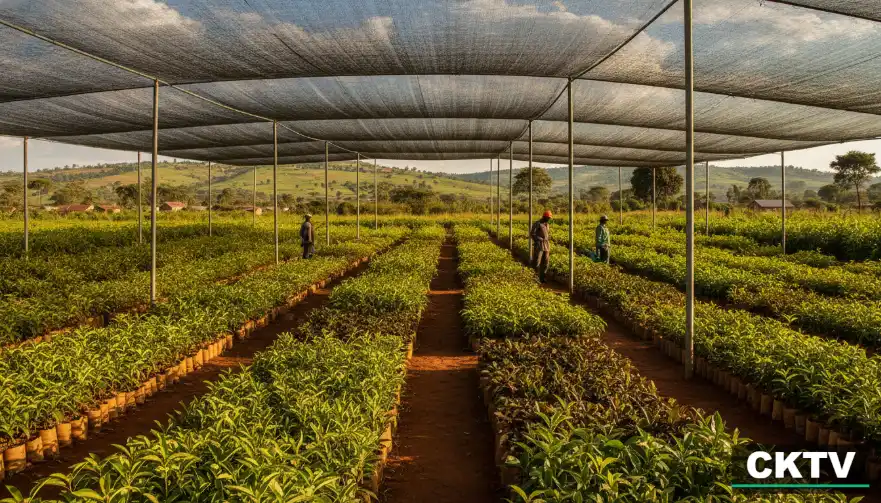
Finally, focus on Protection. After grafting, the scion is vulnerable to heat. In Kenyan highlands, a simple shading structure made of maize stalks or shade netting can increase success rates by 30 percent. If the scion dries out before the cambium connects, the graft will fail regardless of how perfectly the cuts were made.
The Critical Timing: When to Graft in Kenya
In Kenya’s tropical climate, the best time to graft is during the onset of the rainy seasons (March-April and October-November) when sap flow is high and humidity helps prevent scion desiccation. Avoid grafting during the peak of the dry season or during very cold, misty periods in the highlands.
While European guides talk about Spring, Kenyan farmers must look at the Rainy Season cycles. Grafting relies on the tree’s natural healing response, which is strongest when the tree is actively growing. When the rains start, the tree begins to push nutrients and water from the roots to the branches, creating the pressure needed for fusion.
If you graft in the middle of a drought, the tree is in survival mode and will not spare the energy to heal a wound. Similarly, temperature plays a role. The ideal range for callus formation is between 20 degrees Celsius and 30 degrees Celsius. If it is too hot, like the afternoons in Garissa, the scion will shrivel before it can bond.
For farmers in very hot areas, grafting should be done in the early morning hours or under heavy shade netting. In colder areas like Limuru, avoid grafting during the July mist. The damp cold can encourage fungal growth on the fresh cuts before they have a chance to seal. Timing is just as important as the sharpness of your knife.
Advanced Nutrition: Fertilizing Grafted Trees
Grafted trees require a market-first nutrition plan, starting with high-phosphorus fertilizers like DAP at planting to establish roots, followed by Nitrogen-rich CAN for vegetative growth, and NPK blends during fruiting. Proper nutrition ensures the graft union remains strong and the tree reaches maturity quickly.
You cannot expect a grafted tree to perform its best in poor, depleted soil. Before planting your grafted seedlings, conduct a professional soil test. In 2026, many Kenyan soils are becoming acidic due to the over-use of certain fertilizers. Adding lime or well-decomposed manure is often necessary to stabilize the soil pH.
For the first year, focus entirely on Root Development. A strong root system is the engine that drives the scion’s growth. High-phosphorus fertilizers like DAP are essential during the planting stage to ensure the roots penetrate deep into the soil. This depth provides the tree with stability and drought resistance in later years.
The table below provides the current market prices for subsidized and market-rate fertilizers as of the first quarter of 2026. Use this to budget for your orchard’s first two years of growth.
2026 Fertilizer Price Table (50kg Bag)
| Fertilizer Type | Primary Use | Market Price (KES) | Subsidized Price (KES) |
|---|---|---|---|
| DAP (Diammonium Phosphate) | Planting / Root Growth | 3,800 – 4,500 | 2,500 |
| CAN (Calcium Ammonium Nitrate) | Top Dressing / Growth | 3,200 – 3,800 | 2,500 |
| NPK 17:17:17 | General Maintenance | 3,900 – 4,600 | 2,500 |
| NPK 23:23:0 | Young Tree Growth | 3,600 – 4,200 | 2,500 |
Economic Reality Check: Grafted vs. Seed-Grown
Starting a grafted fruit orchard requires a higher initial investment in seedlings (KES 350-550 each) compared to seeds, but the break-even point is reached 4 years earlier. A well-managed acre of grafted avocados can generate KES 800,000 annually by year five, whereas seed-grown trees would just be starting to flower.
Let’s look at the financial math behind a modern Kenyan orchard. If you plant 100 grafted Hass avocado trees on one acre, your seedling cost will be roughly KES 45,000. Including labor, holes, and basic irrigation, your startup cost for the first year will be around KES 120,000. By year five, each tree can produce 300 to 500 fruits.
At a conservative export price of KES 15 per fruit, that is KES 4,500 to KES 7,500 per tree. Compare this to free seeds. You spend zero on seedlings, but you spend five extra years weeding and watering a tree that gives zero return. In those five years, you lose millions in potential revenue. Grafting is an investment in time.
In the 2026 Kenyan economy, land is becoming more expensive. You cannot afford to have land occupied by non-productive trees. Grafting allows you to turn a small plot into a high-intensity production zone. The following table summarizes the return on investment for both systems over a ten-year period.
Projected ROI: Grafted vs. Seed-Grown (1 Acre)
| Feature | Grafted (Hass/Apple) | Seed-Grown (Local) |
|---|---|---|
| Time to First Harvest | 2.5 – 3 Years | 7 – 10 Years |
| Seedling Cost (100 trees) | KES 40,000 – 55,000 | KES 0 – 5,000 |
| Export Market Acceptance | High (90%+) | Low (under 10%) |
| Year 5 Revenue Est. | KES 600,000+ | KES 0 |
| Profitability Ranking | High Commercial | Subsistence Only |
Common Failures and How to Avoid Them
Grafting failures are mostly caused by poor cambium alignment, scion dehydration, and the growth of rootstock suckers that rob the graft of nutrients. Farmers must also guard against incompatibility, where the rootstock and scion are from different families and can never physically bond.
The most heartbreaking failure is when a graft takes, grows for a few months, and then suddenly dies. This is often caused by Rootstock Suckers. The rootstock wants to grow its own branches. It will often push out new shoots from below the graft union. If you do not pinch these off every week, the tree will starve the scion.
Read Also: 15 Most Profitable Agribusiness Ideas in Kenya to Start in 2026
Another silent killer is Graft Incompatibility. You cannot graft a mango onto an avocado tree. They must be in the same botanical family. Even within families, some combinations are weak. Always use rootstocks recommended by KALRO for your specific region to ensure long-term stability and graft strength.
Lastly, watch out for Moisture Loss. If the tape isn’t airtight, the scion will lose its internal water before the cambium can connect the tissues. Many professional farmers now use a double-protection method: they wrap the union with tape and then place a small, clear plastic bag over the scion to create a mini-greenhouse effect.
Long-Term Aftercare for Grafted Trees
Once the graft has successfully taken, your job is not over. You must monitor the union point for at least a year. As the tree grows, the tape can become tight and start to girdle the trunk. If the tape does not fall off on its own, you should carefully cut it away with a sharp blade after the scion has produced about 10 inches of growth.
Young grafted trees are also more attractive to pests. Insects like aphids and whiteflies love the tender new leaves produced by a fresh scion. A regular scouting schedule is necessary to identify these pests before they stunt the growth of your new tree. Use organic neem oil sprays or recommended pesticides from your local agrovet to keep the canopy clean.
Support is another critical factor. The union point is a scar, and it remains physically weak for the first two years. In windy areas like the Rift Valley, you must stake your newly grafted trees. A strong bamboo or wooden stake tied to the main trunk will prevent the scion from snapping off during a storm, protecting your years of hard work.
Final Outlook for 2026 and Beyond
As we look toward the 2030 agricultural cycle, grafting is the clear divider between traditional farming and modern agribusiness. The Kenyan government’s focus on export-oriented crops like macadamia and avocado specifically targets precision-grown, grafted varieties that meet international phytosanitary and quality standards.
The hard truth is that grafting is a skill that requires practice. Your first ten grafts might fail, and your hands might get tired. But once you master the Side Veneer or the T-Bud, you hold the keys to a high-value orchard. You become the master of your own production timeline and fruit quality.
Do not be the farmer who waits ten years for a tree to tell them what kind of fruit it will produce. Be the farmer who decides exactly what they want to sell and uses grafting to make it happen. With the right tools, the correct timing, and a bit of patience, your orchard will become a goldmine for decades to come.
Frequently Asked Questions
What are the best grafting methods for fruit trees in 2026?
Side Veneer and T-Budding are top for mangoes and citrus. Cleft grafting is best for older trees, while Whip and Tongue works best for small nursery seedlings.
What are the four main types of grafting used in agriculture?
The four most common categories are Budding (T-bud/Chip), Cleft Grafting, Bark Grafting, and Whip and Tongue Grafting, each serving different tree ages and sizes.
Which grafting method has the highest success rate for fruit trees?
Side Veneer grafting typically offers the highest success rate because the rootstock remains intact and active while the new scion heals onto the side.
How do you graft a fruit tree step by step successfully?
Select dormant scions, make clean flat cuts on both scion and rootstock, align cambium layers, wrap tightly with budding tape, and provide shade until growth appears.
What is the easiest grafting method for beginners?
Cleft grafting is often the easiest for beginners to learn because the cuts are straightforward and the scion is physically held in place by the split wood.
Can different types of fruit trees be grafted together?
Only trees within the same botanical family can be grafted. You can graft a lemon onto an orange tree, but you cannot graft a mango onto an avocado.
What is the best time of year to graft fruit trees in tropical climates?
The onset of the rainy seasons (March-April or October-November) is ideal as high sap flow and humidity significantly boost the success and healing rates.
Why do grafted fruit trees fail after planting?
Failures are usually due to poor cambium contact, dirty tools causing infection, scion dehydration, or neglecting to remove suckers growing from the rootstock below the graft.
What tools are required for professional fruit tree grafting?
You need a specialized grafting knife, pruning shears, stretchable budding tape (Parafilm), alcohol for sterilization, and sometimes grafting wax to seal large wounds.
What is the difference between grafting, budding, and cutting propagation?
Grafting joins a branch to a rootstock; budding joins a single bud; cutting propagation involves rooting a branch directly in soil without a rootstock.