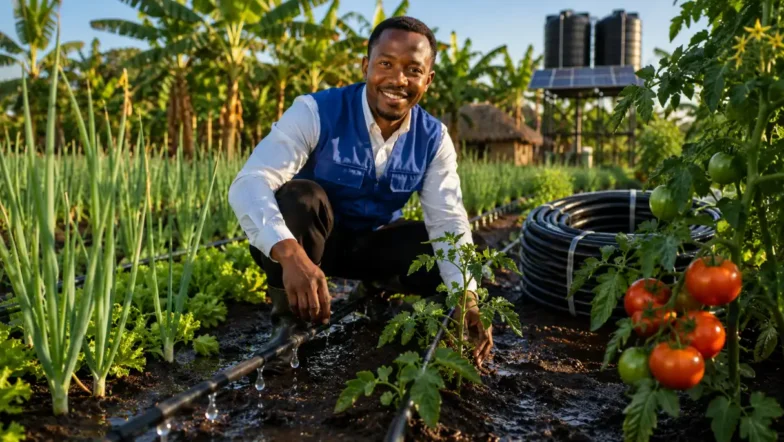

- Market Leaders: SunCulture dominates the smallholder market with Pay-As-You-Grow financing, while Davis & Shirtliff remains the technical leader for deep borehole and commercial solar installations in 2026.
- Budget Planning: Small surface pumps start at KES 35,000, while a complete 1-acre submersible solar system typically ranges between KES 85,000 and KES 130,000 depending on the water depth.
- Expert Advice: Avoid unbranded “gray market” pumps found in downtown Nairobi; they lack dry-run protection and often burn out within months due to poor motor winding quality.
Table of Contents
The agricultural sector in Kenya has entered a new era in 2026. With the cost of petrol consistently high and the national grid remaining expensive for irrigation, solar water pumps have become the most profitable investment for any serious farmer. Transitioning from fuel-based pumping to solar-powered systems can increase a farm’s net profit by up to 40 percent in the first year alone.
Choosing the right provider is a critical decision that affects your farm’s productivity for the next two decades. A solar pump is not just a piece of hardware; it is a long-term engineering solution that requires proper sizing, professional installation, and reliable after-sales support. This guide evaluates the top 5 companies currently serving the Kenyan market to help you make an informed choice.
The Rise of Solar Irrigation in Kenya for 2026
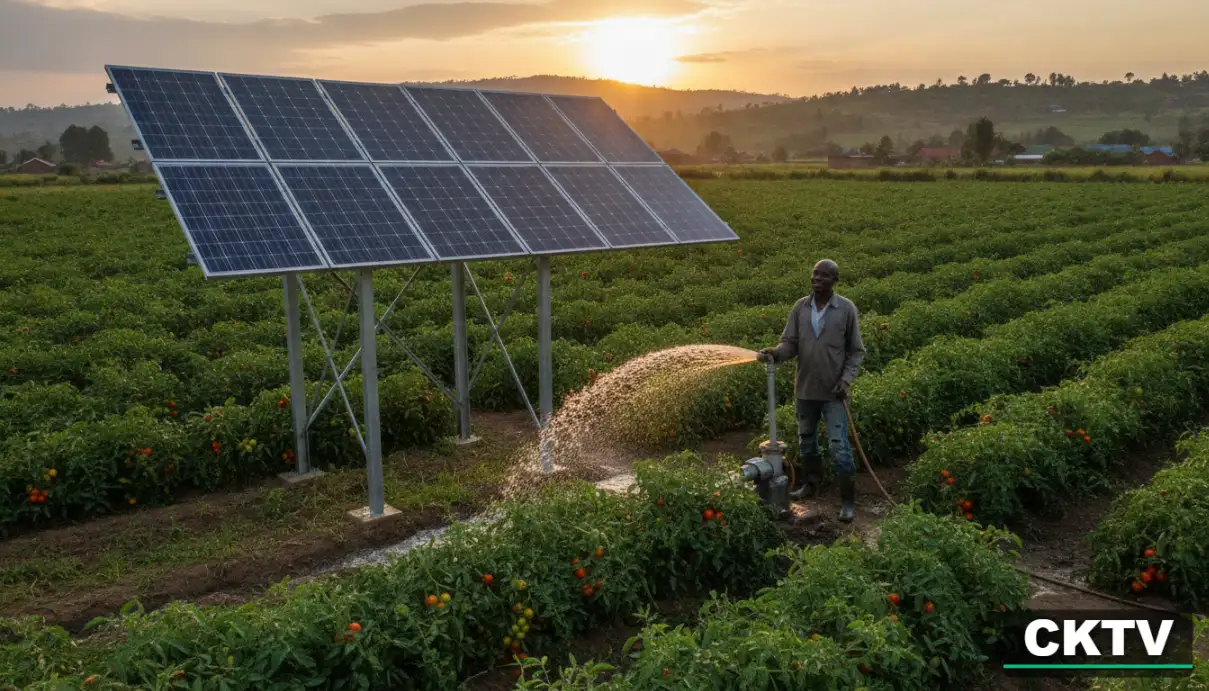
Solar irrigation adoption has grown by 300 percent in Kenya over the last three years. The shift is driven by the zero-fuel operating model, government tax exemptions on solar components, and the introduction of flexible mobile-money payment plans that cater to small-scale vegetable and fruit farmers.
Read Also: SunCulture Solar Water Pump Prices in Kenya 2026: Cost and Profit Guide
In 2026, the technology has reached a point of high reliability. Modern solar pumps use brushless DC motors that require almost zero maintenance and come with smart controllers that optimize water flow even during partially cloudy weather. This is particularly beneficial for farmers in the Central Highlands and the Rift Valley where weather can be unpredictable.
For most Kenyan growers, the move to solar is a response to the “Fuel Trap.” Traditional petrol pumps require daily cash outlays, which often lead to crops drying up when a farmer faces a temporary cash flow shortage. Solar energy removes this risk entirely by providing free energy from the sun every single day of the year.
Furthermore, the environmental impact is significant. Solar pumps are silent and do not leak oil or fumes into the soil. This has made them the preferred choice for farmers targeting premium export markets in Europe and the Middle East, where sustainable farming practices are highly valued and often required for certification.
Top 5 Best Solar Water Pump Providers in Kenya
The leading providers in 2026 are SunCulture, Davis and Shirtliff, Futurepump, Lorentz, and KickStart International. These companies offer a range of products from small portable surface pumps to heavy-duty submersible borehole systems with integrated remote monitoring technology and localized support.
Choosing a provider is not just about the price of the pump today. It is about after-sales service, warranty reliability, and technical support in the future. In Kenya, many “generic” solar pumps found in downtown shops fail within a year because they lack proper protection.
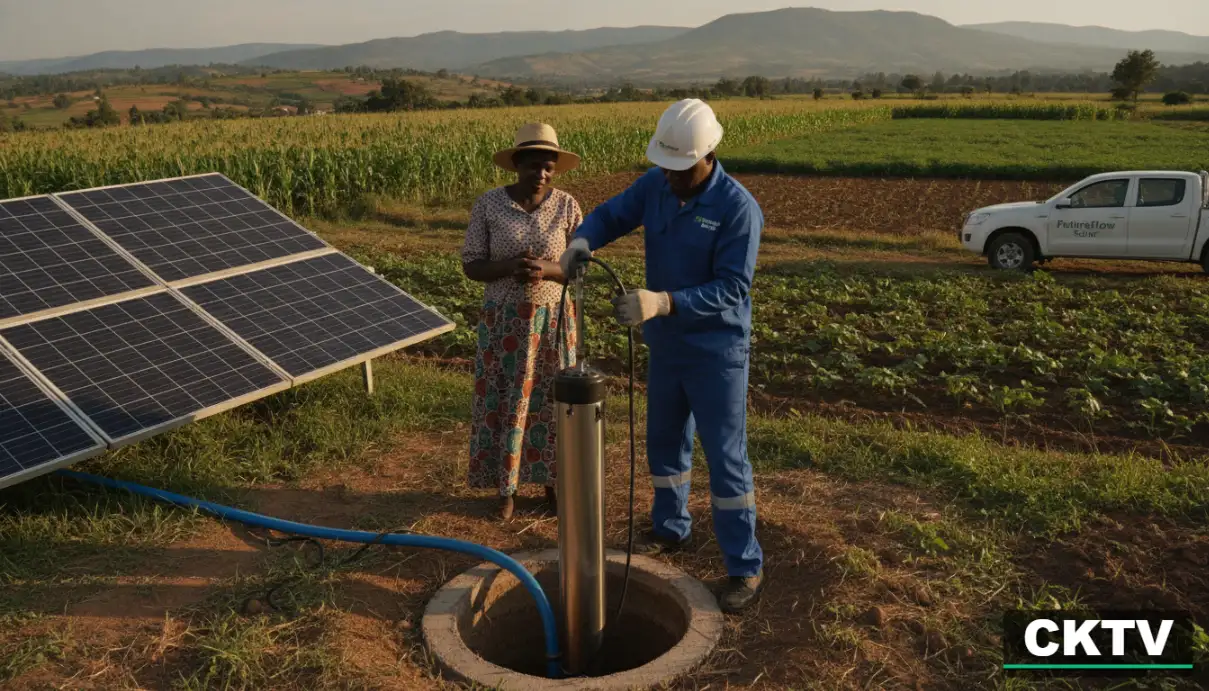
The top five providers listed here have established service centers across the country. They offer genuine warranties that protect your investment against manufacturing defects. They also provide the technical expertise needed to size your system correctly so you don’t waste money on unnecessary components.
1. SunCulture (The Market Innovator)
SunCulture has revolutionized the Kenyan market with its ClimateSmart series of pumps. They are particularly famous for their “Pay-As-You-Grow” financing model. This makes solar irrigation accessible to small-scale farmers who cannot afford the full upfront cost at once.
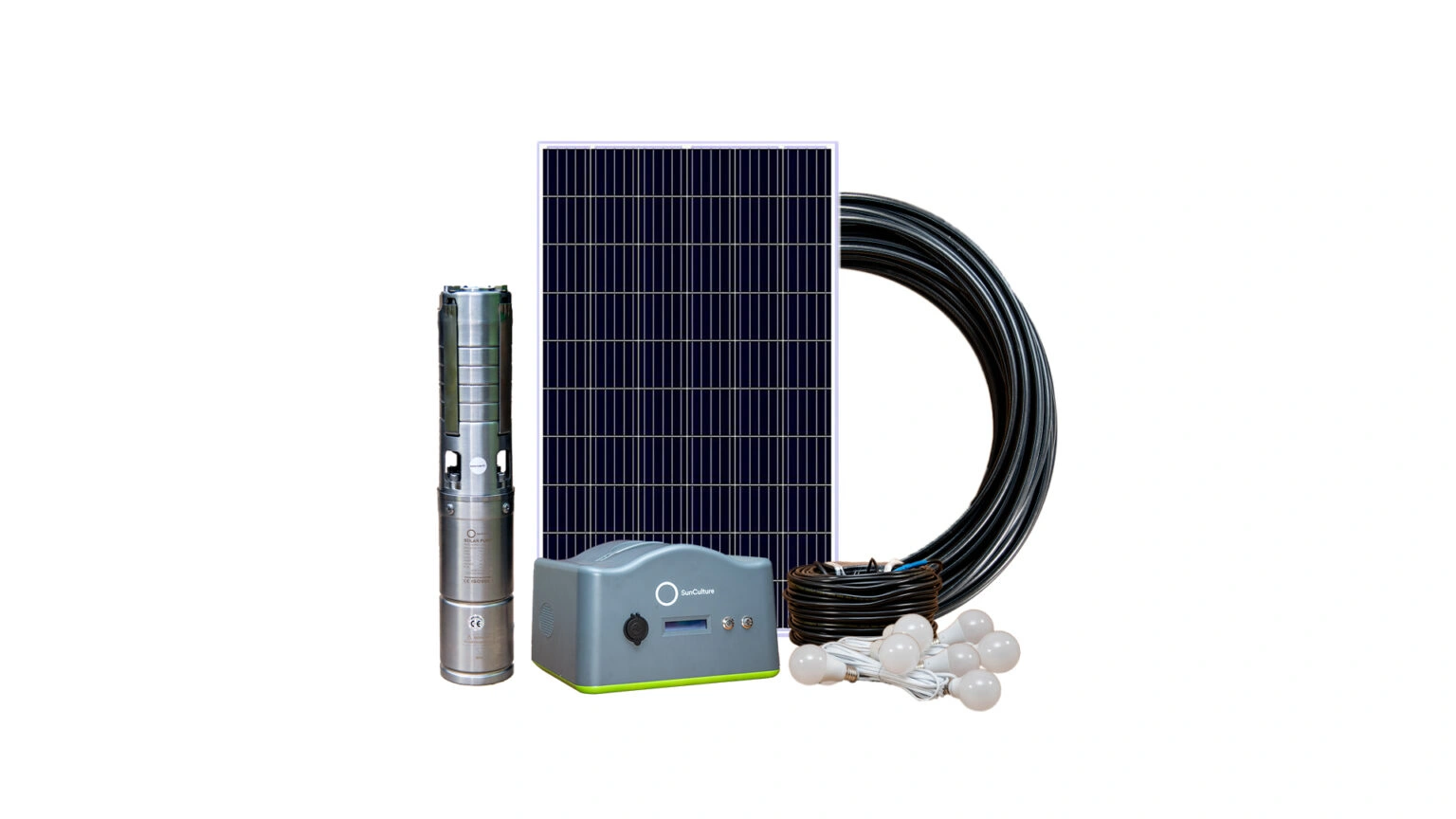
Their systems often come bundled with high-quality drip irrigation kits. This makes them a one-stop-shop for any farmer looking to modernize their shamba quickly. Their headquarters in Nairobi and numerous regional hubs ensure that technical help is never too far away when you need it.
The SunCulture RainMaker 2C is a standout product in 2026. It is designed to handle the variable water quality found in many Kenyan wells. It also features a smart controller that can be managed via a mobile app, allowing you to monitor your water usage from anywhere.
2. Davis and Shirtliff (The Industry Giant)
With over 70 years of experience, Davis and Shirtliff (D&S) is the most trusted name for large-scale water projects. Their “Dayliff” brand offers a wide variety of solar pumping solutions tailored for local conditions. They are the experts in deep borehole pumping and large-scale water distribution.
Whether you are pumping from a shallow well or a 300-meter borehole, D&S has the engineering capacity to size a system perfectly. Their presence in almost every major Kenyan town means that spare parts are always available. This is critical for commercial farms where every hour of downtime costs money.
D&S also partners with global brands like Grundfos to bring world-class technology to Kenya. Their solar pumping systems are known for their extreme durability. While they may have a higher initial cost, the longevity and low failure rate make them the most cost-effective choice for large estates.
3. Futurepump (The Smallholder Champion)
Futurepump focuses on simplicity and durability for the 1-acre farmer. Their pumps, like the SF2 and SE1, are designed to be portable and “fixable” by the farmer. They use a unique piston-drive system that is highly efficient even in the low light of early morning or late afternoon.
Futurepump is ideal for farmers with surface water sources like rivers, ponds, or shallow wells. The system is robust and can handle dirty water better than most centrifugal pumps. It is also mobile, meaning you can move it between different plots or store it safely in your house at night.
Read Also: Top Solar Water Pumps Kenya 2026: Best Models for Irrigation, Save 80% on Fuel
The company offers a generous 10-year warranty, which is almost unheard of in the industry. This shows their confidence in the mechanical design of their pumps. For a farmer on a budget who needs a “workhorse” that won’t quit, Futurepump is a fantastic local option.
4. Lorentz (The Global Efficiency Leader)
Lorentz pumps are widely regarded as the most efficient solar pumps in the world. In Kenya, they are sold through a network of specialized authorized distributors. While they come at a premium price, their “water pumped per watt” ratio is completely unmatched in the market.
For a commercial farmer in a region like Isiolo or Turkana, a Lorentz system is the gold standard. Every watt of solar energy is squeezed to move the maximum amount of water. Their PS2 and PSk series controllers are highly advanced, offering data logging and remote control features.
Lorentz systems are built to last for decades in harsh environments. They use high-grade stainless steel and brushless motors that require zero maintenance for years. If you are planning a 10-year commercial project, the energy efficiency of a Lorentz pump will save you a fortune in solar panel costs.
5. KickStart International (MoneyMaker Solar)
KickStart has long been known for their manual “MoneyMaker” pumps. Their move into solar has been a massive game-changer for entry-level agribusiness. The MoneyMaker Solar is designed specifically for the 0.5 to 1-acre vegetable farmer who is just starting out.
It is affordable, easy to set up without a technician, and robust enough to handle dusty conditions. It represents the most “frictionless” way for a traditional farmer to transition into solar irrigation. The pump is designed to be user-friendly, with simple connections and clear instructions in Swahili and English.
KickStart also works closely with NGOs and agricultural extension officers. This means that farmers who buy their pumps often get access to training on how to grow high-value crops. It is not just about the hardware; it is about the “knowledge package” that helps the farmer succeed and make money.
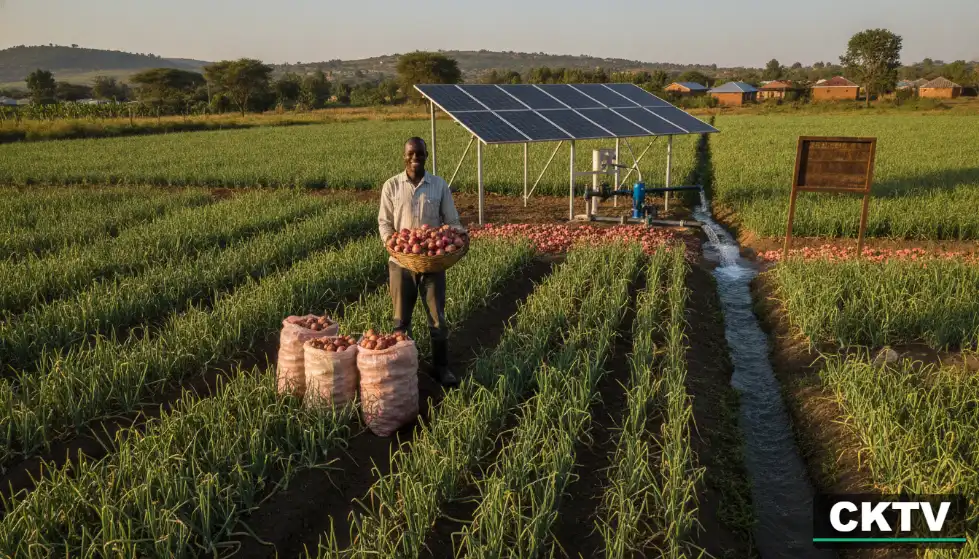
Comparison of Technical Specifications and Suitability
Before buying, you must understand the difference between a surface pump and a submersible pump. A surface pump sits on the ground and sucks water from a nearby river or shallow tank. A submersible pump is dropped deep into a well or borehole where it pushes water up to the surface.
Matching the right pump to your water source is the most common mistake farmers make. This often results in burned-out motors or insufficient water flow for the crops. The following table helps you compare the primary options available from the top providers in the current market.
| Provider | Best Model (2026) | Max Depth (Head) | Daily Output (Avg) | Ideal Use Case |
|---|---|---|---|---|
| SunCulture | RainMaker 2C | 30 – 70 Meters | 15,000 – 25,000 Liters | Drip irrigation for 1-3 acres |
| Davis & Shirtliff | Dayliff SunFlo | Up to 200 Meters | Variable (High) | Boreholes and large storage tanks |
| Futurepump | SE1 / SF2 | 7 – 15 Meters | 12,000 Liters | Surface water / Shallow wells |
| Lorentz | PS2 Series | 300+ Meters | 50,000+ Liters | Large commercial horticulture |
| KickStart | MoneyMaker Solar | 10 Meters | 8,000 Liters |
The Technical Guide: Understanding Pump Types
Selecting the right type of pump depends on your water source depth. Surface pumps are used for water sources less than 7 meters deep, while submersible pumps are required for boreholes and deep wells where the water level is significantly below ground level.
The most common mistake farmers make is trying to use a surface pump for a deep well. Surface pumps work on suction, and physics dictates that they cannot pull water effectively from more than about 7 or 8 meters. If your water is deeper than that, you must use a submersible pump that “pushes” the water up from the bottom.
Below is a quick comparison to help you identify which technology fits your specific shamba requirements for the 2026 season.
| Feature | Surface Solar Pump | Submersible Solar Pump |
|---|---|---|
| Water Source | Rivers, Dams, Shallow Wells | Deep Boreholes, Deep Wells |
| Maximum Lift | 7 to 8 Meters | Up to 300+ Meters |
| Installation Ease | Very Easy (Plug & Play) | Requires Professional Team |
| Maintenance | Simple / Low Cost | Moderate / Requires Pulling Pump |
| Portability | Highly Portable | Fixed Installation |
When selecting a submersible pump, you must also consider the “Head.” This is the vertical distance the water needs to travel from the pump’s location to your storage tank. Always add at least 10 percent to your vertical height calculation to account for “pipe friction,” which slows down the water flow as it travels through your delivery lines.
In 2026, most high-quality pumps also come with “Dry-Run Protection.” This is a sensor that detects when your water source has run dry and automatically shuts off the motor. Without this feature, a pump will continue to spin at high speeds, generating heat that will melt the internal seals and destroy the motor in minutes.
Solar Water Pump Prices in Kenya (2026 Market Analysis)
A basic 1-acre surface solar pump kit costs between KES 45,000 and KES 65,000. A standard 1-acre submersible system for a 30-meter well typically costs between KES 85,000 and KES 120,000. Deep borehole systems (100m+) start at KES 250,000 and can exceed KES 600,000 for large-scale operations.
Price variability is usually driven by the wattage of the solar panels and the quality of the pump controller. A system with a “Maximum Power Point Tracking” (MPPT) controller will be more expensive but will provide up to 30 percent more water per day by squeezing every bit of energy out of the solar panels, even on cloudy days in Limuru or Kericho.
Budgeting for a solar pump also requires looking at the “Full System Cost.” The pump itself might be affordable, but you must account for the solar panel mounting structure, the underground submersible cable, the piping, and the installation labor. A professional installation typically adds about 10 to 15 percent to the equipment cost but ensures your warranty remains valid.
Read Also: Best Drip Irrigation System for Small Farms in Kenya (2026 Guide)
It is worth noting that for vegetable farmers, the cost of the pump is often recovered within two harvests. With the current price of fertilizers like DAP and CAN remaining stable but high, and the market price for tomatoes and onions increasing, the efficiency gained from solar irrigation is a major driver of farm profitability.
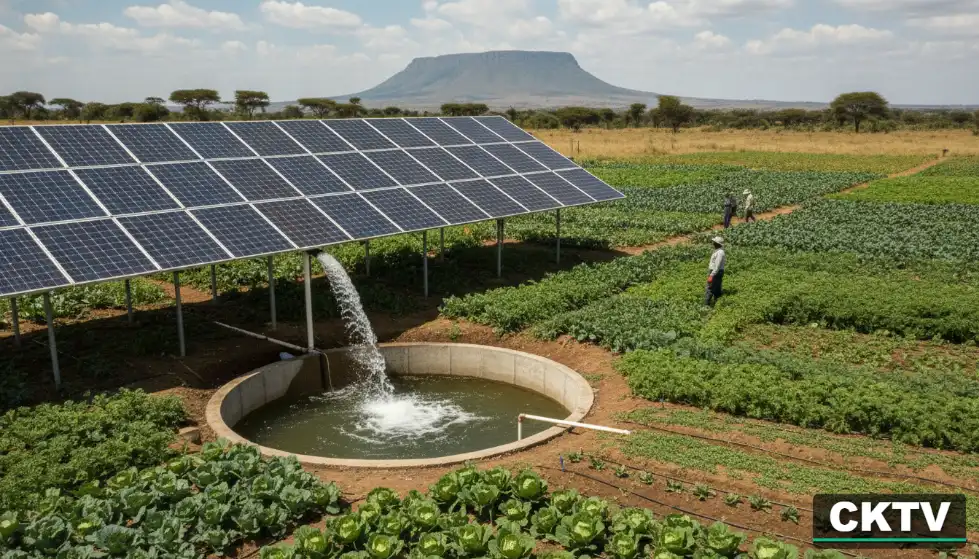
Choosing the Right Pump: A Step-by-Step Guide
To choose the right pump, determine your Total Dynamic Head (vertical lift + pipe friction), calculate your Daily Water Requirement (liters per day for your crop), and assess your solar potential. Use these figures to match the pump’s performance curve provided by the dealer for optimal efficiency.
Most farmers buy a pump based on “horsepower” (HP), but this is often a misleading metric for solar. In 2026, the focus is on “Total Dynamic Head” (TDH) and “Flow Rate.” If you buy a pump rated for 30 meters but your well is 40 meters deep, the pump will run but no water will reach the surface.
Conversely, if you buy a pump that is too large for your well’s recovery rate, you will pump the well dry. This can damage the motor through “dry running” and stir up silt that clogs your pipes. Following a structured selection process is the only way to avoid these expensive mistakes.
Step 1: Know Your Depth (Total Dynamic Head)
Measure the distance from the water level in your well to the highest point where the water will be delivered. This is your “static head.” However, you must also account for “friction loss.” This is the resistance water faces as it moves through the pipes. A long pipe or a narrow pipe increases friction.
Add a factor for pipe friction (usually 10% to 15% of the total length of the pipe) to your static head. This gives you your Total Dynamic Head. If your static head is 45 meters and your pipe is 50 meters long, your TDH is roughly 50 meters. You need a pump that can comfortably push water at this 50-meter mark.
Step 2: Calculate Your Water Needs
Different crops have different “thirst” levels. In Kenya, a general rule of thumb for drip irrigation is that an acre of tomatoes needs about 15,000 to 20,000 liters of water per day. This is during the peak of the dry season in a hot area like Kitui. If you are using overhead sprinklers, you will need double that amount.
Ensure your solar pump can deliver this total volume within 5 to 6 “peak sun hours.” These are the hours between 10 AM and 4 PM when the sun is strongest. If you need 20,000 liters a day, your pump should have a flow rate of at least 3,500 to 4,000 liters per hour during peak sun.
Step 3: Solar Panel Configuration
Never under-size your solar array. In cloudy regions like Limuru or Kericho, you should “over-panel” your system. If the pump requires 500W of power, installing 650W of panels is a smart move. This ensures the pump starts earlier in the morning and continues running later in the afternoon.
This extra wattage is a small cost compared to the massive increase in daily water output it provides. It also helps the pump maintain performance on hazy days. Always use high-quality mounting structures that tilt the panels towards the equator (North in Kenya) for maximum energy capture.
Solar vs. Diesel: The Financial Reality Check
Many farmers hesitate at the initial price of solar, opting for a KES 25,000 petrol pump from a local hardware store. However, a financial analysis of 2026 prices shows that this is often a “poverty trap.” The following breakdown illustrates the dramatic difference in long-term costs for a 1-acre plot.
Petrol/Diesel Pump Scenario:
Initial Purchase: KES 25,000
Fuel Cost (1 Year): KES 144,000 (Based on KES 12,000 per month)
Maintenance & Oil: KES 15,000
Total 1-Year Cost: KES 184,000
Total 5-Year Cost: KES 820,000+
Solar Pump Scenario:
Initial Purchase & Install: KES 100,000
Fuel Cost (1 Year): KES 0
Maintenance (1 Year): KES 2,000
Total 1-Year Cost: KES 102,000
Total 5-Year Cost: KES 115,000
The solar pump pays for itself in less than 9 months. From that point on, every liter of water you pump is essentially free. This allows you to reinvest your savings into high-quality hybrid seeds and modern fertilizers, further increasing your yield and profit. The financial argument for solar is now undeniable for any commercial farming operation in Kenya.
Risks and Failure Points: What to Watch Out For
The biggest risks to a solar pump installation in Kenya are theft of solar panels, damage from silt or sand in the water source, and voltage surges from poor wiring. Using a “silt sleeve” and installing panels on a high, secure mount are the best ways to mitigate these risks.
Theft is a reality that every Kenyan farmer must plan for. In 2026, many farmers are now building high-security “cages” around their solar arrays or installing them on top of high poles that are difficult to access. Some providers like SunCulture now offer “digital locks” where the pump will only function if it is connected to its specific, registered controller.
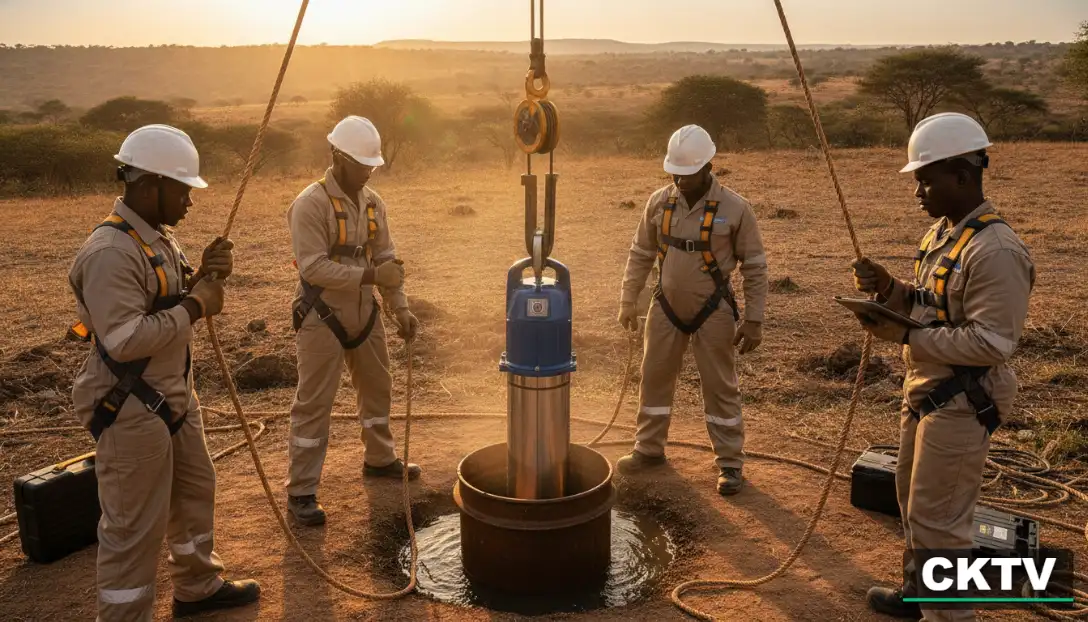
Silt and sand are the “silent killers” of submersible pumps. If your borehole is not properly “developed” (cleaned) after drilling, small grains of sand will enter the pump and grind down the internal impellers. Always insist on a stainless steel mesh strainer for your pump. If you are pumping from a river, use a floating intake so you are not sucking up mud from the bottom of the riverbed.
Finally, avoid the temptation to “DIY” your electrical connections. Solar DC electricity is dangerous and can cause fires if the wires are too thin or the connections are loose. Use only “Solar Grade” cables that are UV-resistant and can withstand the harsh Kenyan sun without cracking and causing a short circuit.
Maintenance Guide: Keeping Your Pump Running for 20 Years
Solar water pumps are remarkably durable because they have fewer moving parts than engines. However, they are not maintenance-free. Following a simple routine will ensure your system lasts for its full rated lifespan of 20 to 25 years.
- Panel Cleaning: Dust buildup on solar panels can reduce water output by up to 30 percent. Wipe your panels with a soft cloth and plain water once a week, preferably in the early morning when they are cool.
- Cable Check: Inspect the cables leading from the panels to the pump for any signs of “nicking” or damage from rodents. Exposed copper will corrode quickly in the rainy season.
- Controller Ventilation: Ensure your pump controller box is in a shaded area but has good airflow. If the controller gets too hot, its efficiency drops and it may eventually fail.
- Submersible Inspection: For deep boreholes, it is a good idea to have a technician pull the pump every 3 to 5 years to check the motor seals and the condition of the drop pipes.
Financing Options for Solar Water Pumps in Kenya
Investing in a solar water pump has become more affordable thanks to flexible financing options available to Kenyan farmers. Today, many leading solar irrigation providers work with financial institutions to help farmers acquire quality irrigation systems without paying the full amount upfront.
Pay-As-You-Grow (PAYG)
The Pay-As-You-Grow (PAYG) model has transformed access to solar irrigation for smallholder farmers. Instead of making a large upfront investment, farmers pay an initial deposit followed by manageable monthly installments over an agreed repayment period.
One of the best-known providers offering this model is SunCulture, whose Pay-As-You-Grow financing has enabled thousands of Kenyan farmers to adopt solar irrigation. Depending on the system selected and eligibility requirements, farmers typically make a deposit before repaying the balance over several months. For many households, the monthly installment is comparable to, or even lower than, what they previously spent on diesel or petrol for irrigation, making the switch to solar more financially sustainable.
Bank and Asset Financing
Farmers looking to install larger irrigation systems can also access asset financing from banks such as Equity Bank, KCB Bank, and Co-operative Bank, as well as selected SACCOs. These financing solutions often offer competitive interest rates and longer repayment periods, making them suitable for commercial farms and large-scale irrigation projects.
Under asset financing, the solar irrigation equipment typically serves as the loan security, allowing farmers to preserve cash for other farm expenses such as seeds, fertilizers, labour, and crop protection.
Green Agriculture Loans
As Kenya continues to promote climate-smart agriculture, several banks and development finance partners now provide green financing products specifically designed for renewable energy and sustainable farming technologies. These loans help farmers invest in solar water pumps, drip irrigation systems, water storage solutions, and other energy-efficient farm equipment.
Choosing the Right Financing Option
Before signing any financing agreement, compare the deposit required, repayment period, total cost of the loan, warranty, maintenance support, and after-sales service. If you’re considering a Pay-As-You-Grow solution, providers such as SunCulture are worth evaluating because they combine financing with professional installation, technical support, and ongoing customer service. For larger commercial farms, bank asset financing may offer greater flexibility for investing in higher-capacity solar irrigation systems.
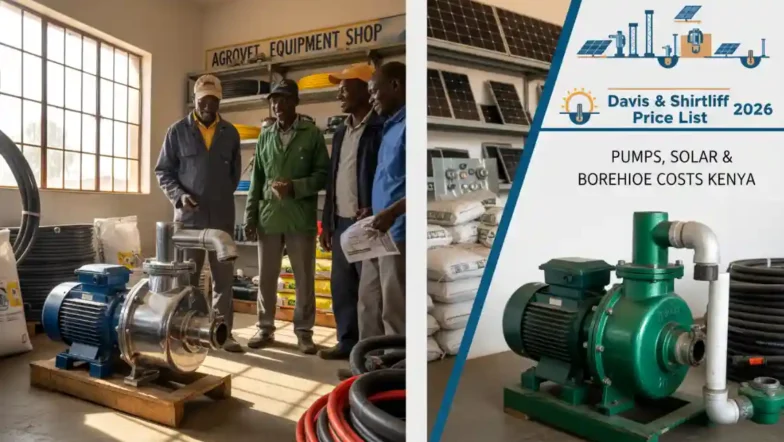
Read Also: Davis & Shirtliff Price List 2026 (Pumps, Solar & Borehole Costs Kenya)
Additionally, some international organizations provide “Green Grants” or subsidies for farmers who are switching from diesel to solar. Always ask your provider if there are any current climate-action incentives available that could reduce your overall purchase price.
Common Mistakes to Avoid When Buying
Buying a solar water pump is a significant investment, and making a mistake can be costly. Here are the most frequent errors reported by Kenyan farmers in 2026 and how to avoid them.
1. Buying based on Horsepower (HP) only: Unlike diesel pumps, solar pumps are rated by “Watts” and “Head/Flow” charts. A 1HP solar pump from one brand might deliver much less water than a 1HP pump from another brand. Always look at the “Liters Per Hour” at your specific depth.
2. Ignoring the “Dry Season” water level: A pump that works in May might fail in February. During the peak of the dry season, the water level in your well will drop. You must ensure your pump is set deep enough to handle this seasonal variation.
3. Skipping the controller: Some cheap vendors try to sell pumps that connect “directly” to panels without a controller. This is a recipe for disaster. A controller regulates the voltage and protects the motor from burning out when the sun is too strong or too weak.
2026 Outlook and Conclusion: Is it Worth It?
The hard truth for 2026 is that farming with petrol or diesel is becoming a relic of the past. The rising cost of fossil fuels and the global push for “Green Agriculture” mean that those who don’t transition will struggle to compete. Solar water pumps are now an essential tool for any serious grower.
The technology has matured to the point where “plug-and-play” systems are the norm. You no longer need to be an engineer to run a solar-powered shamba. With providers like SunCulture and Davis & Shirtliff offering robust warranties, the barrier to entry has never been lower for the average person.
If you have a reliable water source and at least half an acre of land, a solar pump is arguably the single best investment you can make. It secures your water supply, reduces your risks, and puts more money back into your pocket every month. The sun is free; it’s time you started using it to grow your wealth.
Frequently Asked Questions (FAQs)
Which is the best solar water pump provider in Kenya in 2026?
SunCulture is best for small-scale financing, while Davis & Shirtliff is the leader for engineering quality and borehole expertise.
How much does a solar water pump cost in Kenya?
Expect to pay between KES 45,000 for small surface kits and KES 120,000 for standard 1-acre submersible systems.
Which solar water pump company offers Pay-As-You-Grow financing in Kenya?
SunCulture is the primary provider of PAYG financing, though some distributors for Futurepump also offer installment plans.
What should I consider before choosing a solar water pump provider in Kenya?
Prioritize companies with a local service center, a minimum 2-year warranty, and a track record of successful installations in your county.
Which is better for irrigation: a surface solar pump or a submersible solar pump?
Surface pumps are best for rivers and dams; submersible pumps are essential for any source deeper than 7 meters.
How do I choose the right size solar water pump for my farm?
Calculate your total daily water needs and the vertical height the water must travel, then match this to a pump’s flow chart.
Can a solar water pump be used for boreholes, rivers, dams, and shallow wells?
Yes, but you must select the specific pump model designed for that specific type of water source and depth.
How long do solar water pumps last, and what maintenance do they require?
Most high-quality pumps last 15 to 20 years. Maintenance is simple: clean the panels weekly and check cables for damage.
Which solar water pump provider in Kenya offers the best warranty and after-sales support?
Davis & Shirtliff and SunCulture have the most extensive service networks and reliable warranty fulfillment in the country.
Where can I buy genuine solar water pumps in Kenya at competitive prices?
Buy directly from authorized showrooms in Nairobi, Nakuru, or Eldoret. Avoid unbranded pumps from general hardware shops.
Can a solar pump work at night?
Standard solar pumps only work during the day. If you need water at night, you should pump into a high storage tank during the day.
Do I need batteries for my solar water pump?
Most modern solar irrigation pumps are “direct-drive” and do not use batteries, which significantly reduces the cost and maintenance.