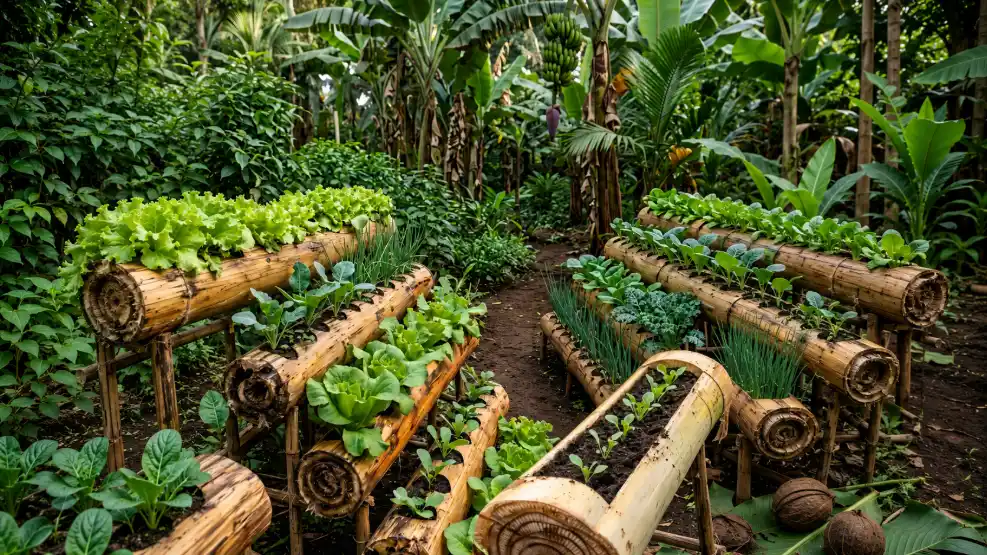

- Water Conservation: Banana stems act as biological reservoirs, reducing irrigation needs by up to 60 percent, making them perfect for drought-prone regions like Machakos and Kajiado.
- Natural Nutrient Supply: As the pseudostem slowly decomposes, it releases potassium and organic matter directly to the roots, cutting down on the need for expensive synthetic fertilizers.
- High Yield in Small Spaces: This method allows urban farmers in Nairobi and Mombasa to grow up to 20 vegetable plants per stem, maximizing output on balconies and small backyards.
Table of Contents
Vertical gardening using banana stems is a climate-smart agricultural technique that transforms agricultural waste into highly productive planting vessels. This method, often referred to as the sponge planting method, leverages the unique biological structure of the banana pseudostem to support leafy greens and herbs. In 2026, as water scarcity and land fragmentation become more pressing in Kenya, this system offers a sustainable path for both home gardeners and small-scale commercial farmers.
By using the discarded trunks of harvested banana plants, you are not only recycling organic matter but also creating a self-watering environment. The internal layers of the stem are packed with moisture and minerals that provide a steady supply of nutrients. This guide will walk you through the entire process, from selecting the right stem to managing pests and maximizing your vegetable harvest in a localized Kenyan context.
Whether you are a seasoned farmer in the highlands of Meru or an urbanite in a high-rise apartment in Kilimani, the banana stem vertical garden is an accessible solution. It requires minimal financial investment and relies mostly on readily available natural materials. By the end of this article, you will have the expert knowledge required to build, maintain, and profit from your own banana stem garden.
What Is a Banana Stem Vertical Garden?
A banana stem vertical garden uses the trunk of a harvested banana plant as a growing medium. By carving pockets into the moisture-rich pseudostem and filling them with compost-rich soil, farmers can grow vegetables vertically. This method utilizes the stem’s natural water retention and decaying organic nutrients to support plant growth.
What is a Banana Pseudostem?
The part of the banana plant we often call the trunk is technically a pseudostem. It is not made of wood like a typical tree but consists of tightly packed leaf sheaths. These sheaths are incredibly fibrous and hold a high percentage of water, often exceeding 90 percent of their total weight. This structure makes the stem a perfect “sponge” for gardening purposes.
Read Also: How to Grow Profitable Pineapples in Containers Using Recycled Materials (Step-by-Step Guide)
In 2026, many organic farmers are moving away from plastic containers and towards these natural alternatives. The pseudostem is soft enough to be easily carved with basic hand tools but sturdy enough to maintain its shape for several months. Its fibrous nature allows vegetable roots to penetrate deep into the stem layers to access trapped moisture and minerals.
How the Sponge Planting Method Works
The sponge planting method relies on the capillary action within the banana fibers. When you place soil and a seedling into a carved pocket, the plant’s roots naturally seek out the moisture inside the stem. As the stem begins its natural process of decomposition, it breaks down into humus, which is the most nutrient-dense form of organic matter.
This process creates a micro-climate around the root zone that is significantly cooler than the ambient air temperature. For farmers in hot areas like Kisumu or Garissa, this cooling effect prevents heat stress in sensitive vegetables like lettuce and spinach. The internal moisture acts as a buffer against erratic rainfall, ensuring that your crops stay hydrated even if you skip a day of watering.
Benefits of Growing Vegetables in Banana Stem Planters
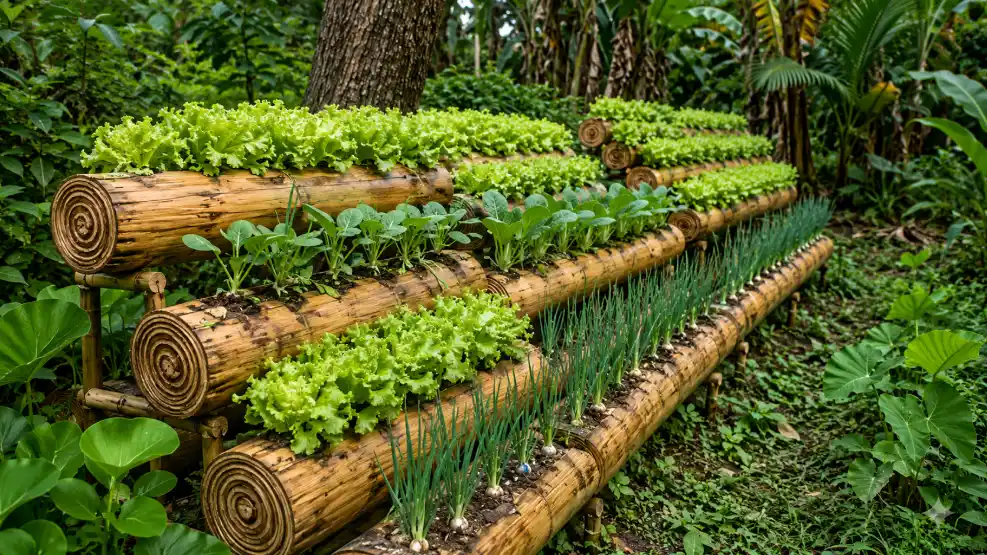
Banana stem planters eliminate the need for plastic pots, reduce weed growth by 90 percent, and provide a natural source of potassium. This space-saving technique allows for year-round vegetable production in dry areas while recycling farm waste that would otherwise rot and attract pests.
Natural Fertilizer and Nutrient Recycling
Banana plants are heavy feeders of potassium, and much of this mineral remains stored in the pseudostem after the fruit is harvested. As you grow vegetables in the stem, this potassium is slowly released, promoting strong cell walls and better water regulation in your leafy greens. This natural fertilization process can reduce your reliance on synthetic NPK fertilizers by up to 40 percent in the first growth cycle.
Furthermore, the decaying organic matter encourages the presence of beneficial soil microbes. these microbes work to fix nitrogen and protect the plant roots from harmful pathogens. By using what was once considered “waste,” you are closing the nutrient loop on your farm or in your garden, which is a core principle of sustainable permaculture in 2026.
Space-Saving Solution for Urban Farming
In urban centers like Eldoret or Nakuru, land is a luxury that many cannot afford. A banana stem vertical garden can be stacked horizontally or stood vertically against walls and fences. A single 2-meter stem can host up to 20 individual plants. This vertical density means you can produce a significant amount of food in a space no larger than a standard doorway.
Read Also: Multi-Storey Vertical Garden Farming in Kenya: Complete Setup Guide 2026
Because the garden is elevated, it is also easier on the back and knees. There is no need for heavy tilling or bending over to weed ground-level beds. The height also protects your crops from common ground pests like certain types of beetles and keeps the vegetables clean from soil splash-back during heavy rains, which reduces the risk of fungal leaf spots.
Best Vegetables to Grow in Banana Stem Vertical Gardens
Not every crop is suited for the confined space of a banana stem pocket. Shallow-rooted vegetables that thrive in moist, nutrient-rich environments are the best candidates for success. The following table highlights the top choices for Kenyan farmers in 2026 based on growth cycle and market demand.
| Vegetable | Growth Time (Days) | Root Depth | Difficulty | Best Season in Kenya |
|---|---|---|---|---|
| Spinach | 45-60 | Shallow | Easy | Year-round |
| Sukuma Wiki (Kale) | 30-45 | Medium | Very Easy | Year-round |
| Coriander (Dania) | 35-45 | Shallow | Easy | Cool/Wet |
| Lettuce | 30-50 | Shallow | Moderate | Cool |
| Spring Onions | 60-90 | Shallow | Easy | Year-round |
| Swiss Chard | 50-70 | Medium | Easy | Year-round |
| Pak Choi | 35-50 | Shallow | Moderate | Cool |
Leafy greens like Spinach and Sukuma Wiki are the most popular choices because they provide a continuous harvest. You can pick the outer leaves while the center continues to grow, allowing one plant to produce for several months. Herbs like mint and basil also do exceptionally well because they enjoy the consistent moisture levels provided by the banana stem’s interior.
Avoid planting deep-rooted vegetables like carrots, parsnips, or large tubers like sweet potatoes in banana stems. These crops require significant soil depth to expand, which the banana stem cannot provide. If the roots hit the bottom of the planting pocket and cannot penetrate the tougher outer layers of the stem, the vegetable will become stunted or deformed.
Best Varieties for Kenyan Farmers in 2026
To maximize profit, you must pick varieties that survive local pests and handle our climate well. Don’t waste space on low-yield seeds.
- Sukuma Wiki (Thousand Headed Kale): This is the king of Kenyan markets. It is tough, grows fast, and recovers quickly after cutting.
- Spinach (Fordhook Giant): It has big, dark green leaves that sell well in local markets. It is resistant to many common leaf diseases.
- Coriander (Slow Bolt): Look for the “Slow Bolt” variety. It doesn’t flower too early when it gets hot, which keeps the leaves tasty and marketable for longer.
- Spring Onions (White Lisbon): These grow straight and thin, making them perfect for tight banana stem pockets. They are ready to harvest in about 60 days.
- Lettuce (Iceberg or Great Lakes): These handle our sun better than delicate fancy types. They stay crunchy and don’t rot as easily in the moisture of the stem.
Stop buying cheap, uncertified seeds from the market. They often have poor germination rates and carry diseases that will ruin your crop before it starts. Spend the extra money on certified seeds from reputable companies like Simlaw or Kenya Seed. It is the only way to guarantee a uniform crop you can actually sell.
Where to Buy Certified Seeds in Kenya
Stop sourcing seeds from random open-air markets. If you want a consistent harvest that you can actually sell, buy from verified suppliers who provide KEPHIS-certified seeds.
- Simlaw Seeds: The best source for vegetable and pasture seeds. They have a massive range of horticultural varieties.
- Online Shop: You can order their full catalog, including “Kitchen Garden Combi” packs, directly through Jumia Kenya.
- Kenya Seed Company: The go-to for high-quality, government-backed seeds. They are reliable for bulk supplies and have a wide distribution network across all counties.
- Seed Co Kenya: Focus on their high-performance hybrid vegetable varieties if you are running a commercial operation. Their seeds are bred for specific African climates.
- Richfields Agriculture: A solid one-stop shop for certified inputs. They offer nationwide delivery and have an agronomist support line if you get stuck choosing the right variety for your specific area.
- Elgon Kenya: Best if you need a “total solution.” They supply everything from seeds and fertilizers to high-tech irrigation systems.
Pro Tip: Always check the expiry date on the seed tin or packet before you pay. If the seal is broken or the date is past, do not buy it. It is a waste of your money and time.
Materials You Will Need
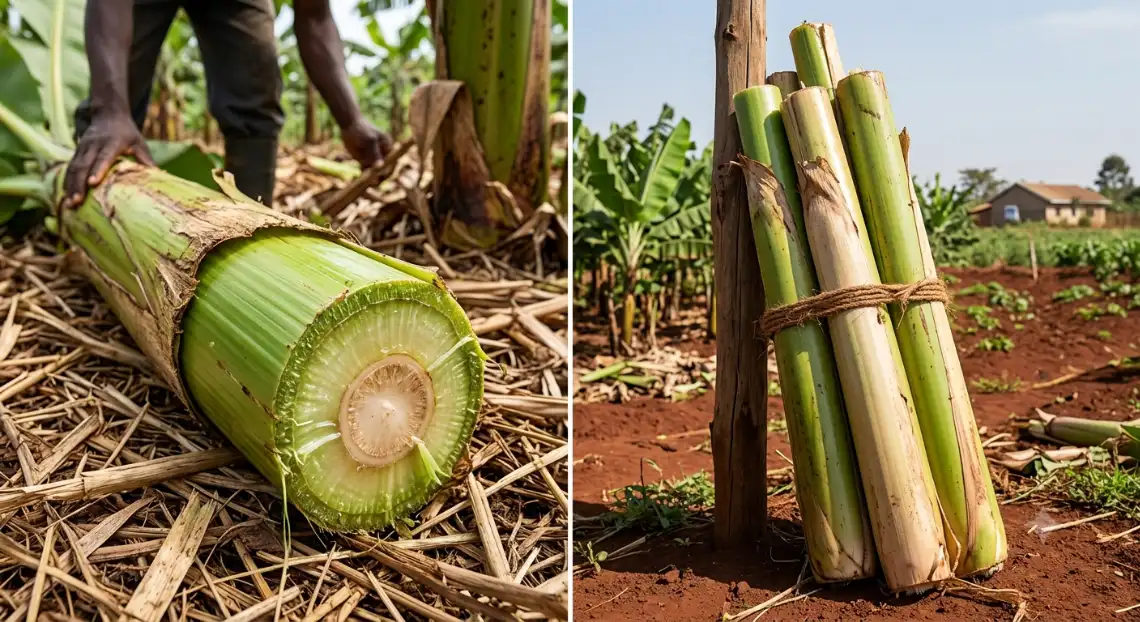
To build a banana stem garden, you need fresh banana pseudostems, a sharp panga or knife, a sturdy wooden or bamboo support frame, organic compost, and high-quality topsoil. For high-volume setups, binding wire or nails are necessary to secure the heavy stems to the vertical racks.
Choosing the Right Banana Stems
The quality of your garden depends entirely on the stems you select. You should always use fresh stems that have been harvested within 24 to 48 hours. Old, dry stems have lost their moisture and structural integrity, making them poor reservoirs for your plants. Look for stems with a diameter of at least 15 centimeters to ensure there is enough internal volume for the soil pockets.
In terms of varieties, the thicker stems of cooking bananas (Matooke) or large dessert varieties like Cavendish are preferred. Ensure the parent plant was healthy and free from diseases like Banana Xanthomonas Wilt (BXW). Using a diseased stem can introduce pathogens into your vegetable garden and eventually spread them to other banana plants on your property.
Supporting Poles and Frame Materials
A water-logged banana stem is heavy, often weighing over 40 kilograms for a 2-meter length. You cannot simply lean it against a wall without support. Bamboo is an excellent choice for the frame because it is strong, lightweight, and weather-resistant. Alternatively, you can use treated timber or offcuts from a local sawmill. You will also need strong binding wire or nails to ensure the stems do not roll off the rack when the plants grow and add more weight.
The Soil and Compost Mixture
Since the planting pockets are small, the soil you use must be highly concentrated with nutrients. The ideal 2026 organic mix for Kenyan farmers consists of one part well-rotted manure (goat or rabbit manure is best), one part forest topsoil, and a handful of wood ash to balance the pH. If you are in a very hot area, adding a small amount of coconut coir or rice husks can help retain even more moisture within the pocket itself.
Step-by-Step Guide to Building Your Banana Stem Vertical Garden
Step 1: Harvest the Banana Stem
Cut the banana stem at the base using a sharp panga. It is best to do this immediately after the bunch of bananas has been harvested. Remove any remaining leaves or the tapering top part of the stem so you are left with a uniform, thick cylinder. Handle the stem carefully to avoid bruising the outer layers, which can lead to premature rotting.
Step 2: Cut to Size
Depending on your available space, cut the stem into manageable lengths. For most horizontal racks, 1.5 to 2 meters is the ideal length. If you are building a vertical “tower,” you might keep the stem at its full length but ensure you have a way to stabilize the top. Shorter lengths are easier to move and replace when they eventually decompose.
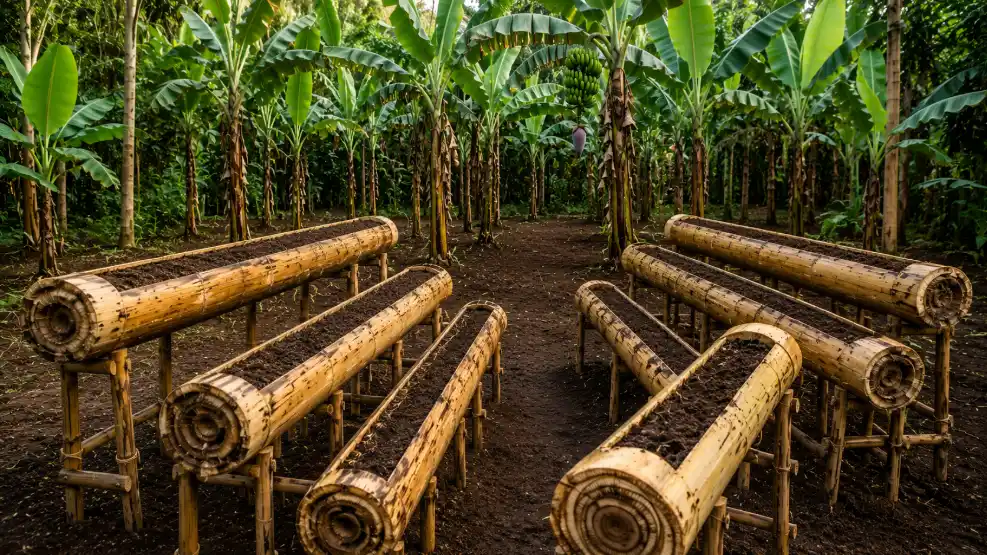
Step 3: Build the Support Frame
Construct a rack that will hold the stems off the ground. A simple “A-frame” design works well for multiple stems. Ensure the frame is sturdy enough to handle the weight of several wet stems. If the stems touch the ground, they will rot much faster and become a target for ground-dwelling pests like termites and slugs.
Read Also: How to Grow Maize in Buckets: Complete Container Farming Guide 2026
Step 4: Create Planting Pockets
Using a sharp knife or a specialized hole saw, cut holes into the top side of the horizontal stem. Each hole should be about 8 to 10 centimeters wide and 10 to 15 centimeters deep. Space the holes roughly 20 centimeters apart. This spacing prevents the plants from shading each other out as they reach maturity.
Step 5: Prepare the Soil Mixture
In a wheelbarrow or on a clean tarp, mix your topsoil, manure, and compost. Ensure the mix is crumbly and free of large stones or sticks. If the manure is not fully decomposed, it may “burn” the delicate roots of your seedlings, so always use well-aged organic matter.
Step 6: Fill the Holes
Scoop the soil mixture into each pocket, filling it nearly to the top. Press the soil down gently with your fingers to remove large air pockets, but do not pack it so tightly that water cannot drain through. The soil should feel firm but spongy.
Step 7: Plant the Seedlings
Create a small indentation in the center of each soil-filled pocket. Place your 3-week-old seedlings into the holes, ensuring the roots are well-covered. It is often better to transplant in the late afternoon to reduce transplant shock caused by the hot Kenyan sun.
Step 8: Arrange the Stems
Lift the prepared stems onto your support frame. If you are using multiple tiers, place the stems so that water dripping from the top tier can help hydrate the tiers below. Secure the stems to the frame using wire or notches in the wood to prevent them from shifting.
Step 9: Mulch the Pockets
Place a thin layer of dry grass or coconut husks around the base of each seedling within the pocket. This mulch layer prevents the soil from drying out on the surface and stops the soil from washing away when you water the plants.
Step 10: Water Properly
Give the plants a light watering immediately after planting. Focus the water directly into the soil pockets. You do not need to soak the entire banana stem; the goal is to get the roots established so they can begin to draw moisture from the internal fibers of the stem themselves.
How the Banana Stem Feeds Your Plants
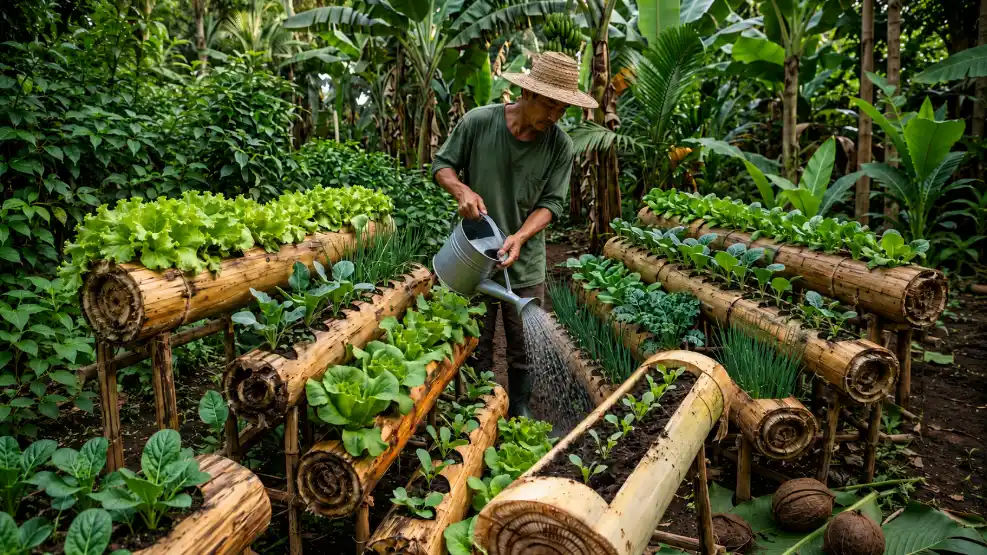
The beauty of this system lies in the natural decomposition of the pseudostem. As the internal leaf sheaths break down, they release a cocktail of essential minerals. Potassium is the most abundant, which is vital for the development of crisp, healthy leaves in spinach and kale. In 2026, many commercial organic growers are using this “living fertilizer” to produce high-value crops without the cost of bottled nutrients.
In addition to potassium, the stem provides significant amounts of calcium and magnesium. These secondary nutrients are often lacking in over-farmed Kenyan soils. By growing your vegetables in a banana stem, you are essentially providing them with a 24-hour slow-release feeding system. This results in faster growth rates and more vibrant colors in your vegetables.
The microbial life within the decaying stem also plays a crucial role. As the fibers rot, they attract beneficial bacteria that help convert atmospheric nitrogen into a form that plants can use. This biological synergy ensures that the vegetables have a constant supply of food throughout their short life cycle, leading to higher yields per square meter compared to traditional ground farming.
Watering Guide for Banana Stem Gardens
Water your banana stem garden only when the top inch of soil in the pockets feels dry. Because the stem itself acts as a water reservoir, you typically only need to water every 2 to 3 days. Overwatering can lead to root rot and cause the banana stem to decompose too quickly.
Managing Water in the Dry Season
During the dry months of January and February in Kenya, evaporation is high. While the banana stem holds moisture, the soil pockets are still exposed to the air. You should water the pockets in the early morning to ensure the plants have a full reservoir before the heat of the day. Using a watering can with a fine rose attachment prevents the soil from being washed out of the small pockets.
Watering During the Rainy Season
When the long rains arrive in March and April, you may not need to water your banana stem garden at all. In fact, excessive rain can be a problem if your support frame does not allow for proper drainage. Ensure the stems are slightly tilted or have small drainage nicks on the underside to prevent the pockets from becoming waterlogged. Saturated soil lacks oxygen, which can kill your vegetable roots within 48 hours.
Fertilizing Your Banana Stem Garden
While the banana stem is nutrient-rich, heavy feeders like Kale (Sukuma Wiki) can benefit from supplemental organic fertilization. In 2026, the use of liquid organic fertilizers is the most efficient way to boost growth in vertical systems. These liquids penetrate the soil pockets quickly and are absorbed by the roots almost immediately.
Compost tea is a fantastic, zero-cost option. You can make it by soaking a bag of well-rotted manure in a drum of water for 14 days. The resulting dark liquid is packed with nitrogen. Dilute it until it looks like weak tea and pour it into the planting pockets once every two weeks. This provides the nitrogen boost needed for the rapid production of large, succulent leaves.
Another expert tip is to use rabbit urine, which is exceptionally high in nitrogen and phosphorus. Urban farmers in Nairobi often keep a few rabbits specifically for this purpose. When diluted at a ratio of 1 part urine to 5 parts water, it acts as a powerful foliar and root fertilizer that can double your harvest speed. Always apply liquid fertilizers in the evening to prevent the sun from evaporating the nutrients before the plant can absorb them.
Pest and Disease Management
Protect your vertical garden from aphids, snails, and slugs by using natural repellents like neem oil or garlic-chili sprays. Ensure the stems are raised off the ground to prevent soil-borne diseases and pests from easily reaching your vegetables.
Common Pests in Vertical Systems
Aphids are the most common problem for kale and spinach in Kenya. These tiny insects cluster on the underside of leaves and suck the sap, causing the leaves to curl and yellow. Because vertical gardens are easy to inspect, you can usually spot an aphid infestation early. A simple spray made of water and a little dish soap is often enough to suffocate these pests without harming the environment.
Snails and slugs are attracted to the moisture of the banana stem, especially at night. If your stems are too close to the ground, these pests will crawl up and devour your seedlings in a single night. Creating a barrier of wood ash or crushed eggshells around the base of your support frame is a highly effective, non-toxic way to keep them at bay. The sharp edges of the shells and the drying effect of the ash are natural deterrents.
Fungal Diseases and Airflow
In humid areas like the Coast or during the rainy season in the highlands, fungal diseases like powdery mildew can be an issue. This appears as a white, flour-like dust on the leaves. The best prevention is to ensure your vertical garden is placed in a spot with good airflow. Don’t crowd the stems too closely together. If you see infected leaves, prune them immediately and burn them to prevent the spores from spreading to the rest of the garden.
How Long Does a Banana Stem Last?
The lifespan of a banana stem vertical garden is typically between three and six months. This duration depends on the thickness of the stem, the local temperature, and how much water it receives. In the cooler climate of Limuru, a stem might last through two full harvests of spinach. In the hotter climate of Mombasa, the decomposition process is much faster, and the stem may need replacement after one long harvest cycle.
You will know a stem is reaching the end of its life when it becomes very soft to the touch and begins to sag significantly on the rack. At this point, the fibers have largely broken down into compost. The structural integrity is no longer sufficient to hold the weight of the soil and plants. This is not a failure of the system but rather the completion of its natural cycle.
When a stem is “expired,” do not throw it away. Chop it up and add it to your compost pile or use it as mulch around the base of your fruit trees. It is now a highly concentrated organic fertilizer. This is the beauty of the system: you start with agricultural waste, grow a crop of fresh vegetables, and end with high-quality compost that goes back into the earth to feed the next generation of plants.
Common Mistakes to Avoid
Even though this method is relatively simple, there are several common pitfalls that can lead to a failed harvest. Understanding these mistakes will save you time and resources in the long run. In 2026, successful farming is about working smarter, not harder.
- Using Rotten Stems: Never start with a stem that already shows signs of deep rot or mold. It will collapse before your vegetables are ready for harvest.
- Poor Support Structure: Many beginners underestimate the weight of a wet banana stem. A weak frame will collapse, likely killing your plants in the process.
- Overcrowding: Planting too many seedlings in a single stem leads to competition for light and nutrients, resulting in small, bitter leaves.
- Neglecting Drainage: If the pockets don’t have a way to shed excess water during a storm, the roots will drown in the anaerobic environment.
- Deep-Rooted Crops: Attempting to grow carrots or potatoes in a banana stem is a common error that always results in stunted growth.
Banana Stem Vertical Garden vs. Traditional Garden Beds
When deciding whether to use banana stems or traditional ground beds, it helps to compare the two methods across key performance indicators. The following table provides a breakdown based on the 2026 Kenyan agricultural landscape.
| Feature | Banana Stem Vertical Garden | Traditional Garden Bed |
|---|---|---|
| Water Use | Very Low (Self-watering properties) | High (Rapid evaporation) |
| Initial Cost | Very Low (Uses waste materials) | Moderate (Requires tools/fencing) |
| Weed Control | Minimal (90% less weeding) | High (Constant weeding required) |
| Space Efficiency | Excellent (Vertical density) | Poor (Requires large land area) |
| Disease Risk | Low (Above ground) | Moderate (Soil-borne pathogens) |
| Longevity | Short (3-6 months) | Permanent |
While traditional beds are permanent, they require much more labor and water. The banana stem garden is an “agile” farming method. It allows you to set up, harvest, and move on quickly. For those who are renting land or have limited access to permanent garden space, the banana stem method is the clear winner for short-term, high-intensity vegetable production.
Cost of Building a Banana Stem Vertical Garden
For a small-scale setup of about 10 stems, which is enough to provide a family of five with daily vegetables and a small surplus for sale, the costs in 2026 are remarkably low. Most of the materials can be sourced for free if you live near a banana farm. If you have to buy everything in an urban setting, here is a realistic budget breakdown.
Read Also: DIY Bottle Drip Irrigation Farming in Kenya (2026): Grow Tomatoes, Strawberries & Vegetables Using Recycled Containers
This budget assumes you are buying seedlings from a nursery and sourcing timber from a local yard. If you use bamboo and grow your own seedlings from seed, the total cost can be halved. The return on investment is usually realized within the first 60 days of production when the first major harvest of spinach or kale hits the kitchen table.
| Material / Labor | Estimated Cost (KES) | Notes |
|---|---|---|
| 10 Banana Stems | 500 – 1,000 | Often free if you harvest them yourself |
| Bamboo/Timber Frame | 1,500 – 2,500 | Can be reused for multiple cycles |
| Organic Manure (2 Bags) | 600 – 800 | Look for rabbit or goat manure |
| Vegetable Seedlings (200) | 600 – 1,000 | Price varies by variety |
| Tools & Binding Wire | 500 – 1,000 | One-time purchase |
| Total Cost | 3,700 – 6,300 | Average: KES 5,000 |
Can You Grow Other Crops Besides Vegetables?
While leafy greens are the primary focus, the banana stem vertical garden is surprisingly versatile. In 2026, many Kenyan farmers are experimenting with high-value strawberries. Strawberries love the moist, cool root zone provided by the stem. They are also heavy potassium feeders, making the decaying banana fiber an ideal environment for producing large, sweet berries that fetch a premium in urban supermarkets.
Medicinal plants and herbs like Aloe Vera, Ginger, and Turmeric can also be grown in these systems, although ginger and turmeric require slightly larger pockets to accommodate their rhizomes. Flowers like marigolds or petunias can be integrated into the system to act as natural pest deterrents while adding beauty to your garden. The marigold scent, in particular, helps keep certain flying insects away from your valuable food crops.
Final Thoughts
Building a vertical garden using banana stems is a practical and rewarding way to enhance your food security while practicing sustainable agriculture. In 2026, this method stands out as one of the most efficient uses of agricultural waste available to the Kenyan farmer. It requires very little money but offers a high return in terms of fresh, organic, and nutritious vegetables for your family or for sale.
As you have seen in this guide, the key to success lies in selecting fresh stems, building a strong support frame, and choosing the right crops. By following the step-by-step instructions provided, you can transform a discarded banana trunk into a thriving “living garden” in just one afternoon. We encourage you to start with one or two stems and see the results for yourself. Your journey toward self-sufficiency and water-wise farming begins with this simple, ingenious technique.
Frequently Asked Questions (FAQ)
How Do You Build a Vertical Garden Using Banana Stems?
Cut a fresh banana stem, place it on a sturdy rack, carve 10cm deep holes every 20cm, fill with soil and manure, and plant your vegetable seedlings directly into the pockets.
What Vegetables Grow Best in a Banana Stem Vertical Garden?
Leafy greens like spinach, kale (sukuma wiki), and lettuce thrive best. Shallow-rooted herbs such as coriander (dania), spring onions, and parsley also perform exceptionally well.
How Long Does a Banana Stem Last as a Vertical Garden Planter?
A fresh banana stem usually lasts between 3 to 6 months. Its lifespan depends on the thickness of the stem and the local temperature, which affects the rate of decomposition.
How Often Should You Water a Banana Stem Vertical Garden?
Water every 2 to 3 days. The stem acts as a natural water reservoir, so you only need to keep the soil pockets moist rather than soaking the entire structure.
Can Banana Stem Vertical Gardens Be Used in Small Spaces or Urban Homes?
Absolutely. They are perfect for balconies and small backyards. You can stack them vertically or hang them to maximize your food production in a very limited area.
What Is the Best Soil Mix for Growing Vegetables in Banana Stem Planters?
Use a mix of 50% well-rotted manure, 40% forest topsoil, and 10% wood ash or rice husks. This ensures high nutrients and proper drainage for the seedlings.
Are Banana Stem Vertical Gardens Better Than Traditional Raised Garden Beds?
They are better for water efficiency and space saving. However, traditional beds are permanent and can support deep-rooted vegetables that banana stems cannot.
Can You Grow Fruits, Herbs, and Flowers in Banana Stem Vertical Gardens?
Yes. Strawberries are a popular fruit choice. You can also grow most culinary herbs and small ornamental flowers like marigolds to help deter pests naturally.
What Are the Benefits of Using Banana Stems for Vertical Vegetable Gardening?
The main benefits include 60% water savings, natural potassium fertilization, zero cost for the planter, and the ability to grow organic food in poor soil areas.
What Common Mistakes Should You Avoid When Building a Banana Stem Vertical Garden?
Avoid using old, dry stems, overwatering, and building weak support racks. Also, ensure you don’t plant deep-rooted vegetables like carrots which will become stunted.